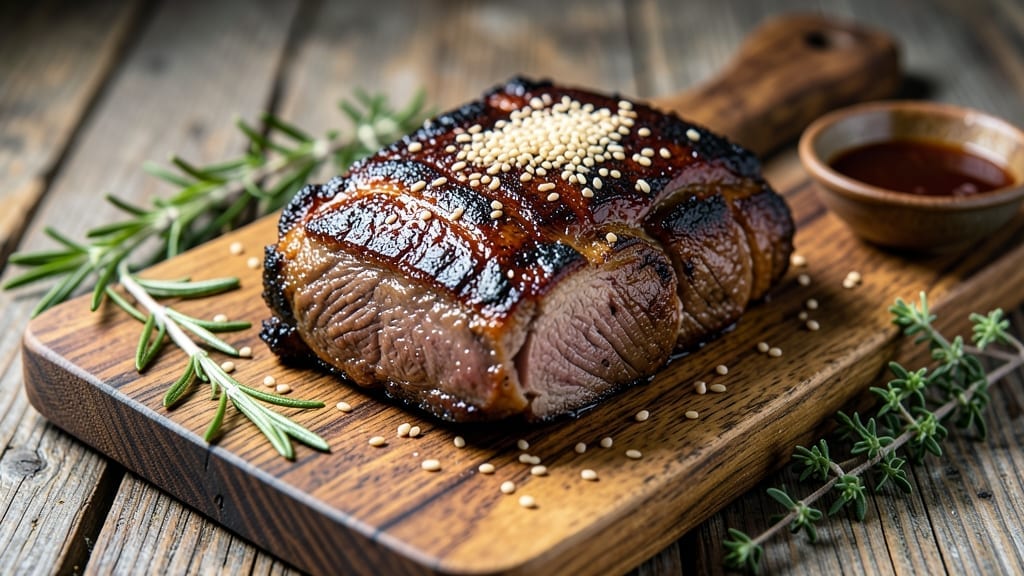
Mastering a smoked picanha roast transforms a simple cut of beef into Brazilian-style ribeye perfection—juicy, smoky, and packed with bold flavor. The key lies in low-and-slow smoking until the internal temperature reaches 130–145°F, creating that signature smoke ring and tender texture.
I remember the first time I nailed this technique after years of experimenting with French searing methods and Brazilian BBQ traditions.
This recipe starts with a simple seasoning blend—just salt and black pepper—but the magic happens during the smoke. Using hickory or cherry wood at 225°F for 1–2 hours ensures the meat stays tender while developing deep, smoky flavors.
The resting period is critical; skipping it means losing juices that make every bite irresistible.
By the time you serve it, you’ll have perfectly smoked picanha with a crispy crust and melt-in-your-mouth tenderness. Slice it against the grain for even texture, and pair it with chimichurri or grilled vegetables for a complete feast.
This is the kind of dish that turns a casual dinner into a memorable experience.
The best part? The aroma alone will have everyone gathered around the grill, waiting for their first bite. Let’s get started on creating your own Brazilian-style masterpiece.
Ingredients for smoked picanha roast
Just a few quality ingredients transform simple beef into Brazilian-style smoked perfection.
| Ingredient | Amount | Notes |
|---|---|---|
| Picanha Roast 🥩 | 4 lb | Center-cut, 1.5-inch thick |
| Kosher Salt 🧂 | 1 ½ tbsp | Coarse grain preferred |
| Freshly Ground Black Pepper 🌶️ | 1 tbsp | Coarse grind for texture |
| Hickory Wood Chips 🌳 | 1 package | Or cherry wood for milder smoke |
| Extra-Virgin Olive Oil 🫒 | 2 tbsp | For crust development |
| Fresh Garlic Cloves 🧄 | 6 cloves | Minced, for chimichurri |
| Fresh Cilantro 🌿 | ½ cup | Stems removed, for chimichurri |
| Red Wine Vinegar 🍷 | ¼ cup | For chimichurri acidity |
| Olive Oil 🫒 | ½ cup | For chimichurri base |
| Red Bell Pepper 🌶️ | 1 whole | Grilled, for chimichurri |
| Yellow Onion 🧅 | 1 whole | Grilled, for chimichurri |
| Lemon Juice 🍋 | 2 tbsp | Freshly squeezed |
| Cumin Seeds 🌿 | 1 tsp | Toasted, for chimichurri |
[recipe_ingredient_scaler]
The picanha cut is everything here. Look for a center-cut roast with visible fat cap—this ensures juiciness. Costco or Whole Foods usually carry it pre-cut, but if you’re buying a whole top sirloin cap, ask your butcher to trim it to 1.5-inch thickness. The thicker it is, the longer it takes to smoke through evenly. Trust me, don’t skip the fat cap—it renders down during smoking and keeps the meat moist. If you can’t find picanha, top sirloin cap is the closest substitute, though it won’t be identical.
No hickory chips? Cherry or pecan wood works just as well—just avoid pine, which can taste bitter. For the chimichurri, fresh cilantro is non-negotiable—dried won’t give you that bright, herby punch. Running short on time? Pre-chop the garlic and onion and store them in the fridge until you’re ready to grill. The red bell pepper adds sweetness that balances the acidity from the vinegar, so don’t skip it. And if you’re feeling fancy, toast the cumin seeds in a dry pan first—it adds a whole new depth of flavor.
This roast reheats beautifully—just warm it up in the oven at 300°F for 15-20 minutes with a splash of water to keep it moist. The chimichurri? It actually tastes better the next day as the flavors meld. Store both in airtight containers: the roast wrapped in foil for 3-4 days in the fridge, and the chimichurri in a jar with a layer of olive oil on top to preserve freshness for up to 5 days. Freeze portions of the chimichurri in ice cube trays for quick use later.
Why You’ll Love This Recipe
- I’ll be real: this roast demands leftovers, and it’s not even a shameful thing. The chimichurri stays fresh for up to 5 days in the fridge, so you can make a big batch and use it on sandwiches, salads, or even eggs the next week. The picanha itself reheats like a dream—just pop it in the oven at 300°F for 15 minutes with a splash of water, and it’s juicy as day one. Feeding a crowd? Double the recipe. Hosting a casual BBQ? This is your secret weapon.
- Let’s talk practicality: a 4 lb picanha roast isn’t cheap, but it stretches so far. You get enough slices for a main dish plus lunches for days, and the chimichurri uses pantry staples like olive oil and vinegar. Plus, smoking it yourself means no pricey restaurant markup. It’s the kind of dish that makes you feel fancy without breaking the bank—especially when you’re left with enough for breakfast tacos the next morning. Win.
Step-by-step instructions for smoked picanha roast
Here’s the method that delivers juicy, smoky perfection every time—simple steps for a restaurant-quality Brazilian cut.
Prepare the Picanha for Smoking
Remove the 4 lb picanha roast from the refrigerator and let it sit at room temperature for 30 minutes before smoking. This ensures even cooking from edge to center. Pat the surface completely dry with paper towels—moisture is the enemy of that beautiful crust we’re after.
In a small bowl, combine the 1½ tablespoons kosher salt and 1 tablespoon freshly ground black pepper. Rub this mixture all over the picanha, pressing firmly so the seasoning adheres. The coarse salt will create texture while the pepper adds depth. Let the seasoned meat rest uncovered on a wire rack for 15 minutes—this helps the salt penetrate slightly and develops flavor.
While the picanha rests, prepare your smoker. Soak the 1 package hickory wood chips in water for 30 minutes, then drain. Set your smoker to 225°F and add the soaked wood chips. You’ll know it’s ready when you see thin, blue smoke—this is the sweet spot for flavor without overpowering the meat.
Smoke the Picanha to Medium Rare
Place the seasoned picanha on the smoker grates, fat-side up. The fat will render slowly and baste the meat as it cooks. Smoke for 2 to 2½ hours, maintaining that 225°F temperature. The key here is patience—the low and slow approach ensures tender meat with a perfect pink center.
Here’s where it gets tricky: monitor the internal temperature using a meat thermometer. Insert the probe into the thickest part of the roast, avoiding the bone. When it reaches 125°F (medium rare), it’s time to remove the picanha from the smoker. The meat will continue cooking slightly as it rests, so don’t worry if it’s not quite there yet.
While the picanha smokes, toast the 1 teaspoon cumin seeds in a dry skillet over medium heat for 1-2 minutes until fragrant. This will be the aromatic base for our chimichurri. Set aside to cool—we’ll use it later.
Prepare the Chimichurri While Resting
Transfer the smoked picanha to a cutting board and let it rest, loosely tented with foil, for 15-20 minutes. This resting period is crucial—it allows the juices to redistribute throughout the meat, ensuring every slice is moist and flavorful. Don’t skip this step, even though it’s tempting when that smoky aroma fills your kitchen.
While the picanha rests, prepare the chimichurri. In a food processor, combine the 6 minced fresh garlic cloves, ½ cup fresh cilantro (stems removed), 1 red bell pepper (charred and peeled), 1 yellow onion (charred and peeled), and the toasted 1 teaspoon cumin seeds. Pulse until finely chopped but not puréed—you want texture.
With the processor running, slowly drizzle in the 2 tablespoons extra-virgin olive oil and ¼ cup red wine vinegar. Add the 2 tablespoons lemon juice and pulse until the mixture comes together. Taste and adjust seasoning with additional salt if needed. The chimichurri should be vibrant green with a bright, acidic kick.
Slice and Serve with Chimichurri
After resting, slice the picanha against the grain into ¼-inch thick slices. The grain runs horizontally across the roast, so cutting perpendicular to these lines ensures tender, easy-to-chew bites. Arrange the slices on a serving platter, fanning them out slightly for presentation.
Drizzle the chimichurri generously over the top of the picanha, allowing it to pool slightly in the center. The acidity of the chimichurri cuts through the richness of the smoked meat, creating a perfect balance of flavors. Serve immediately with crusty bread or a simple green salad to complement the bold flavors.
Here’s the thing—this dish tastes even better the next day. If you have leftovers, store them in the refrigerator for up to 2 days and reheat gently in the oven at 300°F for 10-15 minutes to maintain moisture. The chimichurri can be made ahead and stored in the fridge for up to 5 days—just give it a stir before serving.
Pro Tips For Making Smoked Picanha Roast
- Soak Wood Chips Properly: I used to just toss dry wood chips on the smoker and wonder why the smoke tasted weak. Soak the 1 package Hickory Wood Chips for 30 minutes—this keeps them burning steadily and prevents flare-ups. Drain well before adding, or you’ll end up with a smoky steam bath instead of flavor.
- Salt Early, Salt Firmly: That 1.5 tbsp Kosher Salt isn’t just seasoning—it’s flavor insurance. Rub it on before the 15-minute rest, pressing hard so it clings to every crevice. I learned this the hard way when my picanha tasted bland because the salt slid off during smoking.
- Don’t Rush the Rest: Skipping the 15-20 minute rest after smoking is how you end up with dry slices. The meat needs time to relax and redistribute juices—cover it loosely with foil and let it sit. Yes, even if you’re starving (your future self will thank you).
- Grill the Veggies First: Char those Red Bell Pepper and Yellow Onion over an open flame or in a hot skillet before blending into the chimichurri. The smoky depth from the grill makes the sauce taste like it’s been simmering for hours—not just chopped herbs. Do this while the picanha rests.
Perfect pairings for smoked picanha roast
Crusty Bread Pairings
Nothing balances the rich, smoky flavors of picanha like a crusty baguette or sourdough loaf from your local bakery. The 2 tbsp extra-virgin olive oil you brushed on the roast earlier will also make the bread irresistible—just toast it lightly and spread with a thin layer of chimichurri before serving.
I always keep a loaf of French bread on hand for these occasions—it soaks up the juices perfectly. 🍞
Grilled Vegetable Sides
For a lighter option, grill asparagus and zucchini with a drizzle of olive oil and a sprinkle of sea salt alongside your picanha. The smoky char complements the meat beautifully, and the vegetables add freshness to cut through the richness.
I often toss them with a pinch of red pepper flakes for a little kick. 🌿
Creamy Polenta
Creamy polenta makes an excellent base for your smoked picanha. Cook 1 cup polenta in 4 cups beef broth until thick, then stir in 2 tbsp butter and a sprinkle of Parmigiano-Reggiano.
The smooth texture and mild flavor let the smoky roast shine. I like to serve it warm with a drizzle of chimichurri on top. 🍚
Wine Pairings
A bold Malbec from Argentina cuts through the richness of the smoked beef with its dark fruit notes. For a crisp alternative, try a Vermentino from Sardinia—its citrusy acidity cleanses the palate.
I always keep a bottle of Cabernet Sauvignon on hand for these occasions, but don’t hesitate to experiment with what you love. 🍷
Beer Complements
An IPA might seem like an odd choice, but the hoppy bitterness actually balances the smoky sweetness of the picanha. I prefer a Belgian-style dubbel with its caramel and spice notes—it’s like a hug for your taste buds. For a lighter option, a Pilsner keeps things refreshing without overpowering. 🍺
Nutrition facts
Frequently asked questions
Why does my smoked picanha need to rest before slicing?
The 15-20 minute rest lets juices redistribute throughout the meat, preventing them from draining out when sliced. Skipping this step means dry, less flavorful bites—trust the process for that melt-in-your-mouth texture!
Can I use a different wood type for smoking?
While hickory adds bold flavor, cherry wood offers a milder sweetness. Avoid pine—it can taste bitter. Just soak your chosen wood chips for 30 minutes before smoking. The key is consistency in soaking time to avoid flare-ups.
How do I know when the picanha is done?
Use a meat thermometer to check the thickest part (avoiding bone). Remove at 125°F for medium rare—it’ll rise to 130-135°F while resting. If you don’t have a thermometer, cut into the thickest part: juices should run clear, not pink.
What if my chimichurri turns out too thick?
No problem! Thin it with 1-2 tablespoons lemon juice or olive oil until it reaches the right consistency. The goal is a vibrant, pourable sauce—not a paste. Taste as you go and adjust seasoning with salt.

Trained in classic French technique but raised on slow-cooked ribs and spicy rubs, she blends culinary skill with smoke and soul.
- Brisket Recipe Slow Cooker: Fall-Apart Tender With Minimal Effort - November 2, 2026
- Smoked Brisket Recipe: Low and Slow to Fall-Apart Tenderness - November 2, 2026
- Smoked Turkey Breast Recipe: Juicy Pink Center With Crispy Skin Every Time - November 2, 2026