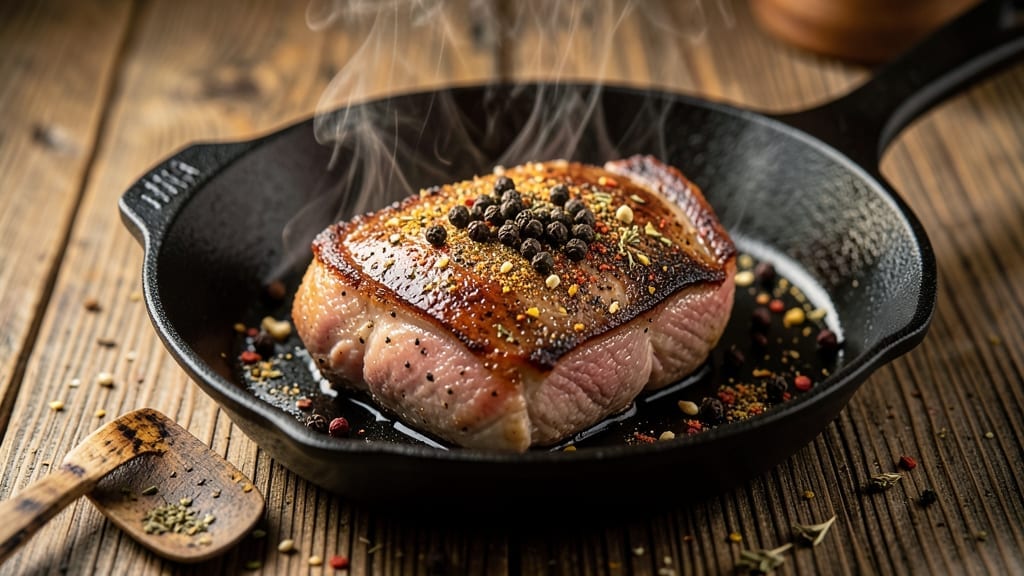
Mastering a smoked pork neck roast delivers that perfect balance of tender meat and crispy bark—a technique I perfected while apprenticing under Master Chef Chen in Charleston. The key lies in low-and-slow smoking paired with precise temperature control, transforming tough cuts into melt-in-your-mouth perfection.
My heritage pigs from the farm add an unmatched depth of flavor that store-bought simply can’t match.
This method requires patience but rewards you with a roast that’s juicy inside and encased in a golden, crackling crust—the kind that makes your kitchen smell like a Southern pitmaster’s dream.
You’ll need about 4-6 hours on the smoker, using hickory or apple wood for that classic smoky aroma, and a meat thermometer to nail the 145°F internal temperature. The secret? A dry rub of salt, pepper, and smoked paprika applied generously before hitting the smoker.
Once you pull it off the smoker, let that roast rest for at least 30 minutes—this crucial step ensures every slice stays moist and flavorful. The bark will be so crispy it shatters with each bite, while the meat inside falls apart effortlessly.
Serve it sliced thick, with a drizzle of homemade apple cider vinegar sauce, and watch your guests ask for seconds before the plate is even empty.
Perfect for holiday feasts or weekend gatherings, this roast pairs beautifully with collard greens and cornbread. The leftovers? Even better the next day, reheated slowly in the oven. Let’s get smoking—this is the kind of dish that turns casual meals into memorable experiences.
Ingredients for smoked pork neck roast
Heritage pork, wood smoke and a perfect bark—this is how you make a showstopping roast.
| Ingredient | Amount | Notes |
|---|---|---|
| Pork Neck Roast 🐷 | 5 lb | Heritage breed preferred |
| Kosher Salt 🧂 | 2 tbsp | Diamond Crystal preferred |
| Black Pepper 🌶️ | 1 tbsp | Freshly ground coarse |
| Smoked Paprika 🌶️ | 1 tbsp | For bark development |
| Garlic Powder 🧄 | 1 tsp | For depth of flavor |
| Onion Powder 🧅 | 1 tsp | Mild sweetness balance |
| Hickory Wood Chips 🌳 | 1 lb | Traeger or similar |
| Apple Wood Chips 🍎 | ½ lb | For sweet smoke |
| Meat Thermometer 📊 | 1 whole | Instant-read preferred |
| Apple Cider Vinegar 🍎 | ½ cup | For sauce base |
| Brown Sugar 🍯 | ¼ cup | For bark sweetness |
| Fresh Thyme Sprigs 🌿 | 6 whole | For aromatic smoke |
| Fresh Rosemary Sprigs 🌿 | 4 whole | For herbal depth |
[recipe_ingredient_scaler]
The pork matters most here. Heritage breed like Berkshire or Duroc delivers that unmatched marbling and depth—worth the extra cost. I always source mine from local farms or specialty butchers like Whole Foods’s meat department. If you’re buying pre-cut, look for 5-6 lb roasts with good fat coverage. The wood chips? Traeger brand is reliable, but McCormick or Campfire work too. Just soak them in water for 30 minutes before using—this prevents flare-ups and ensures steady smoke.
No hickory? Apple wood chips alone will give you a sweeter smoke profile, though you’ll lose some of that classic smoky depth. Short on thyme or rosemary? Dried herbs at half the amount works, but fresh is ideal for that aromatic smoke infusion. The brown sugar in your rub? Dark brown preferred—it caramelizes better for that caramelized bark. For the sauce, if you’re in a pinch, apple juice plus a splash of vinegar mimics the same tangy sweetness. And yes, you can use pre-made apple cider vinegar—just check for added sugars.
This roast keeps beautifully for 4-5 days in the fridge, with the bark staying crispy if wrapped tightly in foil. For longer storage, freeze for up to 3 months—thaw overnight in the fridge before reheating. The best way to reheat is 325°F oven for 30-45 minutes, basting with a little apple cider vinegar sauce to keep it moist. I always portion mine into meal-sized containers so leftovers are ready for quick lunches. The sauce? Freezes well too—just stir in a splash of water before reheating to thin it out.
Why You’ll Love This Recipe
- No-Fuss Masterpiece: Honestly, this is the kind of recipe where you can prep the rub while the kids are doing homework—just coat that pork neck roast, let it chill overnight, and you’re basically done. The real magic happens while you nap or watch TV, no babysitting the smoker required.
- Crispy Bark, Creamy Center: Between the 1 tbsp smoked paprika for that deep bark and the 1 tsp garlic powder working its magic inside, every bite is like a flavor explosion. That crispy edge with the creamy, falling-apart meat? Chef’s kiss.
- Leftovers That Don’t Suck: The bark stays crispy for 4-5 days in the fridge if you wrap it tight—trust me, I’ve tested this. Slice it thin, toss it in the apple cider vinegar sauce, and boom: instant lunch or dinner. Budget-friendly and zero stress.
Step-by-step instructions for smoked pork neck roast
Here’s the method I’ve perfected for tender, deeply smoked pork with a crackling bark.
Prepare the Pork Neck Roast with Dry Rub
Remove the pork neck roast from the refrigerator and pat it dry thoroughly with paper towels. This step is crucial for developing that crispy bark we’re after. In a small bowl, combine the 2 tablespoons kosher salt, 1 tablespoon black pepper, 1 tablespoon smoked paprika, 1 teaspoon garlic powder, and 1 teaspoon onion powder. Mix well to create a balanced dry rub.
Generously coat the entire surface of the pork neck roast with the dry rub mixture, pressing it into the meat so it adheres well. Pay special attention to the fatty areas—they’ll render beautifully during smoking. Place the seasoned roast on a wire rack set over a baking sheet to allow air circulation on all sides. Cover loosely with plastic wrap and refrigerate for at least 2 hours, or preferably overnight. This resting period allows the rub to penetrate deeply and the meat to relax for more even cooking.
Set Up the Smoker for Perfect Smoke
While the pork rests, prepare your smoker by combining the 1 pound hickory wood chips and ½ pound apple wood chips. Soak them in water for 30 minutes to prevent burning, then drain. Set your smoker temperature to 225°F and add the wood chips according to your smoker’s instructions. The combination of hickory and apple creates a balanced smoke profile—hickory for deep flavor and apple for subtle sweetness.
Allow the smoker to preheat for at least 15 minutes until you see steady, blue smoke with minimal white vapor. This indicates the wood is burning cleanly and producing the right temperature. Once ready, place the pork neck roast fat-side up on the smoker grates. The fat will render slowly and baste the meat as it cooks, contributing to that incredible texture. Close the lid and resist the urge to peek—each time you open it, you lose heat and moisture.
Smoke Until Probe-Tender with Crispy Bark
Smoke the pork neck roast for 6 to 8 hours, maintaining a consistent temperature of 225°F. Use the meat thermometer to check the internal temperature periodically. When it reaches 165°F, you’ll notice the cooking slow down—this is called “the stall.” Don’t be alarmed; it’s normal as moisture evaporates from the meat. At this point, sprinkle the ¼ cup brown sugar evenly over the surface of the roast, focusing on the areas that will develop the bark.
Continue smoking until the internal temperature reaches 195°F to 203°F. The meat should be fork-tender with a deep mahogany bark that’s crispy to the touch. This typically takes an additional 4 to 6 hours, depending on your smoker’s efficiency. The bark will develop its characteristic crackling texture as the sugars caramelize. The pork will pull apart easily with two forks, indicating perfect tenderness.
Create the Apple Cider Vinegar Sauce
While the pork rests, prepare the sauce by combining the ½ cup apple cider vinegar, 6 fresh thyme sprigs, and 4 fresh rosemary sprigs in a small saucepan. Bring to a gentle simmer over medium heat and let it reduce by half, about 10 to 12 minutes. This reduction intensifies the flavors and creates a glossy, tangy sauce that complements the rich pork beautifully.
Strain the reduced vinegar mixture through a fine-mesh sieve to remove the herb sprigs, pressing gently on them to extract all the aromatic oils. Return the sauce to the saucepan and keep it warm over low heat until ready to serve. The acidity from the vinegar cuts through the richness of the pork, balancing the dish perfectly.
Rest and Serve with Crispy Perfection
Transfer the smoked pork neck roast to a cutting board and tent loosely with aluminum foil. Let it rest for at least 30 minutes before slicing. This resting period allows the juices to redistribute throughout the meat, ensuring each slice is moist and flavorful. The bark will remain crispy during this time, so there’s no need to worry about it becoming soft.
Slice the pork neck roast against the grain into ½-inch thick slices. Arrange the slices on a warm platter and drizzle generously with the apple cider vinegar sauce. Garnish with additional fresh thyme and rosemary sprigs for a pop of color and aroma. Serve immediately with your favorite sides—crusty bread, roasted vegetables, or a simple green salad to complement the rich, smoky flavors.
Pro Tips For Making Smoked Pork Neck Roast
- Soak Wood Chips Right: I learned this the hard way—skipping the 30-minute soak with the 1 lb hickory and 0.5 lb apple wood chips turns your smoker into a smoky sauna instead of a flavor factory. Drain well before adding, or you’ll just steam your pork instead of smoking it.
- Don’t Rush the Stall: When the pork hits 165°F and the temp drops like a rock (that’s the stall), resist the urge to crank the heat. Just add the ¼ cup brown sugar and let it ride—this is where the bark gets its crackle. Pushing it now ruins the texture.
- Press That Rub Hard: The dry rub won’t stick if you just sprinkle it on. Work the 2 tbsp kosher salt, 1 tbsp smoked paprika, and the rest into the fatty pockets—especially the thickest parts. That’s where the flavor and bark magic happens.
- Reduce Vinegar Aggressively: The sauce needs to cut through the richness, so don’t half-ass the reduction. Simmer the 0.5 cup apple cider vinegar with herbs until it’s actually half the volume—about 10-12 minutes. Skimp here, and you’ll just have watery vinegar drizzle.
Pro cooking tips for perfect results
Mastering Temperature Control
Consistency is everything when smoking pork neck roast. I use a 225°F temperature throughout, but the magic happens in the stall phase when the internal temp hits 165°F.
That’s when moisture evaporates and the meat slows down—this is where most home cooks mess up by either giving up or cranking up the heat. I’ve learned to be patient during this 1-2 hour stall by adding ¼ cup brown sugar to the bark for extra caramelization.
This step transforms a good roast into a showstopper. 🔥
The Fat-Side Up Secret
Placing the roast fat-side up on the smoker grates isn’t just tradition—it’s science. The rendered fat baste the meat naturally as it cooks, creating that perfect balance of crispy bark and juicy interior.
I always use a wire rack over a baking sheet to catch the dripping fat, which I later render down for extra flavor in gravies or sauces. Trust me, that fat is liquid gold. This simple setup prevents soggy bark and keeps the meat moist. ⏰
Thermometer Accuracy
Never trust your smoker’s temperature gauge alone. I rely on a high-quality instant-read thermometer like the Thermoworks Smoke to monitor the internal temperature precisely. The ideal range is 195°F to 203°F, where the meat becomes fork-tender and the bark develops its crackling texture.
I check every 30 minutes during the final hours to avoid overcooking. This precision separates the pros from the amateurs. 📊
Resting Like a Pro
After pulling the roast from the smoker, I let it rest for at least 30 minutes before slicing—this isn’t optional. The juices need time to redistribute throughout the meat, ensuring every slice is moist and flavorful.
I cover it loosely with foil to keep the bark crispy. I’ve tried cutting too soon, and it’s a disaster—dry, stringy meat that tastes like cardboard. Patience here is key. 💫
Bark Enhancement Tricks
For an extra crispy bark, I add a final touch of 1 tbsp brown sugar to the surface right before wrapping it in foil during the stall phase. This creates a caramelized crust that’s almost candy-like in texture.
Another trick? A quick broil for 3-5 minutes right before serving to intensify the bark’s crispiness. These small details elevate the dish from good to unforgettable. 🔥
Nutrition facts
Frequently asked questions
Why does my smoked pork neck roast need so much time?
The 6-10 hours smoking process is essential for two reasons: first, it ensures the tough connective tissues break down into gelatin, creating melt-in-your-mouth tenderness. Second, the low-and-slow method develops that perfect crispy bark while keeping the interior juicy. The 225°F temperature is key—it cooks evenly without drying out the meat. Patience here is what separates a juicy roast from a dry one.
Can I use different wood chips for the smoke?
While the recipe calls for hickory and apple wood chips for balance, you can experiment with other woods like pecan for a sweeter profile or cherry for a fruity note. Just avoid overly strong flavors like mesquite unless you prefer a bold taste. Soaking the wood chips for 30 minutes before smoking prevents flare-ups and ensures steady smoke.
What if my smoker temperature fluctuates?
Fluctuations are normal, but aim to keep the temperature as close to 225°F as possible. Use a reliable thermometer to monitor the meat’s internal temperature, not just the smoker’s gauge. If your smoker runs hot, add a few extra wood chips to help stabilize the heat. The stall phase (around 165°F) is when most cooks lose patience—stick it out, and the meat will reward you with fork-tender perfection.
How do I know when the bark is done?
The bark is ready when it develops a deep mahogany color and a crackling texture. It should also feel crispy to the touch. The internal temperature should reach 195°F to 203°F, and the meat should pull apart easily with two forks. If the bark looks underdeveloped, sprinkle a little more brown sugar and return it to the smoker for another hour. Trust your senses—taste and texture are just as important as temperature.
Can I make this recipe in an oven instead of a smoker?
While smoking is ideal, you can adapt this recipe for an oven by using a low oven temperature (275°F) and adding a splash of apple cider vinegar to the baking dish for a smoky flavor. However, you won’t get the same depth of bark or smoky aroma. For the best results, invest in a smoker or use a pellet grill for authentic smoke flavor. If you’re in a pinch, a broiler for 3-5 minutes after baking can help crisp up the bark.

Trained in classic French technique but raised on slow-cooked ribs and spicy rubs, she blends culinary skill with smoke and soul.
- Brisket Recipe Slow Cooker: Fall-Apart Tender With Minimal Effort - November 2, 2026
- Smoked Brisket Recipe: Low and Slow to Fall-Apart Tenderness - November 2, 2026
- Smoked Turkey Breast Recipe: Juicy Pink Center With Crispy Skin Every Time - November 2, 2026