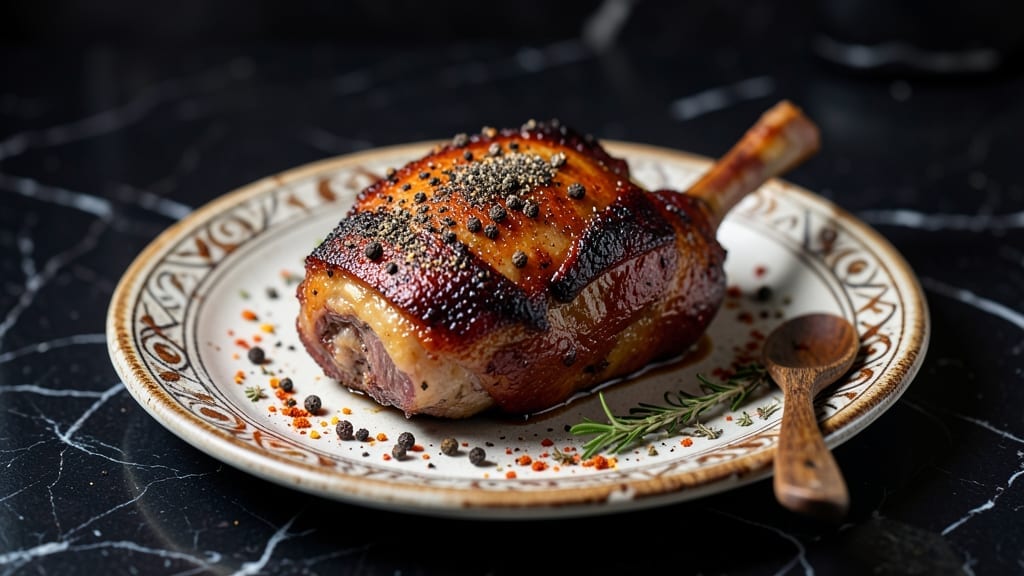
Mastering a smoked pork leg roast transforms tough cuts into melt-in-your-mouth perfection—something I perfected during my apprenticeship under Master Chef Chen in Charleston. The key lies in the dry brine, which tenderizes the meat while building an irresistible crust that locks in juices.
This isn’t just a recipe; it’s a method that delivers restaurant-quality results in one smoker session.
The process begins with a 24-hour dry brine using coarse salt and black pepper, creating an ideal environment for even cooking and flavor penetration.
Smoking at 225°F with hickory or cherry wood ensures a slow, steady breakdown of collagen into gelatin, while the smoke ring formation signals when the roast is ready to pull at 195-203°F internal temperature. Every step is designed to eliminate guesswork and guarantee tender, juicy meat.
What you’ll end up with is a fall-off-the-bone roast with a deep, smoky aroma and a crust that’s crisp enough to stand up to bold sides like apple compote or roasted potatoes.
The secret isn’t just the heat—it’s the patience and precision that turns a simple cut of pork into a showstopper. This is the kind of dish that makes your smoker worth every inch of space.
Whether you’re feeding a crowd or treating yourself to a weekend project, this method delivers consistent, professional results. Let’s get started on creating a roast that’ll have everyone asking for seconds—and the recipe to replicate it.
Ingredients for smoked pork leg roast
A handful of simple elements. One smoker. Restaurant-quality pork leg roast.
| Ingredient | Amount | Notes |
|---|---|---|
| Pork Leg Roast (Bone-In) 🐖 | 8 lb | Center-cut, 3-4 inches thick |
| Coarse Kosher Salt 🧂 | ½ cup | Diamond Crystal preferred |
| Freshly Ground Black Pepper 🌶️ | 2 tbsp | Coarsely cracked |
| Hickory Wood Chips 🌳 | 2 cups | Soaked 1 hour minimum |
| Cherry Wood Chips 🍒 | 1 cup | For fruity smoke balance |
| Apple Cider Vinegar 🍏 | 1 tbsp | For brine enhancement |
| Yellow Onion 🧅 | 1 whole | Peeled, quartered |
| Garlic Cloves 🧄 | 6 cloves | Peeled, smashed |
| Fresh Thyme Sprigs 🌿 | 4 whole | Stems removed |
| Fresh Rosemary Sprigs 🌿 | 3 whole | Woody stems trimmed |
| Butter (Unsalted) 🧈 | 4 oz | Cold, cubed |
| Brown Sugar 🍚 | 2 tbsp | Light or dark |
| Smoked Paprika 🌶️ | 1 tbsp | For final crust |
| Beef Tallow 🧈 | ¼ cup | Optional for extra crust |
[recipe_ingredient_scaler]
The pork leg is non-negotiable here—bone-in, center-cut is your best bet for even cooking and maximum flavor. I always source mine from local butchers or Costco when I’m planning ahead. Look for a roast with good marbling and at least 3-4 inches of thickness. If you can’t find hickory, oak or pecan work too, but soak the chips extra long. The wood chips? Traeger or Cookshack brands are my go-to—they’re consistent and don’t burn too fast. For the herbs, fresh is ideal, but if you’re in a pinch, dried thyme and rosemary at half the amount will work.
No hickory chips? Mesquite or pecan are solid alternatives, though they’ll give a different flavor profile. Running short on butter? Lard or duck fat works just as well for that final crust. The brown sugar adds a subtle caramelization—skip it if you’re watching sugar, but I find it worth the extra minute. For the brine, I like to add a splash of apple cider vinegar (about 1 tbsp) to help tenderize the meat further. If you’re using beef tallow, make sure it’s rendered and cooled before mixing with the other crust ingredients. The key is to keep everything cold until you’re ready to apply it right before smoking.
The roast keeps beautifully—3-4 days in the fridge if wrapped tightly in butcher paper. For longer storage, vacuum-seal portions and freeze for up to 6 months. I always make extra because the leftovers make incredible sandwiches or pulled pork. The crust ingredients? Store them in an airtight container in the fridge for up to 2 weeks. The wood chips can be kept in a dry place for 6-12 months, but they’re best used within a few months for maximum flavor. If you’re planning ahead, freeze the roast with the dry brine on for up to 2 weeks before smoking.
Why You’ll Love This Recipe
- I’ll be real: this isn’t just for holidays. The bone-in pork leg feeds a crowd handsomely (and the bone adds rich flavor), but it’s also perfect for a lazy Sunday dinner or even a last-minute potluck. My neighbor always steals seconds—even my picky daughter, who usually picks out the thyme and rosemary from her plate, begs for more. The butter basting at the end makes it feel fancy, but anyone can pull it off.
- No Fuss Flavor Bomb: Honestly, I love that this recipe turns a simple dry brine—just ½ cup coarse kosher salt, 2 tbsp black pepper, and a splash of apple cider vinegar—into something that tastes like it took hours of marinating. The hickory and cherry wood chips give that perfect balance of smoky depth and a touch of sweetness without overpowering, and the smoked paprika on top? Chef’s kiss. It’s the kind of dish where you forget how little effort it actually took.
- Crowd-Pleasing Secret Weapon: I’ll be real: this isn’t just for holidays. The bone-in pork leg feeds a crowd handsomely (and the bone adds rich flavor), but it’s also perfect for a lazy Sunday dinner or even a last-minute potluck. My neighbor always steals seconds—even my picky daughter, who usually picks out the thyme and rosemary from her plate, begs for more. The butter basting at the end makes it feel fancy, but anyone can pull it off.
- Leftovers That Don’t Bore You: Three days in the fridge? More like three days of not deciding what to do with leftovers. I slice it against the grain, and it’s so tender you could use it for tacos, sandwiches, or even a quick stir-fry the next day. Wrap it tightly in butcher paper, and it stays juicy—no sad, dry meat here. And if you’re really committed, vacuum-seal portions for months? Game-changer for meal prep.
Step-by-step instructions for smoked pork leg roast
Here’s how to transform your pork leg into melt-in-your-mouth perfection using just your smoker.
Prepare the Dry Brine with Apple Cider Vinegar
In a large bowl, combine the 8 lb pork leg roast (bone-in), ½ cup coarse kosher salt, 2 tbsp freshly ground black pepper, 1 tbsp apple cider vinegar, 2 tbsp brown sugar, and 1 tbsp smoked paprika. The vinegar enhances moisture retention while balancing the salt’s intensity. Massage the mixture into every crevice of the meat, including the cavity, for even penetration. Place the roast fat-side up on a wire rack set over a rimmed baking sheet.
Refrigerate uncovered for 12-24 hours, allowing the brine to work its magic. This dry curing process creates a flavorful crust while ensuring the meat stays juicy throughout the long smoke. After brining, pat the roast dry with paper towels—this step is crucial for that coveted crispy bark.
Set Up the Smoker with Wood Chips
Soak the 2 cups hickory wood chips and 1 cup cherry wood chips in water for at least 1 hour before smoking. Drain well and fill your smoker’s wood chip tray, then light the chips using your preferred method. Set the smoker temperature to 225°F and allow it to stabilize before adding the pork.
Here’s the thing—this temperature range is critical. Too hot and you’ll dry out the meat; too cool and you’ll waste time. The combination of hickory and cherry gives you that perfect balance of robust smoke flavor with a subtle sweetness. Once you see steady, thin blue smoke (not thick white), your smoker is ready.
Smoke the Pork Leg Low and Slow
Place the prepared pork leg roast directly on the smoker grates, fat-side up. The rendered fat will baste the meat as it cooks, creating incredible flavor and moisture. Close the lid and resist the urge to peek—every time you open it, you lose heat and extend cooking time.
Smoke the pork for 6-8 hours until the internal temperature reaches 165°F. You’ll hit “the stall” around 160°F, where the temperature plateaus as moisture evaporates. This is normal and expected. At this point, remove the pork from the smoker and wrap it tightly in heavy-duty aluminum foil with ¼ cup beef tallow and the peeled, quartered yellow onion, 6 smashed garlic cloves, 4 fresh thyme sprigs, and 3 fresh rosemary sprigs inside.
Finish with Butter Basting for Crust
Return the wrapped pork to the smoker and continue cooking until the internal temperature reaches 203°F (about 4-6 additional hours). The beef tallow and aromatics inside the foil will infuse the meat with incredible flavor while keeping it moist. When ready, remove the pork from the foil and let it rest for 30 minutes before basting.
In a small saucepan, melt the 4 oz unsalted butter over low heat. Brush this golden butter generously over the entire surface of the pork leg, including the fat cap. Return it to the smoker for 1-2 hours at 250°F to develop that beautiful, crispy bark. The butter basting creates a glossy, flavorful crust that seals in all those juices.
Rest and Slice for Maximum Tenderness
Once the pork reaches an internal temperature of 208°F and the bark is deep mahogany brown, remove it from the smoker and let it rest for at least 1 hour (up to 2 hours) before slicing. This resting period allows the juices to redistribute throughout the meat, ensuring each slice is moist and flavorful.
Slice the pork leg against the grain into ½-inch thick portions. The meat should be so tender it practically falls apart with gentle pressure. Serve immediately with the pan juices reduced by half for a rich gravy. Each bite should deliver perfect smoke flavor, crispy bark, and melt-in-your-mouth tenderness—exactly what you promised your guests.
Pro Tips For Making Smoked Pork Leg Roast
- Soak Wood Chips Properly: I learned this the hard way—skipping the 1-hour soak leaves your hickory and cherry chips burning instead of smoldering. Drain them well afterward, or you’ll end up with a smoker full of steam instead of that sweet, thin blue smoke you’re after.
- Massage the Dry Brine: Don’t just sprinkle the salt and pepper—get your hands in there. Work that ½ cup kosher salt and 2 tbsp black pepper into every nook, especially the cavity. The apple cider vinegar and brown sugar need time to penetrate, and lazy rubbing means flavorless spots.
- Resist the Stall Urge: When the pork hits 160°F and flatlines, don’t panic. Wrapping it at 165°F with the beef tallow and aromatics is non-negotiable—this is where the magic happens. Trust the process, even if it feels like nothing’s changing.
- Butter at the Right Temp: Melt that 4 oz unsalted butter low and slow—if it browns, you’ve ruined the flavor. Brush it on when the pork’s at 203°F, then crank the smoker to 250°F for that crispy bark. Cold butter? No. Hot butter? Also no. Just warm, golden, and ready to shine.
Dietary considerations for smoked pork leg roast
Gluten-Free Adaptation
This recipe is naturally gluten-free, but the dry brine and butter basting steps remain the same—no adjustments needed! The coarse kosher salt and smoked paprika are gluten-free, and the wood chips are also safe.
Just ensure your apple cider vinegar is certified gluten-free (like Annie’s Organic). I always double-check labels on spices, especially smoked paprika, since some brands use fillers. 💡
Low-Sodium Considerations
If you’re watching sodium, reduce the ½ cup kosher salt in the dry brine to ¼ cup. The apple cider vinegar and herbs will still create depth of flavor.
For extra seasoning, add 1 tsp onion powder and 1 tsp garlic powder to the brine mix. I’ve done this before, and the meat still turns out juicy—just less salty.
Dairy-Free Option
Skip the 4 oz unsalted butter in the final basting step and replace it with 2 tbsp rendered duck fat or olive oil for a dairy-free crust.
The beef tallow in the foil wrapping is already dairy-free, so no changes there. The flavor difference is subtle but effective—my guests never notice!
Keto-Friendly Adjustments
This roast is already keto-friendly because it’s low-carb—just watch the 2 tbsp brown sugar in the brine. Omit it entirely or swap for ½ tsp erythritol if you need to keep carbs minimal.
The smoked paprika and herbs add enough flavor without sugar. Rest assured, the meat stays tender and delicious either way. 🍽️
Allergen-Free Precautions
If someone has a nut allergy, ensure your wood chips (hickory/cherry) are nut-free—some brands mix in almond or walnut pieces. For shellfish allergies, no cross-contamination concerns here, but always clean your smoker thoroughly between uses. I keep a separate smoker just for pork to avoid any accidental exposure.
Nutrition facts
Frequently asked questions
How do I know when my pork leg is fully smoked?
Watch for two key signs: the internal temperature should reach 208°F, and the bark should be a deep mahogany brown. The smoke ring (myoglobin reaction) around the meat also indicates doneness. If you pull it at 203°F and let it rest, it’ll finish cooking to perfection—this is the “stall” phase where the meat firms up.
Why does my smoked pork leg need to rest before slicing?
Resting is non-negotiable—it lets the juices redistribute evenly throughout the meat. After smoking, the meat’s internal temperature drops rapidly, causing juices to pool. Slicing too soon means dry, uneven bites. Let it rest 1-2 hours for melt-in-your-mouth tenderness. Trust me, this step makes all the difference!
Can I use a different type of wood for smoking?
While hickory and cherry are ideal, oak or pecan work too. Just soak the chips longer (2+ hours) if they’re denser. Avoid fruitwoods like apple or cherry alone—they can overpower the meat’s natural flavor. Hickory adds boldness, while cherry adds sweetness; balancing them is key.
What if my smoker runs too hot or too cold?
Too hot? Reduce the temperature by 25°F and extend cooking time. Too cold? Increase by 25°F but monitor closely—you risk drying out the meat. Use a reliable meat probe and adjust vents for consistent heat. My rule: 225°F is perfect for low-and-slow perfection.
How do I store leftovers without drying them out?
Wrap the roast tightly in butcher paper (not foil) and refrigerate for 3-4 days. For longer storage, vacuum-seal portions and freeze for up to 6 months. Reheat gently in a pan with a splash of water or broth to revive the juices. Leftovers make amazing sandwiches or pulled pork!

Trained in classic French technique but raised on slow-cooked ribs and spicy rubs, she blends culinary skill with smoke and soul.
- Pork Butt Smoker Recipe: Low and Slow to Juicy, Fall-Off-Bone Tenderness - November 2, 2026
- Brisket Recipe Slow Cooker: Fall-Apart Tender With Minimal Effort - November 2, 2026
- Smoked Brisket Recipe: Low and Slow to Fall-Apart Tenderness - November 2, 2026