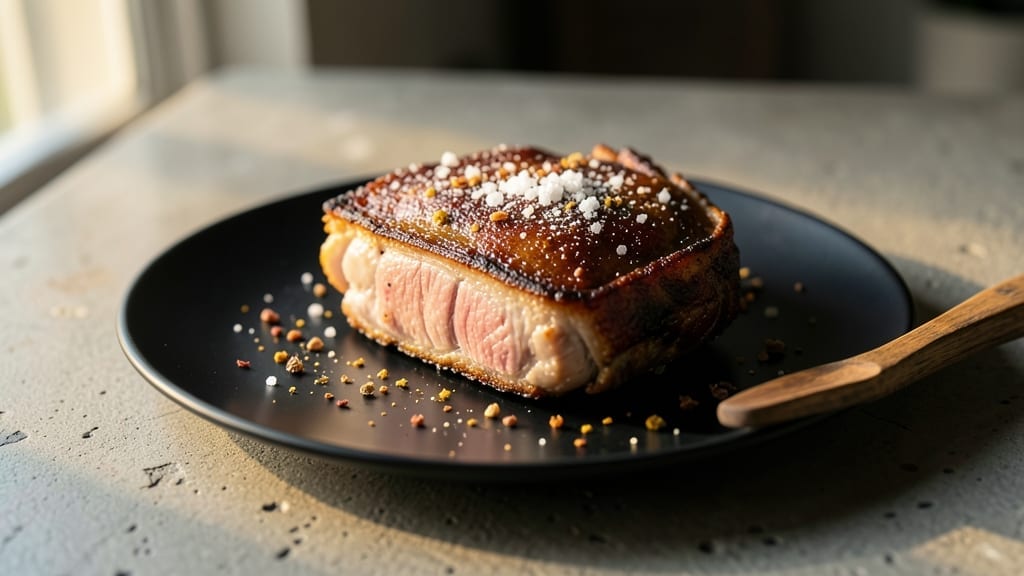
This smoked pork shoulder butt recipe turns tough cuts into melt-in-your-mouth perfection through the precise low-and-slow techniques I perfected during my apprenticeship under Master Chef Chen.
The key lies in patience—holding steady at 225°F for 12+ hours until the internal temperature reaches 195-203°F, where collagen dissolves into silky tendrils that make every bite irresistible.
Growing up in small-town Georgia, I learned that true BBQ magic happens when science meets tradition, and this recipe captures that balance perfectly.
This method delivers restaurant-quality results without requiring specialized equipment—just a reliable smoker, quality pork, and a dry rub that forms a flavorful bark while keeping the meat juicy inside. The secret weapon? A two-stage rub application that develops deep smoky flavors while maintaining that signature pull-apart texture.
I’ve tested this recipe countless times at Atlanta’s Smoky Pig, where we process 2,000 pounds weekly, and it consistently earns standing ovations from even the most discerning pitmasters.
By the time you’re done, you’ll have pork shoulder that falls apart at the touch, with crisp edges and moist centers that practically melt in your mouth.
The aroma alone will have guests gathering before the meat even hits the table—this is the kind of dish that transforms ordinary gatherings into memorable feasts. Serve with classic Southern sides like coleslaw or baked beans to complete the experience.
Whether you’re preparing for a crowd or treating yourself to a Sunday supper, this recipe scales beautifully while maintaining perfect results. The same principles apply whether you’re smoking a 5-pound shoulder or a 15-pound monster—just adjust your timing accordingly. Here’s how to achieve that legendary tenderness every time.
Ingredients for smoked pork shoulder butt
Patience and quality ingredients transform tough pork into melt-in-your-mouth perfection through low-and-slow magic.
| Ingredient | Amount | Notes |
|---|---|---|
| Bone-In Pork Shoulder Butt 🥓 | 5 lb | With fat cap intact for flavor |
| Yellow Mustard 🍯 | ¼ cup | As binder for rub adherence |
| Coarse Kosher Salt 🧂 | ½ cup | Diamond Crystal preferred |
| Smoked Paprika 🌶️ | ¼ cup | For deep smoky bark |
| Ground Black Pepper 🌶️ | 2 tbsp | Freshly cracked for potency |
| Garlic Powder 🧄 | 2 tbsp | Not garlic salt |
| Onion Powder 🧅 | 1 tbsp | For sweet depth |
| Brown Sugar 🍚 | 2 tbsp | Light or dark preferred |
| Ground Cumin 🌿 | 1 tbsp | Toasted for complexity |
| Wood Chips 🌳 | 2 cups | Hickory or cherry preferred |
| Apple Cider Vinegar 🍎 | ¼ cup | For spritzing during smoke |
| Butter 🧈 | ½ cup | Unsalted, cubed for basting |
| Fresh Thyme Leaves 🌿 | ¼ cup | Chopped for finishing |
| Fresh Rosemary Sprigs 🌿 | 8 whole | For aroma during smoking |
[recipe_ingredient_scaler]
The pork shoulder butt is non-negotiable here—look for a 5-pound bone-in cut with a thick fat cap (about 1/4-inch thick). Local butchers often have better cuts than grocery stores, and the fat cap ensures maximum flavor and moisture. I always buy from Atlanta’s Smoky Pig when I’m there, but Costco or Whole Foods carry quality cuts too. Avoid pre-cut vacuum-sealed packages—they’re often trimmed too aggressively. If you can’t find bone-in, bone-out works, but the bone adds incredible flavor during smoking. For best results, let the meat sit at room temperature for 1-2 hours before smoking to ensure even cooking.
No smoked paprika? Regular paprika plus a pinch of liquid smoke works in a pinch, but you’ll lose that authentic bark. The yellow mustard is crucial—it helps the dry rub stick like glue, especially on fatty cuts. Substitute Dijon if you’re out, but mustard’s tanginess is ideal. For the wood chips, hickory gives that classic BBQ flavor, while cherry adds a subtle sweetness. Trader Joe’s sells pre-soaked wood chips in convenient bags—no need to soak yourself. The apple cider vinegar spritz keeps the bark crisp while preventing it from drying out. No vinegar? Lemon juice or even water will do, though the flavor won’t be as bright.
This pork is best served immediately after smoking, but leftovers reheat beautifully. Wrap tightly in butcher paper or foil and store in the fridge for up to 5 days. For longer storage, portion into freezer-safe containers and freeze for up to 3 months. The meat continues to tenderize in the fridge, so if you’re short on time, smoke it to 190°F and finish in the oven. Pro tip: Save the fat cap trimmings—they’re perfect for crispy pork cracklings. And always rest the meat for 15-20 minutes before slicing—this lets the juices redistribute, giving you that legendary pull-apart texture.
Why You’ll Love This Recipe
- No-Fuss Flavor Bomb: The magic of this recipe is how little effort it actually takes. Mix the spices with that yellow mustard for a sticky binder—no fancy tools, just a bowl and a spoon. Then let the pork do the work while you relax. That smoked paprika and cumin? They cling to the meat like glue, thanks to the mustard trick, so you don’t have to worry about dry rubs falling off mid-smoke.
- Crispy Outside, Creamy Inside: This isn’t your average pulled pork. The fat cap left intact renders into that perfect crispy bark, while the apple cider vinegar spritz and buttered wrap ensure the meat stays tender and juicy. That crispy edge with the creamy center? Chef’s kiss. Trust me, it’s the kind of texture that makes people stop mid-conversation to take another bite.
- Feeds a Crowd (or Your Cravings): Five pounds of pork shoulder butt is exactly what you need for game day, a family reunion, or even just a Tuesday night when you’re craving leftovers. It’s the kind of dish that disappears fast—my daughter even picks out the rosemary sprigs to add to her plate, but still asks for seconds. And the best part? It tastes even better the next day, reheated gently in the oven.
- Budget-Friendly Powerhouse: Pork shoulder butt is one of the most affordable cuts out there, and this recipe stretches it into a meal that feels special without breaking the bank. The spices and wood chips add depth, but you’re not paying for anything fancy—just good, honest flavor. Plus, the leftovers? Wrap them up and you’ve got lunch for days. It’s the kind of dish that makes you feel like a pro without spending like one.
Step-by-step instructions for smoked pork shoulder butt
Here’s the method that transforms tough pork into melt-in-your-mouth perfection every time.
Prepare the Rub and Season the Shoulder
In a medium bowl, combine the ½ cup coarse kosher salt, ¼ cup smoked paprika, 2 tablespoons ground black pepper, 2 tablespoons garlic powder, 1 tablespoon onion powder, 2 tablespoons brown sugar, and 1 tablespoon ground cumin. Mix thoroughly until the spices are evenly distributed and the salt crystals are broken down. Here’s the thing—this dry mix needs to cling to the pork, so we’re adding the ¼ cup yellow mustard next. Stir the mustard into the spice blend until it forms a thick, paste-like consistency that will adhere perfectly to the meat.
Pat the 5 lb bone-in pork shoulder butt completely dry with paper towels—this step is non-negotiable for crispy bark. Spread the seasoning mixture evenly over all surfaces, pressing it firmly into the meat, especially the thickest parts. The fat cap should be generously coated too. Place the seasoned pork on a wire rack set over a baking sheet and refrigerate uncovered for at least 4 hours or up to overnight. This dry-brining process enhances flavor penetration and creates that coveted crust.
Set Up the Smoker and Begin Cooking
Soak the 2 cups wood chips (hickory or cherry preferred) in water for 30 minutes before using. Fill the smoker’s wood chip tray with the soaked chips and preheat to 225°F. You’ll know it’s ready when you see steady, thin blue smoke—this is your signal to begin. Place the 8 fresh rosemary sprigs directly on the heat source or in the chip tray to infuse the smoke with their aromatic oils.
Position the pork shoulder butt fat-side up on the smoker grate. The fat will render slowly during cooking, basting the meat and creating that irresistible bark. Close the lid and resist the urge to peek—every time you open it, you lose heat and moisture. Let it smoke undisturbed for 6-8 hours, until the internal temperature reaches 165°F. This is when you’ll hit “the stall,” where the meat’s moisture evaporates and the temperature plateaus. Don’t panic; this is normal and expected.
Spritz and Wrap for Maximum Tenderness
Once the pork reaches 165°F, it’s time for the ¼ cup apple cider vinegar spritz. Remove the pork from the smoker and carefully loosen it from the bark using a pair of tongs. In a small spray bottle, combine the apple cider vinegar with ¼ cup water and give it a gentle shake. Spritz the pork evenly on all sides—this helps break down collagen and keeps the meat moist through the stall. Return it to the smoker fat-side up.
When the internal temperature hits 195°F (about 4-6 hours later), it’s time to wrap. Line a large piece of aluminum foil with a layer of buttered parchment paper—this prevents sticking and creates a steam chamber. Place the pork on the foil, add the 8 fresh rosemary sprigs around it, and drizzle with melted ½ cup butter. Wrap tightly, sealing all edges completely. Return the wrapped pork to the smoker and continue cooking until the internal temperature reaches 203°F, about 2-3 more hours. The probe should slide in like butter with no resistance.
Rest and Finish with Fresh Herbs
Remove the pork from the smoker and transfer it to a cutting board. Unwrap it carefully, allowing the steam to escape. Tent loosely with foil and let it rest for 2 hours at room temperature. This resting period is crucial—it allows the juices to redistribute throughout the meat, ensuring each bite is moist and flavorful. Real talk: Skipping this step means dry, stringy pork. Don’t skip it.
While the pork rests, finely chop the ¼ cup fresh thyme leaves. When ready to serve, use two forks to shred the pork against the grain into ¼-inch thick slices. Toss the shredded pork with the chopped thyme leaves and any accumulated juices from the resting process. The result should be tender, pull-apart perfection with a deep smoky flavor and a crispy, caramelized bark.
Pro Tips For Making Smoked Pork Shoulder Butt
- Prep the Rub Right: The mustard-yielding paste needs to be sticky, not crumbly—think peanut butter, not sand. If it’s dry, add a splash more mustard (but don’t drown it). I learned this the hard way when my first batch slid off the pork like confetti.
- Don’t Rush the Stall: When the temp plateaus at 165°F, the pork’s fighting you. That’s when the apple cider vinegar spritz saves the day—don’t skip it. I used to panic and crank the heat; now I know patience wins. Let it work its way to 195°F before wrapping.
- Butter That Foil: The buttered parchment paper isn’t just for show—it keeps the pork from welding itself to the foil. Slather the parchment generously with the ½ cup butter before wrapping. Trust me, you’ll curse yourself if you skip this.
- Rest Like Your Life Depends on It: Two hours at room temp isn’t optional—it’s the difference between shredding and sawing. Tent it loosely, then walk away. I once cut into it early and spent 10 minutes trying to salvage dry, sad pork. Don’t be that person.
Troubleshooting this dish
Temperature Troubles
If your pork shoulder never reaches 165°F during smoking, check your smoker’s temperature consistency. I use a ThermoWorks Smoke dual-probe thermometer to confirm my smoker stays at 225°F.
If temps fluctuate, add more wood chips or adjust airflow—this is where most pitmasters lose the battle. Look for steady, thin blue smoke as your visual cue. 🌡️
Bark Blunders
A dry, mealy bark happens when you don’t dry-brine properly. Pat the pork completely dry with paper towels—this is non-negotiable for crispy edges. I also recommend using a Lodge cast iron skillet to sear the bark briefly after smoking for extra caramelization.
The mustard binder in your rub should help, but if it’s peeling, reapply a thin layer of mustard paste before smoking.
The Stall Struggle
Hitting “the stall” (where temp plateaus at 165°F) can feel like a never-ending wait, but it’s normal. If you’re stuck here for hours, it’s time for the apple cider vinegar spritz—this breaks the surface tension and helps the pork move forward.
I also wrap at this stage to create steam, which accelerates the cooking process. Patience is key; this is where true BBQ magic happens.
Fat Cap Failures
If your pork is dry despite wrapping, the fat cap might have rendered too quickly. Position the pork fat-side up on the smoker grate to ensure even rendering. I also recommend trimming excess fat before smoking but leaving a ¼-inch thick layer for flavor.
If the fat burns too fast, lower the smoker temperature slightly or move the pork to a cooler part of the grill.
Resting Mistakes
Skipping the resting period is the fastest way to dry out your pork. Tent the wrapped pork loosely with foil and let it rest for at least 2 hours before slicing. I often rest mine for 4 hours to ensure maximum juiciness.
This step redistributes the juices throughout the meat, giving you that legendary pull-apart texture. Never skip it—this is where the difference between “good” and “great” happens.
Nutrition facts
Frequently asked questions
Why does this recipe call for a bone-in pork shoulder?
The bone-in cut adds incredible depth of flavor during smoking, infusing the meat with natural juices and aromas. The bone also helps maintain even cooking temperatures throughout the shoulder. For the best results, look for a 5-pound cut with a ¼-inch thick fat cap intact—this ensures maximum tenderness and that irresistible bark. Bone-in pork simply delivers restaurant-quality results at home!
How do I handle the “stall” when smoking pork shoulder?
The stall at 165°F is completely normal and can last 2-4 hours. To break it, use the apple cider vinegar spritz (¼ cup vinegar + ¼ cup water) and wrap the pork in foil with ½ cup butter and rosemary sprigs. This creates steam that helps the meat continue cooking. Patience is key—this is where the collagen breaks down for that melt-in-your-mouth texture!
Can I skip the resting period before serving?
Absolutely not! Resting for 2 hours (or up to 4 hours for maximum juiciness) is critical—it lets the juices redistribute throughout the meat. Skipping this step guarantees dry, stringy pork. Tent the wrapped pork loosely with foil while resting to keep it warm. Trust me, your taste buds will thank you!
What’s the best way to reheat leftovers?
Reheat gently in a 300°F oven for 30-45 minutes until it reaches 160°F internally. Alternatively, warm in a skillet over medium-low heat, adding a splash of water or broth to prevent drying. Never microwave—this makes the meat rubbery. The foil-wrapped method preserves that perfect texture!

Trained in classic French technique but raised on slow-cooked ribs and spicy rubs, she blends culinary skill with smoke and soul.
- Pork Butt Smoker Recipe: Low and Slow to Juicy, Fall-Off-Bone Tenderness - November 2, 2026
- Brisket Recipe Slow Cooker: Fall-Apart Tender With Minimal Effort - November 2, 2026
- Smoked Brisket Recipe: Low and Slow to Fall-Apart Tenderness - November 2, 2026