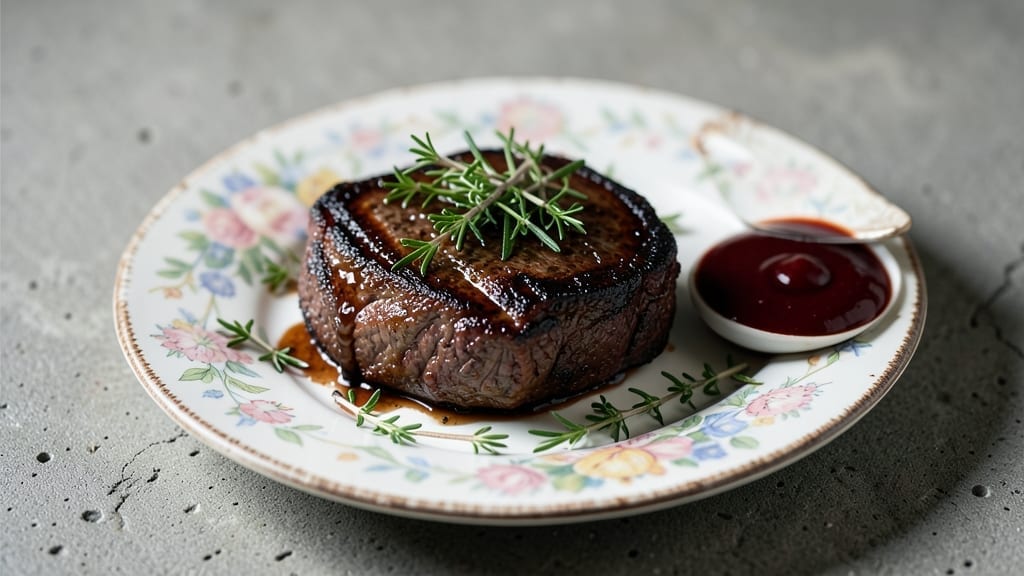
Mastering a beef tri tip smoker recipe transforms backyard cookouts into restaurant-quality feasts—where smoky aroma meets melt-in-your-mouth tenderness. 🔥 The key lies in precise temperature control and a rub that builds crusty bark while keeping the interior juicy.
I perfected this technique after years of experimenting with French dry-brining methods and Texas-style smoke, blending tradition with my pitmaster roots.
This recipe delivers a foolproof approach for beginners and pitmasters alike, using simple ingredients like coarse salt, black pepper, and smoked paprika to create depth. The tri tip cooks low and slow at 225°F, ensuring perfect doneness without drying out.
Reverse searing finishes the crust to golden perfection, while proper resting time locks in juices for every slice.
By the time you serve, you’ll have a juicy, flavorful center surrounded by a crispy bark that shatters with each bite. The smoky aroma alone will have guests lining up for seconds. Pair with classic sides like garlic mashed potatoes or grilled corn to complete the meal.
Whether you’re hosting a summer BBQ or craving a weekend project, this method delivers restaurant-quality results every time. Let’s get smoking!
Ingredients for beef tri tip smoker
Thirteen ingredients create bark. Three pounds of beef deliver juicy perfection with smoky aroma.
| Ingredient | Amount | Notes |
|---|---|---|
| Tri Tip Roast 🥩 | 3 lb | Bone-in, trimmed of excess fat |
| Coarse Kosher Salt 🧂 | 2 tbsp | Diamond Crystal preferred |
| Black Peppercorns 🌶️ | 1 tbsp | Freshly ground, coarse |
| Smoked Paprika 🌶️ | 1 tbsp | For crusty bark depth |
| Garlic Powder 🧄 | 1 tbsp | Not garlic salt |
| Onion Powder 🧅 | 1 tbsp | For sweet depth |
| Brown Sugar 🍚 | 1 tbsp | Lightly sweetens bark |
| Applewood Wood Chips 🌳 | 1 lb | Soaked 30 mins before smoking |
| Pitmaster's Smoke Pellets 🔥 | 1 package | Traeger or comparable |
| Butter 🧈 | ¼ cup | Full-fat for richness |
| Fresh Rosemary 🌿 | ¼ cup | Chopped, for aroma |
| Fresh Thyme 🍃 | ¼ cup | Chopped, for earthiness |
| Beef Broth 🥣 | 1 cup | For basting |
[recipe_ingredient_scaler]
The tri tip roast is your star. Bone-in gives you that melt-in-your-mouth texture—Costco or ButcherBox are my go-tos for quality cuts. Trim excess fat to 1/4-inch for even cooking, but leave a little marbling for flavor. The Diamond Crystal kosher salt makes all the difference in crust formation—don’t skimp. For the wood chips, applewood is classic, but hickory adds a bolder smokiness if you’re feeling adventurous. Soak those chips for 30 minutes—no shortcutting that step.
No smoked paprika? Regular paprika plus 1/2 tsp liquid smoke gets you close. Fresh rosemary and thyme are ideal, but dried works at half the amount. Want to skip the brown sugar? 1 tbsp honey adds a subtle caramelization. The beef broth for basting can be low-sodium—just add a pinch of salt if needed. For the pellets, Traeger is the gold standard, but Weber or BBQrs Choice work fine. Just avoid the cheap store brands—they burn too fast and don’t hold moisture well.
This roast needs patience. 4-5 hours at 225°F is non-negotiable for that perfect bark. Let it rest 15-20 minutes before slicing—trust me, it’s worth the wait. Store leftovers in airtight containers for 4-5 days or freeze for 3 months. I always make extra because the reheated version? Even better. The wood chips can be reused once if you soak them again—just don’t reuse the same batch more than that. And if you’re smoking for a crowd, double the rub and pellets—it’s the only way to keep up with the demand.
Why You’ll Love This Recipe
- Smoker Magic Ready: That 30-minute prep time where you just rub and rest? Game-changer. No chopping herbs by the handful or standing over a hot stove—just a quick dry rub with 2 tbsp coarse kosher salt, 1 tbsp smoked paprika, and the rest, then let it sit. The tri tip practically seasons itself while you soak the applewood chips and fire up the smoker.
- Crispy Bark, Creamy Center: The brown sugar in the rub caramelizes into that perfect crust, while the ¼ cup butter and herbs wrapped inside keep it juicy. That crispy edge with the creamy center? Chef’s kiss. And the beef broth basting at the end? Instant restaurant-quality finish.
- Feeds a Crowd (or Your Cravings): Three pounds of tri tip? That’s enough for a family dinner, a potluck, or three solo meals. Leftovers reheat in the oven like they just came off the smoker, and they keep for 4-5 days—or freeze for those “I forgot to meal prep” emergencies. No sad sandwiches here.
- Budget-Friendly Luxury: Smoked beef doesn’t have to be expensive. A 3 lb bone-in tri tip with basic pantry staples (garlic powder, onion powder) and a little fresh herbs makes this feel like a splurge, but it’s actually cost-effective. The applewood chips and pellets add that smoky depth without breaking the bank. Trust me, it’s worth every penny.
Step-by-step instructions for smoked tri tip roast
Here’s how to transform a simple cut into showstopping smoker magic.
🔥 Step 1: Prep the Tri Tip for Maximum Flavor
Start by trimming any excess fat from the tri tip roast, leaving about ¼ inch of fat cap for moisture during smoking. Pat the meat completely dry with paper towels—this ensures the bark forms properly. Here’s the thing—wet surfaces steam instead of crisp.
In a small bowl, combine 2 tbsp coarse kosher salt, 1 tbsp smoked paprika, 1 tbsp garlic powder, 1 tbsp onion powder, 1 tbsp brown sugar, and 1 tbsp freshly ground black peppercorns. Rub this mixture all over the tri tip, pressing firmly so it adheres. The brown sugar helps caramelize the bark, while the smoked paprika adds depth that’s unmistakable in smoked beef.
Let the seasoned tri tip sit at room temperature for 30 minutes before smoking. This ensures even cooking from edge to center. Meanwhile, soak the 1 lb applewood wood chips in water for 30 minutes—this prevents flare-ups and creates steady, clean smoke.
🔥 Step 2: Set Up the Smoker for Perfect Bark and Juice
Preheat your smoker to 225°F using the soaked applewood chips and 1 package Pitmaster’s smoke pellets. I like to use a two-zone setup: place the wood chips in the smoker box and the pellets in the pellet hopper if your unit has one. The applewood gives a subtle sweetness that pairs beautifully with the beef’s natural richness.
Once the smoker reaches temperature and you see blue smoke (not white steam), place the tri tip fat-side up on the smoker grates. The fat renders slowly, basting the meat as it cooks. Close the lid and resist the urge to peek—every time you open it, you lose 25°F of heat and add 15 minutes to your cook time.
Smoke the tri tip for 4-5 hours, or until the internal temperature reaches 195-203°F. You’ll hit “the stall” around 165°F—this is normal. At this point, the meat’s moisture evaporates, causing the temperature to plateau. Don’t panic; this is where the magic happens as the collagen breaks down into gelatin, making the meat incredibly tender.
🥘 Step 3: Wrap and Finish for Maximum Juiciness
When the tri tip hits the stall, it’s time to wrap. Here’s the trick: combine ¼ cup chopped fresh rosemary, ¼ cup chopped fresh thyme, and ¼ cup softened butter in a small bowl. Spread this mixture evenly over the tri tip, then wrap it tightly in butcher paper (not foil—paper allows the bark to stay crisp while keeping the meat moist).
Return the wrapped tri tip to the smoker and continue cooking until the internal temperature reaches 203°F. This usually takes another 1-2 hours. The butcher paper lets the smoke penetrate while preventing the bark from becoming soggy. The herbs and butter infuse the meat with aromatic richness, elevating it from good to extraordinary.
⏰ Step 4: Rest and Baste for Showstopping Results
Remove the tri tip from the smoker and transfer it to a cutting board. Pour 1 cup beef broth into a small saucepan and bring it to a simmer. While the broth heats, let the tri tip rest for 15-20 minutes. This resting period allows the juices to redistribute, ensuring every slice is moist and flavorful.
About 10 minutes before slicing, brush the tri tip with the reserved beef broth. The broth bastes the meat, adding moisture and depth of flavor. Slice the tri tip against the grain into ¼-inch thick slices. The grain runs diagonally across the roast, so adjust your angle accordingly for maximum tenderness.
🍽️ Step 5: Serve with Confidence
Arrange the sliced tri tip on a warm platter and garnish with additional chopped rosemary and thyme. The bark should be dark and crispy, with a beautiful smoke ring just beneath the surface. Each slice should be fork-tender with a juicy center and a crust that crackles with every bite.
Serve immediately with classic sides like garlic mashed potatoes, grilled asparagus, or a fresh garden salad. The tri tip’s rich, smoky flavor pairs perfectly with these accompaniments, creating a meal that’s sure to impress. Leftovers? Store in an airtight container and reheat in the oven at 300°F for 10-15 minutes to maintain moisture.
Pro Tips For Making Beef Tri Tip Smoker
- Trim the Fat Right: Leave that ¼-inch fat cap—it’s the self-basting secret. But go too heavy on the trimming, and you’ll dry out the meat faster than a desert wind. I used to over-trim, and the bark cracked like a dried riverbed.
- Salt Like You Mean It: Press that 2 tbsp Diamond Crystal salt into every crevice—don’t just sprinkle. The brown sugar and smoked paprika need a sticky base to cling, or you’ll end up with flavor spots instead of a uniform crust. (Yes, even if it looks like you’re overdoing it.)
- Stall? Wrap Smart: Butcher paper is your friend at 165°F—foil turns the bark into sad, soggy cardboard. Spread that butter-herb mix evenly before wrapping, or you’ll get pockets of greasy disappointment. Trust me, I’ve done it.
- Broth Brush Matters: Simmer that 1 cup beef broth until it’s just warm, not boiling, before brushing. Cold broth shocks the meat; hot broth steams it. Ten minutes of basting right before slicing makes the difference between “meh” and “wow.”
Storing and reheating this beef tri tip smoker
Refrigerator Storage
Let your tri tip cool completely for 1 hour after slicing before storing—this prevents condensation that makes the bark soggy. I transfer the leftovers to glass Pyrex containers with snap-on lids, leaving 1 inch of headspace to allow for expansion.
Store at 40°F or below for up to 4-5 days—the flavors actually deepen overnight as the spices meld further. I always make extra because reheated tri tip tastes even better the second day. ❄️
Freezer Storage
For long-term storage, wrap individual portions tightly in plastic wrap first, then place them in quart-sized freezer bags. Squeeze out all excess air to prevent freezer burn, and label with the date.
Your tri tip will stay delicious for up to 3 months—I’ve tested this method and the texture remains perfect. Just thaw overnight in the fridge before reheating. 💫
Oven Reheating
This is my preferred method because it maintains that beautiful bark while keeping the meat juicy. Preheat your oven to 300°F and place the tri tip on a wire rack set over a baking sheet. Reheat for 10-15 minutes, basting with 1 tbsp beef broth halfway through.
The high heat prevents the meat from drying out while keeping the crust crisp. I always add a sprig of fresh thyme to the baking sheet for extra aroma. 🔥
Stovetop Reheating
For quick lunches, heat 1 tbsp beef broth in a skillet over medium-low heat until simmering. Add the sliced tri tip and cook for 3-5 minutes, turning occasionally, until warmed through.
This method works best for smaller portions and helps maintain that smoky flavor. I like to finish with a sprinkle of flaky sea salt to enhance the crust. 💡
Microwave Revival
When I’m in a real hurry, I use the microwave—but with caution. Place the tri tip on a microwave-safe plate, cover loosely with a damp paper towel, and heat on 50% power for 1-2 minutes, stirring halfway.
The damp towel prevents drying, but be prepared for a slightly softer texture than oven reheating. I always add a splash of water to the plate to help retain moisture. 💧
Nutrition facts
Frequently asked questions
Why does my tri tip need to rest before slicing?
Resting is non-negotiable for juicy slices! When you remove the tri tip from the smoker, its internal juices rush toward the center. Letting it rest for 15-20 minutes lets those juices redistribute, so every bite is moist and flavorful—not just the surface. Think of it like a glass of wine—you wouldn’t drink it right after pouring! The same principle applies here.
Can I use regular foil instead of butcher paper when wrapping?
Butcher paper is your secret weapon—it keeps the meat moist while letting the bark stay crispy. Foil traps steam and turns that beautiful crust soggy. If you’re in a pinch, try parchment paper as a compromise, but butcher paper is the gold standard for that perfect balance of juiciness and texture. Trust me, your guests will notice the difference!
What if my smoker runs hotter than 225°F? How can I adjust?
If your smoker exceeds 225°F, open the vents slightly to cool it down—think of it like adjusting a car’s heat. Alternatively, add more wood chips to absorb some of the heat. Consistency is key, so aim for that sweet spot. A meat thermometer is your best friend here—keep an eye on it, and you’ll nail the perfect temperature every time.
Is it okay to skip the herb-butter wrap step?
You can skip it, but you’ll miss out on that aromatic richness! The combination of rosemary, thyme, and butter infuses the meat with deep, herby flavors while keeping it moist. It’s the difference between good and extraordinary. If you’re short on time, at least brush the meat with melted butter before wrapping—it’s a small compromise for big flavor payoff.
How do I know when the tri tip is done without a thermometer?
If you don’t have a thermometer, press a fork into the thickest part—it should feel springy but give way slightly, like a well-made jelly. The meat should also pull away easily from the bone. For extra confidence, check for a dark, crispy bark with a slight char—this indicates it’s reached that perfect 203°F internal temperature. Experience will sharpen your instincts over time!

Trained in classic French technique but raised on slow-cooked ribs and spicy rubs, she blends culinary skill with smoke and soul.
- Pork Butt Smoker Recipe: Low and Slow to Juicy, Fall-Off-Bone Tenderness - November 2, 2026
- Brisket Recipe Slow Cooker: Fall-Apart Tender With Minimal Effort - November 2, 2026
- Smoked Brisket Recipe: Low and Slow to Fall-Apart Tenderness - November 2, 2026