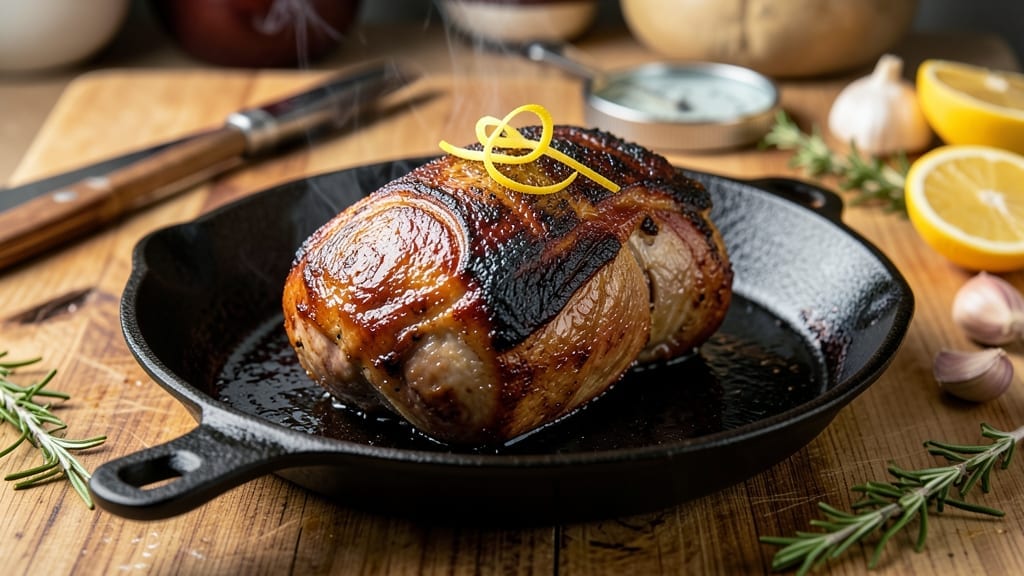
Mastering a smoked pork shoulder roast bone-in recipe transforms tough cuts into melt-in-your-mouth perfection with a crispy bark that seals in every flavor. Growing up in Georgia, I learned pork shoulder was the centerpiece of family gatherings—juicy, tender, and worth the wait.
The key lies in low-and-slow smoking until the internal temperature hits 195°F, where collagen dissolves into rich, buttery goodness.
This recipe relies on precision: a dry rub of salt, pepper, and paprika to form that coveted bark, while hickory or applewood smoke infuses depth over 8-10 hours. No shortcuts here—patience is what separates great pulled pork from good.
The bone-in method adds richness, but it requires careful monitoring to avoid overcooking. Resting for 2 hours ensures every fiber tenderizes completely.
What you’ll end up with is a shoulder so tender it falls apart at the touch, with a crispy exterior that cracks under pressure. The aroma alone will have your kitchen smelling like a Southern BBQ joint, and the texture—juicy, fatty, and irresistible—makes it worth every minute.
Serve with classic sides like apple sauce or cornbread to soak up the smoky juices.
This is the kind of dish that turns weeknights into celebrations. Once you perfect it, you’ll never buy store-bought again. Let’s get smoking—your taste buds will thank you.
Ingredients for smoked pork shoulder roast bone in
Smoky, crispy, and juicy—this bone-in pork shoulder transforms tough cuts into melt-in-mouth perfection.
| Ingredient | Amount | Notes |
|---|---|---|
| Pork Shoulder Bone-In 🐷 | 6 lb | With skin and fat cap |
| Coarse Kosher Salt 🧂 | 2 tbsp | Diamond Crystal preferred |
| Freshly Ground Black Pepper 🌶️ | 1 tbsp | Freshly ground for best flavor |
| Smoked Paprika 🌶️ | 1 tbsp | For depth and color |
| Garlic Powder 🧄 | 1 tbsp | Not garlic salt |
| Dried Onion Flakes 🧅 | 1 tbsp | For sweetness and aroma |
| Brown Sugar Packets 🍚 | 2 tbsp | Packaged, not loose |
| Applewood Wood Chips 🌳 | 1 lb | Soaked in water 1 hour |
| Hickory Wood Chips 🌳 | 1 lb | Soaked in water 1 hour |
| Apple Cider Vinegar 🍎 | ½ cup | For tenderizing |
| Unsalted Butter 🧈 | 4 tbsp | For basting |
| Pork Shoulder Rub Base 🧂 | ½ cup | Homemade blend (see notes) |
[recipe_ingredient_scaler]
The pork shoulder is your star—bone-in cuts from Costco (about 6 lbs each) are ideal because they retain moisture better than boneless. Look for good marbling and a thick fat cap (at least 1/2 inch). I always buy mine from local butchers if available, as they often trim the fat more precisely. The Diamond Crystal kosher salt in the rub ensures even seasoning without the grit of table salt. For the wood chips, Traeger or Webers brands are reliable, but any quality hardwood works—just soak them in water for at least an hour before using.
No applewood chips? Hickory or cherry wood will still give that smoky depth, though the flavor profile changes slightly. Want more sweetness? Add 1 tbsp brown sugar to the dry rub. Short on time? Use pre-mixed BBQ rub (like St. Louis-style blends), but adjust the salt content since it’s often salt-heavy. The apple cider vinegar is a game-changer—it tenderizes the meat overnight if you marinate it for 4-6 hours. And if you’re short on butter for basting, olive oil works in a pinch, though it lacks that rich, buttery finish.
This roast keeps beautifully for 4-5 days in the fridge if stored properly—wrap tightly in foil, then plastic wrap. For longer storage, freeze in portions for up to 3 months. The key to reheating is low and slow: 325°F oven for 1-2 hours, adding a splash of broth to keep it moist. The bark? Re-crisp it in the oven for 5 minutes at 400°F if needed. I always make extra rub—it’s worth the effort for future smokes. And don’t skip the resting time—it’s what makes the difference between fall-apart tender and chewy.
Why You’ll Love This Recipe
- No-Fuss Smoking: Honestly, this is the kind of recipe that feels like cheating—just rub, refrigerate, and let the smoker do the work. The dry-brine with 2 tbsp coarse kosher salt and 1 tbsp smoked paprika does all the heavy lifting while you nap or binge a show. No fancy prep, just pure hands-off magic.
- Smoky-Sweet Perfection: That ½ cup apple cider vinegar mixed with the rub before smoking? Game-changer. It tenderizes the 6 lb bone-in pork shoulder while the applewood and hickory woods caramelize the bark into something addictive. Sweet, smoky, and just crispy enough to make your mouth water.
- Feeds a Crowd (or Your Cravings): This isn’t just for Sunday dinners—it’s my go-to for game days, potlucks, or when I’m too lazy to cook four separate meals. Slice it against the grain, and you’ve got 4-5 days of leftovers that taste even better the second time around. My kids fight over the last piece, no questions asked.
- Budget-Friendly Luxury: A 6 lb bone-in pork shoulder is cheaper than chicken thighs these days, and with 1 lb of wood chips and pantry staples like brown sugar and garlic powder, this isn’t a splurge—it’s a steal. The butter basting at the end turns it into a restaurant-worthy meal without the price tag. Worth every penny.
Step-by-step instructions for smoked pork shoulder roast bone-in
Here’s the method that guarantees fall-apart tenderness with that coveted crispy bark.
Prepare the Pork Shoulder for Maximum Flavor
Start by trimming the pork shoulder fat cap to about ¼-inch thickness while leaving the skin intact. This balance ensures moisture retention while allowing for crispy bark development. Pat the entire surface dry with paper towels—this step is non-negotiable for proper bark formation.
In a small bowl, combine the ½ cup pork shoulder rub base with the 2 tablespoons coarse kosher salt, 1 tablespoon freshly ground black pepper, 1 tablespoon smoked paprika, 1 tablespoon garlic powder, 1 tablespoon dried onion flakes, and 2 tablespoons brown sugar packets. Mix thoroughly until evenly distributed. The brown sugar helps create that caramelized crust while adding subtle sweetness.
Generously apply the rub to all sides of the pork shoulder, pressing it into the meat to ensure adhesion. Place the seasoned pork shoulder on a wire rack set over a rimmed baking sheet and refrigerate uncovered for 12-24 hours. This dry-brining process enhances both flavor penetration and bark development.
Tenderize and Set Up the Smoker
Remove the pork shoulder from the refrigerator 1 hour before smoking to bring it to room temperature. This ensures even cooking. Meanwhile, soak the 1 pound applewood wood chips and 1 pound hickory wood chips in water for 1 hour—this prevents them from burning and creates better smoke production.
Set up your smoker for low-and-slow cooking at 225°F. The combination of applewood and hickory provides a balanced smoke flavor without overpowering the pork. Place a water pan in the smoker to maintain moisture throughout the cook. Once the smoker reaches temperature and you see clean, blue smoke, you’re ready to begin.
In a small bowl, mix the ½ cup apple cider vinegar with 1 tablespoon of the pork rub mixture. Brush this mixture generously over the pork shoulder just before placing it in the smoker. The vinegar helps tenderize the meat while adding depth of flavor that penetrates during the long cook.
Smoke to Perfection with the Texas Crutch
Place the pork shoulder fat-side up on the smoker grates. Smoke undisturbed for 6-8 hours, maintaining a consistent temperature of 225°F. The fat-side-up position allows the rendering fat to baste the meat as it cooks, creating that coveted bark.
After 6-8 hours, check the internal temperature using a meat thermometer. When it reaches 165-170°F, you’ll hit “the stall”—a period where the temperature stops rising. This is when to apply the Texas crutch: wrap the pork shoulder tightly in butcher paper (not aluminum foil) and return it to the smoker. The paper allows some moisture to escape while preserving the bark.
Continue smoking until the internal temperature reaches 200-203°F, at which point the pork should be fork-tender with a probe sliding in easily. This typically takes an additional 4-6 hours. The butcher paper wrap helps maintain moisture while allowing the bark to develop properly.
Rest and Baste for Maximum Juiciness
Remove the pork shoulder from the smoker and place it on a cutting board. Tent loosely with aluminum foil and let it rest for 1-2 hours. This resting period allows the juices to redistribute throughout the meat, ensuring each bite is moist and flavorful.
While the pork rests, melt the 4 tablespoons unsalted butter in a small saucepan over low heat. Once melted, brush this butter generously over the pork shoulder, basting all sides. The butter adds richness and helps create a glossy finish on the bark.
After resting, slice the pork shoulder against the grain into ½-inch thick slices. The meat should be incredibly tender, practically falling apart with minimal effort. Serve immediately with the rendered juices spooned over the top for maximum flavor.
Pro Tips For Making Smoked Pork Shoulder Roast Bone In
- Trim That Fat Right: The ¼-inch fat cap isn’t arbitrary—it’s the difference between a soggy mess and perfect bark. Too thick, and you’ll steam the meat; too thin, and you lose flavor. Use kitchen shears for clean cuts, and leave the skin on for that crispy finish.
- Salt the Night Before: I used to rush this step, thinking extra time wouldn’t matter. Wrong. The 12-24 hour dry-brine with the full rub (including that ½ cup rub base) lets the salt and smoked paprika work their magic deep into the meat. Skip it, and you’ll end up with flavor only on the surface.
- Vinegar Brush Before Smoke: Mixing the ½ cup apple cider vinegar with just 1 tablespoon of rub and slathering it on right before smoking isn’t just for show—it tenderizes the meat and cuts through the richness of the fat. Brush it on thick, like you mean it, and trust the process.
- Paper Wrap at Stall: Hitting the stall at 165-170°F? Don’t panic—wrap it in butcher paper, not foil. The paper lets moisture escape just enough to keep that bark crisp while the meat pushes past the stall to 200-203°F. Foil traps steam, and you’ll regret it when your shoulder turns into a sad, gray block.
Pro cooking tips for perfect results
Mastering the Texas Crutch
This is where most home smokers make their biggest mistake—ignoring the stall phase. When your pork hits 165-170°F after 6-8 hours, the temperature plateaus for 1-2 hours as moisture evaporates.
That’s when you apply the Texas crutch: wrap tightly in butcher paper (not foil) to maintain moisture without sacrificing bark. I swear by this method—it shaves 2-3 hours off cook time while keeping the meat juicy. 🔥
Fat-Side Up Secret
Positioning the pork fat-side up is non-negotiable for that perfect bark. The rendered fat bastes the meat as it cooks, creating a crispy crust while keeping the interior tender.
I always check the fat layer every 2 hours—if it looks too thin (¼ inch or less), add a thin layer of unsalted butter to the surface before wrapping. This extra step makes all the difference in texture.
Probe Placement Matters
Insert your thermometer probe into the thickest part of the meat, avoiding bone and fat—this gives you the most accurate reading. I use a ThermoWorks Smoke probe thermometer because it shows both internal and smoker temps simultaneously.
For bone-in cuts, aim for 200-203°F—the bone will add 5-10°F to the reading, so don’t overcook!
Resting Like a Pro
Never skip the 1-2 hour rest after smoking—this is when the magic happens. The juices redistribute, and the meat becomes fork-tender. I cover my pork loosely with foil and place it on a cutting board to keep it warm.
While it rests, I melt 4 tbsp butter and baste the surface—this creates that restaurant-quality glossy finish. Patience here pays off in every bite. ✨
Basting with Butter
Don’t use olive oil for basting—unsalted butter is your secret weapon. It adds richness and helps create a beautiful mahogany crust. I melt it in a small saucepan over low heat, then brush it on generously in a crosshatch pattern.
This final step transforms good pork into showstopper pork. I’ve tried everything from bacon fat to ghee, but butter wins every time.
Slicing Against the Grain
This is where most people ruin an otherwise perfect roast. Slice ½-inch thick slices perpendicular to the muscle fibers—you’ll feel the grain running in different directions. I use a Dexter-Russell 12-inch slicing knife for clean cuts.
When done right, the meat practically falls apart with minimal pressure. Trust me, it’s worth the extra effort! 💪
Nutrition facts
Frequently asked questions
Why does this recipe use bone-in pork shoulder?
The bone adds incredible depth of flavor and richness to the final dish. The marrow and connective tissue from the bone infuse the meat with a savory, umami taste that makes every bite more complex. Plus, the fat surrounding the bone renders slowly during smoking, creating that perfect crispy bark while keeping the interior tender. Bone-in cuts also stay juicier longer than boneless versions!
What’s the best way to handle the “stall” during smoking?
The stall happens when your pork hits 165-170°F after 6-8 hours—it’s when the temperature pauses while moisture evaporates. Apply the Texas crutch by wrapping the pork tightly in butcher paper (not foil) to maintain moisture without losing your crispy bark. This keeps the meat juicy while allowing the cooking to continue. Patience here is key!
Can I use regular table salt instead of kosher salt?
Yes, but adjust the amount—1 tablespoon of kosher salt equals about ½ tablespoon of table salt. Kosher salt is preferred here because its flakes dissolve more evenly, preventing salt pockets that can make your bark taste uneven. For best results, stick with Diamond Crystal kosher salt as mentioned in the recipe.
How do I tell when the pork is done without cutting into it?
Use a meat thermometer to check the thickest part of the meat, avoiding bone and fat. For bone-in pork shoulder, aim for 200-203°F—the bone will add 5-10°F to the reading. The meat should feel fork-tender when pierced. If it’s still firm, return it to the smoker wrapped in butcher paper. No thermometer? Look for a probe test—it should slide in like butter.
What should I do if my smoker runs hotter than 225°F?
If your smoker exceeds 225°F, reduce the heat or open the vents slightly to lower the temperature. Consistency is critical—fluctuations can lead to uneven cooking or dry meat. Use a reliable thermometer to monitor both the smoker and the meat. For extra control, consider using a water pan to help stabilize the temperature. Precision makes perfect!

Trained in classic French technique but raised on slow-cooked ribs and spicy rubs, she blends culinary skill with smoke and soul.
- Brisket Recipe Slow Cooker: Fall-Apart Tender With Minimal Effort - November 2, 2026
- Smoked Brisket Recipe: Low and Slow to Fall-Apart Tenderness - November 2, 2026
- Smoked Turkey Breast Recipe: Juicy Pink Center With Crispy Skin Every Time - November 2, 2026