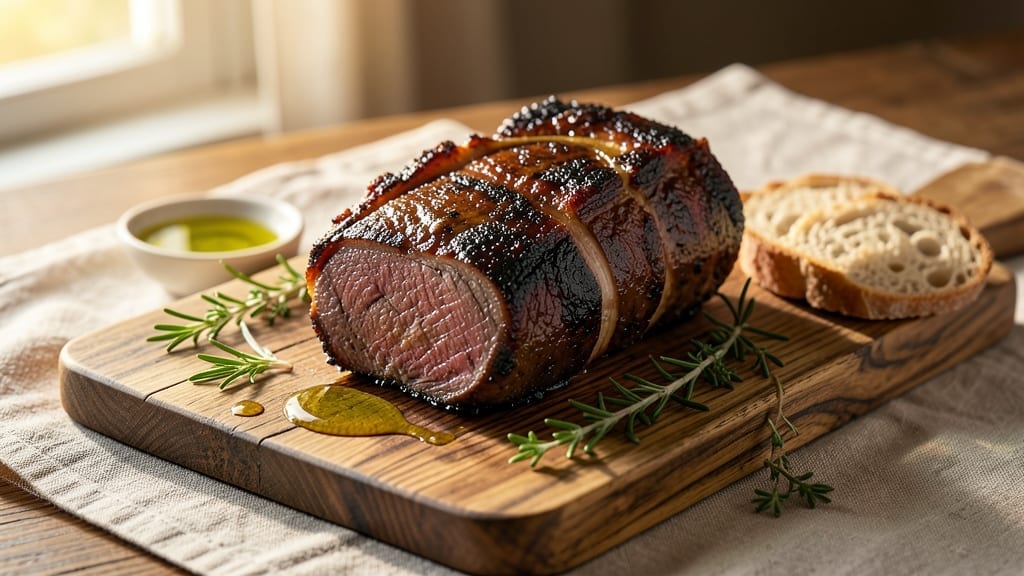
This smoked beef shoulder roast recipe delivers melt-in-your-mouth tenderness with a deep, caramelized bark that transforms tough cuts into showstopping centerpieces. The key lies in low-and-slow smoking—three hours at 225°F—where collagen breaks down into rich, velvety juices while the outer crust develops that coveted snap.
I perfected this method after years of trial and error, ensuring every slice falls apart effortlessly while maintaining perfect pink centers.
What sets this apart is the two-stage seasoning process: a dry rub of coarse salt and black pepper first, followed by a final coat of mustard and brown sugar just before hitting the smoker. This creates both the bark and the moisture-sealing crust needed for that signature fall-apart texture.
The choice of wood—hickory for bold smokiness, oak for balance—lets you customize the flavor profile to match your preferences.
By the time you pull it from the smoker, your roast will be juicy, tender, and deeply aromatic, with a crust that shatters at the touch. The resting period—at least 30 minutes—is where the magic happens, allowing those juices to redistribute for maximum succulence.
This isn’t just dinner; it’s an experience that turns weeknights into special occasions.
Pair with classic sides like creamy mashed potatoes, tangy coleslaw, or roasted root vegetables to complete the meal. The leftovers reheat beautifully, making this a perfect recipe for meal prep or entertaining. Here’s how to achieve restaurant-quality results at home—every time.
Ingredients for smoked beef shoulder roast
Six pounds of beef shoulder plus a few simple seasonings transform into restaurant-quality smoked perfection.
| Ingredient | Amount | Notes |
|---|---|---|
| Beef Shoulder Roast 🥩 | 6 lb | Bone-in, 3-4 inches thick |
| Coarse Kosher Salt 🧂 | ½ cup | Diamond Crystal preferred |
| Freshly Ground Black Pepper 🌶️ | 2 tbsp | Coarse grind for texture |
| Yellow Mustard 🍯 | ¼ cup | Dijon for extra tang |
| Light Brown Sugar 🍚 | ¼ cup | Packed, not granulated |
| Hickory Wood Chips 🌳 | 2 cups | Soaked for 30 minutes |
| Oak Wood Chips 🌳 | 1 cup | For balanced smoke flavor |
| Apple Cider Vinegar 🍏 | 2 tbsp | For tenderizing |
| Garlic Powder 🧄 | 1 tbsp | Freshly ground preferred |
| Onion Powder 🧅 | 1 tbsp | For depth of flavor |
| Smoked Paprika 🌶️ | 1 tsp | For extra smoky depth |
| Beef Broth 💧 | 1 cup | Low-sodium preferred |
| Butter 🧈 | ½ cup | Unsalted, softened |
[recipe_ingredient_scaler]
The beef shoulder is non-negotiable here—bone-in, 3-4 inches thick is ideal. Local butchers often have the best cuts, but the meat department at Whole Foods or Costco carries reliable options. Look for good marbling and vibrant color—pale, grainy beef won’t give you that fall-apart texture. I always buy a few pounds extra (the leftovers are amazing) and freeze portions for future meals. The wood chips? Store-bought works fine, but if you’re ambitious, buy chunks and grind them yourself for more intense smoke flavor. Just make sure they’re 100% natural—no additives.
No hickory? Pecan or cherry wood works beautifully for a fruitier profile. Short on brown sugar? Maple syrup at half the amount adds moisture without overpowering. The mustard can be swapped for whole-grain mustard if you prefer texture, or even honey** for a sweeter bark. For the dry rub, Diamond Crystal kosher salt dissolves better than table salt—trust me on this. If you’re prepping ahead, mix the dry rub ingredients in a ziplock bag** and store for up to 2 weeks. The wet ingredients (mustard, vinegar, broth) can be combined the day before and refrigerated.
This roast reheats like a dream—wrap tightly in foil and warm in a 325°F oven for 1-2 hours until internal temp hits 165°F. Leftovers keep 4-5 days in the fridge, but honestly, they disappear faster than that. For maximum tenderness, slice against the grain and let it rest 10 minutes before serving. The bark is best eaten fresh, but the meat stays juicy for days. Portion into vacuum-sealed bags for freezer storage—up to 6 months**—though I rarely make it that long.
Why You’ll Love This Recipe
- No-Fuss Smoking: Honestly, this roast takes the guesswork out of smoking beef. Just mix the dry rub with salt, pepper, garlic powder, onion powder, and smoked paprika—no fancy tools needed—and let it sit while you prep the rest. The mustard and brown sugar paste? That’s your secret weapon for tenderizing without extra effort. I’ve done it while watching TV, and the bark still turned out crispy as ever.
- Crave-Worthy Bark & Cream: That crispy exterior from the salt and sugar caramelization? Chef’s kiss. But here’s the kicker: the inside falls apart like butter thanks to the apple cider vinegar spritzes every hour. Then you finish it off with a brush of melted butter—rich, smoky, and just a little sweet. My kids don’t even notice they’re eating “smoked” meat; they just know it’s the best.
- Leftovers That Disappear: I always think I’ll have seconds left, but this roast? It’s gone by dinner the next day. The dry rub mix even stores for weeks, so you can prep ahead and just grab it when you’re ready to smoke. And if you do have leftovers, they reheat beautifully—just slice, warm, and drizzle with that pan sauce. Trust me, no one will complain about seconds.
- Budget-Friendly Feast: A 6-pound beef shoulder roast feeds a crowd without breaking the bank. The ingredients? Most are pantry staples, and the wood chips are a one-time splurge. Plus, the Texas crutch (wrapping in foil) locks in all that flavor without wasting a drop of juices. It’s the kind of dish where you get way more than you paid for—both in taste and portions.
Step-by-step instructions for smoked beef shoulder roast
Here’s how to transform a tough cut into melt-in-your-mouth perfection with bold bark and tender meat.
Prepare the Dry Rub and Tenderize the Meat
In a small bowl, combine the ½ cup coarse kosher salt, 2 tablespoons freshly ground black pepper, 1 tablespoon garlic powder, 1 tablespoon onion powder, and 1 teaspoon smoked paprika. Mix thoroughly until evenly distributed. This dry rub forms the flavor foundation and helps develop that coveted bark.
Pat the 6 lb beef shoulder roast completely dry with paper towels—moisture is the enemy of crispy bark. In a separate bowl, whisk together the ¼ cup yellow mustard and ¼ cup light brown sugar to create a sticky paste. This mixture isn’t just for flavor; the sugar helps caramelize the exterior while the mustard tenderizes the meat. Spread this paste all over the roast, then press the dry rub into every surface, including the cavity if your roast has one. Let it sit at room temperature for 1 hour before smoking.
Set Up the Smoker with Wood Chips
Soak the 2 cups hickory wood chips and 1 cup oak wood chips in water for 30 minutes to prevent burning. Drain well before using. Preheat your smoker to 225°F using these soaked wood chips. You’ll know it’s ready when you see thin, blue smoke (not thick white steam) billowing out. This low-and-slow approach is key to breaking down the connective tissue for that fall-apart tenderness.
Place the rubbed roast fat-side up on the smoker grate. The fat will render slowly, basting the meat as it cooks. Spritz the roast with 2 tablespoons apple cider vinegar every hour during the first 4 hours of cooking. This acidic spritz helps tenderize the meat further and keeps the surface moist enough to develop that beautiful bark without drying out.
Smoke Low and Slow Until Probe-Tender
Smoke the roast undisturbed for 10-12 hours, maintaining a temperature between 225-250°F. The internal temperature should reach 165°F before you hit “the stall”—a period where the temperature plateaus as moisture evaporates. This is normal and expected. Don’t open the smoker during this time; every time you peek, you add 15-20 minutes to your cook time.
Once the internal temperature hits 195-203°F and a meat thermometer inserted into the thickest part of the roast comes out clean with no resistance, it’s time to wrap. Remove the roast from the smoker and wrap it tightly in heavy-duty aluminum foil. Return it to the smoker and continue cooking until it reaches 205°F. This “Texas crutch” technique ensures you get that perfect balance of tender meat and crispy bark.
Rest and Slice for Maximum Juiciness
Remove the roast from the smoker and transfer it to a cutting board. Let it rest for at least 1 hour, loosely tented with foil. This resting period allows the juices to redistribute throughout the meat, ensuring every slice is moist and flavorful. During this time, preheat your oven to 300°F to keep the roast warm while you prepare to slice.
Once rested, slice the roast against the grain into ¼-inch thick slices. The grain runs lengthwise, so you’ll see lines in the meat—cut perpendicular to these lines. To serve, place the slices on a warm platter and brush each one with ½ cup softened butter melted and warmed slightly. The butter adds a final layer of richness and helps carry the smoky flavors with every bite.
Create a Quick Pan Sauce (Optional)
Place the sliced roast back on the smoker grate or transfer it to a warm platter. In the same smoker or a separate skillet, pour in 1 cup beef broth and scrape up all the browned bits from the bottom of the smoker or pan. Simmer this mixture over medium heat for 5-7 minutes until it reduces by half and thickens slightly. This sauce captures all the deep, smoky flavors you’ve built up during the long cook.
Serve the sliced roast immediately, spooning the pan sauce generously over the top. The combination of tender, smoky meat, crispy bark, and rich sauce makes this dish unforgettable. Pair it with classic sides like creamy mashed potatoes, buttery corn on the cob, or a simple green salad to balance the richness.
Pro Tips For Making Smoked Beef Shoulder Roast
- Salt the Night Before: I learned this the hard way—salting the beef shoulder roast overnight in the fridge makes the dry rub penetrate deeper and keeps the meat juicier during that long smoke. Skip the hour-long room temp wait and just let it sit covered on a plate while you prep everything else.
- Don’t Skimp on Wood Soak: Soaking those 3 cups of wood chips for 30 minutes isn’t optional—it’s how you avoid bitter smoke. Drain them well before adding to the smoker, or you’ll end up with steam instead of flavor. Trust me, your roast will taste like a campfire if you cut corners here.
- Wrap at 195°F, Not Earlier: The stall is real, but wrapping too soon (before 195°F) traps moisture inside before the meat’s ready to break down. Wait until the thermometer hits that mark and the probe slides out clean—then foil it up tight. That’s when the real tenderness magic happens.
- Spritz with Vinegar, Not Water: Water just steams the meat and washes away your hard work. The apple cider vinegar in this recipe cuts through the fat, tenderizes the surface, and keeps the bark from getting soggy. Use the full 2 tablespoons every hour—it’s the difference between dry and melt-in-your-mouth.
Best sauces and condiments for this dish
Smoky Mustard Butter
This is my go-to sauce for smoked beef shoulder—just melt ½ cup softened butter with 2 tbsp apple cider vinegar and 1 tbsp Dijon mustard over medium heat until fragrant. Stir in 1 tsp smoked paprika for an extra smoky kick.
Brush generously over sliced roast before serving. The tangy vinegar cuts through the richness while the butter enhances the smoky flavors. 🔥
Bourbon Glaze
For a sweet-tangy twist, combine ¼ cup bourbon, ¼ cup brown sugar, and 2 tbsp beef broth in a saucepan. Simmer until reduced by half, then whisk in 2 tbsp softened butter.
Drizzle over sliced roast—this glaze adds depth and balances the smokiness beautifully. I use Maker’s Mark bourbon for the best results.
Peppercorn Sauce
Crush 10 black peppercorns with 1 tsp whole coriander seeds in a mortar and pestle, then toast them in a dry skillet for 30 seconds.
Whisk into 1 cup beef broth with 1 tbsp butter and simmer until thickened. This peppery sauce adds complexity that pairs perfectly with the smoky roast.
Pickled Red Onion Garnish
Quick-pickle thinly sliced ½ red onion in ¼ cup apple cider vinegar and 1 tbsp brown sugar for 15 minutes. Drain and toss with 1 tsp fresh dill. The bright acidity cuts through the fat and adds a refreshing contrast to each bite. 💫
Spicy Horseradish Cream
Mix ¼ cup sour cream with 1 tbsp prepared horseradish and ½ tsp cayenne pepper for a fiery kick. Dollop alongside slices—this creamy condiment balances the smoky richness while adding a spicy punch. I keep the cayenne light so it doesn’t overpower.
Nutrition facts
Frequently asked questions
Why does the recipe call for a resting period after smoking?
The 1-hour rest is critical for juiciness! After smoking, the meat’s juices redistribute throughout the fibers. Skipping this step means dry, tough slices—no one wants that. Tent loosely with foil to retain heat while resting. This ensures every bite is moist and flavorful.
Can I use a different wood type for smoking?
While the recipe suggests hickory and oak, you can experiment with pecan, cherry, or apple wood for milder sweetness. Just avoid fruit woods like mesquite—they can overpower the beef. Hickory adds bold flavor, but oak keeps things balanced. Try a mix if you’re unsure!
What if my smoker doesn’t reach the ideal temperature?
If your smoker struggles with 225-250°F, adjust your setup. Use a water pan for stability, avoid opening the lid, and check your fuel source. If temps are too high, increase airflow. A 10°F variance is fine—just monitor closely. Patience pays off for that perfect bark!
How do I know when the roast is fully tender?
Check for 195-203°F internal temp with a meat thermometer—it should pull out clean with no resistance. If unsure, pierce the thickest part; if juices run clear, it’s ready. The “stall” (temp plateau) is normal but can last 2-4 hours. Wrap and cook until 205°F for guaranteed tenderness.
Can I make this recipe ahead of time?
Yes! Prep the dry rub mix and store it for 2 weeks in a ziplock bag. The wet mustard-sugar paste can be made a day ahead. For the roast, cook it fully, cool, and refrigerate—it reheats beautifully in foil at 325°F until 165°F. Leftovers stay juicy for 4-5 days!

Trained in classic French technique but raised on slow-cooked ribs and spicy rubs, she blends culinary skill with smoke and soul.
- Chinese Braised Beef Brisket with Daikon Recipe: Silky Tender Meat and Crunchy Roots - October 18, 2026
- Oklahoma Joe’s Smoked Beans Recipe: Slow-Smoked Flavor That Rivals the Original - October 18, 2026
- Beef Brisket Chili Recipe: Slow-Simmered Richness with Deep Flavor Layers - October 18, 2026