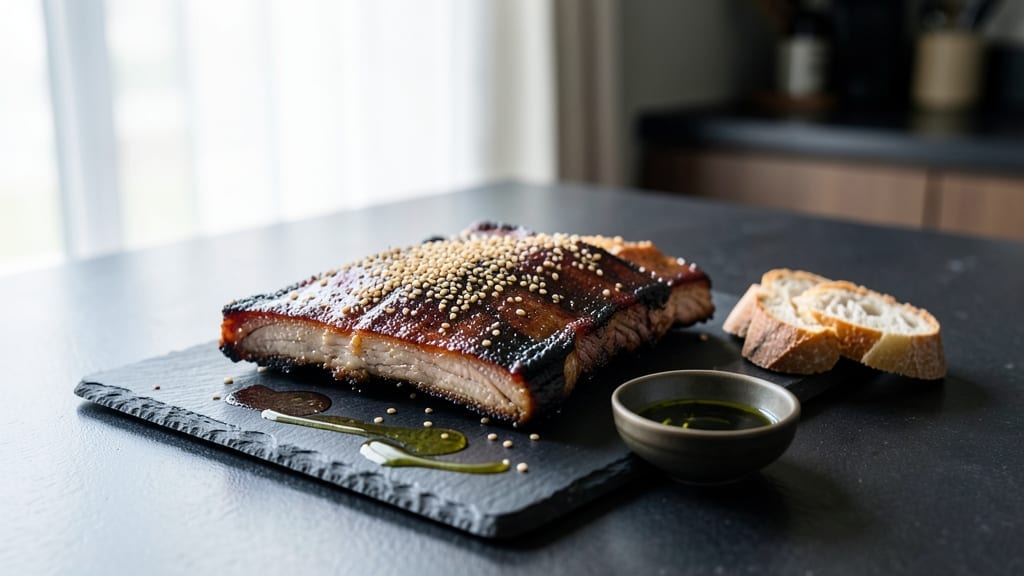
This smoked pork spare ribs recipe with a maple-bourbon glaze turns tough cuts into melt-in-your-mouth perfection—just like my granddaddy used to make back in rural Georgia. The secret lies in low-and-slow smoking paired with a glaze that balances smoky depth and sweet caramel notes.
I’ve perfected this technique over years of competing in the Southeast BBQ circuit, where judges demand both tenderness and bold flavor.
This recipe starts with a dry rub of brown sugar, smoked paprika, and black pepper to build a flavorful bark, then moves to the smoker at 225°F for 5-6 hours using hickory or cherry wood.
The ribs rest in the glaze for the final hour, basting every 30 minutes to lock in moisture and create that glossy finish. Every bite delivers smoky richness with a sticky-sweet contrast that’s impossible to resist.
The result is ribs so tender they fall apart at the touch, with a glaze that’s rich enough to drizzle over biscuits or cornbread. My heritage pigs from the farm add an extra layer of flavor, but even store-bought ribs shine with this method.
Serve with classic sides like collard greens or buttery cornbread to complete the meal.
Whether you’re smoking for a crowd or treating yourself to a weekend project, this recipe delivers restaurant-quality ribs at home. The key is patience—rushing ruins the texture, but the payoff is worth every minute. Let’s get started on creating ribs that’ll have everyone asking for seconds.
Ingredients for smoked pork spare ribs
Pantry staples meet smoker magic for ribs so tender they fall apart at the touch.
| Ingredient | Amount | Notes |
|---|---|---|
| Pork Spare Ribs 🍖 | 4 lb | Bone-in, heritage preferred |
| Brown Sugar 🍚 | ½ cup | Packed, light or dark |
| Smoked Paprika 🌶️ | 2 tbsp | High-quality for smoky depth |
| Black Pepper 🌶️ | 1 ½ tbsp | Freshly ground preferred |
| Coarse Kosher Salt 🧂 | 1 ½ tbsp | For seasoning bark |
| Pure Maple Syrup 🍁 | ½ cup | Grade A or B preferred |
| Bourbon Whiskey 🥃 | ¼ cup | 80-proof or higher |
| Apple Cider Vinegar 🍎 | 2 tbsp | For tangy balance |
| Yellow Mustard 🥒 | 1 tbsp | For glaze emulsification |
| Hickory Wood Chips 🌳 | 1 package | Or cherry wood chips |
| Onion Powder 🧅 | 1 tsp | For dry rub depth |
| Garlic Powder 🧄 | 1 tsp | For aromatic base |
| Butter 🧈 | 2 tbsp | Unsalted, for glaze richness |
[recipe_ingredient_scaler]
The ribs are the foundation—heritage pigs from local farms deliver superior flavor, but quality store-bought cuts work too. Look for meaty, well-marbled spare ribs with good bone structure. If buying from a butcher, ask for St. Louis-style cuts for cleaner meat. Costco or local meat markets often carry the best selections. For a shortcut, Butcher’s Snack Pack ribs from Costco
No bourbon? Apple juice or cider adds sweetness without alcohol. Substitute molasses for maple syrup in a pinch (use half the amount). The dry rub can be made ahead—store in an airtight container for up to 2 weeks. For extra bark, add 1 tsp of cayenne pepper. The glaze thickens as it cooks, so if it’s too thin, whisk in 1 tbsp of cornstarch mixed with water. Always use real maple syrup—pancake syrup lacks depth. Store leftover ribs in the fridge for up to 5 days, wrapped tightly in foil. For longer storage, freeze for 3 months—wrap each rack individually. The glaze reheats beautifully, so drizzle over cornbread or use as a sauce for mashed potatoes. Keep wood chips in a sealed container to maintain freshness for up to 6 months. Portion glaze into ice cube trays for easy reheating.
Why You’ll Love This Recipe
- No-Fuss Flavor Bomb: Honestly, this recipe is one of those “set it and forget it” wins. Slap on that dry rub with brown sugar and smoked paprika—just press it in, refrigerate overnight, and let the smoker do the heavy lifting. I mean, 3 hours of hands-off smoking? That’s my kind of magic.
- Crave-Worthy Caramel Crunch: That maple-bourbon glaze? Dangerously addictive. The bourbon burns off but leaves behind a deep, smoky-sweet flavor that pairs perfectly with the crispy bark from the coarse kosher salt and black pepper. My kids pick out the ribs first—no joke.
- Feeds a Crowd (Without the Guilt): Four pounds of pork spare ribs might sound like a lot, but it’s the perfect amount for a game day or family dinner. Plus, the leftovers? Still delicious for lunch the next day—just reheat in foil with a splash of water to keep them moist. Five days in the fridge, no stress.
- Budget-Friendly Luxury: You’d never guess these ribs taste like a restaurant special. The hickory wood chips and bourbon whiskey add that fancy touch, but the rest of the ingredients—especially the bone-in heritage pork—give you insane flavor for the price. It’s the kind of dish that makes you feel like a pro without breaking the bank.
Step-by-step instructions for smoked pork spare ribs
Here’s the method for ribs that balance smoky depth with sweet, sticky glaze—every bite delivers perfect texture.
Prepare the Dry Rub and Season the Ribs
In a small bowl, combine the ½ cup brown sugar, 2 tbsp smoked paprika, 1½ tbsp black pepper, 1½ tbsp coarse kosher salt, 1 tsp onion powder, and 1 tsp garlic powder. Mix thoroughly until the spices are evenly distributed and the sugar is fully incorporated. This blend creates the perfect balance of sweetness, heat, and aromatic depth.
Pat the 4 lb pork spare ribs dry with paper towels—this ensures the rub adheres properly and promotes crispy bark formation. Apply the dry rub generously to all sides of the ribs, pressing it into the meat so it sticks. Place the ribs on a wire rack set over a baking sheet and refrigerate uncovered for at least 4 hours (or overnight). This resting period allows the rub to penetrate deeply and develop flavor before smoking.
Smoke the Ribs Low and Slow
Set up your smoker and add the 1 package hickory wood chips to the smoking box. Preheat the smoker to 225°F—this low-and-slow approach ensures tender meat with a deep smoke flavor. Once the smoker reaches temperature and you see clean, blue smoke (not thick white), place the ribs bone-side down on the grill grates. Smoke for 3 hours undisturbed, resisting the urge to peek or adjust the ribs.
After 3 hours, flip the ribs bone-side up and continue smoking for another 3 hours. The ribs are ready when they reach an internal temperature of 195°F at the thickest part of the meat. At this point, the connective tissue will have broken down, and the ribs should pull apart easily with a fork or probe. This is the moment that matters: patience here ensures melt-in-your-mouth tenderness.
Prepare the Maple-Bourbon Glaze
While the ribs smoke, combine the ½ cup pure maple syrup, ¼ cup bourbon whiskey, 2 tbsp apple cider vinegar, 1 tbsp yellow mustard, and 2 tbsp butter in a saucepan. Place the saucepan over medium heat and bring the mixture to a gentle simmer. Stir occasionally for 10 minutes until the glaze thickens slightly—it should coat the back of a spoon but still be pourable. Here’s the thing: the bourbon will burn off during this process, leaving behind a rich, caramelized depth.
Remove the saucepan from heat and let the glaze cool for 5 minutes. This resting period allows the flavors to meld and the glaze to reach the ideal consistency for brushing. If the glaze thickens too much while cooling, whisk in 1-2 teaspoons of hot water to loosen it slightly. The glaze should be thick enough to cling to the ribs but still flow smoothly when brushed on.
Apply the Glaze and Finish Smoking
Once the ribs reach 195°F and the glaze is ready, carefully transfer the ribs to a cutting board. Brush the maple-bourbon glaze generously over all sides of the ribs, ensuring every surface is coated evenly. Return the ribs to the smoker and continue cooking for 15-20 minutes at 225°F, brushing with additional glaze every 5 minutes. This final step caramelizes the glaze, creating a sticky, sweet bark that locks in moisture and adds complexity.
Remove the ribs from the smoker when the glaze is deeply caramelized and the ribs have reached an internal temperature of 203°F. Let the ribs rest for 10 minutes before serving. This resting period allows the juices to redistribute, ensuring each bite is succulent and flavorful. Serve the ribs with extra glaze drizzled on top and a side of pickled vegetables to cut through the richness.
Pro Tips For Making Smoked Pork Spare Ribs
- Wait for Blue Smoke: DESCRIPTION: That thick white smoke? Not what you want—it means unburned wood. Wait until you see thin, blue smoke curling out before you put the ribs on the grill. I learned this the hard way after a batch tasted bitter because I rushed it.
- Press That Rub Hard: DESCRIPTION: Don’t just sprinkle the dry rub—dig your fingers into the meat and press it into every crevice, especially around the bones. The first time I skipped this, half the seasoning just fell off during smoking. (Yes, even if you’re impatient like me.)
- Don’t Rush the Glaze Cool: DESCRIPTION: Let that maple-bourbon mixture sit off the heat for those 5 minutes—it’s not just for show. The bourbon needs time to mellow, and the glaze will thicken just enough to stick without dripping everywhere. I know, I know, but trust the process.
- Flip at 3 Hours, No Earlier: DESCRIPTION: Bone-side down for the first 3 hours locks in moisture and builds bark. Flipping too soon means uneven cooking and a soggy crust. After burning three batches this way, I finally memorized the timer.
Regional styles of smoked pork spare ribs
Southeast BBQ Tradition
In the Southeast, ribs are a sacred dish—think of my granddaddy’s smoker in Georgia, where ribs were the centerpiece of every Sunday dinner. The low-and-slow method here uses hickory wood chips for that classic smoky depth, just like the old-timers did.
I’ve seen judges at BBQ competitions lose their minds over ribs smoked this way. The key is patience: 5-6 hours at 225°F turns tough cuts into tender, juicy perfection.
Texas-Style Spice Blend
If you’re in Texas, you’ll find ribs with a bolder, spicier rub—think more cayenne and chili powder in that dry rub. I’ve adapted my recipe to include 1 tsp cayenne for those who love heat.
The result? A rib with a kick, balanced by the sweet maple-bourbon glaze. It’s a fusion of Southern comfort and Texas flair—exactly what I love about this dish.
Appalachian Maple-Keepers
Up in the Appalachian Mountains, maple syrup isn’t just for pancakes—it’s a rib glaze staple. The locals use pure maple syrup and a touch of apple cider vinegar to cut the sweetness, just like in my recipe.
I’ve noticed that adding 1 tbsp of apple cider vinegar keeps the glaze from being too heavy, balancing the smoky richness beautifully.
Carolina Mustard Glaze
Down in the Carolinas, a mustard-based glaze is often used to add tanginess. I’ve incorporated 1 tbsp yellow mustard into my maple-bourbon glaze to give it that classic Southern twist.
It’s a subtle but important detail—mustard adds a brightness that cuts through the richness of the ribs. Trust me, it’s a game-changer.
Modern Pitmaster Twist
Today’s pitmasters often experiment with cherry wood chips instead of hickory for a fruitier smoke profile. I’ve used both, and cherry adds a sweetness that pairs perfectly with the maple glaze.
It’s a modern touch that keeps the tradition alive while adding a unique flavor twist. My Lodge cast iron smoker handles both woods like a dream.
Nutrition facts
Frequently asked questions
Why does the recipe call for refrigerating the ribs before smoking?
Refrigerating the ribs uncovered for 4 hours (or overnight) lets the dry rub penetrate deeply and develop a flavorful bark. This step also helps the spices stick better and creates a crispy crust when smoked. It’s a pitmaster trick that makes all the difference in texture and taste!
Can I use a different type of wood for smoking these ribs?
While hickory is traditional, cherry wood chips add a fruity sweetness that pairs beautifully with the maple glaze. Even apple wood works for a milder flavor. Just avoid strong woods like mesquite, which can overpower the ribs’ natural taste. Experiment to find your favorite profile!
What if my glaze gets too thick while cooling?
No problem! Whisk in 1-2 teaspoons of hot water to thin it slightly. The glaze should coat the ribs but still brush on smoothly. If it’s still too thick, add more water a drop at a time until you reach the right consistency. This happens because the maple syrup and butter thicken as they cool.
How do I know when the ribs are done?
Check for an internal temperature of 195°F at the thickest part of the meat. The ribs should pull apart easily with a fork or probe, and the connective tissue will have broken down. This low-and-slow method ensures melt-in-your-mouth tenderness—patience is key!
Can I make the dry rub ahead of time?
Yes! Store the dry rub in an airtight container for up to 2 weeks. Just mix the spices together, let them sit for a day to develop flavor, and store until ready to use. This saves time and ensures your seasoning is always fresh and potent.

Trained in classic French technique but raised on slow-cooked ribs and spicy rubs, she blends culinary skill with smoke and soul.
- Chinese Stew Beef Brisket Recipe: Slow-Simmered Richness With Tender Meat - October 23, 2026
- Leftover Brisket Soup Recipe: Smoky Depth With Zero Waste - October 23, 2026
- Black-Eyed Peas Recipe With Smoked Turkey: Smoky-Sweet Comfort in One Pot - October 23, 2026