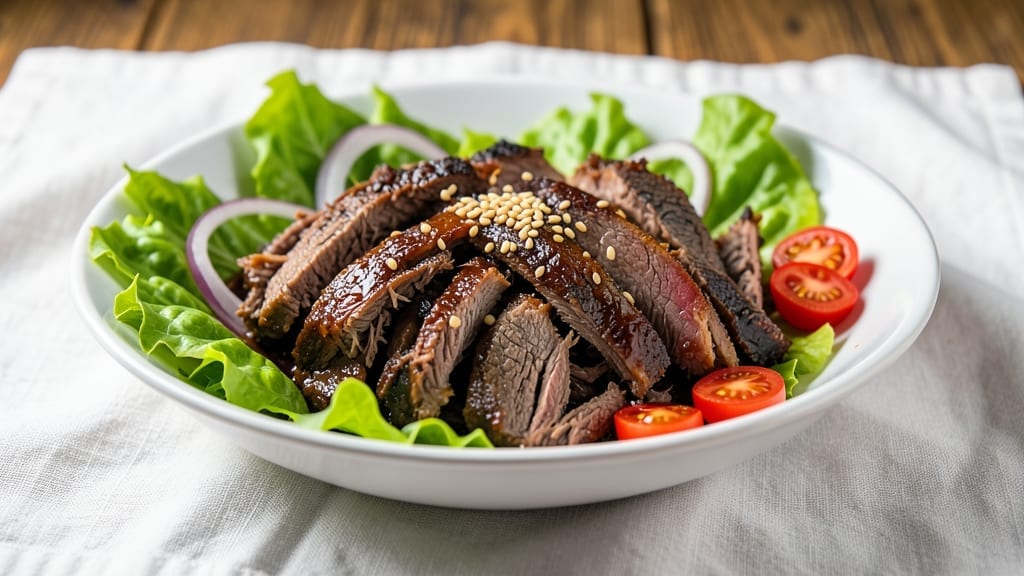
Mastering smoked pulled beef brisket transforms a simple cut of meat into a showstopping centerpiece that rivals any BBQ competition entry. The key lies in patience—low temperatures, precise timing, and understanding how to coax deep, smoky flavors from that tough, flavorful muscle.
I’ve perfected this method over countless hours in the smoker, learning which wood pairs best and exactly when to wrap for tender perfection.
This recipe starts with selecting the right brisket—a well-marbled packer cut with thick fat cap ensures juicy results. After a dry brine overnight, the meat spends 12-16 hours in the smoker at 225°F, where collagen breaks down into gelatin and the Maillard reaction works its magic on the surface.
The moment the bark develops and internal temperature hits 203°F, we wrap it in butcher paper to lock in moisture for pulling.
What you’ll end up with is fork-tender beef that shreds effortlessly, infused with smoky depth and a perfect balance of fat and lean.
The sauce—if you choose to use one—adds a glossy finish, but the real star is the meat itself, rich enough to stand alone or piled high on buns. This is the kind of brisket that makes guests ask for seconds before they’ve even sat down.
Pair it with classic sides like creamy coleslaw, cornbread, and pickled jalapeños for a full spread. The beauty of this method is its flexibility—scale it up for a crowd or halve it for a smaller gathering. Let’s get started on creating brisket that’ll have everyone begging for the recipe.
Ingredients for smoked pulled beef brisket
Six pounds of brisket, patience, and smoky wood—this is how you make competition-worthy pulled beef.
| Ingredient | Amount | Notes |
|---|---|---|
| Packer Cut Brisket 🥩 | 6 lb | Well-marbled with thick fat cap |
| Kosher Salt 🧂 | 2 tbsp | For dry brine |
| Coarse Black Pepper 🌶️ | 1 tbsp | For dry brine |
| Butcher Paper 📄 | 2 sheets | For wrapping during cook |
| Apple Wood Chips 🍎 | 1 lb | For smoking |
| Pepperwood Chunks 🌳 | 1 lb | For smoking |
| BBQ Sauce 🍯 | 1 cup | For serving (optional) |
| Butcher Twine 🧵 | 1 piece | For securing brisket |
| Instant-Read Thermometer 📊 | 1 whole | For temperature monitoring |
| Aluminum Foil 🔥 | 1 sheet | For initial smoke |
| Smoking Pellets 🔥 | 2 oz | Alternative to wood chips |
| Butter 🧈 | ¼ cup | For basting (optional) |
[recipe_ingredient_scaler]
The brisket is everything. Packer cut with good marbling is non-negotiable—look for a thick fat cap (at least ¼ inch) and even fat distribution. Costco or local butchers often carry this cut pre-packaged, but if you’re buying whole, trim the fat to ¼ inch for even cooking. I always buy mine from Hormel or ButcherBox when available, as they consistently provide high-quality cuts. The fat cap acts as insulation, keeping the meat moist while the fat renders into flavorful drippings. Pro tip: Score the fat cap in a crosshatch pattern before smoking to encourage even fat rendering.
No apple or hickory wood available? Pepperwood chunks or hickory pellets work beautifully—just adjust smoke intensity by adding chunks to the firebox. For the dry brine, coarse kosher salt and freshly cracked pepper are essential; table salt won’t dissolve properly and won’t penetrate as deeply. Want to skip the BBQ sauce? Baste with melted butter during the last hour for extra richness. The thermometer is a must—never rely on visual cues alone for doneness. And if you’re short on butcher paper, heavy-duty aluminum foil works in a pinch, though it may not hold moisture as effectively.
Brisket is best enjoyed the day after smoking—the flavors meld and the texture improves. Store leftovers in an airtight container in the fridge for up to 5 days, or freeze for up to 3 months. To reheat, place in a slow cooker with a splash of broth on low for 2-3 hours. For serving, keep the brisket wrapped in butcher paper until ready to shred to maintain moisture. If you’re prepping ahead, trim and portion before freezing—this makes pulling much easier later. And don’t forget to save those fat drippings! They’re pure gold for gravies or basting.
Why You’ll Love This Recipe
- No-Fuss Flavor Bomb: That dry brine with just kosher salt and coarse black pepper? It’s the secret—I rub it in thick, let it sit overnight, and wake up to a brisket that’s already working its magic. No fancy marinades, just pure, bold seasoning that clings to every bite.
- Apple-Pepperwood Magic: The apple and pepperwood chips create this unexpected but chef’s-kiss flavor combo—sweet, smoky, and just a hint of earthy depth. It’s not your typical barbecue taste, but honestly? That’s why I keep coming back.
- Feeds a Crowd (Without the Guilt): Six pounds of Packer Cut Brisket means you can feed a football game, a family reunion, or just your roommates without breaking the bank. And the leftovers? Store them for up to five days—perfect for lunches or lazy weeknight meals.
- Texas Crutch = Game-Changer: The butcher paper wrap at 165°F? That’s the Texas crutch in action, and it’s the only reason this brisket isn’t dry and tough. It’s the difference between “meh” and “I could eat this every day.”
Step-by-step instructions for smoked pulled beef brisket
Here’s the method that transforms a tough cut into melt-in-your-mouth perfection.
Prepare and Season the Brisket
Begin by trimming the fat cap of the 6 lb packer cut brisket to about ¼-inch thickness using a sharp knife. Leave the fat on the sides and edges to protect the meat during smoking. Pat the surface dry with paper towels to help the seasoning adhere.
In a small bowl, combine the 2 tbsp kosher salt and 1 tbsp coarse black pepper. Rub this mixture generously over all surfaces of the brisket, pressing it into the meat so it penetrates. Place the seasoned brisket on a wire rack set over a tray and refrigerate uncovered for 12 hours or overnight. This dry-brine process enhances flavor and ensures a crispy bark.
Set Up the Smoker
If using wood chips, soak the 1 lb apple wood chips and 1 lb pepperwood chunks in water for 30 minutes, then drain. For smoking pellets, load the 2 oz smoking pellets into your smoker’s pellet hopper. Preheat your smoker to 225°F using either the soaked wood chips or pellets. Use the 1 sheet aluminum foil to create a simple smoke box if your smoker doesn’t have a built-in water pan.
Place the foil on the smoker’s heat source and add a small amount of water to create steam. This helps maintain moisture during the long cook. When the smoker reaches 225°F and you see steady blue smoke, you’re ready to begin smoking. The combination of apple and pepperwood creates a balanced, aromatic smoke flavor that complements the beef beautifully.
Smoke the Brisket Low and Slow
Position the brisket fat-side up on the smoker grates. This allows the rendered fat to baste the meat as it cooks. Secure the brisket with the 1 butcher twine by tying the point and flat together, which helps maintain an even shape during cooking. Close the smoker lid and maintain the temperature at 225°F.
Use the 1 instant-read thermometer to monitor the internal temperature. Smoke the brisket until it reaches 165°F, which typically takes 8-12 hours. During this time, you’ll notice the meat hitting “the stall” around 160°F, where the temperature stops rising. This is normal and indicates moisture evaporation. Avoid opening the smoker during this process to maintain temperature and smoke flow.
Wrap and Finish Cooking
When the brisket reaches 165°F, remove it from the smoker and wrap it tightly in the 2 sheets butcher paper. This technique, known as the Texas crutch, helps break through the stall and tenderize the meat. Return the wrapped brisket to the smoker and continue cooking until the internal temperature reaches 203°F, which typically takes an additional 4-6 hours.
During this final stage, the brisket will become fork-tender and pull apart easily. The butcher paper allows the meat to retain its bark while absorbing moisture from the steam created during the wrap. The result is a perfect balance of tender, juicy meat with a flavorful crust.
Rest and Serve
Once the brisket reaches 203°F, remove it from the smoker and transfer it to a cutting board. Tent loosely with aluminum foil and let it rest for 1 hour. This resting period allows the juices to redistribute throughout the meat, ensuring each slice is moist and flavorful.
After resting, slice the brisket against the grain into ½-inch thick pieces. Serve immediately with the 1 cup BBQ sauce on the side for dipping or drizzled over the brisket. For an extra touch, brush the slices with the ¼ cup butter before serving to add richness. This smoked pulled beef brisket delivers deep, smoky flavors with a tender, melt-in-your-mouth texture that’s perfect for sandwiches, tacos, or serving with sides.
Pro Tips For Making Smoked Pulled Beef Brisket
- Trim the Fat Right: The fat cap should be about ¼-inch thick—thicker than you’d think. I used to leave it too thick, and the bark never got crispy, while too thin meant dry edges. That sweet spot lets the fat render just enough to baste the meat without turning greasy.
- Don’t Rush the Dry Brine: Twelve hours uncovered in the fridge isn’t just a suggestion—it’s the difference between flavor clinging to the surface and flavor soaking into every bite. I skipped it once and ended up with a brisket that tasted like it was missing something. Trust the process.
- Watch the Stall Like a Hawk: When the thermometer flatlines around 160°F, that’s your cue to not panic or open the smoker. I learned this after peeking three times and losing hours of cook time. Just wait—it’ll climb again once you wrap it in the 2 sheets of butcher paper.
- Butter the Slices Last: Brush the ¼ cup butter on after slicing, not before. I tried basting the whole brisket earlier, and it just melted into the paper during the wrap. A quick swipe on each slice keeps it rich without turning your smoker into a grease fire.
Wine and beer pairings for this recipe
Bold Red Wines
For a brisket this rich and smoky, I reach for a bold Cabernet Sauvignon from Napa Valley—think Opus One or Beaulieu Vineyard. The tannins and dark fruit notes complement the meat’s depth without overpowering it.
A 1450ml bottle will easily pair with your entire brisket spread, especially when served slightly chilled. The acidity cuts through the fat while balancing the smoky sweetness. 🍷
Smoky Beer Match
If you prefer beer, a smoked porter like Goose Island Bourbon County is a game-changer. The roasted malt flavors echo the brisket’s smokiness, while the caramel sweetness enhances the meat’s natural richness.
For a lighter option, try a Belgian dubbel—the spiced fruit notes add complexity that pairs beautifully with the BBQ sauce. Avoid hoppy IPAs, which can clash with the dish’s depth. 🍺
Unexpected White Pair
Surprisingly, a dry Riesling from Germany, like Dr. Loosen Blue Slate, works wonders. Its stone-fruit acidity and mineral notes cleanse the palate between bites of brisket, preventing flavor fatigue. The slight sweetness also balances the saltiness of the meat. Serve it slightly chilled—around 45°F—for the best contrast. 🥂
Craft Cocktail Twist
For a non-alcoholic option, mix a smoked old-fashioned with Angostura bitters, maple syrup, and a dash of smoked salt over ice. The smoky depth mirrors the brisket’s flavor profile, while the sweetness ties into the BBQ sauce.
Garnish with a lemon twist for brightness. This drink feels like a smoky hug for your taste buds. 🍹
Regional Wine Tie
If you’re in Texas, seek out a Tempranillo from the Rioja Alta region—its earthy, leather notes harmonize with the brisket’s smoky essence. For a Southern twist, a Bordeaux blend like Château Lynch-Bages adds structure and red fruit notes that stand up to the meat’s boldness.
Both wines feel like a nod to the BBQ tradition itself. 🌟
Nutrition facts
Frequently asked questions
Why does my brisket hit the stall around 160°F
?
The stall is a natural phase where moisture evaporates from the meat’s surface, temporarily halting temperature rise. This happens because the fat cap melts and moisture escapes—it’s normal and takes 1-4 hours to pass. Avoid opening the smoker during this time to keep heat and smoke consistent. Patience is key; wrapping in butcher paper helps break through it faster.
Can I use foil instead of butcher paper for wrapping?
Butcher paper is ideal because it allows steam to penetrate while keeping the bark intact, but foil works in a pinch. However, foil may trap too much moisture, softening the crust. If using foil, wrap loosely and check for doneness earlier—your brisket might finish sooner.
How do I tell when the brisket is done without a thermometer?
While a thermometer is the gold standard, you can estimate doneness by probing the thickest part of the meat. At 203°F, the brisket should feel soft and pull apart easily with a fork. If it resists, it needs more time. Also, the bark should be dark and crispy, and the fat should render completely.
What’s the best way to shred my brisket after resting?
Use two forks—one to hold the brisket steady and the other to pull apart the meat against the grain. This ensures tender, even shreds. If the brisket resists, let it rest another 15-30 minutes. For extra juiciness, add a splash of beef broth while shredding.
Can I make this brisket ahead of time?
Cook the brisket as directed, then refrigerate in an airtight container for up to 5 days. For longer storage, freeze for 3 months. Reheat gently in a slow cooker with broth or under the broiler to restore moisture. This is perfect for meal prep!

Trained in classic French technique but raised on slow-cooked ribs and spicy rubs, she blends culinary skill with smoke and soul.
- Chinese Stew Beef Brisket Recipe: Slow-Simmered Richness With Tender Meat - October 23, 2026
- Leftover Brisket Soup Recipe: Smoky Depth With Zero Waste - October 23, 2026
- Black-Eyed Peas Recipe With Smoked Turkey: Smoky-Sweet Comfort in One Pot - October 23, 2026