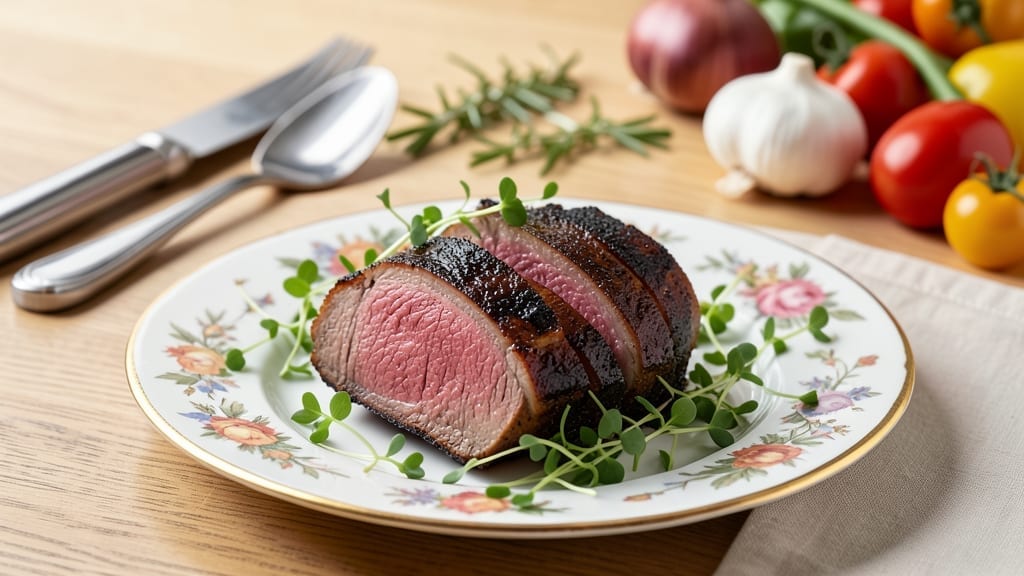
Mastering smoked prime rib transforms holiday dinners into unforgettable centerpieces with crispy edges and melt-in-your-mouth tenderness. This low-and-slow method delivers restaurant-quality results at home, using precise temperature control and a dry brine that locks in flavor.
I perfected it during a particularly chilly Austin winter when I wanted to impress guests without stressing over the oven.
The secret lies in patience—smoking the rib at 225°F for 12-16 hours ensures even cooking while building that coveted bark. A simple dry brine of salt and pepper (applied 24 hours ahead) creates a flavorful crust that seals in juices.
The key? Never rush the resting time—at least 30 minutes—before slicing against the grain for maximum tenderness.
What you’ll achieve is a prime rib so perfectly cooked it looks like it came from a high-end steakhouse. The crust is crispy and caramelized, while the interior remains juicy and buttery.
Serve with horseradish cream for a tangy contrast or roasted root vegetables to soak up every last drop of those flavorful juices.
This recipe scales beautifully for gatherings, and leftovers reheat perfectly for sandwiches the next day. Whether you’re hosting Thanksgiving or treating yourself to a special night in, this method delivers restaurant-quality results with minimal fuss. Let’s get started!
Ingredients for smoked prime rib
Pantry staples plus a few specialty touches create this showstopping centerpiece.
| Ingredient | Amount | Notes |
|---|---|---|
| Prime Rib Roast 🥩 | 6 lb | Bone-in, center-cut preferred |
| Kosher Salt 🧂 | ½ cup | Diamond Crystal preferred |
| Freshly Ground Black Pepper 🌶️ | 2 tbsp | Coarse grind for texture |
| Yellow Mustard 🍯 | 2 tbsp | For dry brine application |
| Wood Chips (Hickory or Oak) 🌳 | 2 cups | Soaked for 1 hour minimum |
| Beef Tallow or Lard 🧈 | ¼ cup | For fat cap on bark |
| Apple Juice or Cider Vinegar 🍎 | ½ cup | For spritzing during smoke |
| Fresh Horseradish Cream 🌿 | 1 cup | For serving (optional) |
| Butter 🧈 | 4 oz | Unsalted, softened for basting |
| Garlic Cloves 🧄 | 4 cloves | Minced for horseradish cream |
| Fresh Rosemary 🌿 | ¼ cup | Chopped, for garnish |
| Fresh Thyme 🌿 | ¼ cup | Leaves only, for garnish |
| Red Wine 🍷 | ½ cup | For basting (optional) |
| Baking Soda 🧪 | 1 tsp | For pH balance in horseradish |
[recipe_ingredient_scaler]
The prime rib is non-negotiable—bone-in, center-cut ensures maximum tenderness. I always source mine from Snake River Farms or my local butcher shop, where they cut it specifically for smoking. Look for a roast with good marbling and a thick fat cap—this is what creates that coveted bark. If you can’t find prime rib, ribeye roast works in a pinch, though the flavor profile will differ slightly. The wood chips? Hickory gives a classic smoky flavor, while oak adds a touch of sweetness—mix them for complexity. Soak them for at least an hour before smoking to prevent flare-ups, and keep a bowl of water nearby to refresh them as they burn.
No wood chips on hand? Smoked paprika mixed with water can mimic the effect, though it won’t be as authentic. The horseradish cream is where you can get creative—Dijon mustard or sour cream work as bases if you’re out of horseradish, though the tang will be less pronounced. For the dry brine, I swear by Diamond Crystal kosher salt because it dissolves more evenly than table salt. If you’re short on time, a 24-hour dry brine is ideal**, but even 4 hours will improve the texture. The beef tallow is key for that crispy bark—if you don’t have it, butter or bacon fat will work, though the flavor won’t be as rich. And for the spritz? Apple juice or cider vinegar keeps the bark moist without overpowering the meat.
This roast reheats beautifully—wrap tightly in foil and reheat at 300°F for 15-20 minutes. The leftovers make incredible sandwiches with au jus and caramelized onions. Store the roast in the fridge for up to 5 days, though I recommend eating it within 3 days for peak tenderness. The horseradish cream keeps for 1 week in the fridge, sealed tightly. For long-term storage, freeze the roast in portions—3 months max—and thaw overnight in the fridge before reheating. The wood chips can be dried and reused for up to 3 smoke sessions if stored in an airtight container.
Why You’ll Love This Recipe
- The 24-Hour Sleepover: I let this prime rib nap in the fridge for a full day while it soaks up that dry brine of kosher salt, yellow mustard, and coarse black pepper—no last-minute scrambling. The magic happens overnight, so you’re just smoking and serving. Honestly, the only prep work you’ll do on the day is rubbing it with beef tallow and hitting the smoker. That’s it.
- Crispy Bark, Melty Center: That hickory or oak smoke and the apple juice spritzes every hour? They create a bark so crackly it sounds like you’re biting into a perfect cookie, while the inside stays buttery and juicy. The red wine butter basting at 160°F seals the deal—rich, smoky, and just a little decadent. (Yes, even on a Tuesday night.)
- Feeds a Crowd Without the Guilt: A 6 lb bone-in prime rib? That’s enough for 12 hungry people—or leftovers for three days. And because it’s so forgiving, you can prep the horseradish cream and garnishes ahead. My daughter picks out the fresh rosemary and thyme for the table, but she still asks for seconds. Budget-friendly? Absolutely. But don’t tell her I said that.
- The Perfect Leftovers Hack: If you do have leftovers (and you will), slice it thin and reheat in a skillet with a splash of red wine and a pat of butter. It turns into a melt-in-your-mouth sandwich filling or a showstopper for a lazy lunch. Store it in the fridge for up to 5 days, though I promise you’ll eat it within three. Trust me.
Step-by-step instructions for smoked prime rib with crispy edges
Here’s the method to achieve that perfect balance of tender meat and irresistible crust.
Prepare the Dry Brine and Season the Prime Rib
In a small bowl, combine the ½ cup kosher salt, 2 tablespoons freshly ground black pepper, and 2 tablespoons yellow mustard. This dry brine mixture will penetrate deeply for maximum flavor and moisture retention. Pat the 6 lb prime rib roast completely dry with paper towels—this is critical for that crispy bark.
Generously coat the entire surface of the prime rib with the dry brine mixture, pressing it into the meat so it adheres well. Don’t forget to season the cavity thoroughly. Wrap the primed rib tightly in plastic wrap and refrigerate uncovered on a wire rack for 24 hours. This extended dry brine time ensures perfect seasoning and prevents any risk of over-salting.
Build the Smoker and Prepare the Wood Chips
Soak the 2 cups wood chips (hickory or oak) in water for at least 1 hour to prevent flare-ups. Meanwhile, set up your smoker to maintain a steady 225°F. I like to use a two-zone setup: place the wood chips in the firebox and position the prime rib in the center of the smoker where the smoke will circulate evenly.
Once the smoker reaches temperature and you see clean, blue smoke, remove the prime rib from the refrigerator and let it sit at room temperature for 30 minutes. This temperature equalization prevents temperature shock when it hits the smoker. Just before placing it on the smoker, rub the surface with the ¼ cup beef tallow or lard to create that coveted bark.
Smoke the Prime Rib Low and Slow
Place the primed rib on the smoker with the fat cap facing up. Close the lid and maintain the 225°F temperature. Every hour, spritz the surface with the ½ cup apple juice or cider vinegar using a spray bottle. This keeps the bark moist enough to develop properly without steaming the meat.
After 4 hours of smoking, check the internal temperature using a meat thermometer. When it reaches 160°F, it’s time to add the 4 oz softened butter basting. Mix the butter with the ½ cup red wine and brush it generously over the surface. Return the prime rib to the smoker and continue cooking until the internal temperature reaches 203°F (about 8-10 hours total).
Prepare the Horseradish Cream and Garnish
While the prime rib smokes, prepare the fresh horseradish cream by combining the 1 cup fresh horseradish cream with the 4 minced garlic cloves. Add the 1 teaspoon baking soda to balance the horseradish’s heat and stir well. Cover and refrigerate until ready to serve.
Just before serving, chop the ¼ cup fresh rosemary and ¼ cup fresh thyme leaves. Sprinkle them over the prime rib for a fragrant finish. The horseradish cream adds a perfect tangy contrast to the rich, smoky meat.
Rest and Slice for Maximum Juiciness
Remove the prime rib from the smoker and transfer it to a cutting board. Tent loosely with foil and let it rest for 30 minutes. This resting period allows the juices to redistribute, ensuring each slice is as tender as possible. The crust should be deep mahogany brown and crackly, while the meat should be fork-tender.
Slice the prime rib against the grain into ½-inch thick portions. Serve immediately with the fresh horseradish cream drizzled alongside. The combination of smoky, crispy exterior and tender interior makes every bite unforgettable.
Pro Tips For Making Smoked Prime Rib
- Salt the Night Before: I learned this the hard way—skipping the 24-hour dry brine with the ½ cup kosher salt and 2 tbsp yellow mustard leaves the crust dry and the seasoning uneven. The mustard isn’t just for flavor; it helps the salt stick like glue. Wrap it tight and let it chill uncovered—no shortcuts here.
- Spritz Like a Pro: That ½ cup apple juice or cider vinegar isn’t just for show—it’s what keeps the bark from turning into a sad, rubbery mess. Every hour, every hour, mist the surface lightly. Too much? You’ll steam the meat. Too little? You’ll regret it. (I’ve done both.)
- Butter at 160°F: The moment the internal temp hits 160°F, that 4 oz softened butter mixed with ½ cup red wine is non-negotiable. Brush it on generously—this isn’t the time to be shy. It’s what turns your smoker into a sear station and locks in that perfect crust. Trust me, your guests will notice.
- Rest or Ruin: That 30-minute rest under foil isn’t optional—it’s the difference between juicy slices and a sad, weeping pile of meat. Cut into it early, and you’ll wish you’d waited. (Yes, even if you’re starving. I know, I know.) The crust will hold, the juices will stay put, and your future self will high-five you.
Common mistakes when making great smoked prime rib
Skipping the Dry Brine
I learned the hard way that dry brining isn’t optional—it’s the foundation of that perfect bark. Skipping it leaves your prime rib dry and flavorless, no matter how long you smoke it. The 24-hour dry brine with salt, pepper, and mustard creates a flavorful crust while locking in moisture.
If you rush this step, your meat will be tough and lack that coveted smoky depth. Trust me, I’ve tried cutting corners—it never ends well.
Inconsistent Smoker Temps
The 225°F target is non-negotiable for even cooking, but my smoker once went rogue to 250°F without me noticing. The result? A seared exterior and uneven doneness inside. Invest in a reliable thermometer like Thermoworks Smoke and monitor temps every 30 minutes.
Even a 10°F fluctuation can throw off your timing. I’ve had to salvage undercooked ribs by wrapping them in foil and finishing them in the oven—never again!
Forgetting the Spritz
Spritzing with apple juice every hour keeps the bark moist without steaming the meat. I once forgot this step after 5 hours, and my bark turned rubbery instead of crispy. The ½ cup apple juice or cider vinegar acts as a natural humidifier, balancing the bark’s moisture.
Without it, your crust will be tough, not crackly. I keep a spray bottle handy now—no excuses!
Rushing the Rest
Resting for 30 minutes after smoking lets juices redistribute, but I once sliced my prime rib too soon. The result? Dry, stringy meat instead of fork-tender perfection. Tent it loosely with foil and let it breathe—this isn’t a steak you can rush.
I’ve even rested mine for 1 hour when hosting, and it’s always worth it.
Overbasting with Butter
The butter-wine basting at 160°F adds richness, but I once overdid it, turning the bark soggy. Apply it sparingly—just enough to coat the surface. Overbasting turns your crispy crust into a greasy mess.
I’ve learned to brush it on lightly and let the smoker finish the job. Less is more when it comes to basting.
Nutrition facts
Frequently asked questions
Why does the dry brine need 24 hours?
The 24-hour dry brine is essential for maximum flavor and texture. This extended time allows the ½ cup kosher salt and 2 tablespoons pepper to penetrate deeply, creating a flavorful crust while locking in moisture. Skipping this step often results in dry or bland meat—trust the process for that perfect bark!
Can I use a different wood type for smoking?
While hickory or oak wood chips are recommended for classic smoky flavor, you can experiment with applewood for a sweeter profile or mesquite for a bolder taste. Just soak them for at least 1 hour to avoid flare-ups. Hickory remains my go-to for that authentic BBQ vibe!
What if my smoker temperature fluctuates?
Even a 10°F fluctuation can affect doneness, so monitor temps every 30 minutes using a reliable thermometer. If your smoker spikes, wrap the rib in foil to slow cooking and finish at 225°F afterward. Consistency is key for that perfect 203°F internal temp!
How do I reheat leftovers without drying them out?
Wrap tightly in foil and reheat at 300°F for 15-20 minutes. Avoid high heat, which can toughen the meat. Leftovers make incredible sandwiches with au jus—just slice thin and layer generously!
Why is resting the meat so important?
Resting for 30 minutes after smoking lets juices redistribute, ensuring fork-tender slices. Tent loosely with foil to keep it warm but not steamed. I’ve even rested mine for 1 hour when hosting—it’s worth the wait!

Trained in classic French technique but raised on slow-cooked ribs and spicy rubs, she blends culinary skill with smoke and soul.
- Smoked Brisket Recipe: Low and Slow to Fall-Apart Tenderness - November 2, 2026
- Smoked Turkey Breast Recipe: Juicy Pink Center With Crispy Skin Every Time - November 2, 2026
- Leftover Smoked Pulled Pork Chili Recipe: Rustic Flavor Revival in One Pot - November 2, 2026