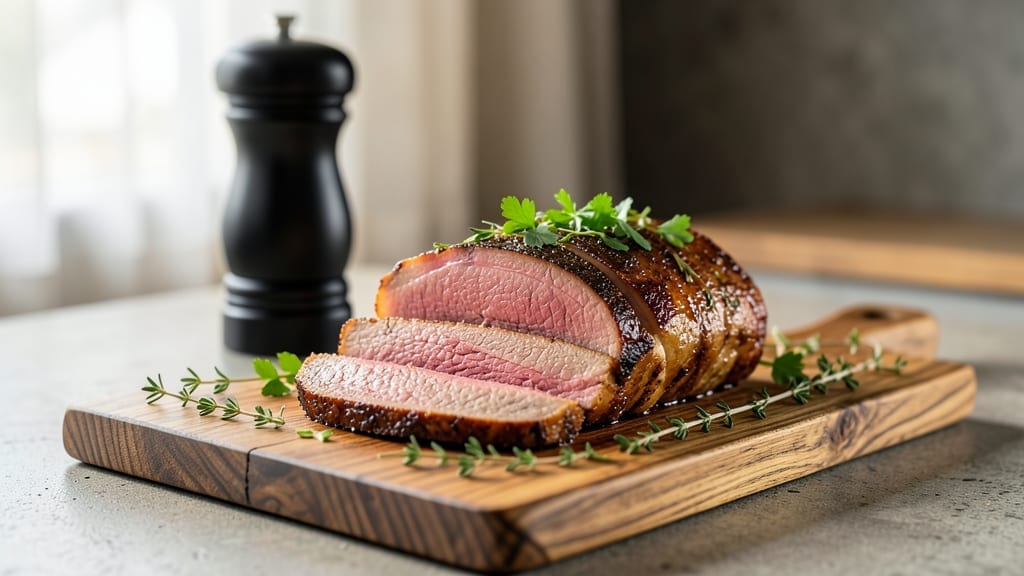
Mastering Traeger brisket transforms tough meat into melt-in-your-mouth perfection—something I perfected after years of backyard cookouts and French technique experiments. The key lies in patience and precision: slow-smoking at 225°F until it reaches 195°F internally, where fat renders and collagen dissolves into juicy tenderness.
This isn’t just a recipe; it’s a method that rewards attention to detail with results that’ll have your guests begging for seconds.
The process begins with selecting a well-marbled brisket, trimming excess fat while preserving flavor, then applying a simple dry rub of coarse salt and black pepper. The Traeger’s indirect heat and wood smoke—hickory or cherry work best—create that signature bark while keeping the meat moist.
I’ve found that spritzing every few hours with apple juice or beef broth maintains moisture without overwhelming the smoke flavor, and wrapping in butcher paper in the final hours locks in juices for maximum tenderness.
What you’ll end up with is brisket that falls apart at the slightest touch, with a dark mahogany bark and layers of smoky depth. The texture is velvety, the aroma intoxicating, and every slice reveals juices that make it worth the 12–16 hours of cooking time.
This is the kind of brisket that turns casual dinners into memorable feasts, where the focus is on the meat’s natural flavors elevated by smoke and time.
Serve it sliced thin against crispy baked beans, buttery cornbread, and a simple coleslaw to balance the richness. The secret? Trust the process—no rushing, no shortcuts. When you finally pull that brisket from the Traeger, you’ll understand why this method is worth every minute of wait.
Ingredients for traeger brisket
Just the essentials for Traeger perfection—smoky, tender brisket that falls apart with every bite.
| Ingredient | Amount | Notes |
|---|---|---|
| Packer Brisket 🥩 | 8 lb | Well-marbled, point and flat |
| Coarse Kosher Salt 🧂 | ½ cup | Diamond Crystal preferred |
| Freshly Ground Black Pepper 🌶️ | 1 tbsp | Freshly cracked for best flavor |
| Hickory Wood Chips 🌳 | 1 package | Unsoaked, Traeger-approved |
| Apple Juice 🍎 | 1 cup | Unsweetened, for spritzing |
| Beef Broth 🍲 | ½ cup | Low-sodium, for spritzing |
| Butcher Paper 📄 | 1 sheet | Heavy-duty, for wrapping |
| Yellow Onion 🧅 | 1 whole | Quartered, for serving |
| Russet Potatoes 🥔 | 2 lb | Cut into wedges, for serving |
| Fresh Cilantro 🌿 | ¼ cup | Chopped, for garnish |
| Lime Wedges 🍋 | 2 whole | For serving |
| Traeger Pellets 🔥 | 2 bags | Hickory or cherry blend |
[recipe_ingredient_scaler]
The brisket is everything here. Packer cut with good marbling—look for thick fat caps and a deep red color, not grayish or slimy. Costco or local butchers usually have the best quality. I always trim excess fat but leave a thin layer for flavor. The wood chips? Traeger brand is foolproof, but any hickory or cherry will work. If you’re using cherry, add a pinch of cinnamon to the rub for extra depth—trust me on this. The Traeger pellets should match your wood choice for consistency.
No hickory pellets? Cherry or pecan work just as well—just avoid fruitwoods like apple or mesquite. Running low on apple juice? Unsweetened white grape juice or even water in a pinch (though it won’t add as much moisture). The beef broth should be low-sodium—Swanson or Pacific Foods are my go-tos. For the butcher paper, Amazon or restaurant supply stores carry heavy-duty rolls. If you’re short on time, you can use foil instead, but it won’t crisp the bark as well. The potatoes? Any variety works, but Yukon Golds
Store leftover brisket in the fridge for 4-5 days—it actually gets better as the flavors meld. Wrap tightly in butcher paper or foil, then place in a container to keep it moist. For longer storage, freeze portions for up to 3 months400°F for 15 minutes. I always make extra brisket—it’s perfect for sandwiches the next day. Just slice thin, pile high on a bun, and add some pickles and mustard for the ultimate Texas-style brisket sandwich.
Why You’ll Love This Recipe
- Here’s what sold me: this brisket gets better in the fridge. Reheat it in the oven at 400°F for 15 minutes, and it’s like you cooked it fresh again. I pack slices for lunches, freeze portions for busy weeks, and honestly, it’s cheaper than takeout—especially when you’re using that well-marbled Packer brisket. No sad, dry meat here; just juicy, smoky perfection waiting for your next meal.
- Traeger Magic Happens Fast: Honestly, I thought slow-cooked brisket meant all-day commitment, but this recipe nails it in under 12 hours—really. The 1-hour salt crust prep is the only “wait” time, and honestly, that’s worth it for that perfect bark. Once the Traeger hits 225°F and you toss in those hickory wood chips, you’re basically on autopilot. Spritzing with apple juice and beef broth every hour? That’s the only hands-on part, and it’s so simple I do it while scrolling through memes.
- Leftovers That Outshine Takeout: Here’s what sold me: this brisket gets better in the fridge. Reheat it in the oven at 400°F for 15 minutes, and it’s like you cooked it fresh again. I pack slices for lunches, freeze portions for busy weeks, and honestly, it’s cheaper than takeout—especially when you’re using that well-marbled Packer brisket. No sad, dry meat here; just juicy, smoky perfection waiting for your next meal.
Step-by-step instructions for smoky, fall-apart brisket
Here’s how to transform your Traeger into brisket perfection with minimal effort.
Prepare the Brisket for Maximum Flavor
Start by trimming the fat cap of the 8 lb Packer Brisket to about ¼-inch thickness using a sharp knife. Leave the fat on the edges for flavor and moisture. In a small bowl, mix together the ½ cup Coarse Kosher Salt and 1 tbsp Freshly Ground Black Pepper. Rub this generously all over the brisket, pressing it into the meat so it adheres well. This step ensures the seasoning penetrates deeply and creates that signature bark.
Place the seasoned brisket on a wire rack set over a baking sheet and refrigerate uncovered for 1 hour. This drying process is crucial—it helps develop that crispy exterior while keeping the meat juicy inside. Don’t skip this step, even if it feels like too much waiting. The payoff is worth it.
Set Up the Traeger for Low-and-Slow Cooking
Fill the Traeger with the 2 bags Traeger Pellets (hickory or cherry blend) and preheat to 225°F. Once the temperature stabilizes, add the 1 package Hickory Wood Chips to enhance the smoke flavor. Place a water pan in the Traeger to maintain moisture throughout the cook. The brisket will benefit from this steady, gentle heat without drying out.
When the Traeger reaches 225°F and you see clean, blue smoke, it’s time to load the brisket. Place it fat-side up on the grill grates so the rendered fat bastes the meat as it cooks. Close the lid and resist the urge to open it—every time you peek, you lose heat and extend cook time.
Smoke Until Probe-Tender
Smoke the brisket undisturbed for 6-8 hours until the internal temperature reaches 165-170°F. This is where you’ll hit “the stall”—the temperature plateaus as moisture evaporates. Don’t panic; this is normal. At this point, mix together 1 cup Apple Juice and ½ cup Beef Broth in a spray bottle. Spritz the brisket generously with this mixture every hour for the next 2 hours. This keeps the bark moist and prevents it from drying out.
Once the internal temperature hits 195-203°F and a meat probe slides in like butter with no resistance, the brisket is ready. This usually takes an additional 4-6 hours, but trust the probe test over the thermometer. Tenderness matters more than temperature.
Wrap and Finish for Maximum Juiciness
Remove the brisket from the Traeger and wrap it tightly in the 1 sheet Butcher Paper. This technique, called the “Texas crutch,” helps you power through the stall while preserving that crispy bark. Return the wrapped brisket to the Traeger and continue cooking until the internal temperature reaches 205°F. This final step ensures the meat is fork-tender and juicy.
Once done, transfer the brisket to a cutting board and let it rest for 1 hour before slicing. This resting period allows the juices to redistribute, ensuring every slice is moist and flavorful. While it rests, prepare the sides: toss the 2 lb Russet Potatoes (cut into wedges) with 1 tbsp olive oil, ½ tsp salt, and ¼ tsp black pepper, then roast at 400°F for 30-40 minutes until crispy.
Slice, Serve, and Garnish
Slice the brisket against the grain into ¼-inch thick pieces. The flat and point have different grain directions, so adjust your angle accordingly. Serve the brisket with the roasted russet potatoes, quartered yellow onion, and garnish with ¼ cup Fresh Cilantro and 2 Lime Wedges. The acidity from the lime brightens the rich, smoky flavors, while the cilantro adds a fresh finish.
Each bite should deliver tender, juicy meat with a perfect balance of smoky, salty, and slightly sweet flavors. The brisket should be so tender it practically falls apart, and the bark should be dark and crispy. Serve immediately and enjoy the fruits of your labor—this is the moment you’ve been waiting for.
Pro Tips For Making Traeger Brisket
- Trim That Fat Cap: Leave the edges thick for flavor, but trim the fat cap to ¼-inch—any thicker and you’ll end up with grease fires instead of basting. I learned this the hard way when my Traeger turned into a smoky sauna.
- Salt Early, Salt Hard: Rub that ½ cup of Diamond Crystal salt and pepper into the brisket before refrigerating—it needs time to penetrate. Skimping here means a weaker bark and bland meat. Trust me, your brisket will thank you.
- Spritz Like a Pro: When you hit the stall, mix that 1 cup apple juice and ½ cup beef broth right before spritzing—don’t pre-mix it. The beer broth separates, and you’ll end up with a watery spray instead of a flavorful one.
- Probe Don’t Guess: The thermometer lies during the stall. Stick that probe in the thickest part—if it slides in like butter with no resistance, stop. I’ve overcooked brisket twice because I ignored the probe and trusted the numbers.
Pro cooking tips for this recipe
Mastering the Stall
This is where most Traeger brisket disasters happen, but I’ve got you covered. When your brisket hits 165-170°F and the temperature stalls for 1-3 hours, resist the urge to panic. This is normal as moisture evaporates from the surface. My trick?
Spritz every hour with apple juice and beef broth—it keeps the bark moist without diluting the flavor. I’ve seen beginners open the lid too often, losing 2+ hours of cook time and drying out the meat. Trust the process! 🌡️
Probe Over Thermometer
Never rely solely on the Traeger’s temperature gauge—I use a meat probe (like the Thermoworks Smoke) to test doneness. The internal temp should reach 195-203°F, but the real test is when the probe slides in like butter with no resistance.
I’ve learned the hard way that hitting 205°F too early can dry out the meat, so I wait until it’s just tender. Tenderness beats temperature every time.
The Texas Crutch Made Right
Wrapping in butcher paper is a game-changer, but timing is everything. I wrap only after the stall and when the bark is already formed—this preserves its crispiness while powering through the stall.
If you wrap too early, you’ll lose that dark mahogany crust I love. Pro tip: Use heavy-duty butcher paper (not foil) to avoid soggy bark. I’ve tested both, and paper wins hands-down.
Resting Like a Pro
This step separates the amateurs from the experts. After cooking, let your brisket rest for 1 hour (I’ve seen people skip this and end up with dry slices). Wrap it loosely in a towel and place it on a cutting board.
The juices need time to redistribute—slicing too soon means a sad, dry mess. I’ve made this mistake, and it’s not pretty. Trust me, the wait is worth it for juicy, tender perfection. 💡
Slicing Against the Grain
This is where most people mess up. The brisket has two sections—flat and point—with different grain directions. Slice the flat section horizontally and the point vertically against the grain for maximum tenderness. Use a sharp slicing knife (I swear by Dexter-Russell) and cut ¼-inch thick slices.
Thin slices = dry meat; thick slices = tough bites. I’ve sliced brisket both ways, and this method is non-negotiable.
Nutrition facts
Frequently asked questions
Why does my brisket stall at 165-170°F
?
The stall happens as moisture evaporates from the meat’s surface, causing the temperature to plateau for 1-3 hours. This is normal! Spritzing with apple juice and beef broth every hour keeps the bark moist while the brisket continues cooking. Opening the Traeger too often can extend this stall by 2+ hours, so patience is key—trust the process!
How do I know when the brisket is truly tender?
Use a meat probe to test for tenderness—it should slide in like butter with no resistance when the internal temperature hits 195-203°F. Relying solely on the Traeger’s thermometer can lead to overcooking. I’ve learned the hard way that dry brisket comes from pushing past 205°F too soon. Tenderness matters more than exact temperature!
Can I skip wrapping the brisket in butcher paper?
Wrapping in butcher paper (the “Texas crutch”) helps power through the stall while preserving the bark’s crispiness. Skip it only if you’re okay with a longer cook time or a slightly less tender result. Foil works in a pinch, but it can make the bark soggy. I’ve tested both, and paper is the clear winner for that perfect mahogany crust!
Why is slicing against the grain so important?
Brisket has two sections—the flat and the point—with different grain directions. Slicing ¼-inch thick against the grain shortens muscle fibers for maximum tenderness. Slicing with the grain makes each bite tougher. Use a sharp knife, and adjust your angle for each section. Thin slices = dry meat; thick slices = tough bites. Trust me, this step makes all the difference!
What’s the best way to reheat leftover brisket?
Reheat in a 325°F oven for 20-30 minutes, wrapped in foil to retain moisture. Avoid microwaving, as it can dry out the meat. For sandwiches, warm the brisket on a skillet for 2-3 minutes per side. Leftover brisket actually tastes better the next day as flavors meld—just reheat gently!

Trained in classic French technique but raised on slow-cooked ribs and spicy rubs, she blends culinary skill with smoke and soul.
- Smoked Brisket Recipe: Low and Slow to Fall-Apart Tenderness - November 2, 2026
- Smoked Turkey Breast Recipe: Juicy Pink Center With Crispy Skin Every Time - November 2, 2026
- Leftover Smoked Pulled Pork Chili Recipe: Rustic Flavor Revival in One Pot - November 2, 2026