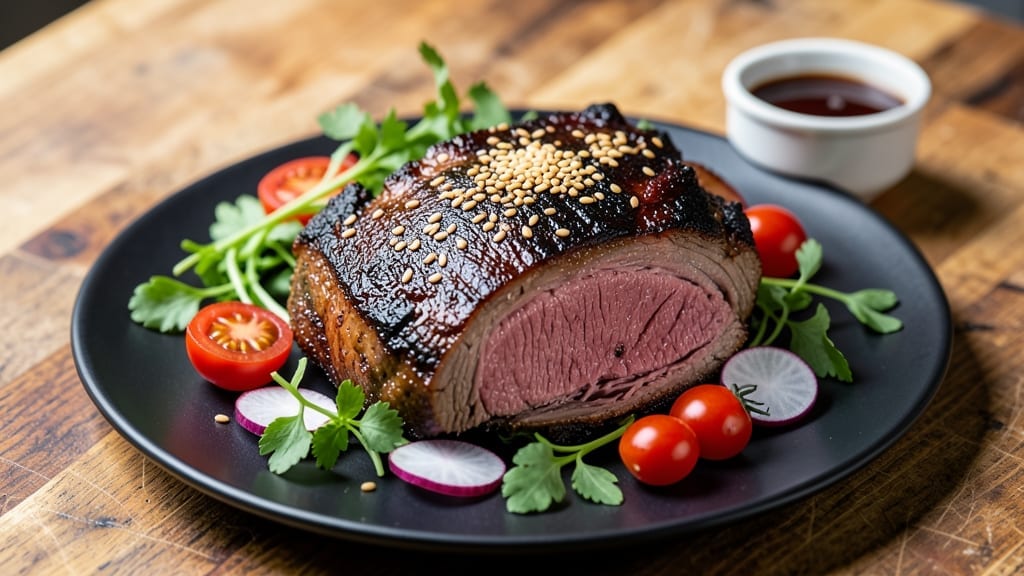
Mastering a smoked prime rib roast transforms ordinary gatherings into unforgettable feasts—juicy, buttery perfection that demands attention. I remember my first attempt at Johnson & Wales, where the instructor stressed that low-and-slow smoking unlocks the richest flavors in prime rib.
The key isn’t just time or temperature; it’s patience and precision.
This recipe delivers restaurant-quality results at home with simple ingredients and a foolproof method. You’ll need a quality prime rib roast (bone-in for extra flavor), a smoker or oven, and about 4-6 hours of hands-off cooking time.
The secret lies in maintaining a steady 225°F temperature, using hickory or cherry wood for that signature smoky depth, and letting the roast rest before carving.
By the end, you’ll have a perfectly cooked prime rib with a tender, melt-in-your-mouth texture and a rich, caramelized crust. The aroma alone will have everyone anticipating dinner, while the first slice reveals layers of buttery goodness. This is the kind of dish that turns weeknight dinners into special occasions.
Pair it with classic sides like roasted garlic mashed potatoes or a crisp green salad for a complete meal. The leftovers reheat beautifully, making this recipe perfect for feeding a crowd or meal prepping. Let’s get started on creating your showstopper centerpiece.
Ingredients for smoked prime rib roast
Thirteen ingredients transform a simple roast into restaurant-quality smoked prime rib perfection.
| Ingredient | Amount | Notes |
|---|---|---|
| Prime Rib Roast (Bone-In) 🥩 | 6 lb | Center-cut, 1.5-2 inches thick |
| Kosher Salt 🧂 | 2 tbsp | Diamond Crystal preferred |
| Freshly Ground Black Pepper 🌶️ | 1 tbsp | Coarse grind for texture |
| Unsalted Butter (Room Temperature) 🧈 | ½ cup | European-style preferred |
| Garlic Cloves 🧄 | 8 cloves | Smashed, skin-on for infusion |
| Fresh Rosemary 🌿 | ¼ cup | Needles only, finely chopped |
| Fresh Thyme 🌿 | ⅛ cup | Leaves only, stems removed |
| Hickory Wood Chips 🌳 | 2 cups | Or cherry wood for milder smoke |
| Beef Au Jus Mix 🍲 | 1 package | Or 2 tbsp beef bouillon powder |
| Beef Broth (Low-Sodium) 💧 | 1 cup | For basting, optional |
| Yellow Onion 🧅 | 1 whole | Quartered, for au jus |
| Red Wine (Dry, Bold) 🍷 | ½ cup | Cabernet Sauvignon preferred |
| Balsamic Vinegar 🍶 | 1 tbsp | For finishing drizzle |
[recipe_ingredient_scaler]
The prime rib roast is non-negotiable—look for a center-cut, bone-in piece with at least 1.5-2 inches of thickness for even cooking. Costco or your local butcher will have the best quality, but check the marbling—you want thick, white fat streaks throughout. I always ask for it to be trimmed of excess fat (but not all—fat equals flavor). If you’re buying frozen, thaw it in the fridge for 48 hours before smoking. The hickory wood chips should be soaked for 30 minutes before using to prevent flare-ups—Trader Joe’s sells pre-soaked ones if you’re in a rush.
No hickory? Cherry or pecan wood works beautifully for a sweeter smoke profile. The red wine adds depth—if you don’t drink it, beef broth with a splash of balsamic gets you close. Fresh herbs are ideal, but dried rosemary and thyme at half the amount will work in a pinch. The beef au jus mix can be swapped for homemade stock if you’re feeling fancy—just simmer the onion, garlic, and herb stems with 2 cups water for 20 minutes, then strain. For the butter, European-style (like Plugrá) has more flavor than American butter, but full-fat, unsalted works too—just don’t use margarine.
Smoked prime rib tastes even better the next day, so portion it into containers with a little extra au jus for reheating. It keeps 4-5 days in the fridge, but freezes beautifully for up to 3 months—wrap tightly in foil first. The au jus can be reheated separately and drizzled over slices. Pro tip: Let it rest for 30 minutes before carving—this keeps it juicy and tender. If you’re feeding a crowd, double the au jus mix and keep it warm in a slow cooker.
Why You’ll Love This Recipe
- I know what you’re thinking: “Prime rib sounds expensive.” But hear me out—this isn’t just for fancy dinners. Buy it on sale, freeze it, and pull it out when you’re craving something special. The au jus mix and beef broth stretch that expensive cut into enough servings to make it worth every penny. Plus, the herbs and wine are pantry staples you already have.
- No Fuss, Big Payoff: Honestly, this recipe is that kind of magic—you just season it with salt and pepper, slather on that herb butter (garlic, rosemary, thyme—so simple but game-changing), and let the smoker do the work. No fancy prep, no stress. Just pat it dry, let it sit, and boom: you’re smoking. The hardest part is resisting the urge to open the smoker lid for the first two hours.
- Smoky, Buttery, Addictive: That crispy bark with the creamy pink center? Chef’s kiss. The hickory smoke blends with the melted butter and garlic, and the balsamic vinegar in the au jus ties it all together—rich but not heavy, savory but not bland. My kids don’t even notice the vegetables on their plates when this is on the table.
- Budget-Friendly Luxury: I know what you’re thinking: “Prime rib sounds expensive.” But hear me out—this isn’t just for fancy dinners. Buy it on sale, freeze it, and pull it out when you’re craving something special. The au jus mix and beef broth stretch that expensive cut into enough servings to make it worth every penny. Plus, the herbs and wine are pantry staples you already have.
Step-by-step instructions for smoked prime rib roast
Here’s the exact method I use to transform a tough cut into melt-in-your-mouth perfection.
Prepare the Prime Rib for Maximum Flavor
Remove the prime rib from the refrigerator and let it sit at room temperature for 1 hour before smoking. This ensures even cooking throughout the thick cut. Pat the surface completely dry with paper towels—this critical step prevents steam from forming under the bark during smoking.
In a small bowl, combine the 2 tablespoons kosher salt and 1 tablespoon freshly ground black pepper. Generously coat all sides of the prime rib, pressing the seasoning into the meat so it adheres well. The salt will draw out moisture initially, but this creates the perfect foundation for that signature crust.
Next, create a herb butter by mixing the ½ cup unsalted butter (room temperature) with the 8 smashed garlic cloves, ¼ cup finely chopped fresh rosemary, and ⅛ cup fresh thyme leaves. Spread this mixture evenly over the seasoned surface of the prime rib. The butter will baste the meat during smoking, while the herbs infuse deep flavor into every bite.
Set Up the Smoker for Low-and-Slow Cooking
Soak the 2 cups hickory wood chips in water for 30 minutes before using. This prevents them from burning too quickly. Set up your smoker to maintain a steady temperature of 225°F. Use a two-zone fire method if needed—place the wood chips on one side and adjust the airflow to keep the temperature stable.
Position the prime rib on the smoker grate, fat-side up. The rendered fat will slowly baste the meat as it cooks, creating that irresistible crust. Place a water pan in the smoker to maintain moisture in the air—this helps prevent the outer surface from drying out while the center cooks.
Close the lid and resist the urge to open it during the first 2 hours of cooking. Every time you peek, you lose heat and moisture. The smoke should be thin and blue, not thick white—this indicates proper combustion and flavor infusion.
Smoke Until Probe-Tender
Smoke the prime rib for 4-5 hours, or until the internal temperature reaches 145°F at the thickest part of the roast. This is where the magic happens—the low temperature breaks down connective tissue while preserving moisture. You’ll notice the bark forming a deep mahogany color, which is exactly what you want.
At this stage, the prime rib will hit “the stall”—a period where the internal temperature stops rising despite continued cooking. This is normal and occurs because moisture evaporates from the surface. Don’t panic; simply continue smoking. The stall typically lasts 1-2 hours and is a sign the meat is transforming into tender perfection.
Once the internal temperature reaches 145°F, increase the smoker temperature to 275°F and smoke for an additional 1-2 hours until the internal temperature reaches 195-200°F. At this point, the meat should be fork-tender with a deep pink center. The high temperature during this final phase helps develop that beautiful crust while ensuring the center remains juicy.
Create the Au Jus and Finish with Balsamic
While the prime rib rests, prepare the au jus. In a saucepan, combine the 1 package beef au jus mix, 1 cup beef broth (low-sodium), and 1 quartered yellow onion. Bring to a simmer over medium heat and cook for 10 minutes until the onion softens and the mixture reduces slightly.
Strain the au jus through a fine-mesh sieve to remove the onion. Return the liquid to the saucepan and stir in the ½ cup red wine (dry, bold). Simmer for 5-7 minutes until the sauce thickens slightly. Remove from heat and stir in the 1 tablespoon balsamic vinegar—this adds a touch of tang that cuts through the richness of the meat.
The balsamic vinegar is the secret weapon here. It not only balances the flavors but also adds a glossy sheen to the finished dish. Keep the au jus warm until ready to serve.
Rest and Slice for Maximum Juiciness
Transfer the prime rib to a cutting board and tent loosely with aluminum foil. Let it rest for 30-45 minutes before slicing. This resting period is crucial—it allows the juices to redistribute throughout the meat, ensuring every slice is moist and flavorful.
Slice the prime rib against the grain into ½-inch thick slices. The grain runs horizontally across the roast, so cutting perpendicular to these lines guarantees tender bites. Arrange the slices on a warm platter and drizzle generously with the prepared au jus. Garnish with additional fresh rosemary and thyme for a pop of color and aroma.
Serve immediately with crusty bread or roasted vegetables to soak up every last drop of that rich, buttery sauce. The result is a prime rib that’s perfectly pink in the center, tender enough to pull apart with a fork, and infused with layers of smoky, herby, and slightly tangy flavors.
Pro Tips For Making Smoked Prime Rib Roast
- Skip the Cold Start: That hour-long room temp wait isn’t optional—trust me, I’ve rushed it and paid for it with uneven cooking. A cold prime rib will steam its own juices instead of developing that perfect crust, leaving you with dry edges and a sad center. (Yes, even if you’re impatient like me.)
- Butter First, Smoke Second: Spread that herb butter before smoking—don’t wait until later. The garlic and rosemary need time to melt into the meat while it cooks, not just sit there like forgotten garnish. And for the love of smoky flavor, use European-style butter. The higher fat content makes all the difference when it renders into that golden crust.
- Don’t Fight the Stall: When the internal temp flatlines at 145°F, don’t panic and crank the heat. That’s the stall, and pushing it too early turns your prime rib into a chewy disappointment. Let it ride—it’s the meat’s way of telling you it’s doing its job. The bark will darken, the smoke will deepen, and eventually, that temp will climb again.
- Wine Down Right: Reduce that au jus before adding the red wine, or you’ll end up with a watery glaze instead of a glossy, rich sauce. Simmer it until it’s syrupy enough to coat the back of a spoon, then stir in the wine and balsamic. (And yes, Cabernet Sauvignon—don’t skimp on the boldness.)
Perfect pairings for this recipe
Classic Crusty Bread
Nothing pairs better with prime rib than a warm, crusty loaf to soak up every drop of that rich au jus. I swear by Central Market’s sourdough—its tangy crumb balances the buttery richness of the meat.
For extra indulgence, toast the bread with 2 tbsp unsalted butter and 1 tsp fresh rosemary before serving. The herb aroma complements the smoky notes of the prime rib beautifully. 🍞
Roasted Garlic Mashed Potatoes
Creamy, buttery mashed potatoes are a Southern classic that elevate smoked prime rib to new heights. Roast 2 heads of garlic (whole, unpeeled) at 400°F for 25 minutes until soft, then mash into your potatoes with ½ cup unsalted butter and 1 cup heavy cream.
The garlic adds depth without overpowering the dish. I always use Yukon Gold potatoes for their natural sweetness and smooth texture.
Green Salad with Balsamic Vinaigrette
A crisp, refreshing salad cuts through the richness of the prime rib.
I mix 4 cups baby spinach and 1 cup arugula with ¼ cup shaved Parmesan, then drizzle with a simple vinaigrette of 3 tbsp balsamic vinegar, 2 tbsp olive oil, 1 tsp honey, and a pinch of salt.
The peppery bite of arugula and tangy dressing cleanse your palate between bites.
Honey-Glazed Carrots
Sweet and tender carrots add a touch of color and contrast to the meal. Toss 1 lb baby carrots with 2 tbsp honey, 1 tbsp olive oil, 1 tsp fresh thyme, and a pinch of salt.
Roast at 400°F for 20 minutes until caramelized. The natural sweetness pairs perfectly with the smoky, herby notes of the prime rib. My kids always ask for seconds of these—honestly, so do I.
Red Wine Reduction
For a more elevated pairing, reduce the ½ cup red wine you used in the au jus to a glossy sauce. Simmer it with 1 tbsp balsamic vinegar and 1 tbsp butter until thickened—about 10 minutes.
This reduction drizzled over prime rib slices adds a luxurious finish. I love using Cabernet Sauvignon because its bold tannins stand up to the richness of the meat.
Nutrition facts
Frequently asked questions
Why does my smoked prime rib need to rest before slicing?
The 30-45 minute rest lets juices redistribute evenly throughout the meat after smoking. Skipping this step causes juices to spill out when sliced, leaving dry slices instead of that melt-in-your-mouth perfection. Think of it like letting bread cool—it’s just as important for meat!
What if I don’t have a smoker? Can I still make this recipe?
Use your oven set to 275°F with a water pan for moisture. Place the prime rib on a rack over a tray filled with water, then wrap foil loosely around it to trap steam. The key is patience—it’ll take 6-8 hours total, but the results will be just as delicious.
How do I know when the prime rib is done without cutting into it?
Use a meat thermometer to check the thickest part of the roast. For medium-rare, aim for 145°F (then rest before serving). The stall is normal—it’ll rise to 195-200°F during the final smoking phase. Pro tip: The bark should be deep mahogany when done.
Can I make the au jus ahead of time?
Yes! Prepare the au jus mixture up to the simmering point, then refrigerate it uncovered for 24 hours. The flavors deepen as it chills. When ready to serve, reheat gently on the stove and stir in the balsamic vinegar just before drizzling. It reheats beautifully and tastes even better the next day!

Trained in classic French technique but raised on slow-cooked ribs and spicy rubs, she blends culinary skill with smoke and soul.
- Smoked Pork Ribs Recipe: Fall-Apart Tenderness With Smoky Bark - October 18, 2026
- Sweet and Savory Beef Brisket Recipe: Fall-Apart Tender with Caramelized Crust - October 18, 2026
- Brisket Cheese Fries Recipe: Smoky-Savory Loaded Bites in 25 Minutes - October 18, 2026