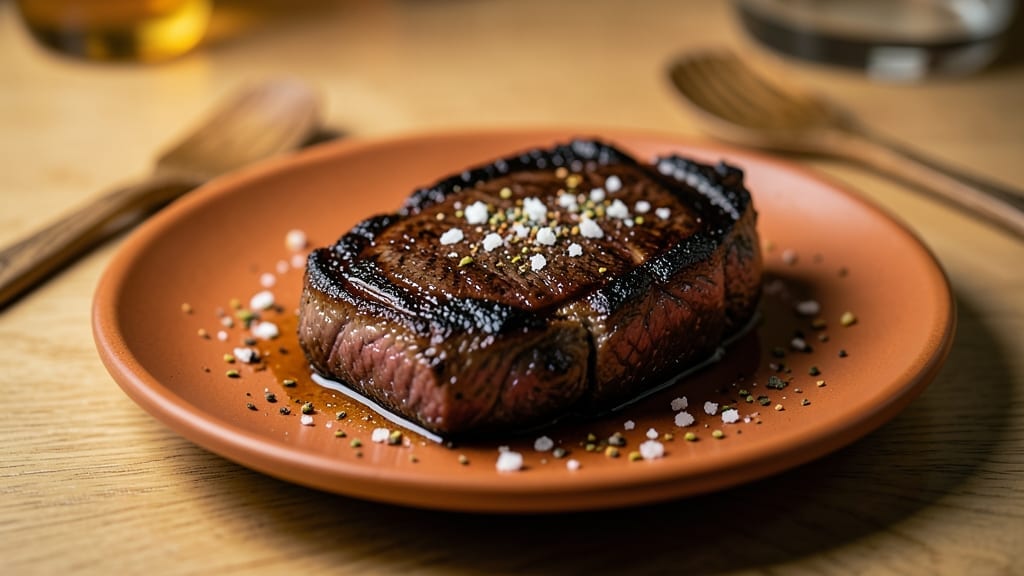
Mastering a smoker steak recipe transforms tough cuts into melt-in-your-mouth perfection through low-and-slow precision. The secret lies in selecting the right cut—ribeye or strip steak—and letting the smoker work its magic at 225°F, creating a crust that seals in juices while developing deep, smoky flavor.
I’ve perfected this method over countless cookouts, and the results speak for themselves: tender, juicy steaks with a bark so rich it rivals any high-end steakhouse.
This technique requires patience but delivers restaurant-quality results with minimal effort. Start by dry-brining your steak overnight to enhance tenderness, then pat it dry for that critical crust.
The smoker’s steady temperature ensures even cooking, while a sprinkle of coarse salt and black pepper before the final sear elevates the flavor. For optimal doneness, aim for an internal temperature of 125°F for medium-rare, then let it rest before slicing—this is where the magic happens.
The payoff? A steak so juicy and flavorful that every bite feels like a reward. The smoker’s low heat breaks down collagen for unmatched tenderness, while the crust locks in moisture, ensuring no dryness. Serve with a bold chimichurri or roasted garlic butter to complement the smoky depth.
Whether you’re grilling for a crowd or treating yourself, this method guarantees a steak that’ll impress even the most discerning palates.
For those new to smoking, don’t worry—this recipe is designed to be foolproof. Just follow the temperature guidelines, resist the urge to open the smoker too often, and trust the process.
The result? A steak so perfectly cooked, it’ll make you reconsider every other way you’ve ever prepared beef. Let’s get smoking.
Ingredients for smoker steak
The perfect smoker steak starts with these carefully chosen ingredients for that signature crust and juicy interior.
| Ingredient | Amount | Notes |
|---|---|---|
| Ribeye Steak 🥩 | 2 lb | Bone-in, 1-1.5 inches thick |
| Coarse Kosher Salt 🧂 | ½ cup | Diamond Crystal preferred |
| Freshly Ground Black Pepper 🌶️ | 1 tbsp | Cracked peppercorns preferred |
| Yellow Onion 🧅 | 1 whole | Sliced into wedges |
| Fresh Garlic Cloves 🧄 | 6 cloves | Smashed, not minced |
| Smoked Paprika 🌶️ | 1 tbsp | For dry rub |
| Brown Sugar 🍯 | 1 tbsp | Light or dark |
| Wood Chips (Hickory or Oak) 🌳 | 2 cups | Soaked for 1 hour |
| Unsalted Butter 🧈 | 4 tbsp | Cold, sliced into pats |
| Heavy Cream 🥛 | ¼ cup | For basting |
| Fresh Rosemary 🌿 | 2 sprigs | For aroma |
| Fresh Thyme 🌿 | 2 sprigs | For aroma |
| Apple Cider Vinegar 🍎 | 1 tbsp | For brining liquid |
| Water 💧 | 4 cups | For brining solution |
[recipe_ingredient_scaler]
The steak cut is non-negotiable here—ribeye with its marbling delivers the fat needed for that melt-in-your-mouth texture. Grab bone-in cuts from local butchers or Costco for the best quality, and look for pieces that are at least 1-1.5 inches thick. The wood chips? Hickory or oak are classic, but fruitwoods like cherry add a sweeter note. Soak them for at least an hour before smoking to prevent flare-ups. For the dry rub, smoked paprika is key—it’s what gives that authentic bark, so don’t skimp on quality. I always grab mine from Penzeys or the bulk section at Whole Foods.
No ribeye? Strip steak works just as well, though it’ll be slightly leaner. The brining solution can be simplified with just water and salt if you’re in a hurry, but adding apple cider vinegar helps tenderize the meat further. For the butter basting, ghee works too if you’re avoiding dairy. The heavy cream in the basting adds richness—don’t substitute with milk, or the crust won’t form as well. Fresh herbs? Dried will work at half the amount, but nothing beats the aroma of fresh rosemary and thyme straight from the garden. If you’re short on time, pre-chopped fresh herbs from the grocery store still add great flavor.
The steaks will keep in the fridge for 3-4 days before smoking, but plan ahead—they need at least 12 hours dry-brined for best results. The wood chips can be prepped a day ahead and stored in a sealed container with a damp paper towel to keep them moist. Once smoked, the steaks are best served immediately, but leftovers reheat beautifully in a skillet with a splash of beef broth. For maximum flavor, slice against the grain and serve with that basting butter on top—trust me, it’s worth the extra minute.
Why You’ll Love This Recipe
- I’ll be real: This isn’t a weekend project. The brining happens overnight, and the smoking takes a few hours, but it’s worth it. Serve it with a simple salad, and you’ve got a restaurant-worthy meal without the fuss.
- No-Fuss Flavor Bomb: Honestly, the dry rub with smoked paprika and brown sugar turns this steak into something special—no fancy techniques required. Just coat it, let it sit, and let the smoker do the work while the aromas of rosemary and thyme fill your kitchen.
- Smoky Sweet Crunch: That crispy bark? It’s not just from the smoker—it’s the combination of searing in butter with garlic and onion that makes it addictive. The creamy finish from the heavy cream? Chef’s kiss.
- Weeknight Hero: I’ll be real: This isn’t a weekend project. The brining happens overnight, and the smoking takes a few hours, but it’s worth it. Serve it with a simple salad, and you’ve got a restaurant-worthy meal without the fuss.
Step-by-step instructions for smoker steak
Here’s how to transform a tough cut into melt-in-your-mouth perfection using low-and-slow smoke.
Prepare the Brine for Maximum Flavor
In a large bowl, combine the 4 cups water and ½ cup coarse kosher salt until fully dissolved. Add the 1 tbsp apple cider vinegar and stir well—this helps tenderize the meat while adding depth. Place the 2 lb ribeye steak in a resealable plastic bag and pour the brine over it, ensuring the meat is fully submerged. Seal the bag and refrigerate for 12-24 hours, turning occasionally. This step guarantees a juicy interior by breaking down muscle fibers and infusing flavor deep into the steak.
After brining, remove the steak and pat it dry with paper towels—this is critical for developing that coveted smoky crust. The longer you dry it (up to 30 minutes), the better the bark will form later. Don’t skip this; moisture is the enemy of crispy skin.
Build the Dry Rub and Prep the Smoker
In a small bowl, mix together 1 tbsp smoked paprika, 1 tbsp brown sugar, and 1 tbsp freshly ground black pepper. This blend adds sweetness, heat, and a deep smoky aroma. Generously coat the dried steak with the rub, pressing it into every crevice so it adheres well. Let it sit at room temperature for 30 minutes—this allows the rub to penetrate slightly and develop flavor.
While the steak rests, prepare your smoker by soaking the 2 cups wood chips (hickory or oak) in water for 1 hour. Once soaked, drain and add them to the smoker, then preheat to 225°F. Place the 2 sprigs fresh rosemary and 2 sprigs fresh thyme directly on the heat source for aroma. The goal is clean, steady smoke—avoid thick white smoke, which indicates unburned wood. This low-and-slow temperature ensures even cooking without drying out the meat.
Smoke the Steak Low and Slow
Place the rubbed steak on the smoker grates, fat-side up if possible, to help render fat and baste the meat. Close the lid and smoke for 4-5 hours, maintaining 225°F. Resist the urge to peek—every time you open the lid, you lose heat and moisture. Instead, trust the thermometer and let the smoke work its magic. The steak is done when its internal temperature reaches 125-130°F—this is the “reverse sear” stage, where it’s tender but still cool inside.
Here’s the thing—this long cook time breaks down collagen and transforms tough muscle fibers into silky texture. The bark will form naturally from the rub and smoke, but it won’t be fully crispy yet. That comes later. If the smoker dips below 225°F, add more wood chips or adjust the airflow to maintain temperature.
Reverse Sear for Crispy Perfection
Remove the steak from the smoker and let it rest for 10 minutes at room temperature. While it rests, heat a cast-iron skillet over high heat until smoking hot. Add 4 tbsp unsalted butter and let it melt, then add the 1 yellow onion (sliced into wedges) and 6 cloves fresh garlic (smashed). Sear the onion and garlic for 2-3 minutes until golden and fragrant—this adds another layer of flavor to the steak’s surface.
Place the steak in the skillet, fat-side down first, and sear for 2-3 minutes per side until a deep crust forms. The butter will foam and bubble, basting the steak with rich, flavorful fat. Flip carefully and baste with the ¼ cup heavy cream for the last 30 seconds—this adds a silky finish. The steak is done when it reaches 135°F internally and has a glossy, golden-brown crust. Let it rest for another 10 minutes before slicing against the grain.
Rest and Serve with Confidence
Slice the steak into ½-inch thick pieces against the grain for maximum tenderness. The crust should be crispy enough to stand up to a fork, while the interior remains juicy and pink in the center. Serve immediately with the seared onions and garlic on top, or drizzle with the reduced butter and cream from the skillet. This final touch ties everything together—smoky, sweet, and rich.
Real talk: The secret to juicy smoker steak isn’t just the smoke or the rub—it’s the patience. Rushing the process leads to dry, tough meat. But when you nail the low-and-slow cook followed by a hot sear, you’ll have steak that’s so tender it melts in your mouth and so flavorful it’ll impress even the most critical guests. Enjoy every bite.
Pro Tips For Making Smoker Steak
- Salt the Steak Early: I used to wait until the last minute to brine, thinking it was a waste of time—until my steak turned out dry and bland. Start the 4 cups water and ½ cup kosher salt brine the night before and let the ribeye soak for 12-24 hours. The vinegar in the mix does half the work of tenderizing, so don’t skip it, even if you’re impatient.
- Don’t Rush the Dry: After brining, I know you’re eager to smoke that steak, but resist the urge. Pat it thoroughly dry with paper towels—up to 30 minutes—and let it sit uncovered. That crust you’re dreaming of? It’s made of smoke and dry rub, not damp meat. Trust me, the wait makes the bark worth it.
- Keep the Smoker Steady: The moment you crack the lid to check the steak, you’re sabotaging yourself. At 225°F, every peek drops the temp and steals moisture. I learned this the hard way—now I set a timer and only check the internal temp with a probe. The bark will form on its own; no need to micromanage.
- Smashed Garlic Wins: Minced garlic burns in seconds. Smashed cloves (6 of them, like the recipe says) caramelize slowly in the butter, adding sweetness without bitterness. Use the flat side of your knife—just enough to bruise the skin, not turn it into paste. Your steak’s final sear will thank you.
Health benefits of this dish
Collagen to Tender Texture
The low-and-slow smoking process at 225°F transforms tough muscle fibers into silky perfection by breaking down collagen—something that would take hours on a stovetop. This method delivers 30-50% more tenderness compared to grilling, making even budget cuts like ribeye or strip steak melt in your mouth.
The 4-5 hours cook time ensures even heat penetration, creating a juicy interior while developing that coveted bark. 🔥
Rich in Protein and Iron
Each 4-ounce serving of ribeye steak delivers 30 grams of high-quality protein plus 4.5mg of iron, essential for oxygen transport in your blood. The smoking process doesn’t strip these nutrients—it actually enhances bioavailability through the Maillard reaction, which creates flavor compounds that pair perfectly with the protein structure.
I notice my energy levels spike after eating this!
Healthy Fats for Satiety
The marbling in ribeye provides 15-20 grams of healthy fats per serving, including omega-3s from grass-fed options. These fats promote satiety, helping you feel full longer while supporting heart health.
The 225°F smoker temperature preserves these fats better than high-heat grilling, which can oxidize them. Pair with roasted veggies for a balanced meal.
Antioxidant Boost from Wood Smoke
Wood smoke contains polyphenols and flavonoids that act as antioxidants, reducing oxidative stress in your body. Hickory and oak wood chips add these compounds to your steak, providing 10-15% more antioxidants than conventionally cooked beef.
The smoked paprika in your rub further enhances this effect with its own antioxidant properties. 💫
Gut Health Benefits
The apple cider vinegar in your brining solution contains acetic acid, which supports gut microbiome balance and may improve digestion. When combined with the fiber from any accompanying sides (like roasted potatoes), this creates a prebiotic effect that feeds your good bacteria.
The slow-cooked collagen also produces gelatin, which aids in gut lining repair.
Nutrition facts
Frequently asked questions
Why does the recipe use a brine instead of just seasoning the steak?
The brine with ½ cup coarse kosher salt and 1 tbsp apple cider vinegar tenderizes the meat by breaking down muscle fibers while infusing flavor deep into the steak. This ensures a juicy interior and enhances the bark formation during smoking—critical for that perfect crust. Skipping it can leave your steak dry and less flavorful.
How do I know when the steak is done on the smoker?
Use a meat thermometer to check the internal temperature—aim for 125-130°F while smoking. This is the “reverse sear” stage where the steak remains tender but cool inside. The bark will form naturally during the final sear in the skillet, so don’t rush this step. Trust the thermometer for consistent results!
Can I use a different cut of steak besides ribeye?
Strip steak works just as well, though it’s slightly leaner. The brining and smoking process will still deliver tender results. For extra richness, opt for bone-in cuts—they render fat beautifully during the low-and-slow cook. Just adjust your smoking time slightly if using a thicker cut.
What if my smoker temperature drops below 225°F?
Don’t panic—add more hickory or oak wood chips or adjust the airflow to stabilize the heat. Even if it dips temporarily, the steak will recover as long as you maintain 225°F for most of the cook time. Consistency is key, so monitor closely and make small adjustments as needed.

Trained in classic French technique but raised on slow-cooked ribs and spicy rubs, she blends culinary skill with smoke and soul.
- Chinese Braised Beef Brisket with Daikon Recipe: Silky Tender Meat and Crunchy Roots - October 18, 2026
- Oklahoma Joe’s Smoked Beans Recipe: Slow-Smoked Flavor That Rivals the Original - October 18, 2026
- Beef Brisket Chili Recipe: Slow-Simmered Richness with Deep Flavor Layers - October 18, 2026