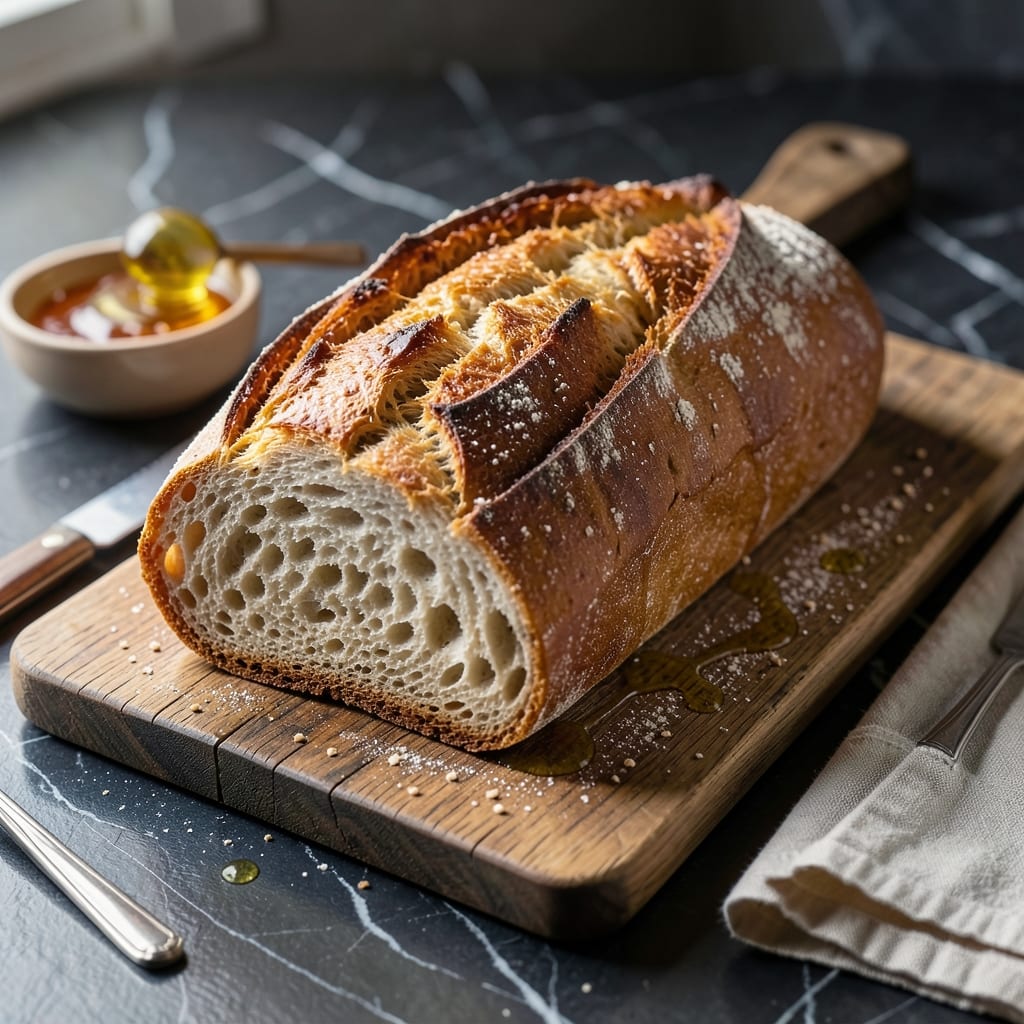
I discovered this method after years of wanting sourdough without the starter maintenance. It delivers that signature tang and chewy texture with minimal effort.
The bread machine handles the mixing and kneading, while a simple yogurt substitution creates the sourdough flavor. This approach removes the intimidation factor from artisan bread baking.
You’ll get a golden, crusty loaf with that characteristic sourdough aroma and open crumb structure. The process is nearly hands-off, with the machine doing most of the work.
Perfect for sandwiches or served warm with butter. This technique proves you don’t need a starter to enjoy authentic sourdough at home.
Ingredients for Sourdough Bread Recipe for Bread Machine Without Starter
Pantry staples plus yogurt create that signature sourdough tang in your bread machine.
| Ingredient | Amount | Notes |
|---|---|---|
| Bread Flour 🌾 | 3 cups | High-protein for chewy texture |
| Whole Wheat Flour 🌾 | 1 cup | Adds depth and structure |
| Plain Yogurt 🥛 | ¾ cup | Full-fat for tangy richness |
| Warm Water 💧 | 1 ¼ cups | 110°F for yeast activation |
| Active Dry Yeast 🍞 | 2 ¼ tsp | One packet plus extra |
| Honey 🍯 | 2 tbsp | Feed for yeast and sweetness |
| Sea Salt 🧂 | 1 ½ tsp | Fine grain for even distribution |
| Olive Oil 🫒 | 2 tbsp | Extra-virgin for aroma |
| Apple Cider Vinegar 🍏 | 1 tbsp | Boosts sourdough tang |
| Vital Wheat Gluten 🌾 | 1 tbsp | Optional for extra chew |
[recipe_ingredient_scaler]
The yogurt is your secret weapon here—full-fat Greek or plain gives the best tang and texture. I grab Fage or Siggi’s from Whole Foods (their yogurt section is always stocked). Bread flour is non-negotiable for that chewy crumb—King Arthur is my go-to. The honey can be swapped for maple syrup, but avoid agave (it’s too thin). Look for yeast labeled ‘active dry’—Fleischmann’s or Red Star work reliably.
No yogurt? Buttermilk at the same amount works in a pinch (slightly different tang). Short on bread flour? Swap in all-purpose but expect a softer loaf. The vinegar can be white vinegar or lemon juice—just don’t skip it, as it mimics the starter’s acidity. For a deeper sourdough flavor, let the dough rest in the fridge overnight before baking (cold ferment trick).
Store yeast in the freezer to extend its life—6-12 months if unopened. Flour keeps in a cool, dark place for 1 year, but buy in smaller quantities for freshness. The loaf freezes beautifully for up to 3 months—slice before freezing for easy toasting.
Why You’ll Love This Recipe
- Hands-Off Baking: The bread machine does all the work—just measure, press start, and walk away.
- Tangy Depth: Plain yogurt mimics sourdough’s signature flavor without the fuss of a starter.
- Breakfast to Dinner: Toast it for morning avocado, tear it for soup dipping, or make midnight sandwiches.
- Pantry Hero: Bread flour, yogurt, and yeast are kitchen staples I always have on hand.
Step-by-Step Instructions for Sourdough Bread in a Bread Machine Without Starter
Here’s the method I’ve perfected for tangy, chewy bread without the fuss of maintaining a starter.
Step 1: Activate the Yeast and Prepare Wet Ingredients
In the bread machine pan, add the 1.25 cups Warm Water first. Then add the 2.25 tsp Active Dry Yeast to one corner of the pan—this prevents premature activation. Let it sit for 5 minutes until the yeast becomes frothy and bubbly on the surface.
Next, add the 2 tbsp Honey, 0.75 cup Plain Yogurt, 2 tbsp Olive Oil, 1 tbsp Apple Cider Vinegar, and 1.5 tsp Sea Salt. The apple cider vinegar is your secret weapon for that classic sourdough tang without a traditional starter.
Step 2: Incorporate the Dry Ingredients
Now add the 3 cups Bread Flour, 1 cup Whole Wheat Flour, and 1 tbsp Vital Wheat Gluten to the pan. I recommend adding the flours last to create a barrier between the yeast and liquid ingredients—this prevents the yeast from activating too early.
The vital wheat gluten boosts the protein content, ensuring a chewy, elastic crumb that mimics traditional sourdough. Make sure to level off the flours when measuring to avoid compacted cups, which can lead to a dense loaf.
Step 3: Select the Dough Setting and Begin the Cycle
Secure the pan in your bread machine and select the “Dough” setting. This setting typically takes 1 hour and 30 minutes to 2 hours, depending on your machine. The machine will handle the mixing and kneading, but keep an eye on the dough during the first 10 minutes of kneading.
If the dough appears too dry, add 1 tablespoon of water at a time. If it’s too sticky, sprinkle in 1 tablespoon of bread flour. The ideal dough should be smooth, elastic, and slightly tacky but not sticking to the sides of the pan.
Step 4: Shape, Proof, and Bake the Dough
Once the dough cycle is complete, transfer the dough to a lightly floured surface. Shape it into a round or oval loaf, tucking the edges underneath to create surface tension. Place the shaped dough into a greased loaf pan or onto a parchment-lined baking sheet.
Cover loosely with a damp towel and let it rise in a warm place for 30-45 minutes until nearly doubled in size. Preheat your oven to 375°F during the final 15 minutes of proofing.
Bake for 30-35 minutes until the loaf is deep golden brown and sounds hollow when tapped on the bottom. For extra crispiness, brush the top with a little water before baking.
Step 5: Cool and Enjoy Your Artisan Loaf
Remove the bread from the oven and transfer it to a wire rack. Let it cool for at least 1 hour before slicing—this allows the crumb to set properly and prevents a gummy texture.
The tangy aroma from the apple cider vinegar and yogurt will fill your kitchen, and you’ll be rewarded with a loaf that has a crisp crust and open, chewy interior. Slice and enjoy as is, or toast with butter for an extra treat.
Pro Tips For Making Sourdough Bread Recipe For Bread Machine Without Starter
- Proof the Yeast: Always activate your dry yeast in the warm water first—about 5 minutes until foamy. I learned this the hard way after a few dense loaves that refused to rise.
- Use Full-Fat Yogurt: Skip the low-fat versions; full-fat plain yogurt gives the dough richness and mimics the tang of sourdough. Sounds weird, but it works.
- Measure Flour Right: Spoon your bread and whole wheat flours into the measuring cup, then level it off. Scooping directly from the bag packs it down and makes your loaf dry and heavy.
- Let It Cool: Resist the urge to slice right away—give the bread a solid 30 minutes on a wire rack. After burning my fingers too many times, I finally accepted that patience pays off with a cleaner crumb.
Pro Cooking Tips for This Recipe
Yeast Activation Secrets
Always use 110°F water—too hot kills yeast, too cold slows activation. I check with a candy thermometer for precision. Let yeast bloom for 5-7 minutes until foamy before adding other ingredients. This ensures a strong rise.
Dough Consistency Check
During the first 10 minutes of kneading, watch closely. If dough climbs the pan sides, add 1 tbsp flour at a time. If it’s crumbly, add 1 tbsp water. The perfect dough should be smooth but slightly tacky. 💡
Flavor Boosting Tricks
For deeper sourdough taste, let the dough cold ferment overnight in the fridge after the dough cycle. This develops more complex flavors. I also add 1 extra tsp apple cider vinegar for extra tang.
Baking Surface Matters
Use a preheated baking stone or cast iron Dutch oven for best crust. If using a loaf pan, grease it well to prevent sticking. A steam tray in the oven creates a crispier crust.
Cooling is Crucial
Resist slicing for at least 1 hour after baking. This lets the crumb set properly. I place my loaf on a wire rack to prevent soggy bottoms. The wait is tough but worth it. ⏰
Machine Maintenance Tip
After each use, clean your bread machine pan thoroughly. I use a soft sponge and warm, soapy water. Never immerse the machine itself in water. Regular cleaning prevents off-flavors in future loaves.
Nutrition Facts
Frequently Asked Questions
Can I use all-purpose flour instead of bread flour?
Yes, but expect a slightly softer loaf. Bread flour’s higher protein creates better chew. For best results, replace no more than 1 cup of bread flour with all-purpose.
Why does this recipe use yogurt?
The yogurt adds tanginess that mimics sourdough starter. Its acidity also helps develop flavor. Use full-fat for richest taste.
Can I bake the dough directly in the bread machine?
Not recommended. The machine’s bake setting won’t give you the crust you want. Transfer to oven for best texture and golden color.
How can I make it more sour?
Add 1 extra tsp apple cider vinegar or let dough cold ferment overnight in the fridge before baking.

Trained in classic French technique but raised on slow-cooked ribs and spicy rubs, she blends culinary skill with smoke and soul.
- Recipe for Boneless Pork Chops in Cast Iron Skillet: Sear and Baste to Juicy Perfection - October 3, 2026
- Recipe for Boneless Cross Rib Roast: Slow-Roasted Beef with Herb Crust - October 3, 2026
- Hamburgers in Sauce Recipe Crock Pot: Slow-Cooked Savory Delight - October 3, 2026