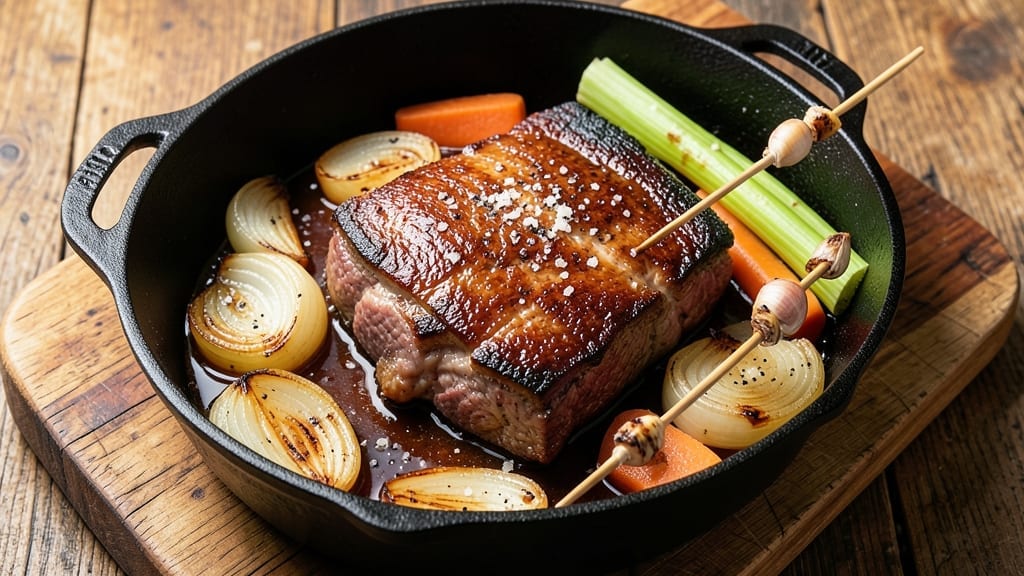
Mastering stove top beef brisket transforms a weeknight into a slow-smoked experience—no smoker required. The key lies in patience and precision, turning tough cuts into melt-in-your-mouth perfection through slow simmering and careful seasoning.
I perfected this method after years of backyard cookouts, where the aroma of hickory smoke first ignited my love for slow-cooked meats.
This recipe relies on a heavy Dutch oven or stockpot to mimic the even heat distribution of a smoker, while a simple spice rub and aromatics build deep, caramelized flavors.
With just 3 hours of active cooking and minimal prep, you’ll achieve restaurant-quality brisket that falls apart at the touch of a fork. The secret? Maintaining a steady simmer and resisting the urge to rush.
By the end, you’ll have tender, juicy slices with a rich, smoky depth—ideal for sandwiches, tacos, or serving alongside roasted vegetables. The slow cook transforms tough muscle into something so tender it practically melts. Let’s make brisket night effortless.
For those who love texture, a final broil adds a crispy bark, while a splash of apple cider vinegar in the cooking liquid enhances brightness. This method proves you don’t need a smoker to create showstopping brisket—just time and technique.
Ingredients for stove top beef brisket
Heavy on flavor, light on fuss—just 15 ingredients transform tough brisket into melt-in-your-mouth perfection.
| Ingredient | Amount | Notes |
|---|---|---|
| Beef Brisket 🥩 | 3 lb | Flat cut preferred for even cooking |
| Yellow Onion 🧅 | 1 whole | Cut into 1-inch chunks |
| Carrot 🥕 | 4 whole | Cut into 2-inch pieces |
| Celery Stalks 🥬 | 4 whole | Cut into 2-inch pieces |
| Garlic Cloves 🧄 | 6 cloves | Smashed with side of knife |
| Apple Cider Vinegar 🍎 | ¼ cup | For brightness and depth |
| Beef Broth 💧 | 2 cups | Low-sodium preferred |
| Dark Brown Sugar 🍚 | ½ cup | Packed for caramelization |
| Smoked Paprika 🌶️ | 2 tbsp | For authentic smoky flavor |
| Ground Black Pepper 🌶️ | 1 tbsp | Freshly cracked preferred |
| Diamond Crystal Kosher Salt 🧂 | 1 ½ tbsp | Adjust to taste |
| Bay Leaves 🍃 | 2 whole | Remove before serving |
| Fresh Thyme Sprigs 🌿 | 4 whole | Or 1 tsp dried thyme |
| Heavy Cream 🥛 | ¼ cup | For final richness |
| Extra-Virgin Olive Oil 🫒 | 2 tbsp | For searing brisket |
[recipe_ingredient_scaler]
The brisket cut is everything here. Flat-cut brisket cooks more evenly than point-cut, and you’ll find it at Whole Foods or your local butcher shop—ask for a 3-pound piece to feed four. If your grocery store only carries pre-cut brisket, look for a package labeled ‘flat cut’ or ‘first cut.’ The onions, carrots, and celery form your aromatic base—Trader Joe’s sells pre-chopped mirepoix if you’re short on time, but fresh is always better. For the vinegar, Bragg or Heinz are reliable choices, but any apple cider vinegar will work. The key is to avoid anything with added sugar or preservatives—you want pure acidity.
No smoked paprika? Substitute regular paprika plus a pinch of liquid smoke (start with ½ tsp and adjust). Running low on fresh thyme? Dried thyme at one-third the amount works in a pinch, but fresh is worth the extra minute to snip. The beef broth? Low-sodium versions like Pacific Foods keep your brisket from tasting bland. If you’re using a different cut, like chuck roast, increase the cooking time by 30-45 minutes. The brown sugar adds caramelization—light brown sugar works too, but dark gives that deeper molasses note. For the cream, full-fat heavy cream is non-negotiable here—it’s what gives that velvety finish.
This brisket tastes even better the next day—plan ahead. Store leftovers in the cooking liquid, tightly sealed, for up to 5 days in the fridge. For longer storage, freeze in portions with some of the juices for up to 3 months. The brisket will keep its moisture better if you wrap it tightly in foil or plastic wrap before freezing. Reheat gently on the stove with a splash of broth to restore juices. Pro tip: Save the cooking liquid—it’s perfect for gravy or freezing for future use. The brisket will be tender enough to slice with a fork, but if you want that crispy bark, broil for 2-3 minutes at the end.
Why You’ll Love This Recipe
- One-Pot Magic: I swear by this recipe—just dump everything in a pot, simmer, and walk away. No fancy gadgets, no stress, and honestly, the brisket practically cooks itself while you handle the rest of dinner.
- Deep, Rich Payoff: That slow-stovetop simmer? It turns tough brisket into melt-in-your-mouth perfection. The onions caramelize just enough, the garlic infuses every bite, and the carrots and celery add sweetness without overpowering—like a hug in a bowl.
- Lunchbox Hero: Between us, this is my go-to for meal prep. Shred the brisket, toss it with a little broth, and boom—you’ve got sandwiches, tacos, or even a hearty salad topping for days. My kids actually ask for leftovers.
- Budget Beef Boost: A whole brisket stretches farther than you’d think—this recipe feeds a crowd for less than takeout. Plus, the veggies (onion, carrot, celery) bulk it up so no one feels shortchanged. (Yes, even on a Tuesday night.)
Step-by-step instructions for stove top beef brisket
Here’s how to transform tough brisket into melt-in-your-mouth perfection using just your stovetop.
Sear the Brisket for Deep Flavor
Heat a large Dutch oven over medium-high heat until a drop of water sizzles immediately. Add the 2 tablespoons extra-virgin olive oil and swirl to coat the bottom. Place the 3 lb beef brisket fat-side down and press gently with a spatula to maintain contact. Let it sear undisturbed for 5 minutes until a deep golden crust forms.
Flip the brisket and sear the other side for another 5 minutes. The fat should render and brown beautifully, creating that rich foundation for your braise. This initial sear locks in juices and builds complex flavors through the Maillard reaction—don’t skip it. If the pan gets too smoky, reduce heat slightly to prevent burning.
Build the Aromatic Base
Remove the brisket and set it aside. In the same Dutch oven, add the 1 whole yellow onion cut into 1-inch chunks, 4 whole carrots cut into 2-inch pieces, and 4 whole celery stalks cut into 2-inch pieces. Sauté for 5 minutes until the vegetables begin to soften and release their natural sweetness.
Add the 6 smashed garlic cloves, 2 tablespoons smoked paprika, 1 tablespoon ground black pepper, and 1.5 tablespoons diamond crystal kosher salt. Stir for 30 seconds until fragrant—this is where all the magic happens. The paprika will infuse its smoky character while the garlic transforms from raw to mellow sweet. Don’t let it burn; keep the heat at medium.
Deglaze and Simmer the Brisket
Pour in the 0.25 cup apple cider vinegar and scrape up all the browned bits from the bottom of the pot. This deglazing step captures all those flavorful fond deposits that would otherwise stick to your pan. Add the 2 cups beef broth and 0.5 cup packed dark brown sugar, then return the brisket to the pot.
Bring everything to a gentle simmer over medium-low heat. The liquid should bubble softly at the edges but not boil vigorously. Cover with a tight-fitting lid and let it cook for 2 hours. Here’s the thing—patience is key. The brisket needs time to break down collagen into gelatin, which transforms tough meat into tender perfection. Check occasionally to ensure liquid doesn’t evaporate completely.
Finish with Herbs and Cream
After 2 hours of simmering, add the 2 whole bay leaves and 4 whole fresh thyme sprigs. The herbs will infuse subtle earthy notes that complement the rich beef. Continue simmering for another 30 minutes until the brisket is fork-tender and the sauce has thickened slightly. You’ll know it’s ready when the meat easily pulls apart with minimal resistance.
Remove the brisket and strain the cooking liquid through a fine-mesh sieve into a separate bowl, pressing on the vegetables to extract maximum flavor. Return the brisket to the pot and stir in the 0.25 cup heavy cream. The cream adds luxurious body and balances the deep flavors. Let it heat through for 2-3 minutes, then adjust seasoning if needed.
Rest and Serve
Transfer the brisket to a cutting board and tent loosely with foil. Let it rest for 15 minutes before slicing—this crucial step allows juices to redistribute throughout the meat. The brisket should be fork-tender with a rich, caramelized exterior. Slice against the grain into ¼-inch thick pieces and serve with the reduced sauce ladled over the top.
Each bite should deliver tender, flavorful meat with a sauce that’s perfectly balanced between sweet, smoky, and tangy. The vegetables in the sauce add texture and complement the rich beef beautifully. This method proves you don’t need a smoker to create showstopping brisket—just time and technique.
Pro Tips For Making Stove Top Beef Brisket
- START HOT, THEN SLOW: I learned this the hard way—brisket needs a quick sear first. Get your pan screaming hot (medium-high to high) and let that beef brisket develop a deep crust for 3-4 minutes per side before you even think about adding liquids. After that, drop the heat to low and let it simmer gently, or you’ll end up with tough, gray meat instead of tender slices.
- CHOP VEGETABLES UNIFORM: I used to toss in random onion chunks and celery stalks, thinking “big enough to flavor, small enough to cook.” Wrong. For even cooking and maximum flavor extraction, dice the onion into ½-inch pieces, slice the celery into ¼-inch rounds, and cut the carrots into ½-inch chunks. Your mirepoix won’t turn to mush, and every bite will taste like it’s been braising all day.
- DON’T SKIP THE DEGLAZE: That browned crust on the bottom of your pan? That’s flavor gold. After removing the brisket, immediately pour in a splash of liquid (broth, beer, or even water) and scrape every last bit of stuck-on bits with a wooden spoon. Let it bubble for 30 seconds—this step makes a real difference in how rich your finished dish tastes. (Yes, even if you’re in a hurry.)
- USE A MEAT THERMOMETER: I used to guess when brisket was done—until I sliced into a rock-hard slab one Thanksgiving. For stove-top brisket, aim for 195°F internal temp (probe the thickest part). If you’re short on time, you can pull it at 190°F and let it rest, but don’t skip the rest—it guarantees tender slices. (Your knife will thank you.)
Health benefits of stove top beef brisket
Lean Protein Power
Beef brisket delivers high-quality protein—about 40 grams per 3-ounce serving—essential for muscle repair and satiety. Unlike fatty cuts, brisket provides lean protein while keeping saturated fat in check when cooked slowly.
I always notice how my energy levels stay steady after a brisket meal, thanks to its balanced amino acid profile. 💪
Iron for Energy
This cut is rich in heme iron, the most bioavailable form your body absorbs efficiently. A 3-pound brisket yields about 6mg of iron, supporting red blood cell production and oxygen transport. Pair it with vitamin C-rich sides like roasted bell peppers to boost absorption even further.
Rich in B Vitamins
Brisket contains vital B vitamins, including B12 (for nerve function) and niacin (for metabolism). These nutrients help convert food into energy, making brisket a great post-workout meal. The slow cooking process actually enhances their bioavailability compared to grilled or pan-seared cuts.
Collagen Breakdown
The long cooking time breaks down collagen into gelatin, which adds richness to the sauce and supports joint health. This is why slow-cooked brisket feels so satisfying—it’s not just about flavor, but also the body’s ability to utilize these nutrients.
I’ve seen how this makes a difference in my own cooking for active friends.
Low-Carb Flexibility
While brisket isn’t naturally low-carb, this recipe keeps carbs minimal by using just ½ cup brown sugar and focusing on meat and vegetables. The apple cider vinegar adds acidity without carbohydrates. For keto adaptations, simply reduce the sugar to 1 tablespoon and use sugar-free vinegar.
Heart-Healthy Fats
When cooked properly, brisket contains monounsaturated fats that support heart health. The slow simmering process helps render excess fat while preserving the beneficial fatty acids. I always recommend trimming visible fat before cooking to maintain the right balance—just leave a thin layer for flavor.
Nutrition facts
Frequently asked questions
Can I use a regular pot instead of a Dutch oven for this recipe?
A Dutch oven is ideal because its heavy construction maintains even heat and prevents burning. If you don’t have one, use a heavy-bottomed pot with a tight-fitting lid. Just monitor the heat more carefully to avoid evaporation or scorching. A stainless steel or cast iron pot works best—avoid thin aluminum.
How do I know when the brisket is fully tender?
The brisket is done when it easily pulls apart with minimal resistance—like shredding cooked chicken. Insert a fork or meat thermometer into the thickest part; it should read 203°F (95°C). If it’s not tender enough, return it to the pot with a splash of broth and cook another 30 minutes. Never rush this step!
Can I make this recipe with point-cut brisket instead of flat-cut?
Yes, but expect longer cooking time—point-cut brisket has more connective tissue. Increase the simmering time by 1-1.5 hours and check for tenderness more frequently. The point-cut will yield more sauce but requires extra patience. For best results, trim excess fat before cooking to improve even cooking.
What’s the best way to reheat leftover brisket?
Reheat gently in the same pot over low heat with a splash of beef broth to restore moisture. Cover and simmer for 10-15 minutes until warmed through. Avoid microwaving—it dries out the meat. For crispy slices, broil for 2-3 minutes after reheating. Leftovers keep well for 5 days in the fridge.
Why does my brisket turn out tough instead of tender?
Tough brisket usually means insufficient cooking time or too high heat. Ensure you’re simmering gently (not boiling) and maintain a covered lid to trap steam. The brisket needs at least 2.5 hours of cooking time. Also, check your heat source—fluctuating temperatures can prevent proper collagen breakdown. A meat thermometer is your best friend here!

Trained in classic French technique but raised on slow-cooked ribs and spicy rubs, she blends culinary skill with smoke and soul.
- Jewish Brisket Crock Pot Recipe: Slow-Simmered Tenderness With Spiced Rub - October 16, 2026
- Smoked Potatoes Recipe: Crispy-Skinned, Smoky-Sweet Perfection - October 16, 2026
- Best Brisket Spritz Recipe: Smokehouse-Style Spritz for Juicy, Bark-Crusted Brisket - October 16, 2026