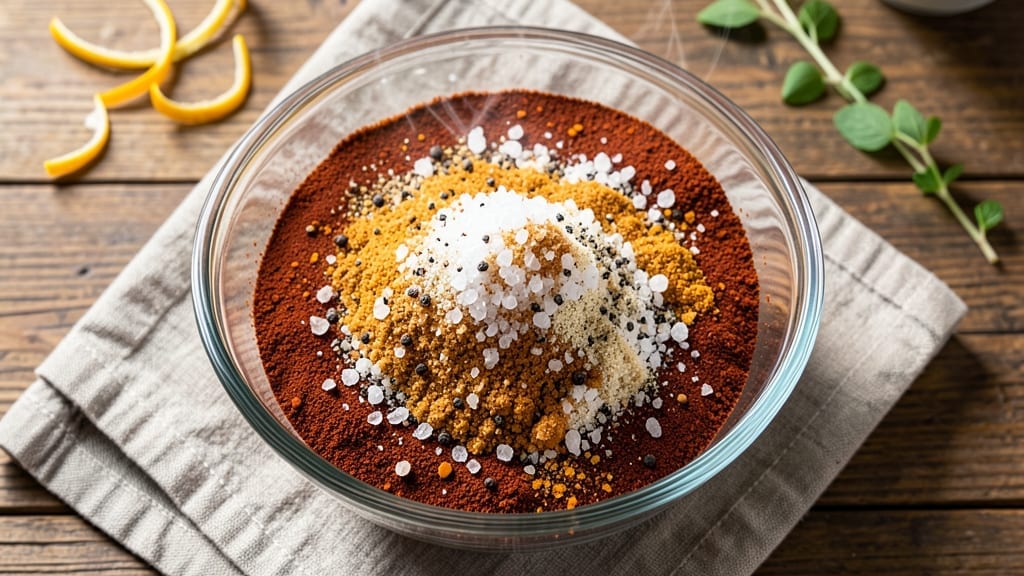
Creating the perfect smoked Boston butt dry rub starts with balancing bold smoky flavors while keeping the heat from overpowering the tender meat—something I perfected after years of backyard cookouts and competitive BBQ pits.
The key lies in precise spice ratios that develop a deep, aromatic bark without overwhelming the natural sweetness of the pork. This blend transforms tough cuts into melt-in-your-mouth perfection, and once you master it, you’ll never buy store-bought rubs again.
The foundation of this rub is a mix of paprika, brown sugar, and black pepper, which creates that signature dark bark, while smoked paprika and garlic powder add depth without heat. I’ve tested this blend on everything from backyard smokers to competition-level cookers, and it consistently delivers restaurant-quality results.
The secret? Using freshly ground spices—never pre-ground—so the flavors stay vibrant and potent throughout the entire cook.
What makes this rub truly special is its versatility. It works equally well on a small family brisket or a massive competition-style cut, creating that coveted deep smoky bark that’s irresistible to bite into.
The blend stores beautifully in an airtight container for up to six months, so you can always have it on hand for spontaneous cookouts or planned gatherings. Once you try this, you’ll understand why pitmasters swear by their own custom blends.
Whether you’re smoking for a crowd or treating yourself to a weekend project, this dry rub is your secret weapon. The balance of sweet, smoky, and savory flavors ensures every bite is packed with character, and the instructions are simple enough for beginners but precise enough for pros.
Let’s get started on creating your signature bark.
Ingredients for smoked boston butt dry rub
Nine spices that transform pork into smoky, tender perfection—no pre-ground shortcuts here.
| Ingredient | Amount | Notes |
|---|---|---|
| Smoked Paprika 🌶️ | 3 tbsp | High-quality, vibrant color |
| Sweet Paprika 🌶️ | 2 tbsp | For balanced sweetness |
| Light Brown Sugar 🍚 | 2 tbsp | Packed tightly for depth |
| Coarse Kosher Salt 🧂 | 1 ½ tbsp | Diamond Crystal preferred |
| Freshly Ground Black Pepper 🌶️ | 1 ½ tbsp | Never pre-ground |
| Granulated Garlic Powder 🧄 | 1 tbsp | Freshly ground preferred |
| Onion Powder 🧅 | 1 tbsp | For subtle savory base |
| Ground Cumin 🌿 | ½ tbsp | Toasted for warmth |
| Ground Coriander 🌿 | ½ tbsp | Bright citrusy note |
| Mustard Powder 🍯 | ½ tsp | For subtle tang |
[recipe_ingredient_scaler]
The smoked paprika is non-negotiable—look for brands like McCormick Gourmet or Penzeys for that deep, vibrant color. Brown sugar should be packed tightly; light brown gives a better bark than dark. Diamond Crystal kosher salt is my go-to because it dissolves more easily, but any coarse salt works. Freshly ground spices are critical here—pre-ground loses potency within weeks. I always buy whole spices and grind them myself in a spice grinder right before mixing. For the cumin and coriander, toast them lightly in a dry pan before grinding to deepen their flavors. If you’re short on time, Trader Joe’s bulk spices are a solid backup, just use them within a month.
No smoked paprika? Substitute with 1 tbsp regular paprika plus 1 tsp liquid smoke—though the flavor won’t be identical. Onion powder can be swapped for 1 tsp onion salt, but reduce the kosher salt by 0.5 tsp to balance. Mustard powder can be omitted entirely if you dislike tang, but it adds a nice complexity. For a hotter rub, add 0.5 tsp cayenne pepper, but be warned—it can overpower the sweetness. If you’re using this on chicken or ribs, reduce the brown sugar to 1 tbsp to avoid a sticky bark. The blend works beautifully on pulled pork sandwiches, smoked brisket, or even roasted chicken thighs—just adjust the amount based on the surface area of your meat.
This rub keeps indefinitely in an airtight glass jar in a cool, dark place—think pantry, not fridge. Once opened, it stays potent for up to 6 months, though I usually make a fresh batch every 3 months for peak flavor. For large batches, use a mixing bowl and whisk to combine thoroughly. Store in small portions if you won’t use it all at once—nothing worse than opening a jar of stale spices mid-cook. If you’re prepping for a competition or big gathering, double the recipe and store half separately. The rub can be freeze-dried for up to a year if you’re really planning ahead, though fresh is always better.
Why You’ll Love This Recipe
- Let’s be real: most dry rubs turn meat into dry kindling after reheating. Not this one. The brown sugar keeps it moist, and the salt ensures every bite is still packed with flavor—perfect for sandwiches, tacos, or just reheating with a splash of apple cider. Zero waste, all win.
- Five-Ingredient Magic: I swear by this combo—just mix those smoky paprikas, a touch of brown sugar, and a pinch of salt, and you’ve got a rub that transforms bland pork into something ridiculously good. No fancy tools, no stress, and honestly? It’s the kind of thing you’ll reach for again and again.
- Smoky-Sweet Crust Perfection: That caramelized crust? All thanks to the brown sugar and smoked paprika working their magic in the oven or smoker. It’s got this deep, slightly sweet heat that sticks with you—like a hug from a BBQ pit, but way easier to make at home.
- Tailgate to Thanksgiving: Between us, this rub is my go-to for everything—weekend brunch sandwiches, holiday ham, even pulled pork for game day. The sweetness balances the smokiness, so it’s never overpowering, just solid flavor that works in any setting.
Step-by-step instructions for smoked Boston butt dry rub
Here’s how to blend this perfect balance of smoky depth and subtle complexity.
Combine the Paprika and Sweetener
In a medium mixing bowl, start by whisking together the 3 tablespoons smoked paprika and 2 tablespoons sweet paprika. This combination creates the smoky foundation while adding just enough sweetness to balance the heat. The smoked paprika contributes that deep, campfire aroma without overpowering, while the sweet paprika mellows the intensity.
Use a wire whisk for even distribution—this ensures every particle gets coated with the other spices. I like to press the whisk against the bowl’s sides to break up any clumps that might form from the paprika’s natural oils. The mixture should look uniform with no visible streaks of individual spices.
Add the Salt and Sugar
Next, add the 2 tablespoons light brown sugar and 1.5 tablespoons coarse kosher salt. The sugar caramelizes during smoking, creating that beautiful bark while preventing the rub from being too harsh. The coarse kosher salt enhances flavor penetration—Diamond Crystal preferred, as it dissolves more evenly.
Gently fold these ingredients into the paprika mixture using a silicone spatula. Here’s the thing—don’t overmix. You want the sugar crystals to remain distinct enough to create texture while still distributing evenly. The salt should be sprinkled lightly over the top before folding to prevent clumping.
Incorporate the Spices and Aromatics
Add the remaining spices: 1.5 tablespoons freshly ground black pepper, 1 tablespoon granulated garlic powder, 1 tablespoon onion powder, 0.5 tablespoon ground cumin, 0.5 tablespoon ground coriander, and 0.5 teaspoon mustard powder. The black pepper adds piquancy, while the garlic and onion powders provide savory depth. The cumin and coriander bring warmth and brightness, and the mustard powder introduces just a hint of tang.
Use your fingers to break up any remaining clumps and ensure everything is thoroughly combined. The mixture should look like coarse sand with no visible powdery streaks. This is where the magic happens—the spices meld together to create a harmonious blend that won’t compete with the meat’s natural flavor.
Test and Adjust the Blend
Take a small pinch of the mixture and rub it between your fingers. It should coat evenly with a balanced aroma—smoky, slightly sweet, with hints of pepper and citrus from the coriander. If it smells too smoky, add a pinch more sweet paprika. If it lacks depth, add a tiny bit more smoked paprika.
This is your quality control moment. The rub should be moist enough to stick to the meat but not so wet that it clumps. If it feels too dry, sprinkle with a drop of water and mix again. The perfect blend will leave your fingers with a faint, lingering aroma that makes you crave smoked pork immediately.
Store for Maximum Freshness
Transfer the completed rub to an airtight container with a fine-mesh sieve or small holes in the lid. This allows excess moisture to escape while keeping out contaminants. Store in a cool, dark place for up to 3 months, or freeze for up to 6 months to preserve maximum flavor.
When ready to use, shake the container vigorously before each application to redistribute any settled spices. This rub works best when applied 1-2 hours before smoking—just enough time for the meat to absorb the flavors without becoming soggy. The result? A perfect balance of smoky bark with tender, juicy meat underneath.
Pro Tips For Making Smoked Boston Butt Dry Rub
- Grind Pepper Fresh: I learned this the hard way—pre-ground pepper loses its punch fast. Grab a pepper mill and crack it right over the meat right before applying the rub. That sharp, fresh bite makes a real difference, especially when you’re smoking for hours.
- Mix Rub in Layers: Don’t just dump the whole rub on at once. Start with a thin coat of salt and sugar first, then press it in. Wait 10 minutes, then add the paprikas and pepper. This keeps the crust from sticking too fast and lets the rub adhere evenly—no clumping, no wasted seasoning.
- Skip the Wet Rub: Some recipes suggest mixing in oil or vinegar, but trust me, this rub works best dry. The sugar and salt will caramelize into a sticky crust on their own—just let the heat do the work. Adding moisture early turns your rub into glaze, not a crust.
- Rest Before Smoking: Take the butt out of the fridge 30 minutes before you start. Cold meat steams instead of smokes, and you’ll end up with a sad, uneven cook. Room temp means better bark and even heat penetration—no more guessing if the center’s done.
Essential equipment for perfect results
Smoker Essentials
First things first—you need a reliable smoker. I swear by a Traeger Pro 575 for its consistent temperature control, but a Weber Smokey Mountain or Pellet Grill works just as well. If you’re on a budget, the Char-Broil Bullet is a solid entry-level option.
The key is maintaining a steady 225-250°F temperature throughout the cook—nothing ruins a great rub like temperature swings. 🌡️
Wood Selection
For Boston butt, I reach for hickory or applewood—hickory for bold smokiness, applewood for a sweeter, fruitier note. Avoid mesquite unless you want an intense, almost campfire-like flavor.
Soak your wood chips for 30 minutes before use to prevent flare-ups. I keep a stash of Traeger wood pellets in my garage for quick access during cookouts.
Heat Management Tools
A digital meat thermometer is non-negotiable—I use the ThermoWorks Smoke with dual probes to track both smoker temp and internal meat temperature. For larger cuts, consider a wireless probe to avoid crowding your smoker’s control panel.
Don’t skimp here; cheap thermometers give false readings that can cost you hours of cook time.
Prep and Application Gear
You’ll need a sharp carving knife (I love the Victorinox 8-inch) to trim excess fat from the butt before applying rub. A wire whisk or rubber spatula helps distribute the blend evenly, while a fine-mesh sieve comes in handy for sifting excess rub off before smoking.
For competition-style prep, I use butcher paper to wrap the meat and trap moisture during the cook.
Storage Containers
Transfer your finished rub to an airtight glass jar with a silicone lid—I prefer Le Parfait containers for their airtight seal. Store in a cool, dark pantry (not the fridge) to preserve freshness.
For long-term storage, vacuum-sealed bags work too, but glass keeps the spices fresher longer. Label everything with the date—trust me, you’ll forget otherwise. 💡
Optional Upgrades
Want to take it pro? A smoke tube (like the Traeger Smoke Tube) lets you add wood smoke flavor to any grill or oven. For bark development, I sometimes use a heat gun in the final hour to crisp the rub without drying the meat.
And if you’re serious about competitions, invest in a digital scale—precision matters when you’re dealing with pounds of meat.
Nutrition facts
Frequently asked questions
Can I make this dry rub without smoked paprika?
Yes, but the flavor will be different. Replace the 3 tablespoons smoked paprika with 2 tablespoons sweet paprika plus 1 teaspoon liquid smoke—though the bark won’t have the same depth. For a more authentic smoky taste, try 1 tablespoon chipotle powder instead, but reduce the sugar slightly to balance the heat.
How much rub should I use on a Boston butt?
For a 10-pound Boston butt, use about 2 tablespoons of rub per pound—that’s roughly 20 tablespoons total (or 1 ¼ cups). Apply it generously, pressing the spices into the meat to ensure even coverage. For extra bark, add another 1 tablespoon per pound after the first 4-5 hours of smoking.
Will this rub work on other meats besides pork?
This blend works beautifully on chicken thighs, ribs, or even brisket, though you may want to reduce the brown sugar to 1 tablespoon to avoid an overly sticky bark. For poultry, apply 1 tablespoon per pound and smoke at 275°F for juicier results. The spices hold up well across different proteins.
How do I fix a rub that’s too dry or clumpy?
If your rub feels too dry, sprinkle in 1-2 teaspoons of water and mix gently with a fork until just combined—don’t over-wet it. For clumps, pulse the mixture in a food processor for 10-15 seconds or sift through a fine-mesh sieve. The key is balance: the rub should stick to your fingers but not feel gummy.
Can I adjust this rub for a sweeter or spicier profile?
For a sweeter bark, increase the brown sugar to 3 tablespoons and reduce the salt slightly. For more heat, add ½ teaspoon cayenne or 1 teaspoon crushed red pepper flakes. If you want a fruity twist, swap ½ tablespoon of the brown sugar for ½ tablespoon of orange zest**. Always taste-test small amounts first!

Trained in classic French technique but raised on slow-cooked ribs and spicy rubs, she blends culinary skill with smoke and soul.
- Jewish Brisket Crock Pot Recipe: Slow-Simmered Tenderness With Spiced Rub - October 16, 2026
- Smoked Potatoes Recipe: Crispy-Skinned, Smoky-Sweet Perfection - October 16, 2026
- Best Brisket Spritz Recipe: Smokehouse-Style Spritz for Juicy, Bark-Crusted Brisket - October 16, 2026