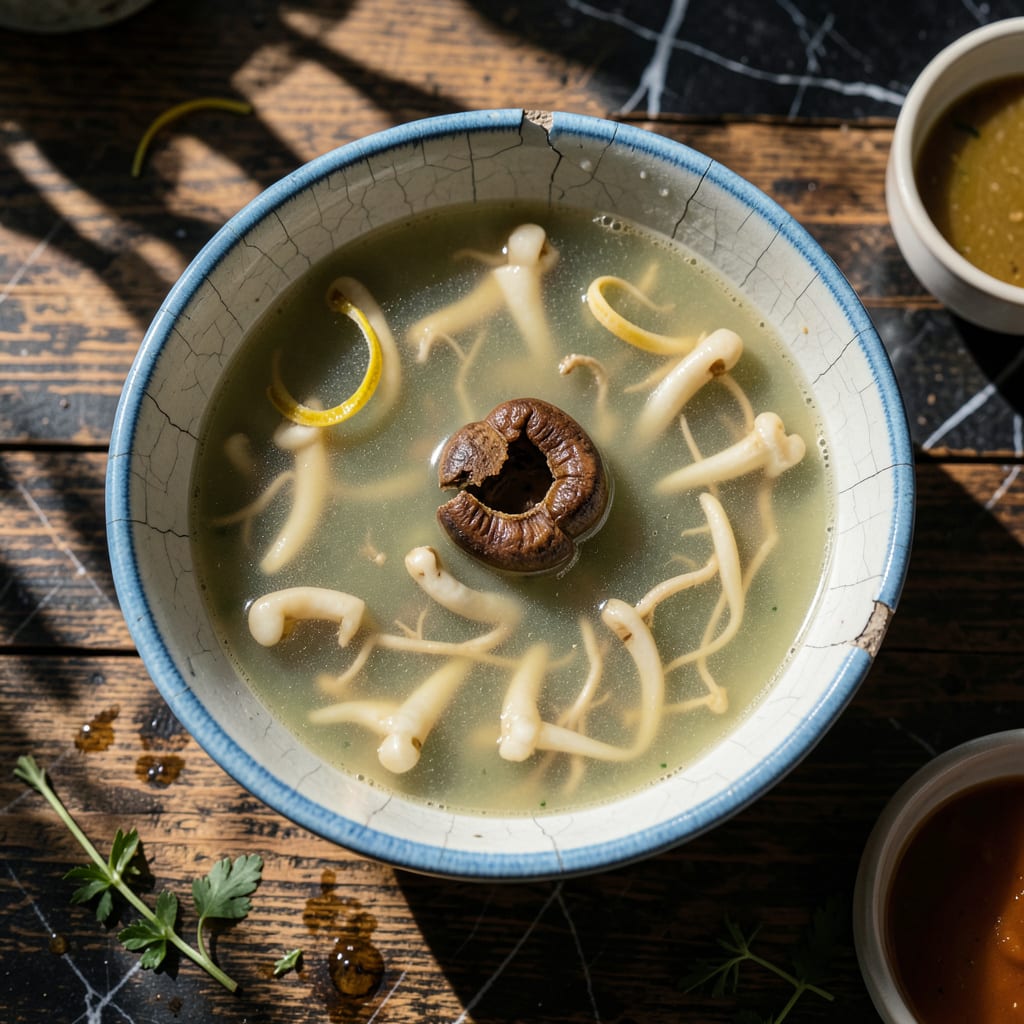
Teeth soup is a traditional Chinese dessert made with melted pork fat, sugar, and sometimes nuts or dried fruit, creating a creamy, jelly-like texture that resembles teeth. It’s served warm or chilled as a sweet treat.
This dessert’s name comes from its striking visual similarity to teeth, achieved through the solidification of rendered pork fat. 🔥 The process transforms simple ingredients into something extraordinary—imagine a delicate, wobbly custard with a subtle sweetness that melts in your mouth. What fascinates me most is how the texture plays with temperature: when served warm, it’s silky and smooth, while chilled, it takes on a firmer, almost gelatinous quality that’s uniquely satisfying.
💡 In This Article
- The Cultural History Behind Teeth Soup’s Name and Texture
- Step-by-Step Guide to Making Authentic Teeth Soup at Home
The Cultural History Behind Teeth Soup’s Name and Texture
The name “teeth soup” comes from its uncanny visual resemblance to a set of teeth embedded in gums. When properly prepared, the rendered pork fat solidifies into a translucent, jelly-like base, while the sugar and other ingredients create white, tooth-like shapes suspended within.
This effect is most pronounced when the mixture cools to around 70°F, where the fat begins to crystallize in a way that mimics dental enamel. The contrast between the creamy base and the firmer “teeth” creates a playful, almost whimsical presentation that’s as intriguing to look at as it is to eat. ✨
This dessert traces its roots to Cantonese cuisine, where it was traditionally served during celebrations and family gatherings. The use of pork fat wasn’t just for texture—it was a practical choice in a time when ingredients were precious. Rendering fat from pork created a rich, calorie-dense treat that could be sweetened with minimal sugar.
The process involves heating pork fat to 250-275°F until fully melted, then combining it with sugar syrup at a precise 1:1 ratio to achieve the signature consistency. The mixture is then poured into molds and chilled for 4-6 hours, allowing the fat to set into that distinctive, wobbly texture.
What makes this dessert culturally significant is its role in festive occasions. In Guangdong province, it was often prepared for Lunar New Year as a symbol of prosperity—the white “teeth” represented purity and good fortune.
The texture also plays a role in its appeal: when served warm, it has a silky, almost custard-like mouthfeel, while chilled versions offer a firmer bite that gradually melts on the tongue. This duality made it versatile for different seasons and preferences. 🔥
The science behind the texture lies in the fat’s crystallization process. As the melted lard cools, it forms a network of tiny fat crystals that trap the sugar syrup, creating that unique jelly-like structure.
The speed of cooling affects the final texture—rapid chilling (like in a freezer) produces smaller, more numerous crystals for a firmer set, while slow cooling in the refrigerator yields larger crystals and a softer consistency.
Traditional recipes often included ingredients like goji berries or dried longan to add subtle fruity notes that balanced the richness of the fat.
Modern variations have emerged, but the core technique remains rooted in this careful balance of fat, sugar, and temperature control. Some contemporary versions use vegetable shortening as a pork-fat alternative, though purists argue this changes the mouthfeel significantly.
The key to authenticity lies in the fat’s quality—traditional recipes call for back fat or leaf lard, which have higher melting points and create a more stable, glossy finish when set. This attention to detail ensures the final product has that signature “tooth-like” appearance and luxurious texture.
Interestingly, the dessert’s popularity spread beyond Guangdong through Chinese diaspora communities, particularly in Southeast Asia. In Malaysia and Singapore, it’s sometimes called “pig’s teeth soup” (猪牙糕), reflecting its Cantonese origins while adapting to local tastes. The version found in Hong Kong often includes red bean paste swirls for added color and flavor contrast.
What remains constant across all variations is the fascination with its texture—a delicate balance between solid and liquid that makes every bite an experience. 💫
For those trying it for the first time, the contrast between the visual presentation and the actual eating experience is what makes it memorable. The “teeth” aren’t hard or crunchy—they dissolve smoothly on the tongue, releasing their subtle sweetness.
This unexpected sensory experience, combined with its cultural backstory, is what gives teeth soup its enduring appeal in Chinese dessert traditions.

Trained in classic French technique but raised on slow-cooked ribs and spicy rubs, she blends culinary skill with smoke and soul.
- Recipe for Boneless Pork Chops in Cast Iron Skillet: Sear and Baste to Juicy Perfection - October 3, 2026
- Recipe for Boneless Cross Rib Roast: Slow-Roasted Beef with Herb Crust - October 3, 2026
- Hamburgers in Sauce Recipe Crock Pot: Slow-Cooked Savory Delight - October 3, 2026