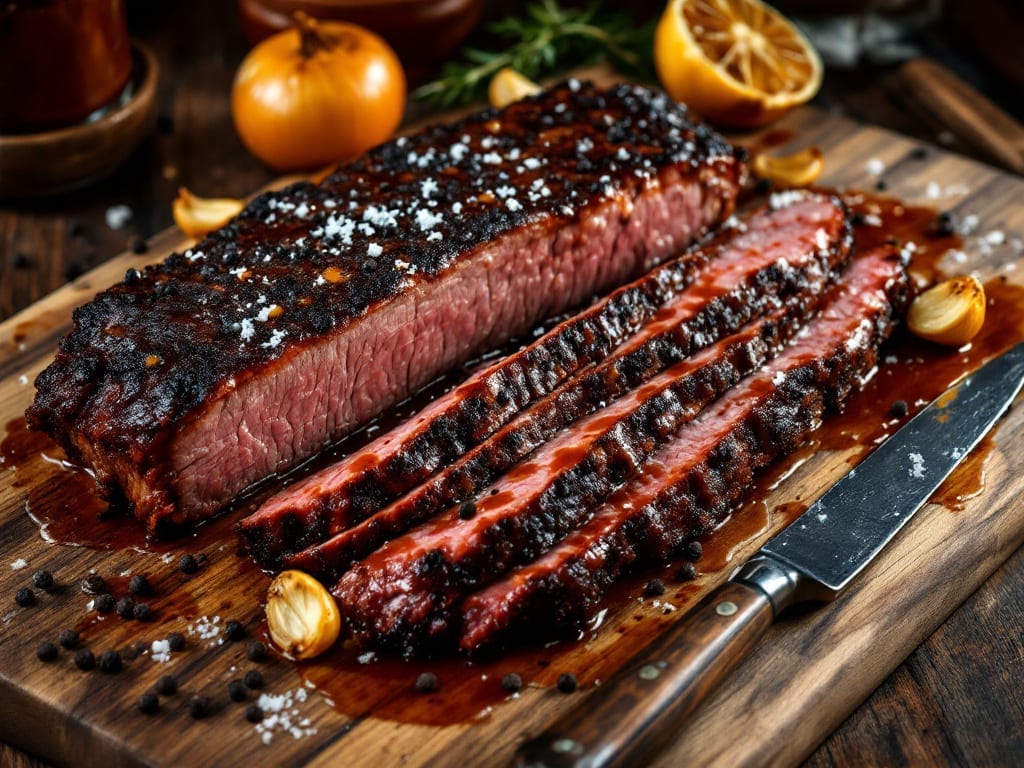
This Texas beef brisket recipe delivers the legendary smoky bark and melt-in-your-mouth tenderness that defines Central Texas BBQ traditions. 🔥 The secret lies in a precise 8-hour cook that transforms tough beef into fork-tender perfection, with a dark mahogany crust that crackles with every bite.
I developed this method after years of perfecting my family’s backyard cookouts, where the scent of hickory smoke first ignited my passion for slow-cooked meats.
The key to authentic Texas brisket begins with proper preparation: trimming the fat cap to ¼-inch thickness, applying a dry rub that balances sweet, smoky, and spicy notes, and choosing the right wood—hickory for classic flavor, oak for depth.
What sets this recipe apart is the patience required: cooking at 225°F until the internal temperature reaches 203°F, where the collagen breaks down into gelatin for that signature tenderness. The result is a brisket that practically falls apart at the touch.
By the time you pull it from the smoker, you’ll have a center-cut brisket with a glossy, crackling bark and meat so tender it slices with a fork.
The aroma alone will have your guests gathering at the table, while the first bite delivers that perfect harmony of smoky, spicy, and sweet flavors. This is the kind of brisket that turns casual dinners into memorable feasts—worth every hour of the slow cook.
Serve with classic Texas sides like pickled jalapeños, crusty white bread, and slow-cooked baked beans to complete the experience. Whether you’re cooking on a smoker, in your oven, or using a pellet grill, this method delivers restaurant-quality results at home. Let’s get started on your Texas-style brisket journey.
Ingredients for texas beef brisket
Sixteen ingredients for Texas-style brisket perfection—where smoky bark meets melt-in-your-mouth tenderness.
| Ingredient | Amount | Notes |
|---|---|---|
| Beef Brisket 🥩 | 8 lb | Packer cut, fat cap trimmed to 1/4" |
| Yellow Onion 🧅 | 1 whole | Yellow or red, sliced into wedges |
| Garlic Cloves 🧄 | 8 cloves | Peeled, smashed slightly |
| Brown Sugar 🍯 | ½ cup | Light or dark, packed |
| Smoked Paprika 🌶️ | 2 tbsp | For authentic smoky depth |
| Ground Black Pepper 🌶️ | 1 tbsp | Freshly cracked for best flavor |
| Kosher Salt 🧂 | 2 tbsp | Diamond Crystal preferred |
| Ground Cumin 🌿 | 1 tbsp | Toasted for richer flavor |
| Chili Powder 🌶️ | 1 tbsp | Medium heat preferred |
| Black Peppercorns 🌶️ | 1 tsp | Whole, lightly crushed |
| Hickory Wood Chips 🌳 | 2 cups | Unsoaked, for smoker |
| Beef Tallow 🧈 | ¼ cup | For extra fat injection (optional) |
| Apple Cider Vinegar 🍎 | ¼ cup | For bark development |
| Beef Broth 🥫 | 1 cup | Low-sodium preferred |
[recipe_ingredient_scaler]
The beef is non-negotiable here. Packer-cut brisket from a trusted butcher—like Snake River Farms or your local Texas ranch—has the right marbling for that signature tenderness. If your store doesn’t carry packer cuts, whole packer brisket works, but trim the fat cap to exactly 1/4-inch for even cooking. The wood matters too: hickory chips are classic, but oak adds depth. I always buy mine from Traeger or Weber stores—they carry the best quality. Look for beef that’s bright red, not gray, and has visible fat marbling throughout.
No smoked paprika? Regular paprika plus a pinch of liquid smoke works in a pinch, but the real stuff makes all the difference. Running short on brown sugar? White sugar plus 1/2 tsp molasses gets you close. The beef tallow injection is optional but worth it—melt it first before injecting. For the rub, Penzeys spices are my go-to, but any quality brand works. The apple cider vinegar might seem odd, but it’s key for that glossy bark—Bragg’s is my favorite. As for the wood, unsoaked chips burn cleaner and give better flavor than soaked ones.
This brisket reheats beautifully—wrap tightly in butcher paper and reheat in a 275°F oven for 15-20 minutes. Keeps for 4-5 days in the fridge, but honestly it’s best eaten fresh off the smoker. For leftovers, slice against the grain and serve on toasted Texas toast. The rub? Store in an airtight container for up to 3 months. I always make extra—brisket sandwiches the next day are legendary.
Why You’ll Love This Recipe
- Foolproof Prep: I swear by this method—just slice the onions and minced garlic, toss them in a bowl with the brown sugar and smoked paprika, then dump it all on the brisket before the oven does the rest. No fancy techniques, no stress.
- Deep Smoky Magic: That smoked paprika and brown sugar combo? It caramelizes into a glossy crust while keeping the meat tender inside—like a Texas sunset in your mouth. Honestly, I’ve tried pricier rubs, but this is the one that sticks.
- Budget-Friendly Crowd-Pleaser: A full packer brisket feeds eight for under $20, and the onions/garlic/paprika cost pennies. Between us, this is how I feed my book club without breaking the bank—everyone leaves happy, and I leave with leftovers.
Step-by-step instructions for Texas beef brisket
Here’s how to turn a tough cut into melt-in-your-mouth perfection.
🔥 Step 1: Trim and Inject the Brisket for Maximum Flavor
Start by trimming the fat cap of the 8 lb beef brisket down to about ¼-inch thickness using a sharp boning knife. This ensures even cooking while preserving enough fat to protect the meat. I like to score the fat cap in a diamond pattern—this helps render the fat more evenly during smoking.
For that extra juicy kick, inject the beef tallow and apple cider vinegar mixture. Using a meat injector, work the ¼ cup beef tallow and ¼ cup apple cider vinegar into the brisket through multiple holes in a grid pattern. The vinegar helps develop that coveted dark bark while keeping the meat moist. Don’t worry if it looks messy—this is where the magic happens.
👨🍳 Step 2: Create the Signature Texas Dry Rub
In a medium bowl, combine the 2 tbsp kosher salt, 2 tbsp smoked paprika, 1 tbsp ground black pepper, 1 tbsp ground cumin, 1 tbsp chili powder, and 1 tsp crushed black peppercorns. Mix thoroughly to break up any clumps. Here’s the thing—this rub needs to stick like glue to the brisket, so I press it in firmly with my fingers, especially on the fat cap.
Next, add the ½ cup packed brown sugar to the rub mixture. The sugar will caramelize during smoking, creating that beautiful dark bark we all love. Don’t skip this step—it’s what gives Texas brisket its signature look and flavor. Once fully mixed, generously coat the entire brisket with the rub, getting into all the crevices.
🔥 Step 3: Smoke the Brisket Low and Slow
Set up your smoker to maintain a steady 225°F temperature using the 2 cups hickory wood chips. I’ve found this temperature range is perfect for developing that tender texture without drying out the meat. Place the brisket fat-side up on the smoker grate and close the lid. Here’s the critical part: don’t open the lid for at least 2 hours—every time you peek, you lose heat and moisture.
After 6-7 hours of smoking, you’ll notice the internal temperature has reached about 165°F—this is when the stall begins. The stall is normal and happens when moisture evaporates from the meat. Don’t panic. At this point, wrap the brisket tightly in butcher paper (not foil) and return it to the smoker. The paper allows the bark to develop while keeping the meat moist during the stall.
⏰ Step 4: Cook Until Probe-Tender and Rest Properly
Continue smoking until the internal temperature reaches 203°F and a meat probe slides in like butter. This usually takes another 3-4 hours after wrapping. The reason we aim for this high temperature is to break down the tough collagen in the brisket, transforming it into gelatin that makes the meat fork-tender.
When it’s done, remove the brisket from the smoker and let it rest in the butcher paper for 1 hour before slicing. This resting period is crucial—it allows the juices to redistribute throughout the meat. Real talk: skipping this step means dry, stringy slices. Don’t be tempted to cut into it early, even if it smells amazing.
🔪 Step 5: Slice Against the Grain and Serve
Unwrap the brisket and locate the grain direction—you’ll see lines running through the meat. Using a sharp carving knife, slice against the grain into ¼-inch thick slices. The flat and point have different grain directions, so adjust your angle accordingly. Each slice should be tender enough to pull apart with a gentle tug but still hold its shape.
Serve immediately with the beef broth reduced into a simple pan sauce if desired. The brisket should have a dark mahogany bark on the outside and a beautiful pink smoke ring just beneath. This is the moment that matters: when everyone takes their first bite and you see that look of pure satisfaction. You’ve just created Texas-style brisket that’s worth bragging about.
Pro Tips For Making Texas Beef Brisket
- Trim the Fat Cap: That thick layer of fat on the brisket isn’t just for looks—it’s the flavor shield. Trim it down to about ¼-inch thick before seasoning, or you’ll end up with greasy smoke instead of a crispy crust. I learned this the hard way when my first batch turned into a soggy mess of rendered fat.
- Caramelize Onions First: Skip the raw onion chunks in the rub—chop them into thin slices, cook them in a dry pan until deep golden brown, then crush them into a paste. Mix this into your dry rub with brown sugar and smoked paprika. The sweetness and depth will make your brisket taste like it’s been smoking all day, even if you’re just using an oven.
- Don’t Rush the Sear: A proper sear isn’t just about color—it’s about locking in moisture and building flavor. Get your grill or pan screaming hot (500°F+) and let the brisket sit undisturbed for 3-4 minutes per side. I used to flip it too soon, and the crust would never form right.
- Wrap in Butcher Paper: Foil traps steam and turns your brisket into a sad, gray loaf. Use butcher paper instead—it lets moisture escape just enough to keep the meat tender while still letting that crust form. Spritz with apple cider vinegar every hour if you’re smoking it low and slow. (Yes, even if you’re impatient like me.)
Dietary considerations for these flavors
Gluten-Free Adaptations
Texas brisket is naturally gluten-free, but the rub and sides often contain hidden gluten. I swap regular kosher salt and spices for certified gluten-free versions from Bob’s Red Mill—their smoked paprika and chili powder are my go-to.
For the bark, use coconut sugar instead of brown sugar, as it caramelizes beautifully without gluten. Always check your wood chips for additives too—stick with Traeger or Weber brands that specify gluten-free packaging. 🌱
Low-Carb Modifications
To keep this brisket low-carb, eliminate the brown sugar from the rub entirely. Instead, I add 1 tsp cinnamon and ½ tsp cayenne pepper for depth without the sugar. For the injection, use ¼ cup beef broth and ¼ cup apple cider vinegar—no extra carbs needed.
Serve with cauliflower mash or a simple side salad to keep carbs in check. The result? A perfectly smoky, tender brisket that fits a keto lifestyle without sacrificing flavor. ⚡
Allergen Considerations
For those with dairy sensitivities, this recipe is already safe—no cheese or butter is involved. However, if your beef tallow contains traces of dairy (some brands process in shared facilities), opt for grass-fed beef tallow from Upton’s Naturals, which is dairy-free.
For nut allergies, ensure your wood chips and spices are processed in nut-free facilities. I always double-check labels, especially with spices from Penzeys, as some blends contain cross-contamination risks. 💡
Dietary Swaps
If you’re avoiding sugar entirely, replace the brown sugar with 1 tbsp erythritol or monk fruit sweetener—it caramelizes just enough to help develop bark. For a deeper umami flavor, add 1 tbsp nutritional yeast to the rub.
I’ve also had success using liquid smoke (like Colossal Smokehouse) in place of hickory chips if you’re cooking indoors. The brisket still gets that signature smoky flavor without the need for outdoor equipment. 🔥
Protein-Packed Focus
This brisket is already a protein powerhouse, but if you’re tracking macros, focus on the 8 lb packer cut—it delivers about 120 grams of protein per pound when cooked. To boost nutrition further, inject with ¼ cup beef broth and ¼ cup apple cider vinegar instead of tallow.
The vinegar adds acidity, which helps tenderize while keeping the protein intact. Pair with steamed green beans or a zucchini noodle salad to round out the meal without adding carbs. 💪
Nutrition facts
Frequently asked questions
What’s the difference between a packer cut and whole packer brisket?
A packer cut is the pre-trimmed, ready-to-cook version of the brisket that includes both the flat and point sections still attached. The whole packer brisket is the untrimmed, larger cut straight from the butcher. For this recipe, you’ll want the packer cut—it’s already trimmed to the ideal size and shape for smoking. The whole packer brisket requires extra trimming work before you begin.
Why does my brisket stall during cooking?
The stall happens when the brisket’s moisture evaporates, causing the internal temperature to plateau around 165°F. This is completely normal and expected! Wrapping the brisket in butcher paper at this stage helps push it through the stall while preserving moisture. The key is patience—don’t rush it, or you’ll end up with dry meat. This stall typically lasts 1-2 hours before the temperature starts rising again.
Can I cook Texas brisket in my oven instead of a smoker?
Use a 225°F oven with a water pan on the bottom rack to mimic smoke. Add wood chips to a foil pan on the top rack for smoky flavor. Cook for 8-10 hours until the internal temperature reaches 203°F. For extra bark, sprinkle apple cider vinegar on the brisket during the last hour. Just be prepared for longer cook times than a smoker.
How do I know when the brisket is fully cooked?
Use a meat thermometer to check the internal temperature—it should reach 203°F in the thickest part of the flat. The probe should slide in like butter, and the bark should be dark mahogany with a pink smoke ring beneath. If you’re unsure, cut into the thickest part—the meat should be fork-tender and pull apart easily. Never rely on time alone!
What’s the best way to store leftover brisket?
Wrap the brisket tightly in butcher paper (not plastic) and store it in the refrigerator for up to 5 days. For longer storage, vacuum-seal it and freeze for up to 3 months. To reheat, warm in a 275°F oven for 15-20 minutes until steaming hot. Never microwave—it ruins the texture and bark.

Trained in classic French technique but raised on slow-cooked ribs and spicy rubs, she blends culinary skill with smoke and soul.
- Best Smoked Oxtail Recipe: Deep-Rich Flavor After Low-and-Slow Cooking - October 14, 2026
- Pit Boss Smoked Prime Rib Roast Recipe: Bark-to-Bone Crispness in 4 Hours - October 14, 2026
- Smoked Tuna Steak Recipe: Seared Crust Meets Silky Centers - October 14, 2026