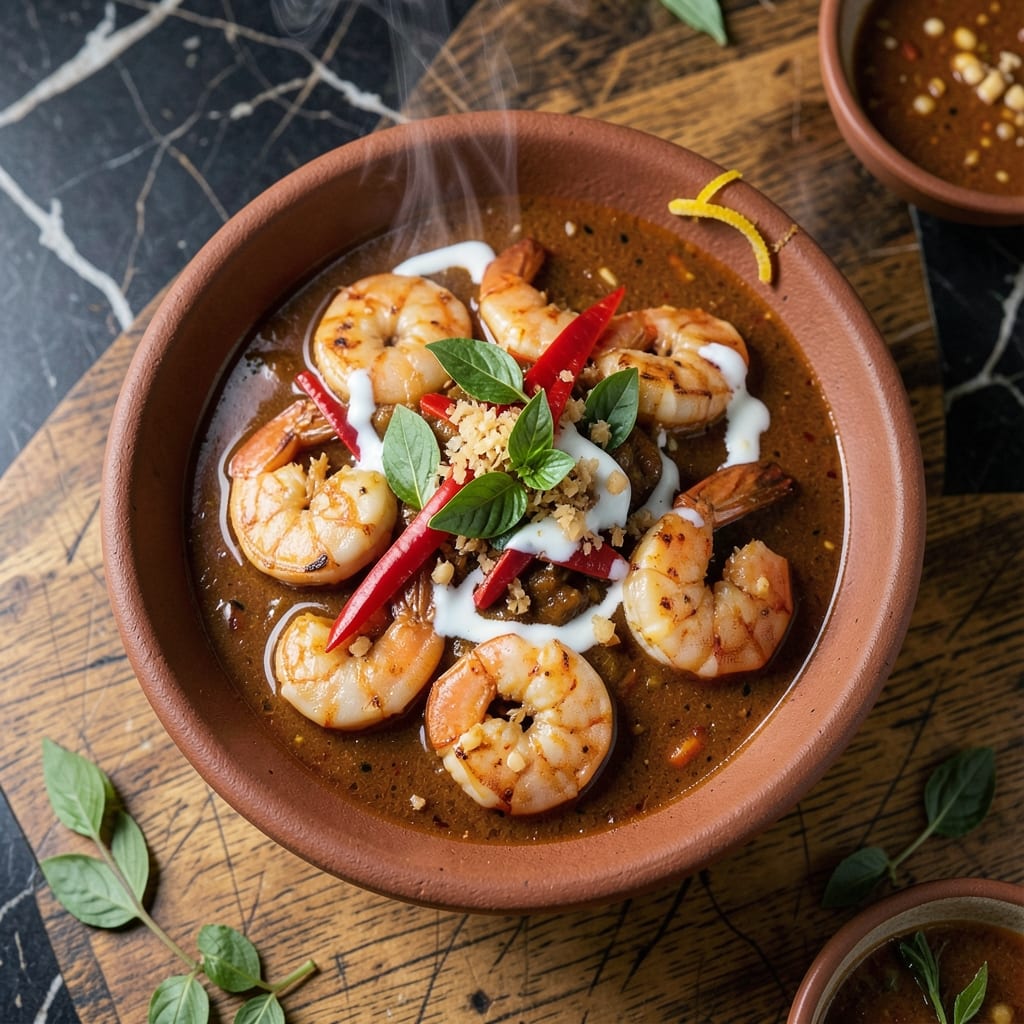
This Thai-inspired curry brings bold, aromatic flavors to your kitchen with minimal effort. The combination of coconut milk and red curry paste creates a rich, velvety sauce that perfectly complements tender shrimp.
I’ve streamlined the process to ensure authentic taste without complicated techniques. A quick sauté of aromatics builds the base, while fresh herbs and lime add brightness to balance the heat.
What you’ll get is a dish that’s creamy, fragant, and packed with layers of flavor. The shrimp cook in just minutes, soaking up the curry’s essence without overpowering it.
Serve with steamed jasmine rice for a complete, restaurant-worthy meal at home.
Ingredients for Thai Red Curry Shrimp
Aromatic paste, creamy coconut, and succulent shrimp make this dish unforgettable.
| Ingredient | Amount | Notes |
|---|---|---|
| Large Shrimp 🍤 | 1 ½ lb | Peeled, deveined, tails on or off |
| Red Curry Paste 🌶️ | 3 tbsp | Thai-style, check for shrimp paste |
| Full-Fat Coconut Milk 🥥 | 2 cans | 13.5 oz cans, shaken well |
| Shallots 🧅 | 2 whole | Finely minced for base |
| Garlic Cloves 🧄 | 4 cloves | Minced for aromatic depth |
| Fresh Ginger 🌿 | 1 tbsp | Peeled, finely grated |
| Red Bell Pepper 🌶️ | 1 whole | Thinly sliced for crunch |
| Bamboo Shoots 🌱 | ½ cup | Canned, drained, sliced |
| Thai Basil Leaves 🌿 | ½ cup | Loosely packed for garnish |
| Fish Sauce 🐟 | 2 tbsp | Red Boat brand preferred |
| Brown Sugar 🍚 | 1 tbsp | Light or dark variety |
| Lime 🍈 | 1 whole | Zest and juice for acidity |
| Fresh Cilantro 🌿 | ¼ cup | Roughly chopped for garnish |
| Jasmine Rice 🍚 | 1 ½ cups | Uncooked, for serving |
| Vegetable Oil 🫒 | 2 tbsp | High smoke point for sautéing |
[recipe_ingredient_scaler]
The curry paste is non-negotiable—Maesri or Thai Kitchen are reliable brands at most grocery stores. Coconut milk needs to be full-fat (none of that light stuff) for that velvety texture. Trader Joe’s has great options, or any Asian market will have the real deal. Shrimp should be wild-caught if possible, and absolutely fresh. Look for ones that smell like the ocean, not fishy (there’s a difference).
No shallots? Red onion at half the amount works. Fresh ginger is ideal, but ground ginger at one-quarter the amount can save you in a pinch. Can’t find Thai basil? Regular basil plus a little mint gets close. Fish sauce is key for umami—soy sauce works as vegetarian swap, but add a pinch of salt too. Bamboo shoots can be subbed with zucchini strips.
Curry tastes even better the next day once flavors meld. Stores 3-4 days in the fridge, freezes for 2 months. Rice is best fresh, but leftovers reheat well with a splash of water (microwave covered, 1 minute).
Why You’ll Love This Recipe
- 20-Minute Meal: I can have this on the table faster than it takes to order takeout. Honestly, the shrimp cooks in just 3-4 minutes.
- Flavor Bomb: The red curry paste and coconut milk create this rich, creamy sauce that soaks into every shrimp.
- Meal Prep Magic: It reheats beautifully for lunch the next day—between us, it might taste even better.
- Budget Stretcher: A pound of shrimp and a can of coconut milk feed my family of four without breaking the bank.
Step-by-Step Instructions for Thai Red Curry Shrimp
Here’s the method I’ve perfected for balancing bold flavors and creamy texture in this dish.
Step 1: Build the Aromatic Base
Heat the 2 tbsp Vegetable Oil in a large pot or deep skillet over medium heat. Add the 2 whole Shallots and cook for 2-3 minutes until they turn translucent and begin to soften at the edges. The goal is to sweat them gently, not brown them.
Stir in the 4 cloves Garlic Cloves and 1 tbsp Fresh Ginger, cooking for 30-60 seconds until the mixture becomes fragrant. Be careful not to let the garlic burn—it should sizzle but not darken. This aromatic trio forms the flavor foundation for your creation.
Immediately add the 3 tbsp Red Curry Paste and stir constantly for 1-2 minutes. The paste will deepen in color slightly and release its complex blend of lemongrass, galangal, and chili. You’ll notice the oil beginning to separate at the edges when it’s ready for the next step.
Step 2: Create the Creamy Curry Sauce
Pour in the 2 cans Full-Fat Coconut Milk, stirring vigorously to combine with the curry paste mixture. The coconut milk should be well-shaken before adding to ensure the cream and liquid are fully integrated. Bring the mixture to a gentle simmer over medium-high heat.
Once simmering, reduce heat to medium-low and let it cook for 3-4 minutes. You’ll see small bubbles breaking the surface consistently. Add the 1 whole Red Bell Pepper, thinly sliced, and 0.5 cup Bamboo Shoots. These will soften slightly while maintaining their texture.
Season with the 2 tbsp Fish Sauce and 1 tbsp Brown Sugar. Stir well and taste—you should detect a balance of salty, sweet, and umami. The sugar helps round out the heat from the curry paste, while the fish sauce adds depth.
Step 3: Cook the Shrimp to Perfection
Add the 1.5 lb Large Shrimp to the simmering sauce. The shrimp should be peeled and deveined, with tails on or off based on your preference. Stir to coat the shrimp completely in the sauce. Cook for 3-4 minutes until the shrimp turn from translucent to opaque and curl into a loose C-shape.
Watch carefully—the shrimp will finish cooking quickly in the hot liquid. Overcooking results in rubbery texture, so remove the pot from heat as soon as the shrimp are just done. The residual heat will continue cooking them slightly, ensuring they stay tender.
Squeeze in half of the 1 whole Lime and stir. The acidity brightens all the flavors and cuts through the richness of the coconut milk. Taste and adjust seasoning if needed, adding more fish sauce for saltiness or brown sugar for sweetness.
Step 4: Finish and Serve
Stir in the 0.5 cup Thai Basil Leaves, reserving a few for garnish. The basil will wilt slightly in the hot sauce, releasing its anise-like aroma. Let the curry sit for 2 minutes off heat to allow the flavors to meld together.
Meanwhile, prepare the 1.5 cups Jasmine Rice according to package instructions. The rice should be fluffy and slightly sticky to soak up the sauce. Divide the rice among four bowls and ladle the curry over the top, ensuring each serving gets plenty of shrimp and sauce.
Garnish with the remaining Thai basil, 0.25 cup Fresh Cilantro, and lime wedges. Each bite should deliver a harmony of creamy, spicy, sweet, and herbal notes, with the shrimp as the star.
Pro Tips For Making Thai Red Curry Shrimp
- Bloom the Paste: Cook the red curry paste in a bit of coconut milk for 2-3 minutes over medium heat before adding the rest—this wakes up the flavors and prevents a raw, gritty texture.
- Pat Shrimp Dry: I learned this the hard way—dry your shrimp thoroughly before cooking to avoid steaming them in their own juices, which makes them rubbery instead of seared.
- Skip the Boil: Never let the coconut milk reach a rolling boil, or it’ll separate and turn oily. Keep it at a gentle simmer, just enough to cook the shrimp through.
- Use Full-Fat Only: Sounds weird, but it works: light coconut milk just doesn’t have the richness to balance the curry paste’s intensity. Full-fat is non-negotiable here.
Storing and Reheating Leftovers
Refrigerator Storage
Let your curry cool for no more than 2 hours before transferring to airtight containers. I use glass containers to preserve flavors. Store at 40°F or below for up to 3-4 days. The flavors deepen overnight as spices meld. ❄️
Freezer Storage
This dish freezes beautifully for up to 2 months. Use quart-sized freezer bags laid flat to save space. Squeeze out excess air before sealing. Label with the date—trust me, you’ll forget when you made it.
Stovetop Reheating
Gently reheat in a saucepan over medium-low heat for 5-7 minutes, stirring occasionally. Add ¼ cup water or coconut milk to thin the sauce if needed. This method keeps the shrimp tender and the flavors vibrant.
Microwave Reheating
For quick meals, microwave individual portions covered with a damp paper towel. Heat on 50% power for 2-3 minutes, stir, then continue in 30-second intervals until hot. Add a splash of lime to revive the brightness. 🔥
Rice Reheating
Sprinkle 1-2 tbsp water over leftover rice and microwave covered for 1 minute. Fluff with a fork to restore texture. The rice will soak up any extra curry sauce beautifully.
Nutrition Facts
Frequently Asked Questions
Can I use light coconut milk instead?
No, light coconut milk won’t give you the same rich, creamy texture. The full-fat version is essential for that velvety consistency.
What if my curry is too spicy?
Balance the heat by adding a little more brown sugar or coconut milk. Start with 1 tablespoon at a time and adjust to taste.
How do I know when the shrimp are done?
They’ll turn from translucent to opaque and curl into a loose C-shape. This usually takes 3-4 minutes in the hot sauce. Overcooking makes them rubbery, so remove them promptly.
Can I make this ahead of time?
The flavors deepen overnight. Store in the fridge for up to 3-4 days or freeze for 2 months. Reheat gently to preserve the shrimp’s texture.

Trained in classic French technique but raised on slow-cooked ribs and spicy rubs, she blends culinary skill with smoke and soul.
- Recipe for Boneless Pork Chops in Cast Iron Skillet: Sear and Baste to Juicy Perfection - October 3, 2026
- Recipe for Boneless Cross Rib Roast: Slow-Roasted Beef with Herb Crust - October 3, 2026
- Hamburgers in Sauce Recipe Crock Pot: Slow-Cooked Savory Delight - October 3, 2026