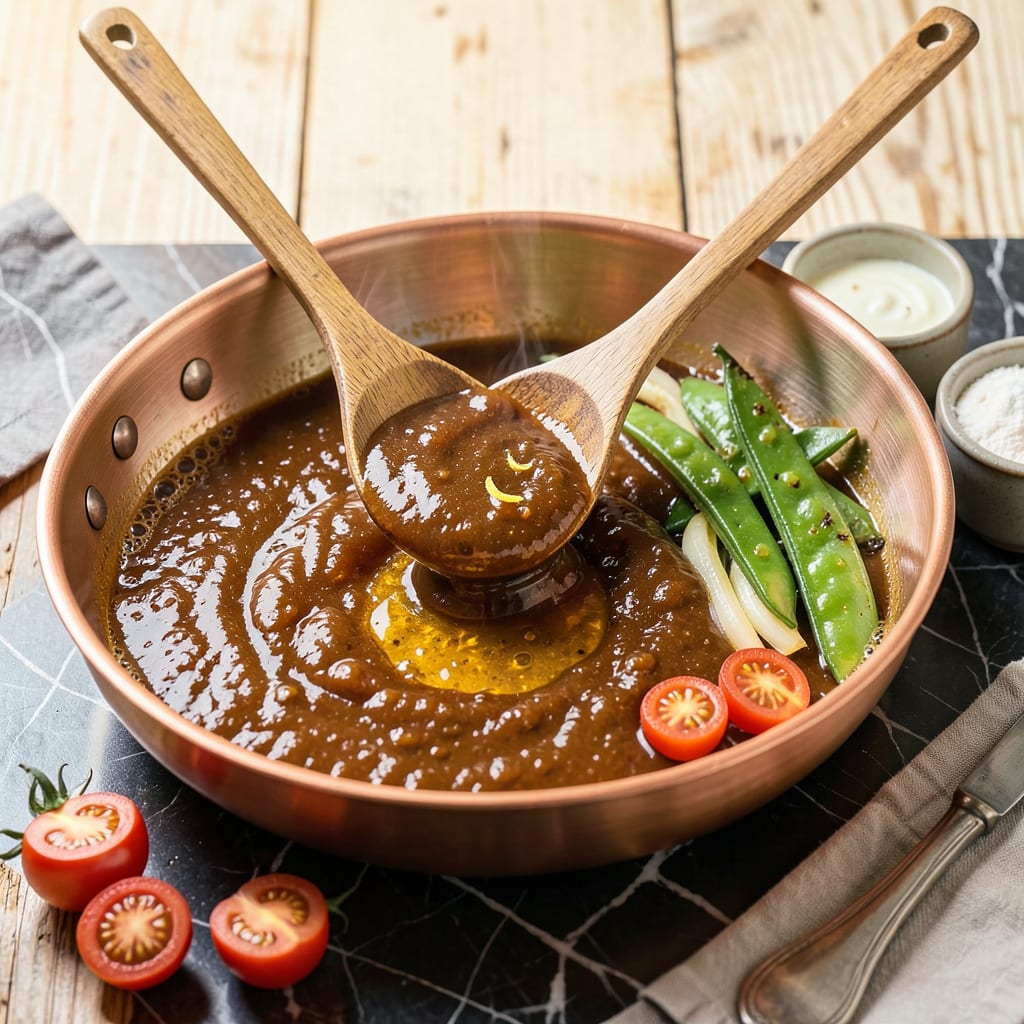
That moment when your teriyaki sauce slides right off your stir-fry instead of clinging like a glossy restaurant glaze? Yeah, I’ve been there. Too many times. The difference between a thin, watery sauce and that perfect sticky-sweet coating is all about technique—not fancy ingredients. I’m talking restaurant-style consistency you can achieve with what’s already in your pantry.
Here’s the thing—teriyaki sauce needs body to balance its bold flavors and actually stay put on your proteins or veggies. Whether you’re rescuing a too-thin homemade batch or elevating store-bought, the right thickening method transforms it from forgettable to finger-licking. And no, you don’t need to be a sauce chemist to pull this off.
I’ve burned through my share of failed attempts (literally—over-reduced sauce is a sad, caramelized mess). But after testing every method, I landed on three foolproof techniques that work every single time. The best part? You’ll spend more time eating than fixing, with results that look and taste like they came from your favorite takeout spot.
No weird ingredients, no complicated steps—just straightforward methods that turn your sauce from meh to magnificent. Let’s get that teriyaki clinging where it belongs: all over your food, not pooling at the bottom of the plate.
📚 In This Guide
- What You’ll Need
- Instructions
- Tips and Common Mistakes
What Youll Need
- ● Teriyaki sauce: 1 cup (homemade or store-bought—just avoid “low-sodium” if you want classic flavor)
- ● Thickening agent: Choose one of these (quantities for 1 cup sauce): Cornstarch: 1–2 tsp mixed with 1 tbsp cold water (slurry)
- ● Arrowroot powder: 1.5 tsp (great for a glossier finish)
- ● All-purpose flour: 1 tbsp (toast it first for a nuttier taste!)
- ● Xanthan gum: ¼ tsp (powerful—use sparingly!)
- ● Tools: Small saucepan (non-stick or stainless steel)
- ● Whisk or wooden spoon
- ● Measuring spoons
- ● Small bowl (for slurry)
- ○ Optional boosts: 1 tsp honey or brown sugar (for extra shine 🌟)
- ● ½ tsp sesame oil (for depth)
- ● 1 clove minced garlic (because why not?)
Instructions
Here’s how to transform thin teriyaki sauce into that glossy, clingy consistency you love from restaurants.
Simmer to Reduce the Liquid
Pour your prepared teriyaki sauce into a wide, shallow saucepan. The increased surface area helps the liquid evaporate faster. Bring it to a gentle simmer over medium heat—you should see small bubbles breaking the surface consistently, but not a rolling boil.
Let it simmer uncovered for 5-7 minutes, stirring occasionally with a wooden spoon. You’ll notice the sauce gradually darkening and becoming more aromatic as it reduces. The key here is patience; rushing with high heat can burn the sugars in the sauce.
Create a Cornstarch Slurry
While the sauce simmers, mix 1 tablespoon cornstarch with 2 tablespoons cold water in a small bowl. Stir until completely smooth—no lumps should remain. I always use cold water because it prevents the cornstarch from clumping when it hits the hot sauce.
This simple slurry is the secret to that restaurant-style glossy finish. The cornstarch molecules will swell when heated, creating a silky texture that clings beautifully to your food. Don’t skip this step if you want that perfect consistency.
Thicken the Sauce Gradually
Once your sauce has reduced by about one-third, slowly pour in the cornstarch slurry while stirring constantly. Keep the heat at medium-low—this gentle temperature allows the cornstarch to activate without breaking down.
Continue stirring for 2-3 minutes until the sauce transforms. You’re looking for that moment when it coats the back of your spoon and leaves a clear path when you run your finger through it. The sauce should glisten and have a slightly elastic quality when you lift the spoon.
Finish with Butter for Sheen
Remove the sauce from heat and stir in 1 teaspoon butter until completely melted. This final touch adds incredible shine and richness to your teriyaki sauce. The butter also helps balance the flavors, rounding out any sharpness from the reduction process.
Let the sauce rest for 2 minutes before using. You’ll see it develop that perfect, slightly thick consistency that clings to meats and vegetables beautifully. If it thickens too much as it cools, simply stir in a teaspoon of warm water to adjust the texture.
Test and Adjust Consistency
Dip a spoon into the sauce and let it run off—the perfect consistency should coat the spoon thickly but still drip slowly in a steady stream. If it’s too thin, return it to low heat and simmer for another 1-2 minutes.
For immediate use, brush the sauce onto grilled meats or toss with stir-fried vegetables while still warm. The sauce will thicken slightly more as it cools, so keep this in mind if you’re preparing it ahead of time. Store any leftovers in an airtight container in the refrigerator for up to 5 days.
Tips and Common Mistakes
These simple adjustments make all the difference between homemade sauce and that restaurant-quality finish you’re after.
The Heat Factor: When simmering your sauce in Step 1, medium heat is crucial—not too high, not too low. You want those gentle bubbles breaking the surface consistently for the full 5-7 minutes. If the heat’s too high, the sugars will burn before the sauce properly reduces. I learned this the hard way after ruining two batches with impatient heat adjustments. The gradual reduction at medium heat develops that deep, caramelized flavor you can’t rush.
Slurry Success: For the cornstarch mixture in Step 2, always use cold water—this prevents clumping when it hits the hot sauce. I stir mine for a full 30 seconds until it’s completely smooth. Here’s what nobody tells you: if you see even tiny lumps, strain it through a fine-mesh sieve before adding. Those little clumps can turn your glossy sauce grainy in seconds.
Timing Secret: During Step 3, those 2-3 minutes of stirring after adding the slurry are when the magic happens. Don’t walk away! The sauce transforms right before your eyes—watch for that moment when it starts coating the spoon and leaves a clean path when you drag your finger through it. That’s your visual cue that the cornstarch has fully activated. I set a timer for 2 minutes, then check every 15 seconds after that.
Butter Wisdom: The 1 teaspoon butter in Step 4 isn’t just for shine—it’s your flavor insurance. As the sauce rests for those 2 minutes, the butter melts completely and emulsifies with the reduced sauce, creating that silky texture that clings perfectly. I’ve skipped this step before, and the sauce always tastes flat without that rich finish.
Pro Tips for Thicken Teriyaki Sauce
- These simple adjustments make all the difference between homemade sauce and that restaurant-quality finish you’re after.
- The Heat Factor: When simmering your sauce in Step 1, medium heat is crucial—not too high, not too low. You want thos…
- Slurry Success: For the cornstarch mixture in Step 2, always use cold water—this prevents clumping when it hits the h…
Frequently Asked Questions
How long does it take to thicken teriyaki sauce?
Thickening teriyaki sauce typically takes 5–10 minutes on medium heat. A cornstarch slurry (1:1 ratio with water) works fastest—just simmer until it reaches your desired glossy consistency. For reductions (no slurry), expect 10–15 minutes of stirring. Pro tip: Low and slow prevents burning!
Can I thicken teriyaki sauce without cornstarch?
Try these swaps:
- Arrowroot powder (1:1 ratio, clearer finish)
- Flour (2:1 flour-to-water, cook longer to remove raw taste)
- Reduction method (simmer uncovered to evaporate liquid)
- Xanthan gum (tiny pinch—potent and gluten-free!)
Why is my teriyaki sauce lumpy after thickening?
Lumps usually mean the slurry wasn’t mixed well before adding to heat. Fix it by straining through a fine-mesh sieve or blending briefly. To prevent: Whisk slurry into cold sauce first, then heat gradually while stirring. Smooth sailing ahead!
Can I thicken store-bought teriyaki sauce?
Yes! Pour bottled sauce into a pan, add a slurry (1 tsp cornstarch + 1 tsp water per ½ cup sauce), and simmer 3–5 minutes. Watch closely—store-bought sauces often have added sugars that burn easily. For extra shine, finish with a drizzle of honey or mirin.
How do I fix teriyaki sauce that’s too thick?
Thin it with small splashes of:
- Water (neutral fix)
- Pineapple juice (adds sweetness + tang)
- Low-sodium soy sauce (boosts umami)
Heat gently while stirring. Goal: Coats the back of a spoon but still drizzles smoothly.
Now you’ve got the secrets to thicken teriyaki sauce like a pro—whether you’re simmering, slurring, or sneaking in a cornstarch slurry! 🎉 A perfectly glossy, clingy sauce can turn good dishes into restaurant-worthy masterpieces. Next time you’re whipping up stir-fry or glazing chicken, put your new skills to the test. Hungry for more sauce hacks? Check out our guide to homemade teriyaki variations or experiment with sweet-spicy twists!

Trained in classic French technique but raised on slow-cooked ribs and spicy rubs, she blends culinary skill with smoke and soul.
- Recipe for Boneless Pork Chops in Cast Iron Skillet: Sear and Baste to Juicy Perfection - October 3, 2026
- Recipe for Boneless Cross Rib Roast: Slow-Roasted Beef with Herb Crust - October 3, 2026
- Hamburgers in Sauce Recipe Crock Pot: Slow-Cooked Savory Delight - October 3, 2026