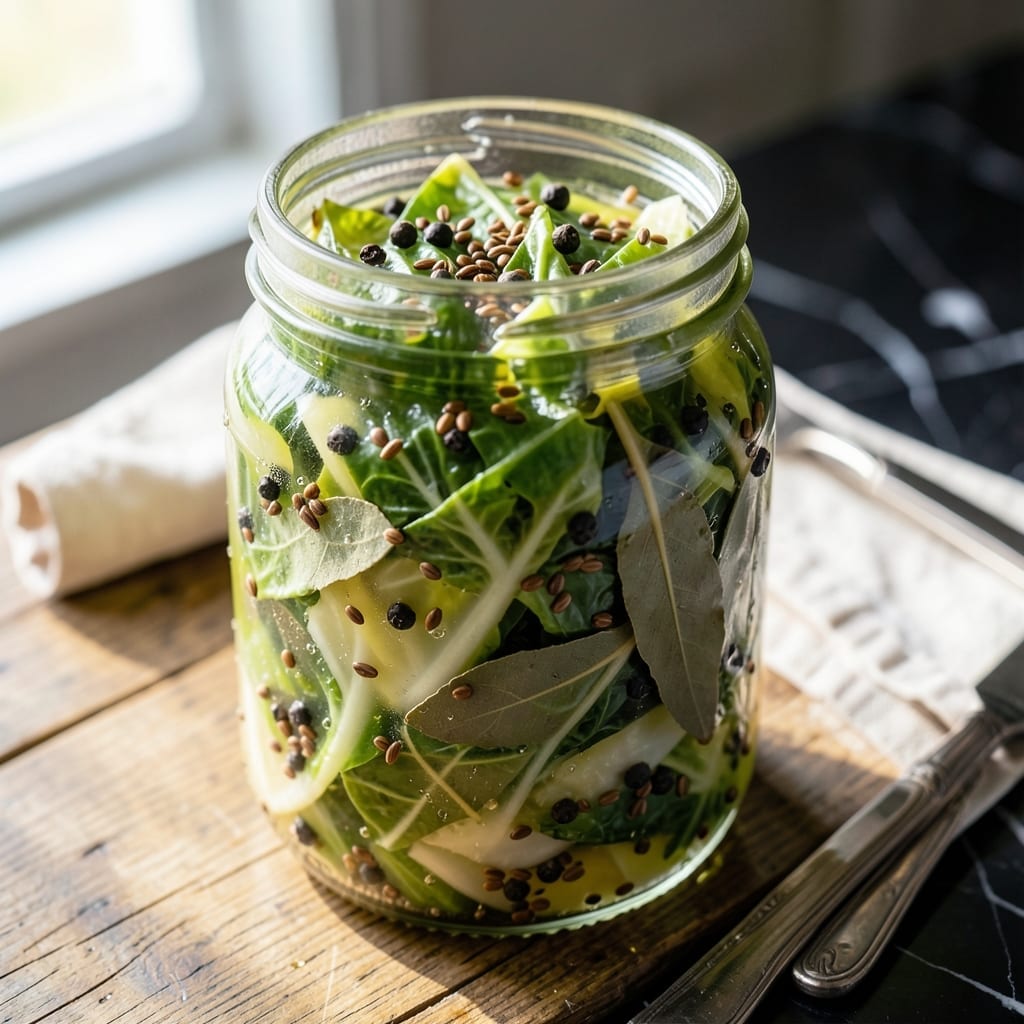
Fermenting sauerkraut at home delivers gut-healthy results with minimal effort. This method transforms fresh cabbage into tangy, crunchy perfection through natural fermentation.
The process relies on salt, time, and proper technique. I’ve refined this approach to ensure consistent, flavorful batches without special equipment. The ratio of salt to cabbage is critical for both safety and taste.
Within days, you’ll notice the cabbage softening and developing its signature sour flavor. The longer it ferments, the more complex the taste becomes, but 3 weeks yields ideal texture and tang.
Store in a cool, dark place to extend shelf life. This creation keeps well for months, making it a pantry staple.
Ingredients for Tim Ferriss Sauerkraut
Fresh cabbage and a handful of spices transform into tangy, crunchy fermented perfection with minimal effort.
| Ingredient | Amount | Notes |
|---|---|---|
| Green Cabbage 🥬 | 2 ½ lb | Fresh, outer leaves removed, thinly shredded |
| Caraway Seeds 🌿 | 1 tbsp | Optional for traditional flavor |
| Kosher Salt 🧂 | 1 ½ tbsp | Non-iodized, Diamond Crystal preferred |
| Black Peppercorns 🌶️ | 1 tsp | Freshly cracked for best aroma |
| Juniper Berries 🍇 | ½ tsp | Lightly crushed for subtle pine flavor |
| Bay Leaves 🍃 | 2 whole | For fermentation depth |
| Filtered Water 💧 | ½ cup | If needed to reach brine consistency |
| Dill Seeds 🌿 | 1 tsp | Alternative to caraway for variation |
[recipe_ingredient_scaler]
The cabbage quality is critical here. Seek out firm, dense heads with vibrant green leaves—avoid any with brown spots or wilting. Whole Foods or farmers markets typically offer the best selection. Kosher salt is non-negotiable; Diamond Crystal is preferred for its consistent grain size and clean flavor. The caraway seeds add authentic flavor, but Penzeys is a reliable source for fresh, potent spices.
No caraway? Dill seeds or mustard seeds work beautifully as alternatives. For a simpler profile, omit the juniper berries and bay leaves entirely. The salt ratio must stay precise—1.5 tbsp per 2.5 lbs is the sweet spot for both safety and flavor. If your cabbage seems dry, a splash of filtered water helps create the necessary brine (avoid tap water with chlorine).
Ferment in a cool, dark place for 3 weeks for ideal texture and tang. Once opened, keep submerged in brine in the fridge for up to 6 months. The flavor continues developing over time, so taste periodically to find your preferred balance.
Why You’ll Love This Recipe
- No-Fuss Ferment: I toss cabbage with salt and spices, then forget about it for days—no daily stirring, no complicated steps.
- Earthy Complexity: The caraway and juniper give it this deep, aromatic punch that’s way more interesting than plain sauerkraut.
- Meal Prep Staper: I keep a jar in my fridge for weeks, throwing it on tacos, eggs, or straight from the fork.
- Pennywise Preserve: A single head of cabbage and a few pantry spices make gallons of this probiotic powerhouse.
Step-by-Step Instructions for Gut-Friendly Fermented Cabbage
Master the fermentation process with these precise, tested steps for consistent results.
Step 1: Prepare and Shred the Green Cabbage
Remove the outer leaves from the 2.5 lb green cabbage and rinse the head under cold water. Quarter the cabbage through the core and remove the tough inner stem from each wedge. This ensures even shredding and consistent fermentation throughout the batch.
Using a sharp knife or mandoline, thinly shred the cabbage into uniform strips about ⅛-inch thick. I prefer a knife for better control, but a food processor with a shredding attachment works efficiently. Transfer the shredded cabbage to a large mixing bowl—you should have approximately 8-10 cups of tightly packed shreds.
Step 2: Add Spices and Salt for Flavor Development
To the shredded cabbage, add the 1 tbsp caraway seeds, 1.5 tbsp kosher salt, 1 tsp black peppercorns, 0.5 tsp juniper berries, 2 whole bay leaves, and 1 tsp dill seeds. The salt is crucial—it draws out moisture, creates the brine, and prevents harmful bacteria while allowing beneficial lactobacillus to thrive.
Using clean hands, massage the cabbage and spices together vigorously for 5-7 minutes until the cabbage releases its liquid and becomes slightly wilted. You should have enough natural brine to submerge the cabbage completely. If not, add the 0.5 cup filtered water gradually until the liquid covers the mixture by at least 1 inch when pressed down.
Step 3: Pack the Mixture into Fermentation Vessel
Transfer the cabbage mixture to a clean, non-reactive fermentation vessel—a wide-mouth quart jar works perfectly for this quantity. Pack the cabbage down tightly with your fist or a wooden tamper, pressing hard to eliminate air pockets and ensure the brine rises above the solids.
Leave 2-3 inches of headspace at the top of the jar to accommodate expansion during fermentation. The cabbage must stay completely submerged beneath the brine to prevent mold growth. If needed, place a small weight, like a fermentation stone or a zip-top bag filled with water, on top to keep everything under the liquid.
Step 4: Ferment at Room Temperature
Cover the jar loosely with a lid or fermentation airlock to allow gases to escape while keeping contaminants out. Place the jar in a cool, dark location, ideally at 65-72°F for optimal fermentation. Warmer temperatures speed up the process but can produce softer texture and stronger flavors.
Check the jar daily. After 24-48 hours, you should see active bubbling—a sign that fermentation has begun. Skim off any foam or scum that rises to the surface with a clean spoon. The cabbage is ready when it reaches your preferred tanginess, typically after 5-10 days. Taste test after 5 days and continue fermenting to develop more sourness.
Step 5: Store and Maintain Your Ferment
Once the desired flavor is achieved, secure the lid tightly and transfer the jar to the refrigerator. Cold storage slows fermentation significantly but doesn’t stop it completely. The sauerkraut will continue to develop flavor over time, becoming more tangy and complex.
Your creation will keep for 6-12 months refrigerated, though the texture becomes softer the longer it stores. Always use clean utensils when removing portions to prevent contamination. The brine should remain clear; if you notice any discoloration or off odors, discard the batch and start fresh.
Pro Tips For Making Tim Ferriss Sauerkraut
- Use Fine Salt: Kosher salt works, but switch to fine sea salt for even distribution—after my first batch had salty pockets, I learned coarse grains can create uneven fermentation.
- Massage the Cabbage: Spend a full 10 minutes kneading the shredded cabbage until it releases plenty of liquid—this isn’t just mixing, it’s what guarantees proper submerging and fermentation.
- Skip the Vinegar: This isn’t quick-pickling; resist the urge to add vinegar as it inhibits natural lactic acid fermentation, which is the whole point of this method.
- Weigh It Down: Place a zip-top bag filled with water on top of the cabbage in your fermentation vessel to keep everything submerged—I was skeptical until I tried it and saw the difference in texture.
Best Sauces and Condiments for These Flavors
Classic Pairings
Sauerkraut pairs beautifully with rich meats. I love it alongside smoked sausage or pork chops—the tang cuts through the fat perfectly. For a German-style meal, serve with bratwurst and mustard. 💛
Cheese Companions
For a vegetarian twist, try it with melted Swiss cheese on rye bread. The nutty, mild flavor complements the sour crunch. A sharp cheddar also works well, adding depth to the fermentation tang.
Condiment Enhancements
Dress up your sauerkraut with whole-grain mustard or Dijon for extra kick. A drizzle of honey mustard adds sweetness that balances the acidity. Caraway seeds sprinkled on top enhance the traditional flavor profile.
Beverage Matches
A crisp German pilsner or wheat beer cleanses the palate. For non-alcoholic options, sparkling apple cider or ginger beer provide refreshing contrast. The effervescence pairs well with the tangy crunch. 🍺
Salad Integration
Toss chopped sauerkraut into potato salad for extra zing. It also brightens up a hearty Reuben sandwich or grilled cheese. The acidity elevates creamy dressings and rich cheeses.
Breakfast Boost
Add a spoonful to your morning eggs or hash for a probiotic kick. It’s amazing with avocado toast topped with a fried egg. The tang wakes up the whole dish.
Nutrition Facts
Frequently Asked Questions
How long does homemade sauerkraut last in the fridge?
Properly fermented and stored sauerkraut keeps for 6-12 months refrigerated. Always ensure it stays submerged in brine and use clean utensils to prevent contamination. The flavor continues developing over time.
Can I use table salt instead of kosher salt?
Avoid table salt as it contains iodine and anti-caking agents that can inhibit fermentation. Stick with non-iodized kosher salt like Diamond Crystal for consistent, safe results. The grain size matters too.
Why is my sauerkraut soft instead of crunchy?
Soft texture often results from over-fermenting or inconsistent salt ratios. Keep the temperature between 65-72°F and check after 5 days. If too soft, reduce fermentation time next batch.

Trained in classic French technique but raised on slow-cooked ribs and spicy rubs, she blends culinary skill with smoke and soul.
- Recipe for Boneless Pork Chops in Cast Iron Skillet: Sear and Baste to Juicy Perfection - October 3, 2026
- Recipe for Boneless Cross Rib Roast: Slow-Roasted Beef with Herb Crust - October 3, 2026
- Hamburgers in Sauce Recipe Crock Pot: Slow-Cooked Savory Delight - October 3, 2026