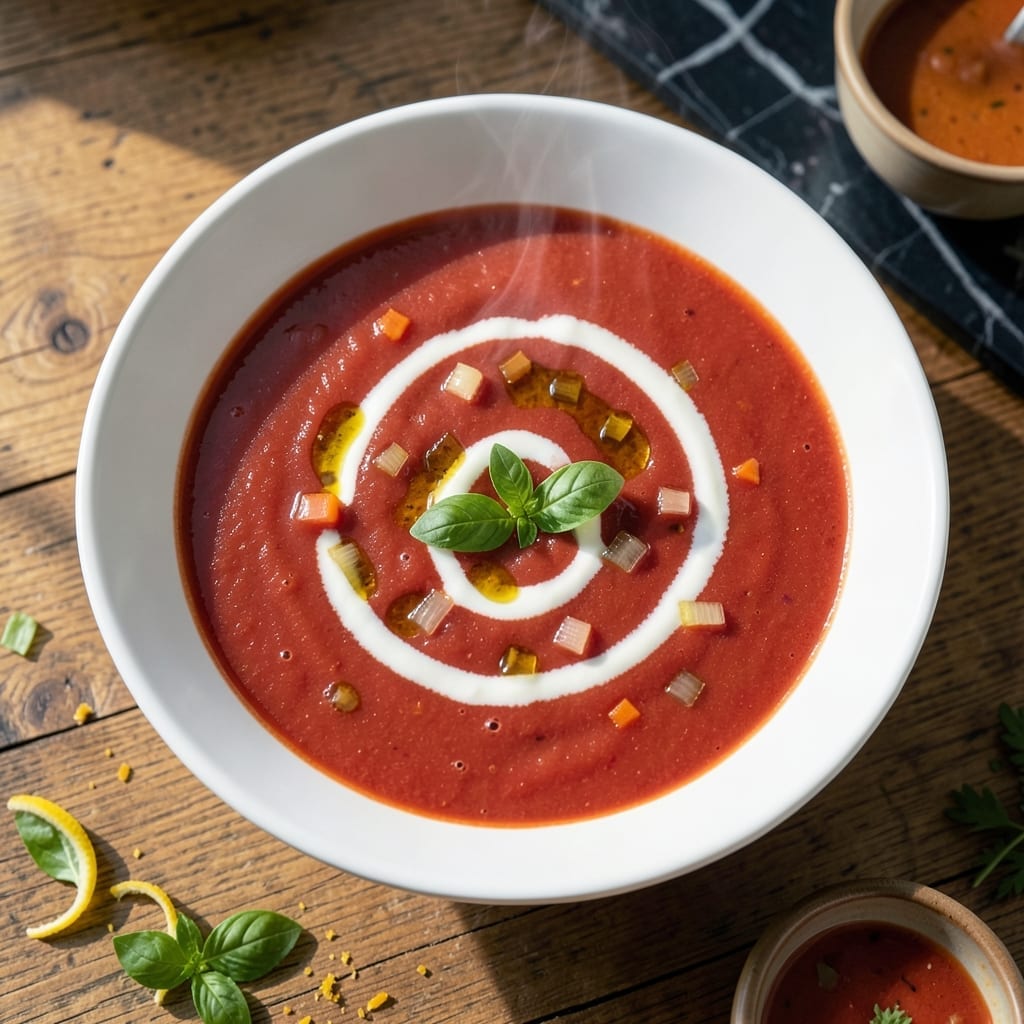
This tomato soup delivers homemade comfort with minimal effort. I developed this method to create a rich, velvety texture using simple pantry staples.
The base of tomato juice provides concentrated flavor without the acidity of fresh tomatoes. A touch of cream adds luxurious body, while aromatic vegetables build depth.
What emerges is a bowl of soup that’s both smooth and satisfying. The aroma alone evokes memories of cozy kitchens and warm meals.
Perfect for chilly evenings or as a starter for special dinners. The process is straightforward, with results that taste anything but simple.
Ingredients for Tomato Soup Recipe Using Tomato Juice
Pantry staples and a few fresh aromatics create this velvety, comforting bowl of soup.
| Ingredient | Amount | Notes |
|---|---|---|
| Tomato Juice 🍅 | 6 cups | Low-sodium preferred for control |
| Yellow Onion 🧅 | 1 whole | Medium, finely diced |
| Carrots 🥕 | 2 whole | Peeled and diced |
| Celery Stalks 🌿 | 2 whole | Diced for aromatic base |
| Garlic Cloves 🧄 | 4 cloves | Minced for depth of flavor |
| Olive Oil 🫒 | 2 tbsp | Extra-virgin for richness |
| Vegetable Broth 🥣 | 2 cups | Low-sodium for balance |
| Coconut Milk 🥥 | 1 cup | Full-fat for creaminess |
| Dried Basil 🌿 | 1 tsp | Or 1 tbsp fresh basil |
| Dried Oregano 🍃 | 1 tsp | Mediterranean variety preferred |
| Bay Leaf 🍃 | 1 whole | Removed before serving |
| Salt 🧂 | 1 tsp | Adjust to taste after cooking |
| Black Pepper 🌶️ | ½ tsp | Freshly ground preferred |
| Sugar 🍚 | 1 tsp | Balances acidity from tomatoes |
[recipe_ingredient_scaler]
The tomato juice is the foundation here. Opt for a high-quality brand like V8 or Knudsen—they have the depth of flavor needed. Aromatic vegetables should be fresh, with onions and carrots having vibrant color and firm texture. Most grocery stores carry these year-round, but farmers markets offer superior quality in season. The coconut milk replaces dairy cream—Native Forest or Thai Kitchen are reliable brands.
No tomato juice? Blend canned tomatoes until smooth, then strain. Short on fresh herbs? Dried work at one-third the amount. The coconut milk can be light if you prefer less richness. For extra depth, add 1 tbsp tomato paste (those squeeze tubes at Trader Joe’s are perfect). Skip the sugar if your tomato juice is already sweet enough.
This soup keeps beautifully—actually improves overnight. Store in the fridge for up to 4 days or freeze for 3 months. Reheat gently to preserve the velvety texture. The coconut milk may separate when frozen, but it reincorporates with stirring.
Why You’ll Love This Recipe
- No Fuss Base: I just dump in the tomato juice and let the onion, carrots, and celery do the rest—no peeling or seeding tomatoes.
- Rich and Deep: The garlic and slow-simmered veggies turn simple juice into a soup that tastes like it cooked all day.
- Meal Prep Hero: I make a double batch on Sunday and it reheats beautifully for lunches all week.
- Pantry Friendly: Between us, this costs less than a can of soup and uses stuff I always have on hand.
Step-by-Step Instructions for Tomato Soup Using Tomato Juice
This method transforms simple ingredients into a luxurious, restaurant-quality soup with minimal effort.
Step 1: Sauté the Aromatic Vegetable Base
Heat the 2 tbsp Olive Oil in a large pot over medium heat. Add the 1 whole Yellow Onion, 2 whole Carrots, and 2 whole Celery Stalks, all finely diced as specified. Cook for 8-10 minutes, stirring occasionally, until the vegetables soften and the onion becomes translucent.
This process builds the flavor foundation. The natural sugars in the vegetables will begin to caramelize slightly, adding depth. Watch for the edges of the onion to turn pale golden brown—this visual cue indicates the aromatics are properly developed.
Step 2: Bloom the Spices and Deglaze
Add the 4 cloves Garlic Cloves (minced) to the pot and stir for 30 seconds until fragrant. Immediately add the 1 tsp Dried Basil, 1 tsp Dried Oregano, 1 tsp Sugar, 1 tsp Salt, and 0.5 tsp Black Pepper. Stir to coat the vegetables evenly.
Pour in the 6 cups Tomato Juice and 2 cups Vegetable Broth. Use a wooden spoon to scrape up any browned bits from the bottom of the pot—these add significant flavor. Bring the mixture to a gentle simmer, then reduce heat to medium-low.
Add the 1 whole Bay Leaf at this stage. The liquid should be at a lazy bubble, not a rolling boil, to prevent the tomato juice from separating.
Step 3: Simmer and Infuse Flavors
Partially cover the pot and let the soup simmer for 25-30 minutes. This allows the vegetables to fully soften and the flavors to meld together. The soup will darken slightly and develop a richer aroma as it cooks.
Stir occasionally during this time. You’ll notice the texture thicken slightly as the vegetables break down. Taste and adjust seasoning if needed, remembering that the 1 cup Coconut Milk will be added next.
Step 4: Finish with Creamy Texture
Remove the pot from heat and discard the 1 whole Bay Leaf. Stir in the 1 cup Coconut Milk until fully incorporated. The soup will transform from a bright red to a creamy, velvety orange hue.
Return the pot to low heat and warm through for 5 minutes. Do not boil after adding the coconut milk, as this can cause separation. The final texture should coat the back of a spoon with a smooth, luxurious consistency.
Taste one last time and adjust salt if necessary. The coconut milk adds a subtle sweetness that perfectly balances the tomato’s natural acidity.
Pro Tips For Making Tomato Soup Recipe Using Tomato Juice
- Sauté the Veggies Long: Cook the onion, carrots, and celery until they’re soft and just starting to brown—about 8-10 minutes. I learned this the hard way: undercooked veggies leave the soup tasting raw and thin.
- Use Full-Fat Tomato Juice: Skip the low-sodium or diet versions; full-fat tomato juice adds richness that makes a real difference in the final flavor. Sounds weird, but it works.
- Skip the Boiling: Simmer the soup gently after adding tomato juice—boiling can make it separate or turn bitter. My grandmother swore by this, and she was right.
- Blend While Hot: Purée the soup right after cooking while it’s still warm; it blends smoother and faster. I was skeptical until I tried it—cold soup just doesn’t emulsify as well.
Make-Ahead Tips for This Recipe
Overnight Flavor Boost
I always make this soup a day ahead—the flavors deepen and meld overnight in the fridge. The coconut milk fully incorporates, and the herbs infuse more completely. Just cool it completely before storing in airtight containers. 💡
Fridge Storage
Store in the refrigerator for up to 4 days in sealed containers. I prefer glass jars because they don’t absorb odors. Reheat gently over medium-low heat, stirring occasionally to prevent sticking.
Freezer Prep
This soup freezes beautifully for up to 3 months. Portion into freezer-safe bags or containers, leaving 1-inch headspace for expansion. Thaw overnight in the fridge before reheating.
Reheating Tips
For stovetop reheating, warm over low heat and add ¼ cup water or broth if it thickens too much. Avoid boiling to keep the texture velvety smooth. Microwave works too—use 30-second bursts and stir between each.
Make-Ahead Shortcut
Prep all your aromatics (onion, carrot, celery) the night before and store them in the fridge. This cuts your cooking time in half the next day. I love this trick for busy weeknights.
Batch Cooking
Double the recipe and freeze half for later. It’s perfect for those days when you want comfort food without the effort. Just label your containers with the date. ❄️
Nutrition Facts
Frequently Asked Questions
Can I use canned tomatoes instead of juice?
Yes! Blend 28 oz canned tomatoes until smooth, then strain. This works as a direct substitute for the 6 cups of juice.
Why add sugar to tomato soup?
A pinch of sugar balances the natural acidity of tomatoes. It enhances the sweetness without tasting sugary. Use 1 tsp or adjust to preference.
Can I make this dairy-free?
The recipe already uses 1 cup coconut milk instead of cream. For extra richness, try cashew cream as another dairy-free option.
How do I fix soup that’s too thin?
Simmer uncovered for 10-15 minutes to reduce. Alternatively, blend in 1 cooked potato for natural thickening. Avoid boiling after adding coconut milk.

Trained in classic French technique but raised on slow-cooked ribs and spicy rubs, she blends culinary skill with smoke and soul.
- Recipe for Boneless Pork Chops in Cast Iron Skillet: Sear and Baste to Juicy Perfection - October 3, 2026
- Recipe for Boneless Cross Rib Roast: Slow-Roasted Beef with Herb Crust - October 3, 2026
- Hamburgers in Sauce Recipe Crock Pot: Slow-Cooked Savory Delight - October 3, 2026