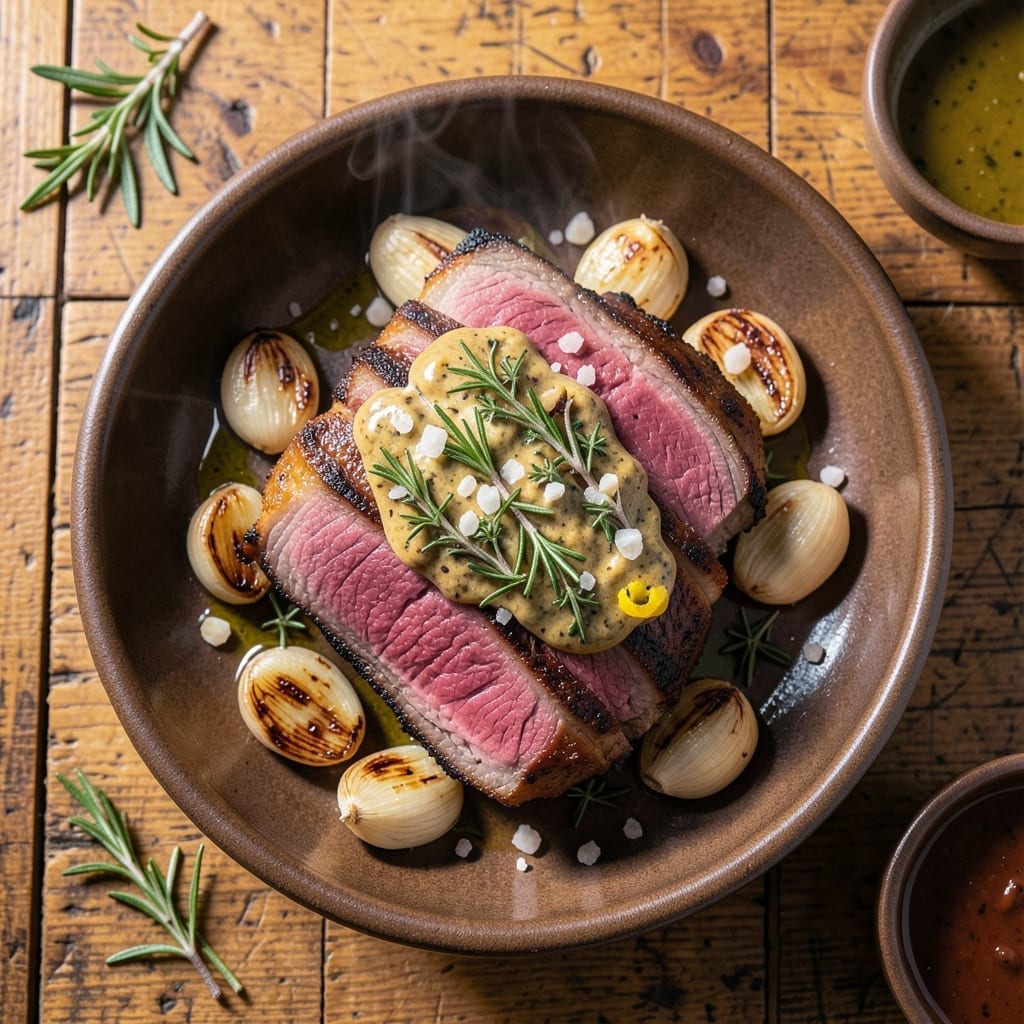
This herb-crusted crown roast transforms prime rib into an elegant centerpiece for your most special gatherings.
My French training meets pitmaster instincts in this foolproof method that ensures tender, perfectly seasoned meat every time.
Ingredients for Top of the Rib Roast
Prime rib, fresh herbs, and a few pantry staples create this showstopping centerpiece dish.
| Ingredient | Amount | Notes |
|---|---|---|
| Prime Rib Roast 🥩 | 5 lb | Bone-in, crown cut requested |
| Kosher Salt 🧂 | 2 tbsp | Diamond Crystal preferred for texture |
| Freshly Ground Black Pepper 🌶️ | 1 ½ tbsp | Coarse grind for crust |
| Fresh Rosemary 🌿 | ¼ cup | Finely chopped, stems discarded |
| Fresh Thyme Leaves 🍃 | ¼ cup | Stripped from stems |
| Garlic Cloves 🧄 | 6 cloves | Minced to paste consistency |
| Dijon Mustard 🟡 | ⅓ cup | Whole-grain variety preferred |
| Extra-Virgin Olive Oil 🫒 | ¼ cup | For herb paste and searing |
| Red Wine 🍷 | 1 cup | Dry variety like Cabernet Sauvignon |
| Beef Stock 🥣 | 2 cups | Low-sodium preferred |
| Unsalted Butter 🧈 | 4 tbsp | Room temperature for finishing |
| All-Purpose Flour 🌾 | 2 tbsp | For thickening pan juices |
| Shallots 🧅 | 2 whole | Finely minced for sauce |
[recipe_ingredient_scaler]
The prime rib is the star—ask your butcher for a crown cut with the bones frenched (that’s the fancy term for cleaned). Whole Foods or a local butcher will know exactly what you need. Look for bright red meat with generous marbling (those fat streaks mean flavor). I always go for USDA Prime if it’s a special occasion, but Choice works fine for weeknight splurges.
No red wine? Beef broth with a splash of balsamic mimics the depth. Short on fresh herbs? Dried at one-third the amount (but fresh really makes a difference here). If you can’t find Dijon, whole-grain mustard from Maille is perfect. The butter can be salted in a pinch—just reduce the added salt a bit.
The roast needs to rest 30 minutes before carving (don’t skip this part). Leftovers? They’re even better the next day—keep them wrapped for up to 5 days. The herb paste can be made a day ahead and stored in the fridge (worth the extra minute).
Why You’ll Love This Recipe
- I’ll be real: the sandwiches I make with the leftovers might be even better than the original meal.
- Minimal Effort: I just rub the prime rib with salt, pepper, rosemary, and thyme—no fancy steps, just pop it in the oven.
- Herb-Infused Luxury: The rosemary and thyme crust forms this ridiculous flavor that makes every bite taste like a high-end steakhouse dinner.
- Holiday Showstopper: Honestly, this is my go-to for Christmas dinner—impressive but unfussy, and it feeds a crowd without stress.
Step-by-Step Instructions for Herb-Crusted Prime Rib Roast
This method delivers a showstopping centerpiece with a flavorful herb crust and perfect medium-rare center.
Step 1: Prepare the Herb Crust and Season the Roast
In a small bowl, combine the 0.25 cup fresh rosemary, 0.25 cup fresh thyme leaves, 6 cloves garlic cloves, 2 tbsp kosher salt, and 1.5 tbsp freshly ground black pepper with the 0.33 cup Dijon mustard and 0.25 cup extra-virgin olive oil. Stir until it forms a thick, fragrant paste.
Pat the 5 lb prime rib roast completely dry with paper towels—this ensures the crust adheres properly. Place the roast bone-side down on a rack in a roasting pan. Using your hands, generously coat the entire surface with the herb paste, pressing firmly to create an even layer. Let it sit at room temperature for 1 hour while the oven preheats.
Step 2: Sear and Begin Roasting
Preheat your oven to 450°F. Place the roasting pan with the herb-coated roast in the oven and bake for 20 minutes to develop a deep, golden crust. You’ll notice the herbs start to sizzle and brown—that’s the flavor building.
After 20 minutes, reduce the oven temperature to 325°F. Insert a meat thermometer into the thickest part of the roast, avoiding the bone. Continue roasting, checking the temperature periodically. The initial high heat creates the crust, while the lower temperature ensures even cooking.
Step 3: Roast to Perfect Doneness
Roast the prime rib until the internal temperature reaches 120-125°F for medium-rare. This typically takes 1.5 to 2 hours total, depending on your oven and the roast’s shape. I start checking at the 1.5-hour mark to avoid overcooking.
Baste the roast every 30 minutes with the pan juices to keep the crust moist and flavorful. You’ll see the juices start to pool in the pan—that’s your cue to baste. The crust should be a rich, deep brown, and the aroma will fill your kitchen with a savory, herby scent.
Step 4: Rest and Prepare the Pan Sauce
Once the roast reaches the desired temperature, transfer it to a cutting board and tent loosely with foil. Let it rest for 20-30 minutes—this allows the juices to redistribute, ensuring every slice is tender and flavorful. Meanwhile, place the roasting pan on the stovetop over medium heat.
Add the 2 whole shallots, finely minced, to the pan and cook for 2 minutes until softened. Stir in the 2 tbsp all-purpose flour and cook for 1 minute to create a roux. Slowly whisk in the 2 cups beef stock and 1 cup red wine, scraping up any browned bits from the bottom of the pan.
Step 5: Finish the Sauce and Serve
Simmer the sauce for 5-7 minutes until it thickens enough to coat the back of a spoon. Remove from heat and stir in the 4 tbsp unsalted butter, one tablespoon at a time, until the sauce is glossy and rich. Taste and adjust seasoning if needed.
Carve the roast between the ribs into thick slices and arrange on a platter. Drizzle some of the pan sauce over the top and serve the rest on the side. Each slice should have a beautiful pink center, a flavorful herb crust, and juices that pool slightly on the cutting board—a surefire sign of perfection.
Pro Tips For Making Top Of The Rib Roast
- Dry the Roast: Pat the prime rib completely dry with paper towels before seasoning—this guarantees a better crust. I learned this the hard way after years of wondering why my roast looked pale instead of golden.
- Salt Overnight: Apply the kosher salt at least 12 hours before cooking and leave it uncovered in the fridge. Sounds weird, but it works: the surface dries out just enough for a perfect sear.
- Skip Cold Meat: Let the roast sit at room temperature for 1-2 hours before it goes in the oven. After burning the edges on a cold roast once, I finally figured out that even heat matters most.
- Use Fresh Herbs: Crush the rosemary and thyme between your palms before rubbing them on—it releases the oils and actually changes the outcome. My grandmother swore by this, and she was right.
Common Mistakes When Making Perfect Results
Skipping the Room Temp Rest
Never put a cold roast straight into the oven. I always let my 5 lb prime rib sit at room temperature for 1 hour after applying the herb paste. This ensures even cooking throughout—cold meat seizes up and cooks unevenly.
Overcrowding the Pan
Use a rack in your roasting pan to elevate the roast. This allows hot air to circulate completely around the meat. Without a rack, the bottom steams instead of browning, and you’ll lose that perfect crust.
Ignoring the Thermometer
Don’t rely on time alone for doneness. I check the internal temperature starting at 1.5 hours with a ThermoWorks probe. Pull it at 120-125°F for perfect medium-rare—it’ll rise another 5-10°F while resting. 🌡️
Skipping the Resting Time
The 20-30 minute rest is non-negotiable. Slicing too soon causes all those beautiful juices to spill onto the cutting board instead of staying in the meat. I tent mine loosely with foil during this crucial phase.
Forgetting to Baste
Baste every 30 minutes with pan juices to keep the herb crust moist. This simple step adds layers of flavor and prevents the exterior from drying out. I use a silicone brush for even coverage.
Using Dull Carving Tools
A sharp knife is essential for clean slices. I use my Wüsthof 8-inch chef’s knife to carve between the ribs. Dull knives crush the meat, making your beautiful roast look ragged. 💡
Nutrition Facts
Frequently Asked Questions
How long should I let it rest before carving?
Let it rest for 20-30 minutes after removing from the oven. This allows juices to redistribute for tender, flavorful slices. Skipping this step results in dry meat.
What internal temperature should I aim for?
Pull it from the oven at 120-125°F for medium-rare. The temperature will rise another 5-10°F while resting, reaching perfect doneness. Use a meat thermometer for accuracy.
Can I use dried herbs instead of fresh?
Yes, but use 1/3 the amount since dried herbs are more concentrated. Fresh herbs provide better flavor and aroma, but dried work in a pinch.
What if my roast isn’t browning enough?
Ensure your oven is fully preheated to 450°F before starting. If needed, broil for 2-3 minutes at the end, watching closely to avoid burning.

Trained in classic French technique but raised on slow-cooked ribs and spicy rubs, she blends culinary skill with smoke and soul.
- Recipe for Boneless Pork Chops in Cast Iron Skillet: Sear and Baste to Juicy Perfection - October 3, 2026
- Recipe for Boneless Cross Rib Roast: Slow-Roasted Beef with Herb Crust - October 3, 2026
- Hamburgers in Sauce Recipe Crock Pot: Slow-Cooked Savory Delight - October 3, 2026