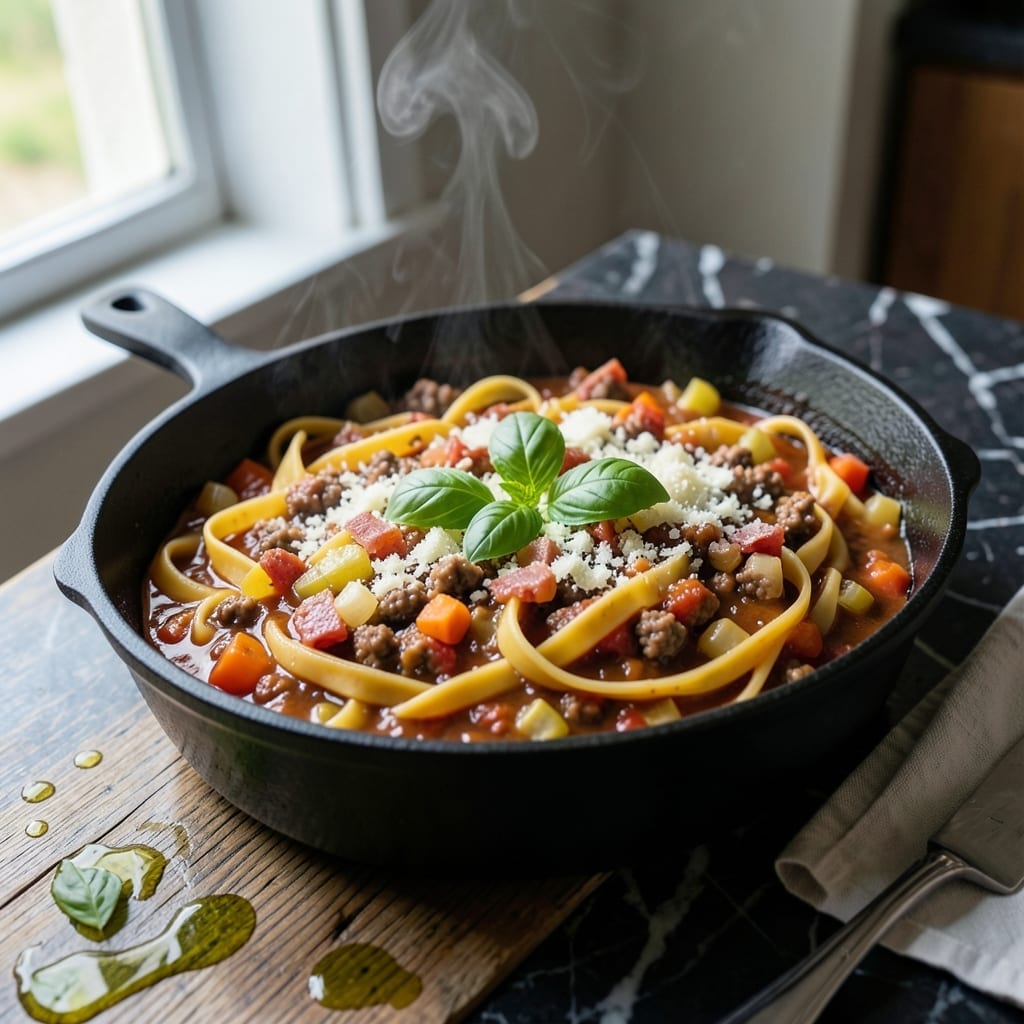
This authentic ragù delivers the rich, slow-simmered depth that defines traditional Bolognese. A proven technique transforms simple ingredients into a restaurant-quality sauce.
Developed through careful layering of flavors, this method ensures a perfectly balanced sauce with tender meat and complex aromas. The long simmer creates that signature thick, hearty texture.
Ingredients for Traditional Bolognese Sauce Recipe Jamie Oliver
Authentic ragù starts with quality proteins and aromatic vegetables for deep, complex layers.
| Ingredient | Amount | Notes |
|---|---|---|
| Ground Beef 🥩 | 1 lb | 80/20 fat ratio preferred |
| Ground Pork 🥩 | ½ lb | or substitute additional beef |
| Pancetta 🥓 | 4 oz | diced, or use thick-cut bacon |
| Yellow Onion 🧅 | 1 whole | finely diced |
| Carrots 🥕 | 2 whole | finely diced, medium size |
| Celery Stalks 🌿 | 2 whole | finely diced with leaves |
| Garlic Cloves 🧄 | 4 cloves | minced to fine paste |
| Tomato Paste 🍅 | 3 tbsp | double-concentrated preferred |
| Dry White Wine 🍷 | 1 cup | drinkable quality, not cooking wine |
| Whole Milk 🥛 | ½ cup | full-fat for richness |
| San Marzano Whole Peeled Tomatoes 🍅 | 1 can | 28 oz can, crushed by hand |
| Chicken Stock 🍲 | 1 cup | low-sodium preferred |
| Extra-Virgin Olive Oil 🫒 | 3 tbsp | for sautéing soffritto |
| Kosher Salt 🧂 | 1 ½ tsp | Diamond Crystal brand recommended |
| Freshly Ground Black Pepper 🌶️ | 1 tsp | coarse grind preferred |
| Bay Leaves 🌿 | 2 whole | dried, removed before serving |
[recipe_ingredient_scaler]
The meat foundation is non-negotiable for authenticity. Ground chuck at 80/20 fat ratio delivers the right richness, while pork shoulder adds necessary depth. Pancetta (available at Whole Foods or Italian specialty markets) beats bacon for genuine flavor. For the soffritto, seek out firm, unblemished produce—this trio of onion, carrot, and celery forms the flavor base that defines traditional technique.
No pancetta? Thick-cut bacon works in a pinch, though it imparts a smokier note. Substitute ground turkey or veal for beef if preferred. The wine can be omitted, but replace with additional stock plus 1 tbsp lemon juice for acidity. For the tomatoes, San Marzano is ideal, but any high-quality canned whole tomato suffices—just avoid pre-crushed varieties which lack texture.
The sauce develops flavor as it cools and can be refrigerated for up to 5 days or frozen for 3 months. For best results, make a day ahead. The fat will solidify on top—simply skim before reheating. Always use a heavy-bottomed pot to prevent scorching during the long simmer.
Why You’ll Love This Recipe
- One Pot Wonder: I love that everything—pancetta, beef, pork, and veggies—simmer together in one pot, no fancy techniques needed.
- Rich and Meaty: The combo of ground beef, pork, and pancetta gives it that deep, savory flavor that’s so much better than store-bought sauce.
- Feeds a Crowd: Honestly, I make a big batch and freeze half—it’s just as good weeks later over pasta, in lasagna, or stuffed in ravioli.
- Budget Stretcher: Between us, it’s a great way to turn affordable ground meats and a few veggies into a meal that feels special.
Step-by-Step Instructions for Traditional Bolognese Sauce
Authentic technique meets patient execution in this time-honored ragù preparation.
Step 1: Render and Sauté the Aromatic Base
Heat the 3 tbsp Extra-Virgin Olive Oil in a heavy-bottomed Dutch oven over medium-low heat. Add the 4 oz Pancetta and cook for 5-7 minutes, stirring occasionally, until the fat renders and the meat turns golden brown.
Add the 1 whole Yellow Onion, 2 whole Carrots, and 2 whole Celery Stalks, all finely diced. This soffritto foundation is critical for authentic depth. Cook for 8-10 minutes until the vegetables soften and become translucent, but avoid browning. Stir in the 4 cloves Garlic Cloves and cook for 1 minute until fragrant.
Step 2: Brown the Meat and Build Flavor
Increase heat to medium-high and add the 1 lb Ground Beef and 0.5 lb Ground Pork. Break the meat into small pieces with a wooden spoon and cook for 8-10 minutes, stirring occasionally, until all the meat is browned and crumbly.
This step develops the Maillard reaction, creating complex flavor compounds essential for authentic ragù. Once browned, stir in the 3 tbsp Tomato Paste and cook for 2-3 minutes until it deepens in color to a brick red. This caramelization intensifies the umami base of your sauce.
Step 3: Deglaze and Simmer the Sauce
Pour in the 1 cup Dry White Wine and scrape up all the browned bits from the bottom of the pot with a wooden spoon. Simmer for 3-4 minutes until the liquid reduces by half and the alcohol cooks off.
Add the 1 can San Marzano Whole Peeled Tomatoes (crushed by hand), 1 cup Chicken Stock, 0.5 cup Whole Milk, 2 whole Bay Leaves, 1.5 tsp Kosher Salt, and 1 tsp Freshly Ground Black Pepper. The milk tenderizes the meat and balances acidity—a traditional Bolognese technique.
Step 4: Slow-Simmer to Perfection
Reduce heat to low and partially cover the pot. Simmer for 2.5-3 hours, stirring occasionally and adding small amounts of water or stock if the sauce becomes too thick. The ragù should maintain a gentle bubble, not a rolling boil.
You’ll know it’s ready when the sauce has reduced to a thick, rich consistency and the meat has absorbed all the flavors. The Bay Leaves should be removed before serving. Taste and adjust seasoning with additional Kosher Salt or Freshly Ground Black Pepper if needed. This patient simmering is what transforms good sauce into extraordinary.
Pro Tips For Making Traditional Bolognese Sauce Recipe Jamie Oliver
- Render the Pancetta First: Start by cooking the diced pancetta on medium-low until crisp—this builds the fatty base that flavors the whole sauce. I learned this the hard way after skipping it once and wondering why my bolognese tasted flat.
- Finely Dice the Veggies: Chop the onion and carrots almost as fine as the ground meat—about 1/8-inch pieces. Sounds tedious, but it blends into the sauce better than lazy, chunky cuts.
- Brown, Don’t Steam: Crank the heat to medium-high when browning the beef and pork, and resist the urge to stir constantly. Let it sit for 2-3 minutes to develop color—this is where the depth comes from.
- Add Milk Slowly: When the recipe calls for milk, pour it in a little at a time and let it absorb before adding more. My first attempt curdled because I dumped it all in at once—lesson learned.
Storing and Reheating traditional bolognese sauce recipe jamie oliver
🍳 Refrigerator Storage
Once your traditional Bolognese sauce has cooled to room temperature, transfer it to an airtight container. It will stay fresh in the refrigerator for 3-4 days. For best results, divide larger batches into smaller portions to speed up cooling and minimize reheating waste. 💡
❄️ Freezer Storage
To extend its shelf life, freeze your Bolognese in freezer-safe bags or containers. Label with the date and use within 2-3 months for optimal flavor. For easy portioning, spread the sauce in a thin layer on a tray to freeze first, then transfer to a bag—this prevents clumping! ✨
🔥 Reheating Methods
Reheat gently to preserve the rich texture. On the stovetop, warm over low to medium heat (around 160°F/70°C), stirring occasionally, for 5-10 minutes. In the microwave, use 1-minute intervals at 50% power, stirring between each. For a smoky twist, reheat in a smoker at 225°F/107°C for 20-30 minutes, stirring occasionally. 🎯
🌡️ Quality Preservation
To maintain moisture, add a splash of water or broth when reheating if the sauce thickens. Thaw frozen Bolognese overnight in the fridge for even reheating. Avoid rapid temperature changes, as they can affect the sauce’s consistency and depth of flavor. 🔥
Nutrition Facts

Trained in classic French technique but raised on slow-cooked ribs and spicy rubs, she blends culinary skill with smoke and soul.
- Recipe for Boneless Pork Chops in Cast Iron Skillet: Sear and Baste to Juicy Perfection - October 3, 2026
- Recipe for Boneless Cross Rib Roast: Slow-Roasted Beef with Herb Crust - October 3, 2026
- Hamburgers in Sauce Recipe Crock Pot: Slow-Cooked Savory Delight - October 3, 2026