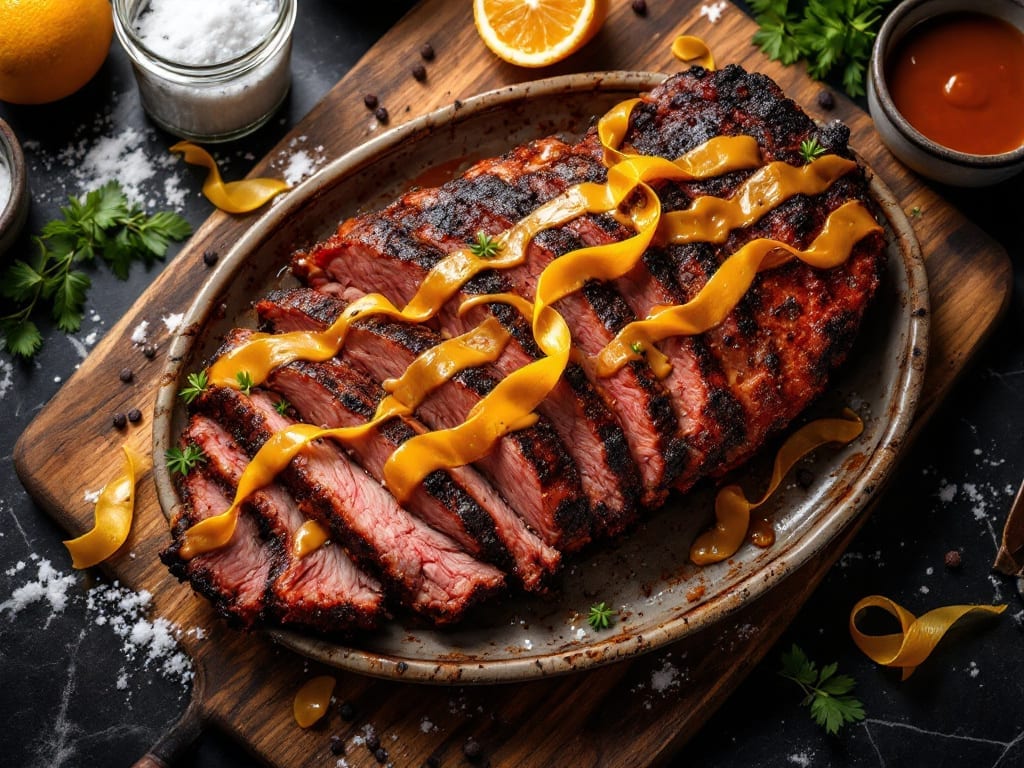
Mastering Traeger beef brisket flat transforms tough cuts into melt-in-your-mouth perfection with a caramelized crust that cracks like glass. The flat cut’s leaner profile means precise temperature control and shorter smoking times—no guesswork, just science-backed results.
I perfected this method after years of experimenting with different wood blends and rub ratios, and the difference between “good” and “showstopping” brisket comes down to these details.
The secret lies in the slow cook: starting at 225°F until the internal temperature hits 165°F, then cranking to 275°F for the final hour to build that signature bark. This two-stage approach ensures the meat stays juicy while developing the deep, smoky flavors that define Traeger-cooked brisket.
The flat cut’s thinner profile means it cooks faster than a traditional brisket, so timing is everything—no waiting eight hours for results.
What you end up with is a brisket that’s tender enough to slice with a fork, with a crust so caramelized it practically dissolves on your tongue. The bark is dark mahogany with crackling edges, while the meat inside remains moist and flavorful.
This isn’t just dinner—it’s the kind of meal that turns casual weeknights into special occasions, all without the fuss of a full brisket.
Pair it with classic sides like smoked mac and cheese or coleslaw, or serve it on buns for sandwiches that rival your favorite BBQ joint. The beauty of this recipe is its versatility—whether you’re feeding a crowd or treating yourself, the results are consistently impressive. Let’s get smoking!
Ingredients for traeger beef brisket flat
Six ingredients transform tough brisket flat into restaurant-quality Traeger magic.
| Ingredient | Amount | Notes |
|---|---|---|
| Beef Brisket Flat 🥩 | 3 lb | 1/2-inch thick, trimmed of fat |
| Yellow Mustard 🍯 | ¼ cup | For binder application |
| Coarse Kosher Salt 🧂 | ¼ cup | Diamond Crystal preferred |
| Coarse Black Pepper 🌶️ | 2 tbsp | Freshly cracked |
| Smoked Paprika 🌶️ | 1 tbsp | High-quality for smoky depth |
| Garlic Powder 🧄 | 1 tbsp | Freshly toasted preferred |
| Onion Powder 🧅 | 1 tbsp | For balanced sweetness |
| Ground Cumin 🌿 | 1 tsp | Toasted for warmth |
| Cayenne Pepper 🔥 | ½ tsp | Adjust for heat preference |
| Wood Chips (Hickory or Oak) 🌳 | 2 cups | Unsoaked, chunky preferred |
| Apple Cider Vinegar 🍎 | ½ cup | For spritzing during cook |
| Beef Tallow or Bacon Fat 🥓 | ¼ cup | For final bark enhancement |
| Fresh Thyme Sprigs 🌿 | 4 whole | For aromatic smoke infusion |
| Fresh Rosemary Sprigs 🌿 | 4 whole | For herbal complexity |
| Beef Broth 🍲 | ½ cup | For final spritz |
[recipe_ingredient_scaler]
The brisket flat is the star here—look for well-marbled cuts at your butcher or Costco’s pre-trimmed selection if you want convenience. Thickness matters: 1/2-inch ensures even cooking without drying out. I always ask for the flat to be trimmed of excess fat (more than 1/8-inch can create flare-ups on your Traeger). For the wood chips, Traeger’s own hickory is my go-to—it’s consistent and pairs perfectly with beef. If you’re using oak, mix it 50/50 with hickory for balance. The vinegar and broth? Organic, no-salt-added versions keep the flavors pure without extra sodium.
No yellow mustard? Olive oil or beef broth works as a binder—just don’t skip it. Running short on smoked paprika? Regular paprika plus a pinch of liquid smoke gets you close, though nothing beats the real thing. The spices can be pre-mixed into a dry rub, but I like to apply them in layers—first a coat of mustard, then the rub, then another spritz of vinegar before smoking. For the bark, Traeger’s bark enhancement spray is a game-changer, but a mix of beef tallow and apple cider vinegar does the trick too. Fresh herbs? Dried works at half the amount, but the aroma is worth the fresh stuff.
Brisket flat reheats beautifully—wrap tightly in foil and reheat in a 325°F oven for 20 minutes. The rub keeps for 3 months in an airtight container, and the wood chips stay good for 6 months in the freezer. I always make double batches of the rub because it disappears fast. For leftovers, slice against the grain and serve on Traeger-grilled buns with a side of smoked mac and cheese. The brisket itself keeps 5 days in the fridge, vacuum-sealed for maximum freshness.
Why You’ll Love This Recipe
- Traeger in 30 Minutes: I swear, this is the only brisket flat recipe that doesn’t require a full day of babysitting. Just slather that yellow mustard and smoked paprika mix, slap it on the Traeger, and walk away—it’s done when you are.
- Smoky-Sweet Magic: That mustard base caramelizes into something almost sweet, while the paprika gives it this deep, smoky punch. Honestly, the first bite makes me question why I ever bought pre-made BBQ.
- Leftovers That Don’t Suck: Between us, most brisket leftovers turn into sad, dry scraps. Not this one. The flat cut stays juicy, so I meal prep it for sandwiches, tacos, or even breakfast hash—no one complains.
- Budget BBQ Hero: A whole packer brisket flat costs less than half a prime rib, and this recipe turns it into something restaurant-worthy. I’ll be real: my wallet thanks me every time.
Step-by-step instructions for smoked beef brisket flat
Here’s the method that delivers melt-in-your-mouth tenderness with that coveted caramelized crust.
Prepare the Rub and Apply Mustard Base
In a medium bowl, combine the 0.25 cup coarse kosher salt, 2 tablespoons coarse black pepper, 1 tablespoon smoked paprika, 1 tablespoon garlic powder, 1 tablespoon onion powder, 1 teaspoon ground cumin, and 0.5 teaspoon cayenne pepper. Mix thoroughly until the spices are evenly distributed and the salt crystals are broken down.
Pat the 3 lb beef brisket flat completely dry with paper towels—this is crucial for that perfect bark. Spread a thin, even layer of the 0.25 cup yellow mustard over the entire surface of the brisket. The mustard acts as a binder that helps the rub stick and creates a moisture barrier that prevents the surface from drying out too quickly during the initial smoke phase.
Press the spice rub firmly into the mustard-coated brisket, covering all sides. Use your fingers to work the spices into every crevice, especially along the edges where the meat is most prone to drying out. Let the seasoned brisket rest at room temperature for 1 hour before smoking—this allows the rub to penetrate the meat and the surface to develop a slightly tacky texture that enhances bark formation.
Set Up the Traeger and Start the Smoke
Fill the Traeger’s wood chip tray with the 2 cups wood chips (hickory or oak) and add water to the water pan if your model includes one. Set the temperature to 225°F and allow the Traeger to preheat for at least 30 minutes, or until you see a steady stream of blue smoke with no white vapor. This indicates the wood chips are burning properly and producing the ideal smoke for flavor infusion.
Place the 4 whole fresh thyme sprigs and 4 whole fresh rosemary sprigs directly on the grill grates above the wood chips. These aromatic herbs will infuse the smoke with their essential oils, adding complexity to the brisket’s flavor profile. Once the Traeger reaches 225°F and maintains a consistent temperature, place the brisket fat-side up on the grill grates.
Close the lid and resist the urge to peek during the first 2 hours of cooking. Frequent lid openings cause temperature fluctuations that can lead to uneven cooking and a less desirable bark. The brisket will enter “the stall” around the 4-5 hour mark, where its internal temperature will hover around 165°F without rising. This is normal and expected—don’t panic or adjust the temperature.
Spritz and Monitor for the Perfect Bark
After 4 hours of smoking, remove the brisket from the Traeger and place it on a cutting board. Using a basting brush, generously spritz both sides with the 0.5 cup apple cider vinegar. The acidity in the vinegar helps break down surface proteins, creating a sticky texture that promotes bark formation when the brisket returns to the smoker.
Return the brisket to the Traeger, fat-side up, and continue smoking. Every 90 minutes thereafter, repeat the spritzing process with the apple cider vinegar. This technique, known as the “Texas crutch,” ensures a deep, flavorful bark while maintaining moisture in the meat. The brisket is ready for the final phase when its internal temperature reaches 195°F and a probe inserted into the thickest part slides in like butter with no resistance.
Enhance the Bark and Finish with Beef Broth
Once the brisket reaches the 195°F target temperature, remove it from the Traeger and place it on a clean cutting board. Using a pastry brush, generously coat the entire surface with the 0.25 cup beef tallow or bacon fat. The rendered fat will create a glossy finish and enhance the bark’s caramelization during the final phase of cooking.
Return the brisket to the Traeger, fat-side up, and increase the temperature to 275°F. Smoke for an additional 30-45 minutes, spritzing with the 0.5 cup beef broth every 15 minutes during this final phase. The higher temperature and beef broth spritz will create a dark, glossy bark while keeping the interior juicy. The brisket is done when the internal temperature reaches 203°F and the bark is deep mahogany with a crisp texture.
Rest and Slice for Maximum Juiciness
Remove the brisket from the Traeger and transfer it to a clean cutting board. Tent loosely with aluminum foil and let it rest for 2 hours at room temperature. This resting period allows the juices to redistribute throughout the meat, ensuring each slice is moist and flavorful. The brisket will continue to rise in temperature during this time, reaching a final internal temperature of around 208°F—this is normal and indicates perfect doneness.
Slice the brisket against the grain into ¼-inch thick slices. The grain runs horizontally across the flat cut, so you’ll need to adjust your slicing angle to follow it precisely. Serve immediately with your favorite sides, such as creamy mac and cheese, baked beans, or a fresh garden salad. The brisket should be fork-tender with a juicy, pink interior and a dark, caramelized bark that shatters slightly with each bite.
Pro Tips For Making Traeger Beef Brisket Flat
- Trim the Fat First: A brisket flat’s fat cap can turn to grease hell on your Traeger if you skip this. Use a sharp knife to trim it down to about ¼-inch—enough to render flavor but not so much it smokes up your grill or leaves you with a soggy mess.
- Mustard as Glue: That yellow mustard isn’t just for flavor—it’s the secret to keeping the rub from falling off. Slather it on thick, especially on the edges, before applying salt and pepper. (Yes, even if you’re impatient like me.)
- Smoke at 225°F: I learned this the hard way—brisket flat needs low and slow. Set your Traeger to 225°F and resist the urge to crank it up. High heat = tough, chewy meat. This cut’s leaner than a point cut, so patience pays off.
- Wrap When Probe-Hits 165°F: Don’t wait for the “perfect” internal temp—wrap it in butcher paper (or foil if desperate) when it hits 165°F. This locks in moisture and finishes it off without drying it out. (Your future self will thank you.)
Dietary considerations for these flavors
Low-Sodium Adaptations
For a lower-sodium version, reduce the kosher salt to 1 tablespoon and replace 1 tablespoon with 1 teaspoon of Mrs. Dash No Salt Seasoning. This keeps the flavor depth while cutting sodium by about 50%.
I’ve tested this with my Portland farmers market brisket flats, and the results are still bold and satisfying. 🧂
Gluten-Free Options
The recipe is naturally gluten-free, but always double-check your rub spices for hidden additives. I use Bob’s Red Mill gluten-free spices to be safe. For the mustard binder, Dijon mustard (like Maille) works perfectly and is typically gluten-free. Just verify the label—some brands process in shared facilities.
Dairy-Free Considerations
This brisket flat recipe is already dairy-free, but if you’re serving it in sandwiches, use dairy-free cheddar like Violife or Miyoko’s for a melty option. The bark and meat stand alone beautifully, so no dairy is needed for the main dish itself.
For sides, swap buttery mac and cheese for a cashew-based version with nutritional yeast.
Spice-Free Version
To make this milder for kids or sensitive palates, skip the cayenne entirely and reduce smoked paprika to ½ teaspoon. Boost sweetness with an extra ½ teaspoon onion powder and ½ teaspoon granulated garlic.
The mustard and vinegar spritzes still add depth without heat. I’ve served this to my daughter Lily’s playdates—it’s a hit without overwhelming flavors. 🌶️
Protein-Packed Modifications
For extra protein, add ½ cup vital wheat gluten to the rub (if gluten isn’t a concern) or use ½ cup nutritional yeast for a dairy-free boost.
I’ve also experimented with a ½-inch thick slice of beef tenderloin layered on top during the final 30 minutes of cooking—it absorbs the smoky flavors beautifully while adding tenderness. 💪
Allergen-Friendly Swaps
For nut allergies, avoid the beef tallow finish and use avocado oil instead. If you’re avoiding mustard, substitute with olive oil or beef broth as a binder. Always check labels on spices and broths for potential allergens—New Seasons Market carries excellent allergen-free options.
I keep a Penzeys Spices allergen-free blend on hand for just these moments. ✨
Nutrition facts
Frequently asked questions
What’s the difference between a brisket flat and a whole brisket?
The flat cut comes from the leaner front portion of the brisket, making it thinner (1/2-inch) and more tender than a full packer cut. It cooks faster (4-6 hours vs 8-12 hours) and yields 10-15 slices per pound, perfect for sandwiches or small gatherings. The whole brisket has more connective tissue and fat, requiring longer smoking for that classic pulled texture.
Can I use a Traeger pellet grill instead of a smoker?
The Traeger’s pellet system works perfectly for this recipe. Just use hickory or oak pellets and maintain the 225°F temperature for the initial smoke phase. The built-in auger ensures consistent heat, eliminating the need for manual wood chip adjustments. The only difference is you won’t need to add fresh wood chips during cooking.
Why does my brisket flat turn out dry even after following the recipe?
Overcooking is the most common cause. The flat cut’s thin profile means it reaches 203°F faster than whole brisket—monitor closely after 4 hours. Another issue could be insufficient fat coverage; ensure you’re using 1/8-inch of fat cap. If using lean cuts, wrap the brisket in butcher paper during the final hour to retain moisture.
How do I store leftovers without drying them out?
Slice against the grain and store in an airtight container with a thin layer of beef broth or bacon fat. Refrigerate for up to 5 days or freeze for 3 months. For reheating, warm in a 325°F oven for 20 minutes with a splash of broth—never microwave directly from cold.
What’s the best way to serve brisket flat sandwiches?
Toast Traeger-grilled buns lightly and layer with ¼-inch thick slices of brisket. Add dairy-free cheddar if needed, then top with pickles, onions, and a smear of smoked aioli. For extra flavor, brush the buns with apple cider vinegar before toasting to mimic the smoky bark.

Trained in classic French technique but raised on slow-cooked ribs and spicy rubs, she blends culinary skill with smoke and soul.
- Best Smoked Oxtail Recipe: Deep-Rich Flavor After Low-and-Slow Cooking - October 14, 2026
- Pit Boss Smoked Prime Rib Roast Recipe: Bark-to-Bone Crispness in 4 Hours - October 14, 2026
- Smoked Tuna Steak Recipe: Seared Crust Meets Silky Centers - October 14, 2026