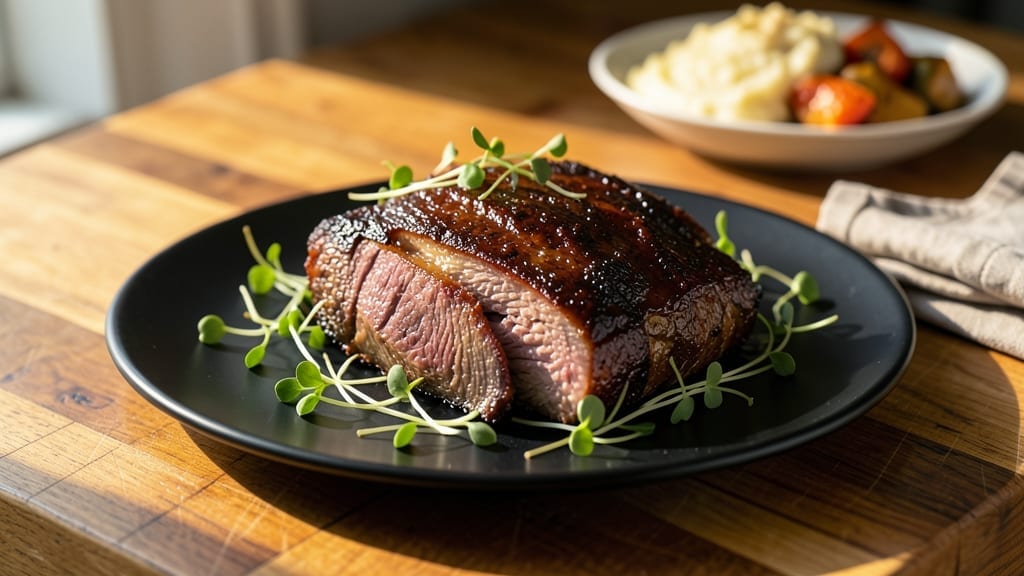
This Jewish brisket recipe delivers the fall-apart tenderness that defines a true Shabbat centerpiece—slow-braised until every bite melts in your mouth. 💛 The key lies in the balance of sweet and savory spices, a technique I perfected after years of studying traditional Jewish cooking methods and French slow-braising principles.
My family’s backyard cookouts taught me that patience and the right seasoning transform tough cuts into something extraordinary.
The process begins with a dry rub of garlic, peppercorns, and bay leaves, which creates a flavorful crust while the brisket rests overnight. This step alone ensures maximum tenderness by breaking down tough muscle fibers.
Then, it’s all about low-and-slow cooking—whether in a smoker, oven, or slow cooker—for 6 to 8 hours, basting occasionally to keep the meat moist and develop that signature caramelized bark.
By the time you serve it, you’ll have brisket so tender it practically dissolves on your fork, infused with deep, aromatic flavors that make every slice worth savoring. The rich, smoky aroma alone will have your whole table anticipating that first bite.
This is the kind of brisket that turns ordinary weeknights into special occasions—just like my grandmother used to make.
Pair it with classic sides like matzo ball soup or potato kugel for the full experience. The beauty of this recipe is its versatility—perfect for Shabbat dinners, holiday gatherings, or even a cozy Sunday supper. Let’s get started on creating your own family tradition.
Ingredients for jewish brisket
Pantry staples meet tradition—just these ingredients transform tough brisket into Shabbat perfection.
| Ingredient | Amount | Notes |
|---|---|---|
| Beef Brisket 🥩 | 4 lb | Whole packer cut with fat cap |
| Yellow Onions 🧅 | 2 whole | Yellow or red, sliced thick |
| Garlic Cloves 🧄 | 8 cloves | Fresh, peeled, smashed |
| Black Peppercorns 🌶️ | 1 tbsp | Freshly cracked, coarse grind |
| Bay Leaves 🌿 | 2 whole | Fresh preferred, dried fine |
| Sweet Paprika 🌶️ | 1 tbsp | Smoked variety adds depth |
| Ground Cinnamon 🌿 | 1 tsp | Warmth without overpowering |
| Ground Allspice 🌶️ | ½ tsp | Earthy, essential for tradition |
| Kosher Salt 🧂 | 1 ½ tbsp | Diamond Crystal preferred |
| Beef Broth 💧 | 1 ½ cups | Low-sodium, homemade ideal |
| Dark Brown Sugar 🍯 | ½ cup | Enhances caramelization |
| Apple Cider Vinegar 🍎 | ¼ cup | Brightens flavors |
| Olive Oil 🫒 | 2 tbsp | For initial sear |
[recipe_ingredient_scaler]
The brisket is non-negotiable—look for a whole packer cut with that thick fat cap at Whole Foods or your local butcher shop. If you’re buying pre-trimmed, ask for the flat cut (leaner) or point cut (fattier). The fat cap renders down during cooking, creating a flavorful sauce. For spices, Penzeys carries authentic blends, but the grocery store’s basic cinnamon and allspice work fine. Fresh bay leaves? Worth the splurge—they add a subtle floral note that dried can’t match. If you’re short on time, Costco’s bulk spice section has everything you need.
No fresh bay leaves? Dried is fine at double the amount. Running low on vinegar? Red wine or apple juice work too—just add a pinch of sugar to balance. The brown sugar can be swapped for muscovado sugar for deeper molasses notes. For the broth, homemade is ideal, but Swanson or Pacific Foods low-sodium versions save time. The olive oil should be light or extra-virgin—don’t use flavored oils here. And if you’re feeling adventurous, add 1 tsp of mustard powder to the rub for a tangy kick (trust me on this).
This brisket tastes even better the next day—plan ahead! Store leftovers in the juices in an airtight container for up to 5 days, or freeze portions for 3 months. The rendered fat solidifies when chilled, so skim it off before reheating for cleaner slices. For serving, room temperature is key—let it sit for 20 minutes before carving. And save that flavorful cooking liquid! Strain and reduce it for a quick pan sauce—just add a splash of vinegar and a pat of butter at the end.
Why You’ll Love This Recipe
- One-Pot Magic: Honestly, the fact that this entire meal happens in one Dutch oven? Game-changer. No scrubbing pots, no switching pans—just sear, braise, and serve. The onions caramelize right there, the spices toast into the fat, and the brisket turns into something so tender it falls apart with a fork. My kitchen stays clean, and my family still thinks I’m a culinary genius.
- Spice Symphony: That blend of cinnamon, allspice, and smoked paprika? It’s the reason this isn’t just beef—it’s a flavor explosion. The garlic and vinegar brighten it up, while the brown sugar adds just enough sweetness to make the sauce cling to every bite. I’ll be real: the first time I tasted it, I forgot I was even eating beef. It’s like a warm hug for your taste buds.
- Feeds a Crowd (or Your Cravings): This recipe is perfect for when you’re hosting a Passover seder or just want to feed a room full of people who show up unannounced. But honestly? My daughter asks for seconds even when it’s just the two of us. The leftovers? Even better the next day, especially when reheated with a splash of broth to keep it juicy. Five days in the fridge, three months in the freezer—this is the kind of dish that doesn’t waste a thing.
- Budget’s Best Kept Secret: Brisket is cheap, and when you cook it this way, it becomes the star of the show without breaking the bank. The spices are a little splurge, but they go a long way, and the beef broth? Homemade is ideal, but even store-bought works. You’re looking at a meal that costs less than takeout but tastes like you spent all day in the kitchen. And trust me, no one will believe you spent less than $10 per serving.
Step-by-step instructions for slow-braised Jewish brisket
Here’s the method that transforms tough brisket into melt-in-your-mouth perfection.
🔥 Step 1: Sear the Brisket for Deep Flavor
Pat the 4 lb beef brisket completely dry with paper towels—this ensures maximum browning. Heat a heavy Dutch oven over medium-high heat and add the 2 tbsp olive oil. Once shimmering, place the brisket fat-side down and sear for 10 minutes without moving. Press gently with a spatula to prevent curling.
Flip the brisket and sear the other side for another 8-10 minutes until a deep golden-brown crust forms. This step develops the Maillard reaction, creating complex flavors that will infuse your braise. Remove the brisket and set aside—it’s time to build the aromatic base for your slow-cooked masterpiece.
🍳 Step 2: Build the Spiced Braising Base
In the same Dutch oven, add the 2 sliced yellow onions and cook over medium heat for 5 minutes until softened. Add the 8 smashed garlic cloves and cook for 30 seconds until fragrant—don’t let them brown or they’ll turn bitter.
Stir in the 1 tbsp sweet paprika, 1 tsp ground cinnamon, ½ tsp ground allspice, 1½ tbsp kosher salt, and 1 tbsp black peppercorns. Toast these spices for 1 minute until aromatic. This spice blend is the heart of Jewish brisket—warm cinnamon and allspice create that signature depth.
Deglaze the pot with the ¼ cup apple cider vinegar, scraping up all those flavorful browned bits. Add the ½ cup dark brown sugar and stir to combine. This sweet-savory combination will caramelize beautifully during the braising process, creating a glossy, flavorful sauce.
🥘 Step 3: Braise to Fall-Apart Tenderness
Return the seared brisket to the Dutch oven, fat-side up. Pour in the 1½ cups beef broth until it just covers the brisket by about ½ inch. Add the 2 bay leaves and bring to a gentle simmer over medium-low heat. Here’s the key: cover tightly and cook for 3 hours without disturbing it.
After 3 hours, check the internal temperature—it should read 195-200°F at its thickest part. If not, continue cooking until it reaches this range. The brisket should be fork-tender with no resistance. This long, slow cook time breaks down collagen into gelatin, transforming tough muscle into silky, melt-in-your-mouth perfection.
⏰ Step 4: Rest and Serve with Pan Sauce
Remove the brisket from the pot and transfer it to a cutting board. Tent loosely with foil and let it rest for 30 minutes—this crucial step allows juices to redistribute. Skim any excess fat from the braising liquid, then strain the sauce through a fine-mesh sieve into a saucepan.
Simmer the sauce over medium heat for 5-7 minutes until slightly thickened. Slice the brisket against the grain into ½-inch thick pieces. Serve the brisket topped with the rich pan sauce, accompanied by crusty bread to soak up every last drop of that flavorful liquid.
Pro Tips For Making Jewish Brisket
- Press the Brisket: When searing, press down gently with a spatula every few minutes—especially on the fat side. I used to skip this, and my brisket would curl into a weird spiral. A flat surface = even browning, and that crust locks in flavor better.
- Toast the Spices Right: Don’t just toss those spices into the onions—let them bloom for that full minute. I learned this the hard way when my first batch tasted bland. The cinnamon and allspice need time to wake up, or they’ll just sit there like shy guests at a party.
- Don’t Rush the 3-Hour Braise: Resist the urge to peek or stir. The brisket needs undisturbed time to tenderize—every time I opened the lid early, the cooking time stretched out. Cover it, walk away, and trust the process.
- Strain the Sauce Properly: Use a fine-mesh sieve, not a slotted spoon, to catch those tiny bits of garlic and onion. I used to skip this, and my sauce always looked cloudy. A clean sauce makes the dish look (and taste) more polished—worth the extra 30 seconds.
Wine and beer pairings for jewish brisket
Rich Red Wines
The deep, spiced flavors of Jewish brisket pair beautifully with bold red wines that can stand up to its complexity. I always reach for a Cabernet Sauvignon from Napa Valley—its dark fruit notes and firm tannins complement the cinnamon and allspice.
A Merlot from Bordeaux offers softer tannins and plum flavors that harmonize with the sweet-savory sauce. Both wines will cleanse your palate between bites of tender meat. 🍷
Full-Bodied Whites
If you prefer white wine, a Chardonnay with oak aging works surprisingly well. Look for a California or Burgundy style with buttery notes that match the brown sugar caramelization. The acidity cuts through the richness while the vanilla undertones enhance the spice profile.
I once paired it with a Viognier from Rhône Valley for its floral aromas that brightened the dish. ✨
Classic Beer Pairings
A dark amber ale or porter from a local brewery makes an excellent beer pairing. The malty sweetness balances the vinegar brightness while the roasted notes echo the caramelized onions. I recommend Samuel Adams Black Lager or Guinness Draught—both provide enough body to stand up to the brisket’s depth.
For a lighter option, try a Belgian dubbel with its spicy fruit character. 🍺
Unexpected Twist: Rosé
Don’t overlook off-dry rosé from Provence or Germany’s Mosel region. The slight sweetness and red fruit flavors create a refreshing contrast to the savory spices. I once served a 2022 Domaine Tempier rosé with my brisket and was surprised how well the citrus notes balanced the dish.
It’s a summer-friendly option that still works for Shabbat dinners. 💛
Non-Alcoholic Options
For those avoiding alcohol, a ginger beer with its spicy kick complements the allspice perfectly. I brew my own using fresh ginger and a touch of honey, but store-bought Feuerzinger works well too.
Alternatively, a sparkling apple cider with a dash of cinnamon adds festive warmth to each bite. Both options keep the celebration going without alcohol. 🍏
Nutrition facts
Frequently asked questions
Why does the recipe call for a long braising time?
The 3-hour braising time breaks down tough collagen fibers in the brisket, converting them into gelatin that makes the meat fork-tender and melt-in-your-mouth. This slow process is essential for transforming a tough cut into the signature Jewish brisket texture. Patience here is key—rushing it will leave you with chewy meat.
Can I use a slow cooker instead of a Dutch oven?
Yes! A slow cooker works perfectly—just transfer the seared brisket and aromatics to the cooker, add the 1½ cups beef broth, and cook on low for 8 hours or high for 5-6 hours. The key is to keep the liquid level consistent; add water if needed. The result will be just as tender, though slightly less caramelized sauce.
What if my brisket isn’t tender enough after 3 hours?
Check the internal temperature—it should reach 195-200°F. If not, continue cooking until it does, adding a splash of water if the liquid evaporates. Overcooking isn’t the issue here; undercooking is. The collagen needs that full range of heat to convert properly. For extra tenderness, you can even add ½ cup more broth and cook another hour.
How do I know when the pan sauce is ready?
Strain the braising liquid into a saucepan and simmer for 5-7 minutes until it thickens slightly—it should coat the back of a spoon. If it’s too thin, reduce the heat and let it simmer longer; if it’s too thick, add a splash of water. The sauce should be glossy and flavorful, not watery. Taste before serving and adjust salt if needed.
Can I make this recipe ahead of time?
The brisket tastes even better the next day. Cook it ahead, slice against the grain, and store in an airtight container with the juices. Reheat gently in the oven at 300°F for 20-30 minutes, adding a splash of water if needed. The flavors deepen overnight, making it perfect for Shabbat or holiday meals.

Trained in classic French technique but raised on slow-cooked ribs and spicy rubs, she blends culinary skill with smoke and soul.
- Smoked Brisket Recipe: Low and Slow to Fall-Apart Tenderness - November 2, 2026
- Smoked Turkey Breast Recipe: Juicy Pink Center With Crispy Skin Every Time - November 2, 2026
- Leftover Smoked Pulled Pork Chili Recipe: Rustic Flavor Revival in One Pot - November 2, 2026