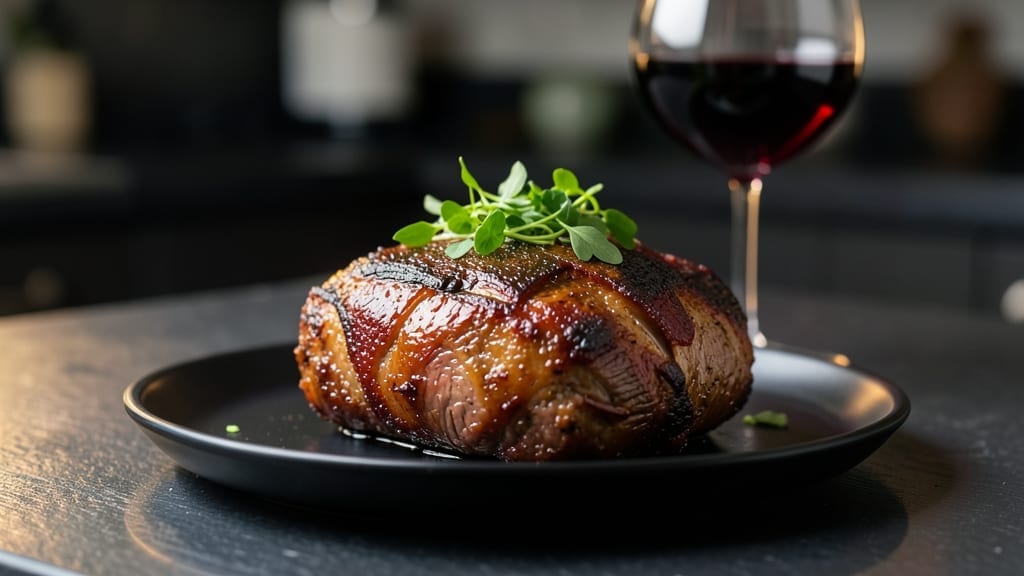
This Traeger smoked chuck roast delivers the perfect marriage of Maillard crust and juicy, slow-smoked core—the kind of meal that transforms a simple Sunday into a showstopping dinner. 🔥 I remember the first time I nailed this technique at a family cookout, when the aroma of hickory smoke filled the backyard and everyone fought over seconds.
The secret lies in patience: letting the smoke work its magic while the meat develops that deep, caramelized bark.
What makes this recipe truly special is how it balances French technique with pitmaster tradition—starting with a dry rub that forms a flavorful crust, then smoking at a precise 225°F to break down collagen into tender, fork-shreddable meat.
No fancy sauces needed; the smoker does all the heavy lifting while you sip coffee and let the wood flavors infuse. The result? A roast so tender it practically melts in your mouth, with a crust that crackles with every bite.
By the time you pull it from the smoker, you’ll have a juicy, flavor-packed center surrounded by a dark, aromatic crust—proof that slow cooking isn’t just about time, but about mastering the balance between heat, wood, and patience.
The smoke ring alone tells the story of hours spent perfecting this dish. Serve it with mashed potatoes or crusty bread to soak up every last drop of that rich, smoky juice.
This isn’t just a recipe; it’s a restaurant-quality meal you can recreate at home with your Traeger. The best part? Leftovers reheat beautifully, making it perfect for meal prep or feeding a crowd. Let’s get smoking.
Ingredients for traeger smoked chuck roast
A few simple ingredients transform your Traeger into a smoky flavor machine.
| Ingredient | Amount | Notes |
|---|---|---|
| Chuck Roast 🥩 | 4 lb | Well-marbled, bone-in preferred |
| Kosher Salt 🧂 | 2 tbsp | Coarse grain preferred |
| Black Peppercorns 🌶️ | 1 ½ tbsp | Freshly cracked preferred |
| Garlic Powder 🧄 | 1 tbsp | Freshly ground preferred |
| Onion Powder 🧅 | 1 tbsp | No added salt |
| Smoked Paprika 🌶️ | 1 tbsp | For deep smoky flavor |
| Ground Cumin 🌿 | 1 tsp | Toasted for depth |
| Fresh Rosemary 🌿 | 1 tbsp | Chopped, fresh preferred |
| Fresh Thyme 🌿 | 1 tbsp | Chopped, fresh preferred |
| Yellow Onion 🧅 | 1 whole | Quartered, for aromatics |
| Carrots 🥕 | 4 whole | Whole, for smoker aromatics |
| Hickory Wood Pellets 🌳 | 2 lb | 100% natural, no additives |
| Beef Broth 🍲 | 1 cup | Low-sodium preferred |
| Apple Cider Vinegar 🍎 | 1 tbsp | For tenderizing |
[recipe_ingredient_scaler]
The chuck roast is your star—look for good marbling (those white fat streaks) at Costco or your butcher shop. Bone-in stays juicier, but boneless works too. The hickory pellets are non-negotiable for that classic BBQ flavor, though oak or cherry blends work beautifully too. I always grab extra pellets—Traeger’s own brand is reliable, but Lumberjack is my backup. The beef broth? Low-sodium so you control the saltiness, and bone broth adds even more depth if you’ve got it.
No fresh rosemary or thyme? Dried works at half the amount. The apple cider vinegar might seem odd, but it’s a game-changer for tenderizing—white vinegar works too. Short on carrots? Celery or potatoes add great flavor. The onion quarters can be pre-cut and stored in the fridge for up to 5 days—just don’t peel them. And if you’re feeling fancy, add a bay leaf to the broth for extra aroma. The spices? Toast them in a dry pan for 30 seconds before mixing—they’ll smell amazing and taste even better.
This roast is a 3-day meal prep machine. The crust stays crispy for 2 days if wrapped tightly, and the meat gets even more tender. Freeze portions for up to 6 months—just thaw in the fridge overnight. I like to slice against the grain and serve with homemade mashed potatoes or crusty sourdough. The leftovers? Sandwiches the next day are legendary. Store the rub in a jar for up to 3 months—perfect for future smokes.
Why You’ll Love This Recipe
- No-Fuss Smoking: Honestly, this is the kind of recipe that makes me feel like I’m doing something without overcomplicating things. Just trim the fat, slather on the spices, and let the Traeger do the heavy lifting. The only real prep is cracking those black peppercorns and chopping the fresh herbs—nothing fancy, just good old-fashioned flavor work.
- Smoky-Spiced Bliss: That combo of smoked paprika, garlic powder, and fresh rosemary? It’s a flavor punch you won’t find in any grocery-store rotisserie. The hickory wood and slow-cooked onions caramelize into something that tastes like a campfire hug—deep, smoky, and just sweet enough to make your taste buds sing.
- Leftovers That Shine: I always cook this for Sunday dinner, but honestly, the leftovers are better the next day. Slice it up, reheat gently, and it’s perfect for lunches or even tacos. And if you freeze portions? That 1 cup beef broth you deglaze with becomes a quick sauce for a week’s worth of meals—zero extra effort.
- Budget-Friendly Feast: A 4 lb chuck roast is one of the most affordable cuts, but it turns into a showstopper with just a handful of pantry staples. The fresh herbs and spices add up to minimal cost, and you’re left with enough meat to feed a crowd—or leftovers for days. It’s the kind of recipe that makes cooking feel like a win.
Step-by-step instructions for Traeger smoked chuck roast
Here’s the method that delivers an irresistible Maillard crust and melt-in-your-mouth tenderness every time.
🔥 Step 1: Prep the Chuck Roast for Maximum Flavor
Start by trimming any excess fat from the 4 lb chuck roast, leaving about ¼ inch on the surface. This ensures proper smoke penetration while preventing flare-ups. Place the roast on a wire rack set over a baking sheet—this allows air circulation for that perfect crust.
In a small bowl, combine 2 tbsp kosher salt, 1½ tbsp freshly cracked black peppercorns, 1 tbsp garlic powder, 1 tbsp onion powder, 1 tbsp smoked paprika, 1 tsp ground cumin, 1 tbsp chopped fresh rosemary, and 1 tbsp chopped fresh thyme. Rub this mixture all over the roast, pressing firmly so the spices adhere. Here’s the thing—let it sit at room temperature for 1 hour before smoking. This step is non-negotiable; it ensures even cooking and deeper flavor penetration.
While the roast rests, quarter the 1 yellow onion and slice the 4 carrots into 2-inch chunks. These will become your smoker aromatics, adding sweetness and depth to the meat as it cooks.
🔥 Step 2: Set Up Your Traeger for Low-and-Slow Magic
Fill your Traeger with 2 lb hickory wood pellets and preheat to 225°F. I like to use a water pan in the smoker to maintain moisture, but it’s optional—just monitor the temperature closely. Once the temperature stabilizes and you see clean, blue smoke (not thick white), you’re ready to load the roast.
Place the seasoned chuck roast fat-side up on the smoker grate. The fat will render slowly, basting the meat and creating that incredible crust. Add the quartered yellow onion and carrot chunks to the smoker tray—they’ll caramelize slightly and infuse the meat with sweet, earthy notes.
Close the lid and resist the urge to peek! Every time you open it, you lose heat and add 15-20 minutes to your cook time. This is where patience pays off—low and slow is the secret to juicy perfection.
⏰ Step 3: Smoke Until Probe-Tender (This Is the Moment That Matters)
Smoke the roast undisturbed for 12-14 hours, maintaining a temperature between 225-250°F. You’ll notice the internal temperature will stall around 165°F—this is normal and happens when moisture evaporates. Don’t panic; it’s part of the process.
Here’s the trick: when the internal temperature hits 195-200°F and a meat probe slides in like butter with no resistance, it’s time to wrap. Remove the roast from the smoker, wrap it tightly in butcher paper (not foil—paper breathes better), and return it to the smoker. This “Texas crutch” technique powers through the stall while preserving that beautiful bark.
Continue smoking until the internal temperature reaches 203°F—this ensures fork-tender perfection. The total cook time should be around 14-16 hours, but trust the probe test over the thermometer. Tenderness is the ultimate goal here.
🍳 Step 4: Rest and Slice for Juicy Perfection
Once the roast reaches 203°F, remove it from the smoker and transfer it to a cutting board. Tent loosely with foil and let it rest for 30-45 minutes. This resting period allows the juices to redistribute throughout the meat, ensuring every slice is moist and flavorful.
While it rests, prepare your serving platter. Slice the roast against the grain into ¼-inch thick slices. The grain direction is easy to spot—you’ll see lines running through the meat. Cutting against the grain shortens the muscle fibers, making each bite incredibly tender.
For extra richness, deglaze the smoker tray with 1 cup beef broth and 1 tbsp apple cider vinegar while the roast rests. Scrape up the browned bits from the bottom of the tray and simmer for 5-7 minutes until slightly reduced. This creates a quick pan sauce that ties everything together.
🍽️ Step 5: Serve with Confidence
Serve the sliced chuck roast immediately, drizzled with the reduced beef broth sauce. The exterior should have a deep, dark bark from the Maillard reaction, while the interior remains juicy and tender. Each bite should deliver a perfect balance of smoky, spiced flavors with a hint of sweetness from the onions and carrots.
Pair with crusty bread to soak up the delicious juices and any remaining sauce. The result? A showstopping centerpiece that’s worth every minute of the slow cook. You’ve just mastered the art of Traeger-smoked chuck roast!
Pro Tips For Making Traeger Smoked Chuck Roast
- Crack Pepper Fresh: Store-bought pepper flakes taste like sawdust next to freshly cracked black peppercorns. Grab a mortar and pestle or a clean rolling pin—just a few firm presses will release the oils that make this dish sing. I used to skip this, and the flavor was noticeably dull.
- Wrap at 195°F: The moment your probe glides in like butter at 195-200°F is your cue to wrap in butcher paper. Too early, and you’ll trap steam that turns your crust to soggy leather. Too late, and you’re fighting dryness. Trust the probe—it never lies.
- Quarter Onions Now: Prep the yellow onion quarters before the roast hits the smoker. They’ll caramelize beautifully alongside the meat, but if you wait until later, you’ll be scrambling while the Traeger heats up. Store them unpeeled in the fridge for up to 5 days if you’re prepping ahead.
- Deglaze While Resting: While the roast rests, don’t let those browned bits go to waste. Scrape up the smoker tray’s crust with 1 cup beef broth and 1 tbsp apple cider vinegar—simmer it down for 5-7 minutes. That sauce elevates the whole dish from “good” to “wow.” (Yes, even if you’re in a hurry.)
Regional styles of this dish
Texas-Style Smoked Roast
This is where I first learned the magic of the “Texas crutch”—wrapping the roast in butcher paper after the stall to push through the toughest part of the cook. The technique comes from Texas pitmasters who needed to make brisket (and now chuck roast) work in their hotter, drier climates.
I still use it religiously, especially when smoking on a windy coastal day. The paper lets moisture escape just enough to keep that beautiful bark while speeding up the process by 2-3 hours. 🔥
Midwest Slow-Smoked Tradition
In the Midwest, where winters are long and wood is plentiful, chuck roast is a staple for big gatherings. I remember my uncle’s basement barbecue setup—he’d smoke this roast for 16-18 hours using a mix of hickory and applewood pellets to balance the smokiness with a touch of sweetness.
His secret? Adding a bay leaf to the beef broth during the last hour of smoking. It’s subtle but adds complexity that really elevates the dish.
Southern Wood-Fired Approach
Down South, they take things a step further with wood-fired techniques. While my Traeger uses pellets, I’ve adapted Southern methods by adding whole pecans to the smoker tray alongside the onions and carrots. The pecans caramelize beautifully and add a nutty depth to the roast.
I also like to finish the cook with a 5-minute burst at 350°F to crisp up the edges—just like my grandmother used to do with her famous pulled pork. The result? A roast with layers of flavor that dance on your palate.
French-Inspired Smoked Version
My French technique training taught me to value precision, so I blend pitmaster methods with classic French approaches. After smoking, I like to deglaze the smoker tray with 1 cup red wine (instead of beef broth) and 1 tbsp shallots for a subtle, elegant twist.
This creates a sauce with depth and acidity that cuts through the richness of the roast. I also add a pinch of white pepper to the rub—it’s a subtle but sophisticated touch that keeps the dish feeling refined while still being smoky and bold.
Coastal Forager’s Adaptation
When I’m foraging along the coast, I swap out some of the traditional aromatics for wild herbs I find. A handful of sea grape leaves or wild thyme tossed into the smoker tray adds a briny, herbal note that pairs wonderfully with the smoky beef.
I also like to finish the roast with a drizzle of local honey mixed with a splash of lemon juice—it’s a coastal twist that balances the smoky richness with a touch of brightness. This version is perfect for summer gatherings by the water. ✨
Nutrition facts
Frequently asked questions
Why does the recipe call for letting the roast sit at room temperature for 1 hour before smoking?
Letting the chuck roast sit at room temperature for 1 hour ensures even cooking throughout. Cold meat cooks unevenly, risking dry edges while the center stays raw. This step also helps the spices adhere better and penetrate deeper, creating a more flavorful crust. Trust me—it’s worth the wait!
How do I know when the chuck roast is done without overcooking it?
Use a meat probe to check the internal temperature—aim for 203°F. When the probe slides in like butter with no resistance at 195-200°F, wrap it in butcher paper and return it to the smoker. The stall around 165°F is normal; just keep cooking until you hit that perfect tenderness. Always trust the probe over the clock!
Can I substitute dried herbs for the fresh rosemary and thyme?
Yes! Use half the amount of dried herbs (e.g., ½ tbsp dried rosemary instead of 1 tbsp fresh). Toast them lightly in a dry pan for 30 seconds first to enhance their flavor. The dish will still be delicious, just with a slightly different herbal depth.
What’s the best way to store leftovers to keep them moist?
Slice the roast against the grain and store portions in an airtight container with a paper towel on top to absorb excess moisture. Reheat gently in the oven at 300°F for 10-15 minutes until warmed through. This keeps the texture tender and prevents dryness. Leftovers taste great cold too!
Why use butcher paper instead of foil to wrap the roast?
Butcher paper allows moisture to escape while keeping the bark intact—unlike foil, which traps steam and can make the crust soggy. This “Texas crutch” technique speeds up the cook by 2-3 hours while preserving that perfect smoky crust. It’s a pitmaster’s secret for juicy, tender meat!

Trained in classic French technique but raised on slow-cooked ribs and spicy rubs, she blends culinary skill with smoke and soul.
- Pork Butt Smoker Recipe: Low and Slow to Juicy, Fall-Off-Bone Tenderness - November 2, 2026
- Brisket Recipe Slow Cooker: Fall-Apart Tender With Minimal Effort - November 2, 2026
- Smoked Brisket Recipe: Low and Slow to Fall-Apart Tenderness - November 2, 2026