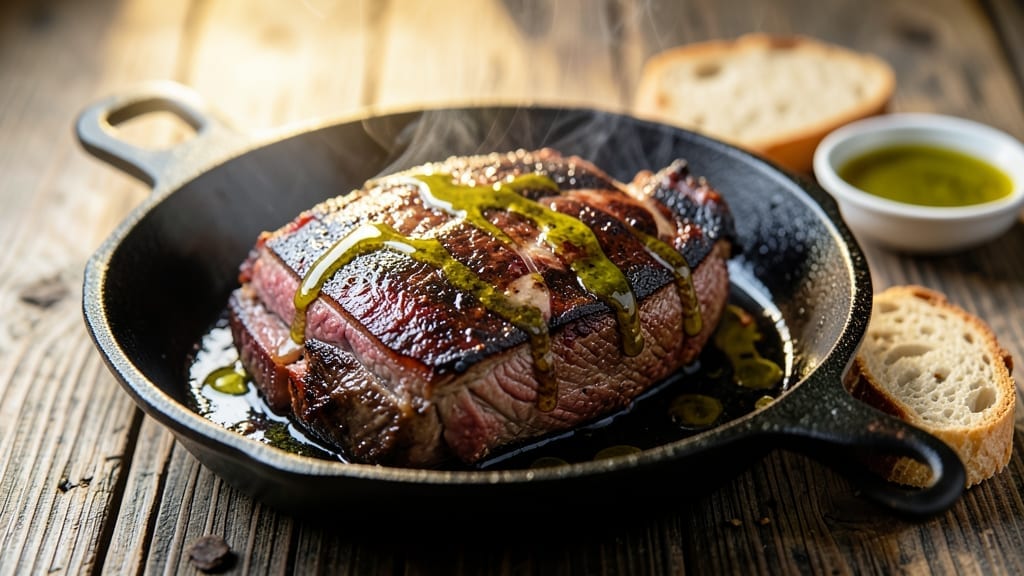
Mastering a slow-smoked prime rib roast transforms a holiday centerpiece into a tender, smoky masterpiece that rivals any restaurant. The key lies in patience—dry-brining the meat overnight and letting low-and-slow smoke work its magic while you monitor that internal temperature like a pro.
I still remember the first time I nailed this technique after years of experimenting with my family’s backyard cookouts, and the results were worth every hour spent.
This recipe delivers restaurant-quality tenderness without requiring professional equipment—just a reliable smoker, quality wood (hickory or cherry for depth), and precise temperature control. The dry brine creates a perfect crust, while the slow smoke infuses the meat with rich, aromatic flavors.
For home cooks, I’ve simplified the process to ensure foolproof results, whether you’re using an electric smoker, charcoal setup, or even a well-calibrated oven.
By the time you carve into that perfectly smoked roast, you’ll be rewarded with melt-in-your-mouth texture and layers of smoky flavor that elevate every bite.
The bark forms a flavorful crust while the interior stays juicy and tender, making it ideal for special occasions or when you want to impress guests. Pair it with a classic horseradish cream or red wine au jus for the full experience.
This method works equally well for beef tenderloin or ribeye, so don’t hesitate to experiment. The secret to success? Timing, temperature, and letting the meat rest before slicing. Let’s get started on creating a showstopping centerpiece that’ll have everyone asking for seconds.
Ingredients for slow smoked prime rib roast
Quality beef, wood smoke, and patience. That’s all you need for restaurant-worthy prime rib.
| Ingredient | Amount | Notes |
|---|---|---|
| Prime Rib Roast (Bone-In) 🥩 | 6 lb | Center-cut, 2-3 inches thick |
| Kosher Salt 🧂 | ½ cup | Diamond Crystal preferred |
| Black Peppercorns 🌶️ | 2 tbsp | Freshly cracked, coarse grind |
| Fresh Rosemary 🌿 | ¼ cup | Needles finely chopped |
| Fresh Thyme 🌿 | ¼ cup | Leaves only, stems removed |
| Garlic Cloves 🧄 | 8 cloves | Smashed, not minced |
| Hickory Wood Chips 🌳 | 2 cups | Unsoaked, for smoker |
| Cherry Wood Chips 🌳 | 1 cup | Unsoaked, for fruity depth |
| Yellow Mustard 🍯 | 2 tbsp | For dry brine adhesion |
| Heavy Cream 🥛 | ½ cup | Full-fat, for au jus |
| Beef Broth 💧 | 1 cup | Homemade or high-quality |
| Red Wine 🍷 | ½ cup | Bold dry red, like Cabernet |
| Unsalted Butter 🧈 | ¼ cup | Cold, cubed for basting |
| Prepared Horseradish 🌶️ | 1 tbsp | For horseradish cream |
[recipe_ingredient_scaler]
The roast is non-negotiable—center-cut prime rib with good marbling delivers that melt-in-your-mouth texture. Most butchers will trim it for you, but if you’re buying whole, ask for a 2-3 inch thick cut. Costco and high-end grocery stores like Whole Foods carry excellent options, but call ahead to confirm availability. For wood, Traeger brand chips are my go-to—they’re consistent and easy to find. If you’re using a smoker, soak the wood chips for 30 minutes before adding them to the tray. Fresh herbs? Trader Joe’s sells pre-chopped rosemary and thyme in little jars—convenient but not as fresh as what you’d find at the market.
No hickory? Oak chips work perfectly—just add a splash of apple juice to the smoker tray for extra moisture. Running low on fresh thyme? Dried thyme at half the amount keeps the flavor profile intact. The mustard in the dry brine might seem odd, but it’s a game-changer—it helps the salt stick to the meat and adds a subtle tang. For the au jus, red wine reduction from a jar (like Bertolli) saves time without sacrificing depth. The horseradish cream can be made ahead—just whisk it together last-minute before serving. And if you’re short on butter for basting, ghee works just as well—it’s got a higher smoke point.
The roast reheats beautifully—wrap it tightly in foil and bake at 275°F for 20-30 minutes to restore juices. Store leftovers in the fridge for 4-5 days or freeze for up to 3 months in airtight containers. For the au jus, it keeps for 5 days in the fridge, but the flavor improves over time. I always make extra—it’s perfect for drizzling over eggs the next morning or using as a base for gravy. The horseradish cream? Use it within 3 days for the best texture. Portion everything into containers so you’re not scrambling on serving day.
Why You’ll Love This Recipe
- I’ll be real: this roast demands seconds. The au jus gets even better with time, and the meat stays tender for days. Pack up slices for lunches, freeze portions for future game days, or repurpose into sandwiches—it’s that good, and honestly, I’ve never wasted leftovers this happily.
- One-Pan Impressiveness: Honestly, the only prep work is mixing that dry brine—kosher salt, cracked peppercorns, rosemary, thyme, and smashed garlic cloves, all stuck to the roast with a little mustard. Then it’s hands-off for 24 hours in the fridge, and the rest is smoke and patience. No last-minute frantic chopping or worrying about multiple pans.
- Smoky Herbal Magic: The hickory and cherry wood chips create that deep, woodsy aroma, while the rosemary and thyme add bright, herbal complexity. That crispy bark crust? It’s like eating a flavor bomb—every bite packs smoky richness with a herbal punch that’s hard to resist.
- Leftovers That Outshine: I’ll be real: this roast demands seconds. The au jus gets even better with time, and the meat stays tender for days. Pack up slices for lunches, freeze portions for future game days, or repurpose into sandwiches—it’s that good, and honestly, I’ve never wasted leftovers this happily.
Step-by-step instructions for slow smoked prime rib roast
Here’s how to transform a simple roast into a showstopping centerpiece with deep smoky flavor and melt-in-your-mouth tenderness.
Prepare the Dry Brine and Season the Roast
In a small bowl, combine the ½ cup kosher salt, 2 tablespoons black peppercorns, ¼ cup finely chopped fresh rosemary, ¼ cup fresh thyme leaves, and 8 smashed garlic cloves. This is your dry brine mixture – the foundation for that incredible bark crust. Spread this generously over the entire surface of the 6 lb prime rib roast, pressing it firmly into the meat so it adheres well. Pay special attention to the fat cap and bone areas where flavor concentrates.
Now comes the secret technique: mix the 2 tablespoons yellow mustard with the dry brine ingredients. The mustard acts as a binder that helps the seasoning stick to the meat during the smoking process. Spread this mustard-blended mixture evenly over the roast, making sure to get it into all the crevices. Place the seasoned roast on a wire rack set over a baking sheet and refrigerate uncovered for 24 hours. This dry brining process ensures maximum flavor penetration and creates that coveted crust.
Set Up the Smoker and Prepare for Cooking
Combine the 2 cups hickory wood chips with 1 cup cherry wood chips in your smoker box. This wood combination gives you both classic smoky depth and subtle fruity notes that complement the beef beautifully. Fill the smoker water pan with enough water to cover the bottom, then preheat to 225°F. You’re aiming for clean, blue smoke – not thick white smoke which indicates unburned wood. Let the smoker stabilize at this temperature for at least 30 minutes before adding the meat.
While the smoker heats up, prepare your roasting setup. Place the cold roast on the wire rack in a roasting pan. This elevated position allows proper airflow around the meat, which is crucial for even cooking and bark development. Once the smoker reaches 225°F with steady smoke output, carefully place the roast in the smoker fat-side up. Close the lid and resist the urge to open it – every time you peek, you lose valuable heat and moisture.
Smoke the Prime Rib Low and Slow
Smoke the prime rib for 6-8 hours, maintaining a consistent 225°F temperature. This low-and-slow approach is what creates that incredible tenderness you’re after. The roast will hit “the stall” around 165°F internal temperature – this is when the meat’s moisture begins evaporating faster than it can render, causing the internal temperature to plateau. Don’t panic; this is completely normal and part of the process.
Here’s where the ¼ cup unsalted butter comes into play. When the roast reaches the stall (around 6-7 hours), remove it from the smoker and let it rest for 15 minutes. While it rests, melt the ¼ cup unsalted butter in a small saucepan over low heat. Using a pastry brush, generously baste the roast with this melted butter, focusing on the surface and any areas that need extra moisture. Return the roast to the smoker and continue cooking until it reaches an internal temperature of 203°F in the thickest part of the meat, about 1-2 hours total smoking time.
Rest and Prepare the Horseradish Cream
Remove the prime rib from the smoker and transfer it to a cutting board. Tent loosely with aluminum foil and let it rest at room temperature for 1-2 hours. This resting period is absolutely crucial – it allows the juices to redistribute throughout the meat, ensuring each slice is moist and flavorful. The roast should feel warm to the touch but not hot when you handle it.
While the roast rests, prepare the horseradish cream by combining the ½ cup heavy cream with the 1 tablespoon prepared horseradish in a small bowl. Whisk until smooth and set aside. Also, prepare your au jus by combining the 1 cup beef broth with the ½ cup red wine in a saucepan. Simmer over medium heat until reduced by half, about 10-12 minutes. Strain through a fine-mesh sieve to remove any impurities, then keep warm.
Carve and Serve with Perfect Pairings
After resting, carefully remove the twine and discard it. Using a sharp carving knife, slice the prime rib against the grain into ½-inch thick slices. The meat should be fork-tender with a beautiful pink smoke ring just beneath the crust. Arrange the slices on a warm platter and drizzle generously with the reduced au jus. Serve immediately with the horseradish cream on the side for those who enjoy a bit of kick.
The result should be a prime rib with a perfect bark crust that’s both crispy and tender, a deep pink smoke ring, and melt-in-your-mouth meat that practically falls apart. Each bite delivers layers of smoky flavor from the hickory and cherry wood, with bright herbal notes from the rosemary and thyme. The horseradish cream adds a perfect contrast to cut through the richness, while the au jus ties everything together in every bite.
Pro Tips For Making Slow Smoked Prime Rib Roast
- Preheat Smoker Properly: Don’t just toss in the wood chips and hope for the best—let that smoker hit 225°F with clean blue smoke for at least 30 minutes before adding the roast. I’ve seen too many people rush this, and the result? Weak smoke flavor and uneven cooking. That water pan? Keep it full—it’s not just for show.
- Crack Those Peppercorns: Freshly cracked black peppercorns make all the difference—don’t just grind them in the shaker. A coarse grind means they stick to the meat better and release flavor as it smokes. I used to skip this, and the bark never had that same depth.
- Don’t Skip the Stall Baste: When the roast hits 165°F and stalls, that’s your cue to pull it, melt the ¼ cup unsalted butter, and baste like you mean it. Skimping here means dry spots on an otherwise perfect roast. Trust me, the extra 15 minutes of rest while basting is worth every juicy bite.
- Rest It Right: Two hours at room temperature—not hot out of the smoker. I know, it’s tempting to carve early, but rushing this step means slices that fall apart and lose juices. Tent it loosely with foil, let it breathe, and you’ll get that fork-tender perfection every time.
Flavor customization for this dish
Herbal Depth Boost
I love adding fresh wild rosemary and thyme from my coastal foraging spots—it elevates the bark with earthy, piney notes that hickory smoke can’t match. For extra complexity, mix in 1 tbsp chopped sage and 1 tsp dried juniper berries (crushed) with your dry brine.
The juniper adds a subtle piney, citrusy aroma reminiscent of classic German sausage rubs. Just remember to soak the juniper berries in warm water for 30 minutes before mixing to soften their intensity. 🌿
Smoky-Sweet Fusion
Want to balance the smokiness? Swap ½ cup cherry wood chips for 1 cup apple wood chips—this creates a fruity, almost caramelized note that pairs beautifully with the hickory. I also add 1 tbsp brown sugar to the dry brine for a subtle sweetness that contrasts the peppery bark.
The result? A prime rib with layers of smoky-sweet complexity that reminds me of my first BBQ competition win. 🔥
Spicy Heat Variation
For those who love heat, add 1 tbsp Penzeys hot honey to the mustard brine and sprinkle 1 tsp cayenne pepper over the roast before smoking. The honey caramelizes into the bark, while the cayenne adds a gentle kick that cuts through the richness.
If you prefer more heat, rub 2 tbsp crushed red pepper flakes into the fat cap—just don’t overdo it, or you’ll overwhelm the smoky flavors. 🌶️
Wine-Infused Bark
Infuse your dry brine with ¼ cup red wine reduction (from the au jus) for an extra layer of depth. Reduce ½ cup Cabernet with 1 tbsp balsamic vinegar until syrupy, then mix it into your seasoning blend.
This technique, inspired by French technique training, adds a fruity acidity that brightens the smoky flavors. The result? A prime rib with a bark that’s as complex as the wine itself. 🍷
Buttery Herb Crust
For a richer bark, replace the ¼ cup unsalted butter basting step with ½ cup brown butter (cooled slightly) mixed with 1 tbsp chopped parsley. The nutty, caramelized notes from the brown butter enhance the smoky flavor while keeping the crust moist.
I like to baste the roast with this mixture twice—once at the stall and again when it hits 200°F. This is my secret for a bark that’s both crispy and tender. 🧈
Nutrition facts
Frequently asked questions
What if my smoker temperature fluctuates during cooking?
Small fluctuations are normal, but keep the average around 225°F. Use a reliable meat thermometer to monitor internal temps. If the smoker drops below 220°F, add more wood chips or adjust the vent. Consistency is key—patience during the 6-8 hour smoke ensures that perfect bark and tenderness.
Why does the recipe call for a 24-hour dry brine?
The overnight dry brine creates a perfect bark crust while allowing flavors to penetrate deeply. This process also helps tenderize the meat. Trust the timing—skipping it means less flavor and less bark development. It’s worth the wait!
Can I use a different type of wood for smoking?
While hickory and cherry work beautifully, oak or pecan also create rich flavors. Just avoid fruitwoods like apple or cherry alone—they can make the meat taste too sweet. Stick to bold woods for that classic smoky depth.
What’s the best way to handle the stall during smoking?
When the internal temp hits 165°F, the stall begins—this is normal! Keep the smoker closed and resist checking it. If needed, baste with melted butter at this stage to help the meat stay moist. The stall usually lasts 1-2 hours before resuming progress.
How do I know when the prime rib is done?
Use a meat thermometer to check the thickest part of the roast—it should reach 203°F. The bark will be crispy, and the meat will be fork-tender with a beautiful pink smoke ring. Never guess—it’s the only way to ensure perfect results!

Trained in classic French technique but raised on slow-cooked ribs and spicy rubs, she blends culinary skill with smoke and soul.
- Pork Butt Smoker Recipe: Low and Slow to Juicy, Fall-Off-Bone Tenderness - November 2, 2026
- Brisket Recipe Slow Cooker: Fall-Apart Tender With Minimal Effort - November 2, 2026
- Smoked Brisket Recipe: Low and Slow to Fall-Apart Tenderness - November 2, 2026