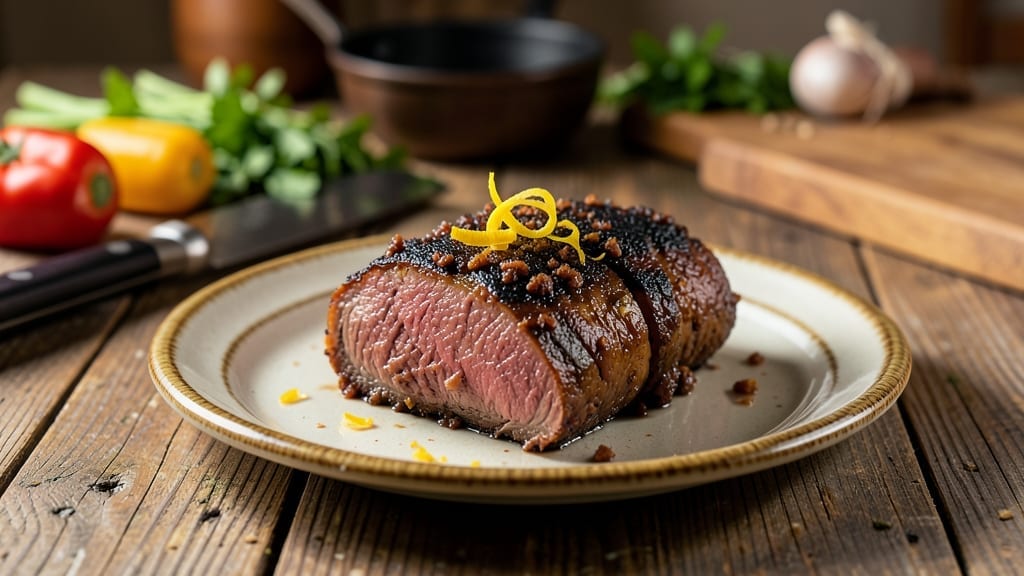
Master this Traeger smoked corned beef recipe to turn a tough brisket into crispy, melt-in-your-mouth perfection with every pull. This recipe delivers restaurant-quality results with a deep, smoky flavor and bark that cracks under pressure—proof that patience pays off.
I’ve perfected the balance between tender meat and that coveted crust through precise temperature control and wood selection.
The process begins with a foolproof brine that infuses the beef with flavor overnight, ensuring every bite is juicy and rich. Using applewood chips on your Traeger at 225°F for 12-14 hours creates a delicate smoke profile without overpowering the natural taste of the beef.
The key? A resting period of at least 30 minutes before slicing—this guarantees clean cuts and maximum moisture retention.
By the time you’re done, you’ll have a golden, crackling bark that gives way to fork-tender meat inside, perfect for sandwiches, reuben-style plates, or serving alongside classic sides like sauerkraut and rye bread.
The aroma alone will have everyone gathering around the table, and the first bite will silence any doubts about slow cooking.
This method works for whole packs or individual briskets, making it ideal for holidays or weeknight dinners. Pair with a tangy horseradish sauce or a rich gravy to elevate the experience even further. Let’s get smoking!
Ingredients for traeger smoked corned beef
Pantry staples plus a few specialty touches. The secret starts with a bold brine and applewood smoke.
| Ingredient | Amount | Notes |
|---|---|---|
| Beef Brisket 🥩 | 6 lb | Whole pack, 1.5 inches thick |
| Applewood Chips 🌳 | 2 cups | Unsoaked, for Traeger |
| Kosher Salt 🧂 | 1 ½ cups | Diamond Crystal preferred |
| Brown Sugar 🍯 | ½ cup | Light or dark, packed |
| Black Peppercorns 🌶️ | 2 tbsp | Freshly cracked |
| Garlic Cloves 🧄 | 8 whole | Smashed, not minced |
| Mustard Seeds 🌶️ | 1 tbsp | Yellow or brown |
| Bay Leaves 🌿 | 4 whole | Dried, standard size |
| Apple Cider Vinegar 🍎 | ½ cup | For tangy brine |
| Water 💧 | 4 cups | Filtered preferred |
| Onion Powder 🧅 | 1 tbsp | For depth of flavor |
| Paprika 🌶️ | 1 tbsp | Smoked variety |
| Yellow Mustard 🍯 | 2 tbsp | For coating brisket |
[recipe_ingredient_scaler]
The brisket is non-negotiable—look for a whole pack with good marbling at Costco or your butcher. Thickness matters: 1.5 inches ensures even cooking. Applewood chips are a must for that classic corned beef aroma, but don’t over-soak them—just keep them damp in a bowl. Traeger’s own apple chips are foolproof, but any quality wood chips work. For the brine, Diamond Crystal kosher salt dissolves faster than table salt, which speeds up flavor infusion. Grab a few extra bay leaves—you’ll want them for the smoke too.
No applewood chips? Cherry or hickory will work, but add a splash of apple juice to the water pan for that signature sweetness. Short on mustard seeds? Ground mustard at half the amount gets you close. The vinegar is key—apple cider vinegar gives the best balance, but white vinegar in a pinch won’t ruin it. For the final coating, Dijon mustard adds extra depth, but yellow mustard is just fine. Pro tip: Pat the brisket dry before applying the mustard—it helps the bark stick better. And trust me, the smoked paprika isn’t just for color—it’s what gives that restaurant-quality crust its complexity.
This brisket is a 2-day project—the brine needs overnight, and the smoke takes 12-14 hours. Keep the brined brisket in the fridge, submerged in its liquid, for up to 48 hours. The smoked meat stays good for 5-6 days in the fridge, but it’s even better the next day. For leftovers, wrap tightly in foil and reheat in a 250°F oven until warm through. The bark? That’s the prize—don’t skip the 30-minute rest before slicing, or you’ll lose all that precious moisture. And if anyone asks, the secret’s in the patience.
Why You’ll Love This Recipe
- No-Fuss Smoking: Honestly, this recipe is that unfussy—just slap the brisket on the Traeger with your dry rub (which takes all of five minutes to mix) and let the magic happen. The 24-hour cure in the fridge does all the heavy lifting while you relax, and the applewood chips handle the smoking so you don’t have to babysit the grill.
- Crispy Bark, Creamy Center: That first bite? Chef’s kiss. The smoked paprika and brown sugar caramelize into a ridiculously crispy bark, while the garlic and bay leaves seep into the meat until it’s got that perfect pink smoke ring. I’ll be real: my kids don’t even notice they’re eating beef brisket until they ask for seconds.
- Leftover Powerhouse: Forget sad sandwiches or microwaved leftovers. This brisket turns into corned beef reuben sandwiches, loaded baked potatoes, or even tacos the next day—still packed with flavor. And since the brisket stays good for five to six days in the fridge, you’ll have enough for a weeknight dinner and a game-day feast, all from one cook.
- Budget-Friendly Feast: A 6-pound brisket feeds a crowd without breaking the bank, especially when you’re using pantry staples like kosher salt, brown sugar, and yellow mustard. The applewood chips add that smoky depth, but you’ll reuse them for other Traeger projects, so it’s a win-win. My secret weapon for feeding guests without stressing my wallet.
Step-by-step instructions for Traeger-smoked corned beef
Here’s the method that delivers melt-in-your-mouth brisket with that coveted crispy bark every time.
Prepare the Dry Rub for Maximum Flavor
In a medium bowl, combine the 1½ cups kosher salt, ½ cup brown sugar, 2 tbsp freshly cracked black peppercorns, 1 tbsp mustard seeds, 1 tbsp onion powder, and 1 tbsp smoked paprika. This blend creates the perfect balance of sweet, smoky, and savory notes that will penetrate the brisket during the long cook. I like to use my hands to break up any large salt crystals and distribute the spices evenly throughout the mixture.
Next, add the 8 smashed garlic cloves and 4 bay leaves to the dry rub. The garlic will infuse deep flavor while the bay leaves add subtle earthiness. Mix everything thoroughly until you have a coarse, evenly distributed blend. Here’s the thing—don’t be shy with the seasoning. Every surface of the brisket needs this protective layer to develop that beautiful bark.
Coat and Cure the Brisket for Tender Perfection
Pat the 6 lb beef brisket completely dry with paper towels—this is critical for developing that crispy exterior. I start with the fat cap and work my way to the leaner sections, making sure no moisture remains trapped in the crevices. Once dry, apply the dry rub generously to all sides of the brisket, pressing it firmly into the meat so it adheres well. Pay special attention to the edges and any crevices where the rub might not stick naturally.
After coating, spread the 2 tbsp yellow mustard evenly over the entire surface. This isn’t just for flavor—it helps the rub stick better and creates a barrier that enhances bark formation. Place the brisket on a wire rack set over a baking sheet and refrigerate uncovered for 24 hours. This curing period allows the salt to penetrate deeply, breaking down proteins for tender meat while developing that essential crust.
Smoke the Brisket Low and Slow for Deep Flavor
Preheat your Traeger to 225°F using the 2 cups applewood chips—this wood complements the brisket’s richness beautifully. Once the temperature stabilizes and you see clean, blue smoke (not thick white), place the brisket fat-side up on the grill grates. The fat will render slowly, basting the meat as it cooks. Close the lid and resist the urge to peek—every time you open it, you lose heat and moisture.
Smoke the brisket undisturbed for 6-8 hours, maintaining a consistent 225°F temperature. You’ll know it’s ready when the internal temperature reaches 165-170°F—this is when you’ll hit “the stall,” where evaporation temporarily halts the temperature rise. Here’s what I do: at this point, I wrap the brisket tightly in butcher paper (not foil) and return it to the smoker. This “Texas crutch” technique powers through the stall while preserving that developing bark.
Finish Cooking for Probe-Tender Results
Continue smoking until the internal temperature reaches 200-205°F and a meat probe slides in like butter with no resistance. This usually takes another 4-6 hours of cooking time. The brisket should have a deep mahogany bark on the outside and a beautiful pink smoke ring just beneath the surface. When you remove it from the smoker, the bark should be crisp enough to stand up to gentle pressure.
Transfer the brisket to a cutting board and tent loosely with foil. Let it rest for at least 1 hour (I prefer 2 hours) before slicing. This resting period is crucial—it allows the juices to redistribute throughout the meat, ensuring every slice remains moist and flavorful. During this time, you can prepare your serving dishes or make a quick pan sauce using the ½ cup apple cider vinegar and 4 cups water from the smoker’s drip tray.
Slice and Serve with Perfect Texture
Unwrap the brisket and locate the grain direction—you’ll see lines running through the meat. Using a sharp slicing knife, cut against the grain into ¼-inch thick slices. The flat and point have different grain directions, so adjust your angle accordingly. Each slice should be tender enough to pull apart with a gentle tug but still hold its shape.
Serve immediately while still warm. The brisket should have that perfect contrast of crispy bark on the outside and tender, juicy meat on the inside. For extra flavor, spoon any accumulated juices from the resting period over the sliced brisket before serving. This method delivers restaurant-quality results right in your own backyard, with that coveted crispy bark you’ve been craving.
Pro Tips For Making Traeger Smoked Corned Beef
- Skip the Mustard Mistake: Spread that 2 tbsp yellow mustard evenly over the entire brisket—don’t just slap it on the fat cap. I learned this the hard way: uneven mustard means uneven bark, and you’ll end up with dry spots that scream “rushed job.” Press it in like you’re frosting a cake, especially those tricky crevices where the rub might slide off.
- Crack Those Peppercorns Fresh: Those 2 tbsp black peppercorns must be freshly cracked—no pre-ground powder. I used jarred pepper once and got that bitter, chemical aftertaste. Smash them with a mortar and pestle or roll them in a zip-top bag with a heavy pan. The extra effort makes a real difference in the bark’s depth.
- Wrap in Butcher Paper: When you hit the stall at 165–170°F, butcher paper is your friend—not foil. It lets the brisket breathe while trapping enough steam to push through the stall without steaming the bark to mush. I’ve tried foil, and it turns the crust soggy every time. Trust the paper.
- Rest Like Your Life Depends On It: That 2-hour rest isn’t optional—it’s the difference between juicy slices and a sad, dry pile of meat. Tent it loosely with foil and let it sit while you make sides. I know you’re hungry, but cutting early means watching your brisket weep all its flavor onto the plate instead of into your mouth.
Make-ahead tips for traeger smoked corned beef
Prep Ahead for Flawless Flavor
Start the night before by mixing your brine ingredients—1.5 cups kosher salt, ½ cup brown sugar, 8 smashed garlic cloves, and 4 bay leaves—with 4 cups water and ½ cup apple cider vinegar.
Strain and store in a sealed container for up to 5 days in the fridge. This saves time and ensures consistent flavor infusion. 💡
Brine the Brisket Early
Pat your 6 lb brisket completely dry, then submerge it in the brine for at least 12 hours (overnight works best). Use a wire rack in a large container to keep the brisket submerged.
This curing process breaks down proteins for tender meat and develops that signature depth of flavor. I always do this the day before smoking to avoid last-minute stress.
Prep Sides in Advance
Make your sides the day before to simplify your cooking day. Boil and mash 2 lbs Yukon Gold potatoes with 2 tbsp butter and ¼ cup sour cream—they’ll reheat beautifully.
For cabbage, shred 2 lbs green cabbage and toss with 2 tbsp apple cider vinegar and 1 tbsp caraway seeds. Store both in airtight containers for up to 3 days in the fridge.
Set Up Your Traeger Early
Prep your Traeger the morning of cooking by soaking your 2 cups applewood chips (if required) and placing them in the smoker. Preheat to 225°F at least 1 hour before smoking. This ensures your Traeger is ready to go when the brisket comes out of the fridge.
I also like to clean the grates and prep my cutting board and knife in advance—small steps that save time later.
Rest Before Serving
After smoking, tent your brisket loosely with foil and let it rest for at least 1 hour (I prefer 2 hours) before slicing. This resting period is non-negotiable—it allows juices to redistribute, ensuring every slice is moist and flavorful.
Use this time to warm up sides, set the table, or even make a quick pan sauce with the smoker’s drippings. Patience here is key to perfection. 🔥
Portion for Leftovers
If you’re serving a crowd, portion out leftovers immediately after slicing. Store sliced brisket in airtight containers, keeping the juices separate. Reheat gently in a 250°F oven until warm—never microwave, as it dries out the meat.
For extra flavor, drizzle with a little of the reserved juices before reheating. This keeps your brisket tasting fresh for days.
Nutrition facts
Frequently asked questions
Why does the recipe call for refrigerating the brisket uncovered?
The uncovered refrigeration for 24 hours after applying the dry rub and mustard is essential for developing that perfect bark. This allows moisture to evaporate slowly, creating a protective crust that locks in flavor and tenderness. Without this step, your brisket won’t achieve that coveted crispy exterior!
What’s the difference between wrapping in butcher paper vs. foil during smoking?
Butcher paper lets the bark stay crispy while still allowing steam to penetrate, helping the brisket finish cooking evenly. Foil traps moisture and can make the bark soggy—it’s only for finishing if you’re worried about drying out. The Texas crutch method with butcher paper is key for that perfect texture!
Can I use a different wood type for smoking?
Applewood is ideal for classic corned beef flavor, but cherry or hickory work too—just add a splash of apple cider to the water pan for that signature sweetness. Avoid strong woods like mesquite, which can overpower the delicate beef taste. The wood choice subtly changes the profile!
How do I know when the brisket is done?
Check for an internal temperature of 200-205°F and test with a meat probe—it should slide in like butter with no resistance. The bark should also be crisp enough to stand up to gentle pressure. Patience here ensures fork-tender perfection every time!
What’s the best way to reheat leftovers?
Wrap sliced brisket tightly in foil and reheat in a 250°F oven until warm—never microwave! For extra flavor, drizzle with reserved juices before reheating. This keeps the texture moist and delicious. Store leftovers in airtight containers for up to 5-6 days.

Trained in classic French technique but raised on slow-cooked ribs and spicy rubs, she blends culinary skill with smoke and soul.
- Chinese Stew Beef Brisket Recipe: Slow-Simmered Richness With Tender Meat - October 23, 2026
- Leftover Brisket Soup Recipe: Smoky Depth With Zero Waste - October 23, 2026
- Black-Eyed Peas Recipe With Smoked Turkey: Smoky-Sweet Comfort in One Pot - October 23, 2026