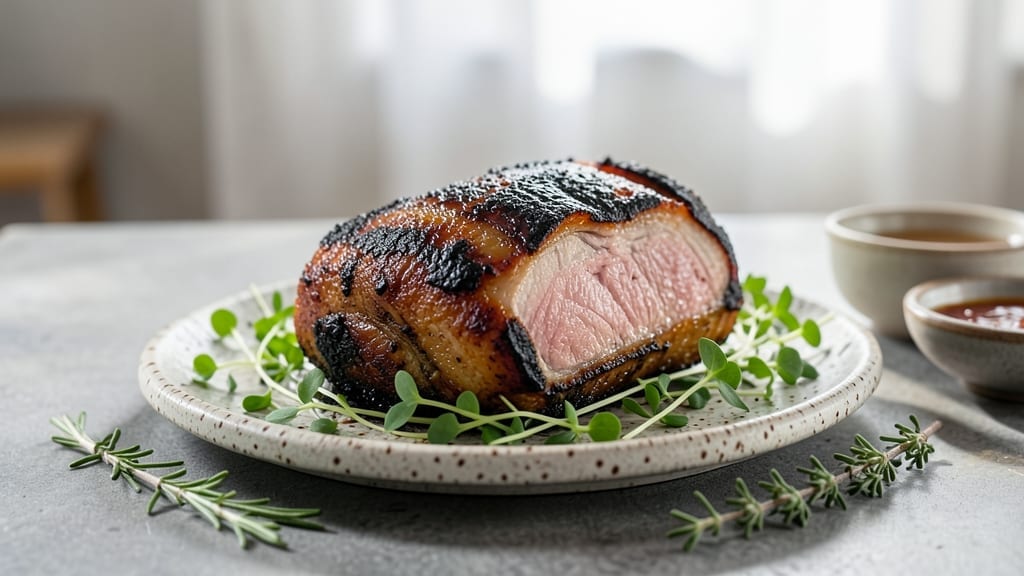
This Traeger smoked pork shoulder roast delivers fall-apart tenderness that transforms a simple cut into a showstopping centerpiece. Growing up in small-town Georgia, I learned that slow-smoked pork shoulder—cooked low and slow with just the right wood—is the heart of any gathering.
The key lies in patience and precision, letting the Traeger work its magic over 12 hours to break down tough fibers into melt-in-your-mouth perfection.
The secret to success starts with a simple dry rub of salt, pepper, and paprika, then letting the Traeger maintain a steady 225°F temperature. Using hickory or cherry wood adds depth without overpowering the natural flavor of the pork.
I’ve perfected this method over years of smoking competitions, where judges rave about the juicy, flavorful results that rival professional BBQ joints.
By the time you pull it at 203°F internal temperature, the pork will be so tender it practically falls apart with a fork. The crust will be rich and caramelized, while the inside remains moist and richly seasoned.
This is the kind of dish that makes guests ask for seconds—and leaves them wondering how you achieved such restaurant-quality results at home.
Pair it with classic sides like baked beans, tangy coleslaw, or buttery cornbread for a complete meal that’s as satisfying as it is impressive. Here’s how to make it happen—step by step, with all the pro tips I’ve learned along the way.
Ingredients for traeger smoked pork shoulder roast
Pork shoulder, wood chips, and a simple dry rub—just the essentials for melt-in-your-mouth perfection.
| Ingredient | Amount | Notes |
|---|---|---|
| Pork Shoulder (Boston Butt) 🥩 | 8 lb | Bone-in for best flavor, trimmed of excess fat |
| Kosher Salt 🧂 | ½ cup | Diamond Crystal preferred for even coating |
| Freshly Ground Black Pepper 🌶️ | 2 tbsp | Coarsely ground for visible texture |
| Smoked Paprika 🌶️ | 1 ½ tbsp | For deep smoky flavor (not sweet paprika) |
| Garlic Powder 🧄 | 1 tbsp | Freshly ground preferred |
| Onion Powder 🧅 | 1 tbsp | For balanced sweetness |
| Brown Sugar 🍯 | 1 tbsp | Lightly packed for caramelization |
| Hickory Wood Chips 🌳 | 2 cups | Unsoaked for consistent smoke |
| Cherry Wood Chips 🍒 | 1 cup | For fruity depth (optional) |
| Apple Cider Vinegar 🍎 | 2 tbsp | For tenderizing (optional) |
| Yellow Mustard 🧅 | 2 tbsp | As a binder (Dijon works too) |
| Beef Broth 🍲 | ½ cup | For spritzing during cook (optional) |
| Butter (Unsalted) 🧈 | ½ cup | For basting at the end (full-fat) |
[recipe_ingredient_scaler]
The pork shoulder is non-negotiable here. Look for bone-in Boston butt—it’s more flavorful and holds up better to long smoking. Trim any thick fat caps to 1/4-inch thickness so it renders evenly. I always buy mine from Costco or a local butcher when available—freshness matters for that first bite. If you’re in a hurry, Trader Joe’s sells pre-trimmed pork shoulders that work perfectly. The key is finding a cut with good marbling; press your thumb into it—if it springs back slowly, that’s your sign of quality. For a 12-hour cook, an 8-pound shoulder gives you generous portions for a crowd.
No hickory wood chips? Oak or pecan will work in a pinch, though hickory’s bold flavor is classic. Cherry adds sweetness but can be skipped if you prefer pure smokiness. The brown sugar in the rub isn’t just for flavor—it helps create that caramelized bark on the outside. For the vinegar and mustard, apple cider vinegar adds tang while Dijon mustard gives a slightly sharper bite than yellow. If you’re short on time, pre-mixed pork rubs from Traeger’s own brand or Montana BBQ Rub save effort without sacrificing flavor. Just be sure to adjust salt if the rub already contains it.
Wood chips last 3-6 months in the fridge if stored in a sealed container. The pork shoulder itself? Use within 2 days of purchase for best texture. Once smoked, it reheats beautifully—wrap tightly in foil and bake at 300°F for 20 minutes. For leftovers, I portion into single-serving containers with a spoonful of the juices so every bite stays moist. The bark? That’s the prize—save a few slices for sandwiches where the crispy crust shines.
Why You’ll Love This Recipe
- No-Fuss Smoking: Honestly, this is the kind of recipe where you can prep the rub while watching TV—just mix the spices, slather it on, and let it chill. The real work happens while you’re asleep or at work, so you’re left with just the satisfying final steps.
- Crispy Outside, Creamy Inside: That smoked paprika and garlic powder? They caramelize into a bark so good you’ll want to eat it by the spoonful, while the inside stays so tender it practically melts. The butter wrap at the end seals the deal—rich, juicy, and addictive.
- Leftovers That Shame No Leftovers: You’ll have so much pork, you can turn it into tacos, sandwiches, or even pulled-pork fried rice the next day. My kids beg for seconds, and I don’t blame them—this is the kind of meal that just gets better as it sits.
- Budget’s Best Friend: An 8-pound Boston butt is cheaper than takeout, and with the hickory-cherry wood combo, you’re getting restaurant-quality smoke at home. Plus, the spices are pantry staples, so you’re not dropping cash on fancy ingredients.
Step-by-step instructions for smoked pork shoulder roast
Here’s the method that delivers melt-in-your-mouth tenderness every time.
Prepare the Rub and Season the Pork Shoulder
In a medium bowl, combine the ½ cup kosher salt, 2 tablespoons freshly ground black pepper, 1½ tablespoons smoked paprika, 1 tablespoon garlic powder, 1 tablespoon onion powder, and 1 tablespoon brown sugar. Mix thoroughly until the spices are evenly distributed and the salt crystals are well incorporated.
Pat the 8 lb pork shoulder (Boston Butt) dry with paper towels—this step is crucial for developing that perfect bark. Generously coat all sides of the meat with the spice rub, pressing it firmly into the surface so it adheres well. Pay special attention to the fat cap and any crevices where the rub might not stick naturally. Place the seasoned pork shoulder on a wire rack set over a baking sheet and refrigerate uncovered for at least 4 hours or overnight. This resting period allows the rub to penetrate deeply and the meat to dry out slightly, both of which are essential for that coveted crispy exterior.
Set Up the Smoker and Cook Low and Slow
Combine the 2 cups hickory wood chips and 1 cup cherry wood chips in a smoker box or directly into your Traeger’s wood chip tray. Preheat your smoker to 225°F with the lid closed. You’ll know it’s ready when you see a steady stream of thin blue smoke—this indicates the ideal temperature for a long, slow cook.
Once the smoker reaches temperature, place the pork shoulder fat-side up on the grill grates. Avoid moving it during the initial phase—this helps create that beautiful bark. Close the lid and maintain the temperature at 225°F for the next 8-10 hours. Here’s the thing: resist the urge to peek or adjust the meat. Every time you open the lid, you lose heat and moisture, potentially extending your cook time by 30-60 minutes. Instead, use a leave-in meat thermometer to monitor the internal temperature without disturbing the cook.
Spritz and Monitor for the Stall
After 6 hours of smoking, prepare the ½ cup beef broth and 2 tablespoons apple cider vinegar in a spray bottle. This mixture is your secret weapon for battling the “stall”—that frustrating period where the meat’s temperature plateaus around 160-165°F. Every 90 minutes starting at the 6-hour mark, spritz the pork shoulder generously with this mixture. The acidity in the vinegar helps tenderize the meat further, while the broth adds moisture to prevent drying.
Continue smoking until the internal temperature reaches 200-203°F, which typically takes a total of 10-12 hours. You’ll notice the meat will start to pull away from the bone slightly, and a probe should slide in like butter with minimal resistance. This is your cue that the collagen has broken down and the pork is approaching its fall-apart stage. Real talk: if you rush this step, you’ll end up with tough, chewy meat instead of the tender masterpiece you’re aiming for.
Wrap and Finish for Maximum Tenderness
Once the pork shoulder hits 200-203°F, remove it from the smoker and transfer it to a large piece of heavy-duty aluminum foil. Add the 2 tablespoons yellow mustard and ½ cup unsalted butter, then tightly seal the foil packet. The mustard acts as a binder, while the butter adds richness and helps create a succulent interior. Return the wrapped pork to the smoker and cook for an additional 1-2 hours at 225°F, until the internal temperature reaches 205-207°F. This final phase ensures the meat is probe-tender and ready to shred effortlessly.
During this time, the juices will redistribute throughout the meat, guaranteeing that every bite is moist and flavorful. Let the pork rest in the foil for 15-20 minutes before unwrapping and shredding. The residual heat will carry the meat to a perfect 210°F, and the butter will create a luscious, glossy finish. Serve immediately with the rendered juices spooned over the top for maximum succulence.
Pro Tips For Making Traeger Smoked Pork Shoulder Roast
- Salt the Night Before: I learned this the hard way—skipping the overnight rub means the salt just sits on top, making the bark uneven. The longer the pork sits with the rub (even 4 hours helps), the deeper the flavor and the better the crust. Trust me, your future pulled pork will taste like it came from a pitmaster.
- Don’t Rush the Stall: The stall isn’t just a pause—it’s where the magic happens. When the temp hits 160-165°F, fight the urge to crank the heat. Instead, spritz with beef broth and apple cider vinegar every 90 minutes and let it work. I’ve seen people rush this, and their pork ends up dry and tough—don’t be that person.
- Use Diamond Crystal Salt: Not all kosher salt is created equal. Diamond Crystal has finer grains and clumps less, so it coats the pork evenly without leaving gummy spots. I used table salt once by mistake—ended up with a salty, uneven crust. Save yourself the headache and stick to the recipe.
- Wrap Tight, Wrap Right: The foil wrap isn’t just for show—it’s about creating a steam bath. Crimp the edges tightly so no steam escapes, and add that mustard and butter before sealing. I’ve seen people wrap loosely, and their pork stays dry. This step guarantees juicy, buttery perfection every time.
Perfect pairings for this dish
Classic Southern Sides
Nothing pairs better with this pork shoulder than three-bean salad—I swear by the creamy, tangy version with Vlasic pickles, celery, and red onion tossed in mayo and vinegar. I make it the day before so the flavors meld, and it’s the perfect cool contrast to the smoky meat.
For a heartier option, baked beans with brown sugar, molasses, and bacon become a caramelized masterpiece when simmered alongside the pork. I use Traeger’s own wood chips in the bean pot for subtle smokiness that ties everything together. 🥘
Creamy & Crunchy Balance
A sharp cheddar coleslaw with apple cider vinegar dressing cuts through the richness of the pork beautifully. I chop green cabbage and carrots finely and toss them with mayonnaise, a touch of honey, and a pinch of cayenne for just a hint of heat.
For extra crunch, add crushed pork rinds—they’re a Southern secret for that perfect texture without sogginess. This combo is a crowd-pleaser, especially when served with the pork’s juices spooned over top. ✨
Sweet & Smoky Pairings
Cornbread is non-negotiable with smoked pork, but I take it up a notch with buttermilk biscuits brushed with brown sugar and cinnamon. The Traeger’s wood smoke infuses the biscuits with subtle depth, making them irresistible.
For a lighter option, grilled corn on the cob with chipotle butter adds smoky-sweet contrast. I always serve the corn with a sprinkle of flaky sea salt to balance the pork’s richness. 🌽
Drink Pairings That Shine
A sweet tea with a lemon wedge and a splash of bourbon is my go-to for cutting through the pork’s smokiness. For something lighter, iced hibiscus tea adds a floral, tangy brightness that cleanses the palate.
If you’re serving a crowd, Traeger’s own smoked beer (like a Traeger Smoked Lager) pairs perfectly—its malty notes complement the pork’s depth without overpowering it. 🍹
Final Touch: The Garnish
Finish plates with fresh cilantro or parsley for a pop of color and brightness. A drizzle of hot honey adds a subtle kick, while crumbled bacon bits give that extra smoky crunch.
For a restaurant-worthy touch, I like to serve the pork with a spoonful of the rendered juices spooned over the top—it’s the secret to making every bite feel luxurious. 💛
Nutrition facts
Frequently asked questions
Why does the pork shoulder need to rest after smoking?
The 15-20 minute rest lets juices redistribute throughout the meat, ensuring every bite stays moist and flavorful. Skipping this step means losing those delicious juices to your plate instead of the meat—trust the process!
Can I use a different wood type than hickory and cherry?
Oak or pecan work well too. Hickory gives bold flavor, while cherry adds sweetness—just adjust to your taste. The key is consistency in smoke style for even flavor distribution.
What if my Traeger isn’t reaching 225°F?
Check for proper airflow and close the lid tightly. If it’s still struggling, try lowering the temperature slightly—just monitor closely. A leave-in thermometer helps track progress without opening the lid. Patience is key here!
How do I know when the pork is fully tender?
Pull it at 205-207°F internal temperature—it should shred effortlessly with minimal resistance. If unsure, check around 200°F and let it rest; the residual heat will finish the job. A fork test is your best friend!
Can I make this recipe ahead of time?
Yes! Smoked pork keeps beautifully for 3-4 days in the fridge. Reheat in foil at 300°F until warm, adding a splash of broth to keep it moist. Freezing works too—just wrap tightly and thaw overnight.

Trained in classic French technique but raised on slow-cooked ribs and spicy rubs, she blends culinary skill with smoke and soul.
- Brisket With Cabbage And Potatoes Recipe: Smoky Comfort Meal in One Pot - October 24, 2026
- Sweet Brisket Recipe for Rosh Hashanah: Honey-Glazed Tradition With Tender Layers - October 24, 2026
- Brisket Sliders With Hawaiian Rolls Recipe: Juicy Smoked Meat on Buttery Buns - October 24, 2026