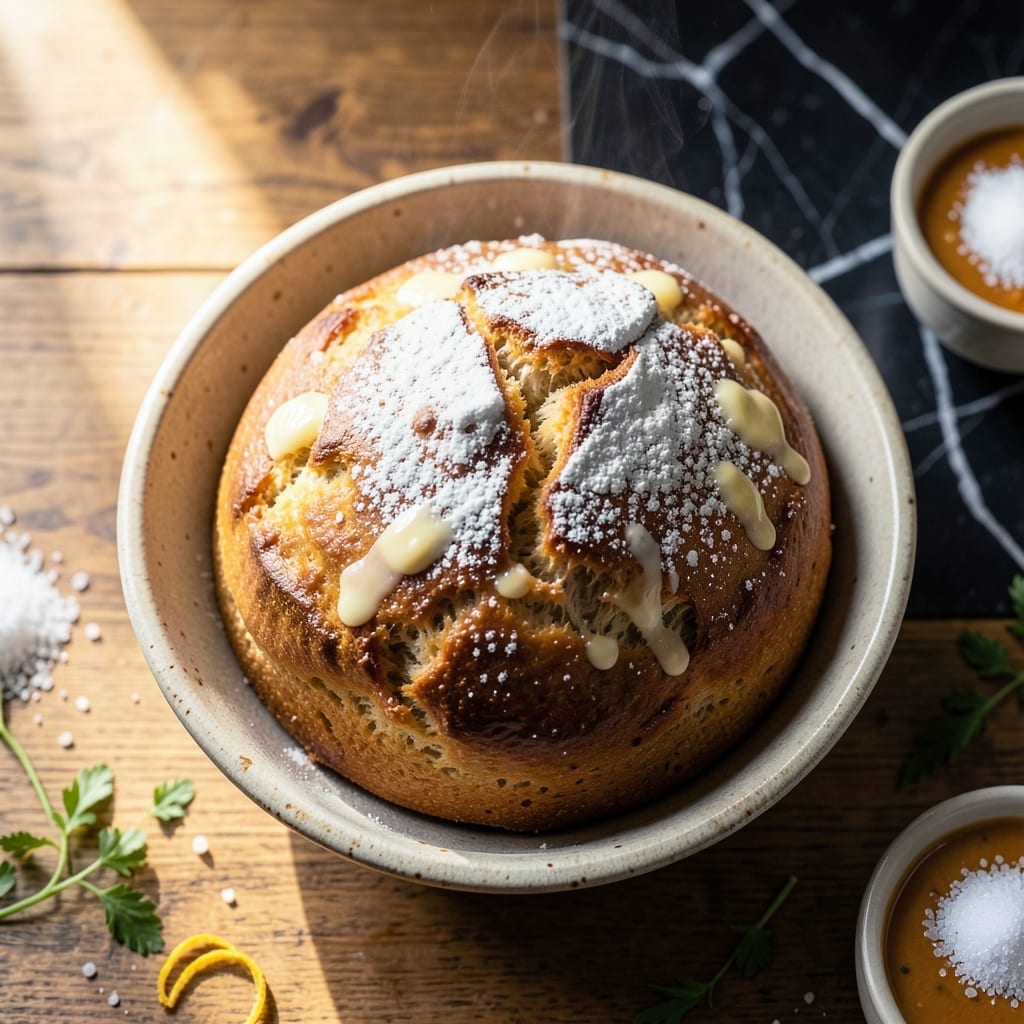
This Trinidadian bread recipe brings Caribbean warmth to your kitchen with its soft, pillowy texture.
I’ve perfected the balance of sweetness and spice, creating loaves that stay fresh for days. The process is straightforward, but the results are anything but ordinary.
Ingredients for Trinidad Homemade Bread
Simple ingredients deliver that soft, pillowy Caribbean warmth you crave in every bite.
| Ingredient | Amount | Notes |
|---|---|---|
| All-Purpose Flour 🌾 | 5 cups | Plus extra for dusting |
| Granulated Sugar 🍚 | ¼ cup | For subtle sweetness |
| Active Dry Yeast 🍞 | 2 ¼ tsp | One packet, proofed |
| Warm Water 💧 | 1 ¼ cups | 110°F, not hot |
| Salt 🧂 | 2 tsp | Fine grain preferred |
| Unsalted Butter 🧈 | ¼ cup | Melted and cooled |
| Whole Milk 🥛 | ¼ cup | Warmed to 110°F |
| Ground Cinnamon 🌿 | 1 tsp | For Caribbean warmth |
| Ground Nutmeg 🌰 | ½ tsp | Freshly grated preferred |
| Vanilla Extract 🌿 | 1 tsp | Pure for best flavor |
| Vegetable Oil 🫒 | 1 tbsp | For greasing bowl |
| Large Egg 🥚 | 1 whole | Room temperature |
[recipe_ingredient_scaler]
The flour is the foundation here. King Arthur or Gold Medal all-purpose gives the best rise—avoid bread flour, which can make the loaf too dense. Yeast needs to be fresh (check the expiration date) and proofed properly in warm water. The milk and butter add richness, but if you’re in a pinch, whole milk powder works too (just reconstitute it). I grab my spices from Penzeys for that extra punch.
No whole milk? 2% or skim works fine—just add an extra tablespoon of melted butter to compensate. Cinnamon and nutmeg are key for that Trinidadian flair, but if you’re out of nutmeg, allspice at half the amount gets you close. Forgot to warm the milk? Microwave it in 10-second bursts until it feels like warm bathwater. The egg can be skipped, but it adds a lovely golden color to the crust.
This bread stays fresh for 3-4 days wrapped in plastic at room temperature. For longer storage, slice and freeze for up to 3 months. The dough can also be made ahead—let it rise in the fridge overnight for a slower, more developed flavor.
Why You’ll Love This Recipe
- One Bowl Wonder: I mix everything right in the same bowl—flour, sugar, yeast, water, salt—and it’s ready to rise.
- Warm, Sweet Simplicity: The sugar and yeast create that soft, slightly sweet Trinidadian taste I crave with every bite.
- Breakfast to Dinner: Honestly, it’s just as good fresh from the oven as toasted the next morning with jam or alongside stew.
- Penny-Wise Loaf: Between us, a bag of flour and a packet of yeast make two big loaves for less than a fiver.
Step-by-Step Instructions for Trinidad Homemade Bread
Here’s my time-tested method for achieving those signature soft, pillowy loaves with a hint of Caribbean warmth.
Step 1: Activate the Yeast and Mix Wet Ingredients
In a large mixing bowl, combine the 1.25 cups Warm Water, 0.25 cup Granulated Sugar, and 2.25 tsp Active Dry Yeast. Let it sit for 5-10 minutes until the mixture becomes foamy and the yeast is visibly active—this is your confirmation that the yeast is alive and ready to work.
Once the yeast is frothy, add the 0.25 cup Whole Milk, 1 whole Large Egg, 0.25 cup Unsalted Butter, 1 tsp Vanilla Extract, 1 tsp Ground Cinnamon, and 0.5 tsp Ground Nutmeg. Whisk everything together until smooth. The spices here are key—they infuse the dough with that subtle Caribbean character that makes this bread special.
Step 2: Incorporate the Dry Ingredients and Knead
Gradually add the 5 cups All-Purpose Flour and 2 tsp Salt to the wet mixture, about 1 cup at a time, mixing with a wooden spoon until a shaggy dough forms. I always hold back about ½ cup of flour to adjust as needed—you want a dough that’s slightly sticky but pulls away from the sides of the bowl.
Turn the dough out onto a lightly floured surface and knead for 8-10 minutes by hand, or 6-8 minutes in a stand mixer with the dough hook attachment. The dough should become smooth, elastic, and only slightly tacky. If it sticks to your hands, add a little more flour, 1 tablespoon at a time. You’ll know it’s ready when you can stretch a small piece thin enough to see light through it without it tearing.
Step 3: First Rise Until Doubled in Size
Lightly grease a large bowl with the 1 tbsp Vegetable Oil and place the dough inside, turning to coat all sides. Cover the bowl with a clean kitchen towel or plastic wrap and let it rise in a warm, draft-free place for 1 to 1.5 hours, or until doubled in size.
I like to preheat my oven to 200°F, turn it off, and then place the bowl inside with the door slightly ajar. This creates the perfect environment for a consistent rise. The dough is ready when it holds an indent when gently pressed with your finger. Don’t rush this step—proper rising is what gives the bread its airy, pillowy texture.
Step 4: Shape, Second Rise, and Bake
Punch down the risen dough to release the air, then turn it out onto a floured surface. Divide it into 4 equal portions and shape each into a smooth ball. Place the balls on a parchment-lined baking sheet, spacing them 2 inches apart. Cover and let rise again for 30-45 minutes until puffy.
Preheat your oven to 375°F. Once the loaves have risen, bake them for 20-25 minutes until they’re golden brown and sound hollow when tapped on the bottom. For an extra-soft crust, brush the tops with a little melted butter as soon as they come out of the oven. Let them cool on a wire rack for at least 15 minutes before slicing—this prevents the bread from becoming gummy.
Pro Tips For Making Trinidad Homemade Bread
- Test Yeast First: I learned this the hard way—always bloom your active dry yeast in warm water with a pinch of sugar for 5-10 minutes until foamy. If it doesn’t bubble, your bread won’t rise, no matter how long you wait.
- Use Bread Flour: Sounds weird, but swapping half the all-purpose flour for bread flour gives that chewy texture Trinidad bread is known for. The extra gluten actually changes the outcome.
- Skip Cold Water: Warm water should feel like a baby’s bath—around 110°F. After killing yeast with hot water once, I now use a thermometer to guarantee it’s just right.
- Let It Double: Resist the urge to rush the first rise—give it a full 1-2 hours in a warm spot until the dough has doubled in size. I skip this when I’m lazy, but the bread is noticeably denser.
Dietary Considerations for trinidad homemade bread
Gluten-Free Adaptation
For a gluten-free version, swap the 5 cups All-Purpose Flour for a 1:1 gluten-free baking blend. I’ve had great success with King Arthur’s Measure for Measure—it includes xanthan gum, which helps mimic the elasticity of gluten. Add 1 extra tsp to the dough to improve structure.
Dairy-Free Options
Replace the 0.25 cup Whole Milk with unsweetened almond milk or coconut milk for a dairy-free loaf. The 0.25 cup Unsalted Butter can be swapped for vegan butter or coconut oil. Honestly, the coconut milk adds a subtle tropical note that pairs beautifully with the cinnamon.
Vegan Modifications
To make this bread fully vegan, use the dairy-free substitutions above and replace the 1 whole Large Egg with a flax egg (1 tbsp ground flaxseed mixed with 3 tbsp water). Let it sit for 5 minutes to thicken before adding to the wet ingredients.
Reduced Sugar Version
If you prefer less sweetness, cut the 0.25 cup Granulated Sugar in half. The cinnamon and nutmeg will still shine through, and the bread will have a more subtle, savory profile. I’ve found this works well for sandwiches where you want the filling to be the star. 💛
Nut Allergy Notes
This recipe is naturally nut-free, but always double-check your spice blends and flour brands for cross-contamination warnings. For extra safety, use certified nut-free facilities products. The egg can be omitted if needed, though the texture may be slightly denser.
Low-Carb Alternative
For a lower-carb option, try replacing half the flour with almond flour or coconut flour. Note that the texture will be denser, and you may need to add 1-2 extra tbsp of liquid to balance the dry ingredients. This version is best for those strictly monitoring carb intake.
Nutrition Facts
Frequently Asked Questions
Why does my dough not rise properly?
Check if your yeast is expired or the water was too hot (110°F max). Also ensure your rising spot is warm and draft-free. Cold environments slow yeast activity significantly.
Can I make this without a stand mixer?
Knead by hand for 8-10 minutes until smooth and elastic. The process is more labor-intensive but yields equally good results. Just keep your surface lightly floured.
How do I store leftover bread?
Wrap cooled loaves in plastic wrap or an airtight container at room temperature for 3-4 days. For longer storage, freeze slices for up to 3 months.
What makes the Caribbean flavor unique?
The combination of cinnamon and nutmeg gives it that distinctive warm, spiced character. Vanilla extract adds depth, creating a subtle sweetness typical of Trinidadian baking.

Trained in classic French technique but raised on slow-cooked ribs and spicy rubs, she blends culinary skill with smoke and soul.
- Recipe for Boneless Pork Chops in Cast Iron Skillet: Sear and Baste to Juicy Perfection - October 3, 2026
- Recipe for Boneless Cross Rib Roast: Slow-Roasted Beef with Herb Crust - October 3, 2026
- Hamburgers in Sauce Recipe Crock Pot: Slow-Cooked Savory Delight - October 3, 2026