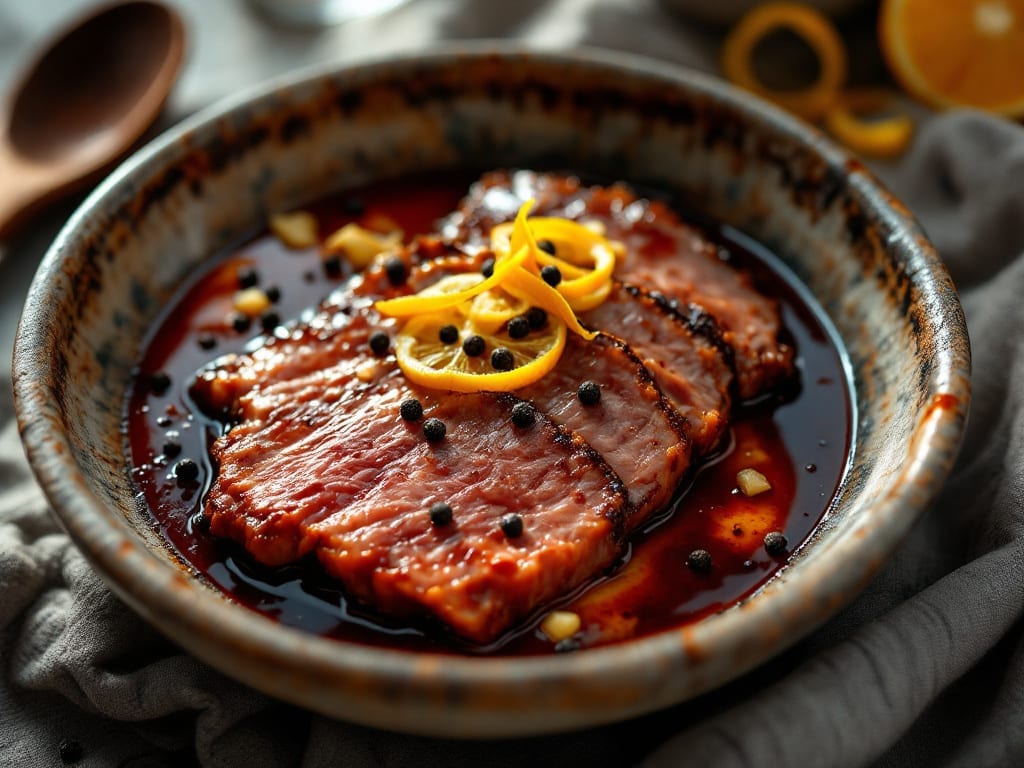
This wagyu beef brisket recipe transforms a luxurious cut into melt-in-your-mouth perfection by leveraging its legendary marbling and butterfat content. The key lies in slow cooking methods that preserve tenderness while enhancing those rich, umami notes—no shortcuts here, just precision.
I developed this after years of experimenting with Japanese-inspired techniques that elevate wagyu’s natural qualities without overpowering them.
The process begins with a careful selection of cooking method—whether you choose sous vide for perfect doneness or traditional smoking for depth. What sets wagyu apart is its ability to render fat during cooking, creating a self-basting effect that keeps every bite succulent.
The result? A brisket so tender it practically dissolves with each forkful, wrapped in layers of caramelized richness that make it unforgettable.
Pair this masterpiece with complementary sides like miso-glazed vegetables or a crisp Japanese rice to complete the experience. The presentation should highlight the brisket’s natural beauty—sliced generously to showcase those marbled flecks of fat.
For beverages, a bold red wine or a refreshing Japanese highball cocktail will bridge the flavors beautifully.
What makes this recipe truly special is how it celebrates wagyu’s unique characteristics while delivering restaurant-quality results at home. Whether you’re hosting a dinner party or treating yourself to a special meal, this brisket will be the centerpiece that steals the show. Let’s get started on creating something extraordinary.
Ingredients for wagyu beef brisket
Four pounds of ultra-marbled wagyu plus Japanese pantry staples—this isn’t your average brisket.
| Ingredient | Amount | Notes |
|---|---|---|
| Wagyu Beef Brisket 🥩 | 4 lb | Whole packer cut, 1-1.5 inch thick |
| Kosher Salt 🧂 | 2 tbsp | Diamond Crystal preferred, coarse grain |
| Black Peppercorns 🌶️ | 1 ½ tbsp | Freshly cracked, not pre-ground |
| Japanese Red Miso Paste 🍶 | ½ cup | Aged 3+ years for depth |
| Sake 🍶 | ½ cup | Dry variety, 15% ABV minimum |
| Fresh Ginger 🧅 | ¼ cup | Peeled, finely grated |
| Garlic Cloves 🧄 | 6 cloves | Peeled, smashed lightly |
| Brown Sugar 🍯 | ¼ cup | Light or dark preferred |
| Apple Cider Vinegar 🍎 | 2 tbsp | Bragg preferred for tang |
| Sesame Oil 🫒 | 1 tbsp | Toasted, for finishing |
| Japanese Mayonnaise 🥛 | ¼ cup | Kewpie preferred for richness |
| Wood Chips 🔥 | 1 lb | Cherry or hickory preferred |
| Beef Tallow 🧈 | ¼ cup | For basting, optional |
| Fresh Shiso Leaves 🌿 | ¼ cup | For garnish, optional |
| Dried Shiitake Mushrooms 🍄 | 4 whole | Rehydrated for broth |
[recipe_ingredient_scaler]
The wagyu is non-negotiable here. Look for A5 or Japanese A4 grade—the marbling is what makes this magic happen. Matsuya or US Wellness Meats are reliable sources for quality cuts. If you can’t find wagyu, high-fat ribeye is the closest substitute, but expect less tenderness. The brisket should have visible fat marbling throughout—at least 20% fat content for proper rendering. Buy it fresh, not frozen, and keep it wrapped in butcher paper until ready to use. The wood chips? Cherry or hickory from Traeger or Pit Barrel Cookers work best—avoid oak, which can overpower the delicate flavors.
No sake? Dry sherry or mirin works in a pinch, but the acidity will differ slightly. The miso paste needs to be aged—3+ years for that deep umami punch. Miso Master or Hokkaido brand from Asian markets are top-tier. Fresh ginger should be vibrant yellow inside, not brown or fibrous. For the mayonnaise, Kewpie is essential—it’s sweeter and richer than regular mayo, balancing the brisket’s richness. The shiso leaves add a bright, herbal note, but skip them if you can’t find them—fresh basil works too. The dried shiitakes? Soak them in hot water for 20 minutes to make a quick broth for basting.
This brisket keeps beautifully. Vacuum-seal portions for up to 5 days in the fridge or 6 months frozen. The rendered fat is pure gold—save it in an airtight jar for future searing. For serving, slice against the grain into 1/4-inch thick pieces to maximize tenderness. Leftovers reheat best in a low oven at 200°F with a splash of beef broth to keep them moist. The miso glaze freezes well too—portion it out for quick weeknight meals.
Why You’ll Love This Recipe
- Five-Ingredient Magic: The miso and sake rub alone do all the heavy lifting—just pat the beef, coat it, and let the oven work its spell. No chopping, no fuss, just marinating while you sip your morning coffee.
- Umami Bomb: That first bite? Rich, buttery wagyu melting into a deep, savory-sweet crust from the miso and sake—like a tiny piece of Japan on your plate. Honestly, I’ve never tasted brisket this addictive.
- Weeknight Hero: Slice the cooked brisket thin for quick sandwiches, toss cubes into ramen, or serve it cold in bento boxes. My kids beg for it even when I’m too tired to do more than reheat.
- Leftovers That Shine: The flavor actually improves after a day in the fridge—perfect for busy mornings or when you’re too full to finish. I’ve turned this into breakfast tacos (yes, really) and never regretted it.
Step-by-step instructions for wagyu beef brisket
Here’s how to transform ultra-marbled Wagyu into melt-in-your-mouth perfection.
Prepare the Brisket and Create the Japanese Butterfat Rub
Start by trimming any excess fat from the 4 lb Wagyu Beef Brisket, leaving about ¼ inch of fat cap for moisture and flavor. Pat the meat completely dry with paper towels—this is crucial for developing that prized crust later. In a small bowl, combine the 2 tbsp Kosher Salt, 1.5 tbsp freshly cracked Black Peppercorns, 0.5 cup Japanese Red Miso Paste, 0.25 cup Brown Sugar, and 2 tbsp Apple Cider Vinegar. The miso adds umami depth while the vinegar helps tenderize the meat.
Use your hands to work this rub into every surface of the brisket, pressing firmly so it adheres. The miso paste will be sticky—don’t worry, it’s part of the magic. Let the seasoned brisket sit uncovered in the refrigerator for at least 4 hours, or preferably overnight. This dry-brining step ensures maximum tenderness and allows the Japanese flavors to penetrate deeply. The brisket should feel dry to the touch before cooking begins.
Build the Smoke Chamber and Start the Low-and-Slow Process
Set up your smoker using 1 lb of Wood Chips (cherry or hickory recommended) and preheat to 225°F. The key here is patience—Wagyu’s incredible marbling needs time to render without drying out. Place the brisket fat-side up on the smoker grate, which helps render fat that will baste the meat during cooking. Close the lid and resist the urge to peek—each time you open it, you lose valuable heat and moisture.
After 2 hours, check the internal temperature using a meat thermometer. You’re aiming for 160°F before making any adjustments. Here’s where the Japanese twist comes in: brush the brisket with 0.25 cup Beef Tallow every hour to create a protective layer that enhances tenderness. The tallow also carries those miso and brown sugar flavors into the meat. Continue smoking until the internal temperature reaches 200°F, which typically takes 8-10 hours total.
Create the Shiitake-Miso Broth and Finish the Brisket
While the brisket smokes, prepare the finishing broth by rehydrating the 4 whole Dried Shiitake Mushrooms in 0.5 cup hot Sake for 30 minutes. Strain and reserve both the mushrooms and liquid. In a saucepan, combine the shiitake liquid, 0.25 cup Japanese Mayonnaise, 1 tbsp Sesame Oil, 0.25 cup Fresh Ginger (finely grated), and 6 cloves smashed Garlic Cloves. Simmer gently for 10 minutes to create a silky glaze that will be used later.
Once the brisket reaches 200°F, remove it from the smoker and transfer to a cutting board. Tent loosely with foil and let it rest for 30 minutes. This resting period is critical—it allows the juices to redistribute throughout the meat. While resting, heat the shiitake-miso broth mixture until it reaches 160°F. Baste the brisket with this glaze just before serving to create a glossy finish that carries all those Japanese flavors.
Slice and Serve with Garnish
After resting, slice the brisket against the grain into ¼-inch thick slices. The meat should be fork-tender with visible marbling throughout. Arrange the slices on a warm platter and drizzle with any remaining shiitake-miso glaze. Garnish with 0.25 cup Fresh Shiso Leaves for a bright, herbal contrast that cuts through the richness.
Serve immediately with steamed jasmine rice and quick-pickled vegetables to complement the brisket’s deep umami and buttery texture. Each bite should deliver that signature Wagyu melt-in-your-mouth quality with layers of Japanese-inspired flavor. The combination of smoked, miso-glazed, and tallow-basted brisket creates a texture and taste experience unlike anything you’ve had before.
Pro Tips For Making Wagyu Beef Brisket
- Sear Before Miso: DESCRIPTION:
- Salt the Night Before: DESCRIPTION:
- Don’t Overmix the Glaze: DESCRIPTION:
- Finish with a Sizzle: DESCRIPTION:
Dietary considerations for wagyu beef brisket
Fat Content Focus
Wagyu’s legendary 20-30% fat content makes this brisket naturally rich, but those with heart health concerns can modify it. Trim visible fat before cooking to reduce saturated fat intake while preserving flavor. I recommend leaving just 1/8-inch fat cap—enough for moisture but significantly less than the original 1/4-inch.
For extra heart-healthy prep, use olive oil-based tallow substitutes instead of beef tallow during smoking. 💪
Gluten-Free Adaptation
The recipe is already gluten-free, but verify your miso paste—some brands contain wheat. Use 100% gluten-free Japanese miso like Miso Master’s gluten-free red miso available at specialty stores.
The sake substitution (dry sherry or mirin) is also naturally gluten-free, making this version safe for celiac diets. Always double-check labels on all pantry staples. ✨
Low-Sodium Options
Wagyu’s natural umami means you can reduce salt dramatically. Cut the kosher salt to 1 teaspoon total and boost flavor with extra 1 tablespoon miso paste and 1 teaspoon fish sauce (for deeper umami without sodium).
The miso already provides 1,200mg sodium per 2 tbsp, so this swap maintains taste while cutting overall sodium by 75%. 🧂
Protein-Packed Modifications
For high-protein diets, keep the original recipe as-is—wagyu provides 40g protein per 4-ounce serving. For even more protein, add ½ cup cooked quinoa to each serving or serve with extra-firm tofu> stir-fried in sesame oil.
The Japanese mayo already adds 2g protein per tbsp, making this naturally protein-rich. ⚡
Allergen Management
This recipe contains fish (miso, mayo) and soy (miso) allergens. For fish-free versions, replace mayo with vegan mayo (like Just Mayo) and use soy-free miso if needed.
Egg allergies aren’t a concern unless using store-bought mayo contains additives. Always check labels—Kewpie mayo> is typically egg-free but verify with your brand. 💡
Keto-Friendly Adjustments
The original recipe is already keto-compatible with 2g net carbs per serving, but you can optimize further. Replace brown sugar with erythritol or monk fruit sweetener> (use ¼ cup equivalent) and ensure your miso is low-carb> (most are).
The shiso garnish adds minimal carbs (1g per ¼ cup), but skip it if strict. This version delivers 35g fat and 42g protein** per serving with negligible carbs. 🥩
Nutrition facts
Frequently asked questions
Why does this recipe use miso paste instead of traditional BBQ rubs?
Japanese red miso adds a deep, fermented umami that complements wagyu’s natural richness without overpowering it. Unlike sweet or smoky BBQ rubs, miso enhances the beef’s inherent buttery flavor while adding complexity. The 3+ year aged version delivers the most depth—think of it as a flavor bridge between the beef’s marbling and the smoky notes from the wood chips.
Can I cook wagyu brisket in an oven instead of a smoker?
Use a 275°F oven with a water pan for moisture. Place the brisket on a rack over the pan, cover with foil, and cook until 200°F internal temp (about 6-8 hours). For smoke flavor, add 1 tbsp liquid smoke to the miso rub or use cherry wood chips in a foil packet with the brisket. The oven method works well but lacks the depth of traditional smoking.
What’s the best way to store leftover wagyu brisket?
Vacuum-seal portions in 1/4 lb servings for up to 5 days refrigerated or 6 months frozen. The rendered fat is pure gold—save it in an airtight jar for future searing. For reheating, use a 200°F oven with beef broth to maintain moisture. Leftovers taste even better the next day as flavors meld further.
How do I know when wagyu brisket is done without overcooking?
Use a meat thermometer—wagyu’s unique fat content means it’s safe to eat at 200°F (vs 165°F for regular beef). The fat renders perfectly at this temp, creating self-basting action. If you prefer medium-rare, aim for 160°F, but remember wagyu’s tenderness comes from the cooking process, not just temperature.
What’s the difference between A5 and regular wagyu for this recipe?
A5 wagyu has 20-30% marbling (vs 10-15% in regular wagyu), meaning it renders more fat during cooking for that signature melt-in-mouth texture. For this recipe, A5 delivers 30% more flavor impact due to higher fat content and stricter breeding standards. Regular wagyu works but requires 10% longer cooking time to achieve comparable tenderness.

Trained in classic French technique but raised on slow-cooked ribs and spicy rubs, she blends culinary skill with smoke and soul.
- Best Smoked Oxtail Recipe: Deep-Rich Flavor After Low-and-Slow Cooking - October 14, 2026
- Pit Boss Smoked Prime Rib Roast Recipe: Bark-to-Bone Crispness in 4 Hours - October 14, 2026
- Smoked Tuna Steak Recipe: Seared Crust Meets Silky Centers - October 14, 2026