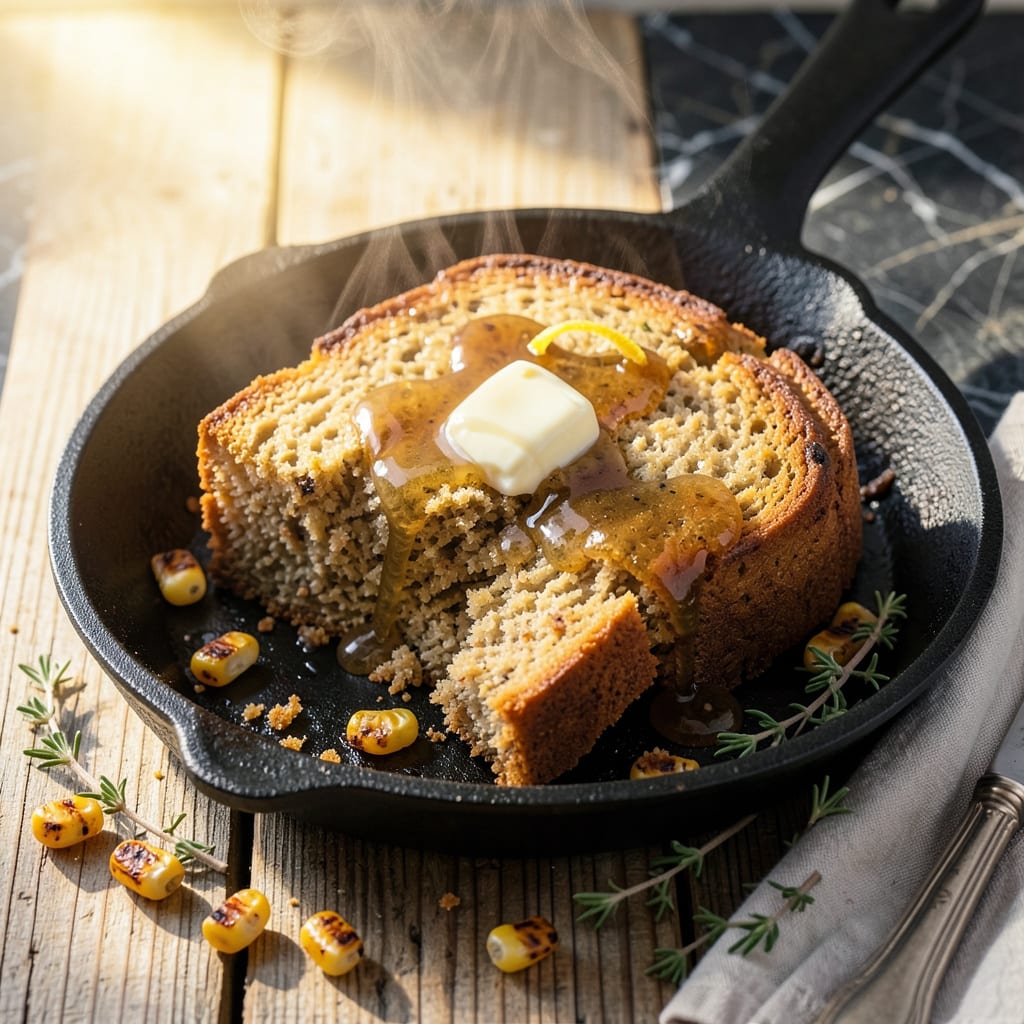
Cornbread has a slightly sweet, buttery flavor with a crumbly yet moist texture—ranging from cake-like in Northern styles to dense and savory in Southern versions. Its cornmeal base gives it a subtle earthy, grainy taste that pairs well with rich or spicy dishes.
I love how cornbread bridges comfort food and culinary tradition. 🔥 The secret lies in the cornmeal’s coarse texture—it creates that signature bite while absorbing flavors like a sponge. Northern recipes often add more sugar for a dessert-like quality, while Southern versions lean into savory depth with buttermilk or bacon fat. What’s fascinating is how the same basic ingredients can transform based on regional preferences and cooking methods.
💡 In This Article
- Flavor and Texture Variations in Cornbread Styles
- Best Dishes and Toppings to Pair with Cornbread
Flavor and Texture Variations in Cornbread Styles
The difference between Northern and Southern cornbread comes down to two key ingredients: sugar and fat. Northern recipes typically include 1/2 to 3/4 cup sugar per batch, creating a cake-like sweetness that’s almost dessert-like. Southern versions, however, use little to no sugar, letting the cornmeal’s natural earthiness shine through.
The fat source matters too—Northern bakers often use vegetable oil, while Southern recipes favor bacon drippings or lard for a richer, more savory depth. 🔥
Cornmeal grind dramatically affects texture. Fine-ground cornmeal (common in Northern styles) produces a smoother, more uniform crumb similar to cake. Medium or coarse grinds (preferred in the South) create that signature grainy bite and slightly crumbly structure.
The protein content matters too—stone-ground cornmeal retains more of the germ and hull, adding nutty complexity and a heartier texture compared to degerminated versions.
Baking method transforms the final product. Cast iron skillets (a Southern staple) conduct heat more evenly at 425°F, creating a crisp golden crust while keeping the interior moist. Oven-baked cornbread in pans tends to be lighter and more uniform.
The buttermilk factor can’t be overlooked—its acidity tenderizes the crumb while adding a subtle tang that balances sweetness in Northern recipes or enhances savory notes in Southern versions. ✨
Regional water chemistry even plays a role. Southern water tends to be softer, which can make cornbread more tender. Northern water with higher mineral content may require slight adjustments to liquid ratios.
The corn variety matters too—white cornmeal yields a milder flavor, while yellow cornmeal (more common in the South) has a slightly sweeter, more pronounced corn taste.
Here’s what most people miss: the cornmeal-to-flour ratio is the secret weapon. Traditional Southern recipes use 100% cornmeal for maximum grainy texture, while Northern versions often include up to 50% all-purpose flour for a lighter crumb.
This single factor explains why Southern cornbread can support hearty toppings like chili, while Northern versions shine with honey butter or fruit compotes. 💫
Temperature control during baking makes or breaks the texture. Southern cornbread benefits from starting in a screaming hot (450°F) cast iron skillet to develop that coveted crust, then finishing at 375°F to cook through evenly. Northern styles often bake at a steady 350°F for a more delicate, even crumb throughout.
The cooling process matters too—letting cornbread rest 10-15 minutes before slicing prevents that disappointing crumble.
The leavening agent choice reveals culinary priorities. Southern recipes often rely solely on eggs and buttermilk for lift, resulting in a denser, more rustic texture. Northern versions typically include 1-2 teaspoons baking powder for a higher rise and softer crumb.
This fundamental difference explains why Southern cornbread holds up to dipping in pot likker, while Northern styles excel as a standalone sweet treat with afternoon coffee. ⚡

Trained in classic French technique but raised on slow-cooked ribs and spicy rubs, she blends culinary skill with smoke and soul.
- Recipe for Boneless Pork Chops in Cast Iron Skillet: Sear and Baste to Juicy Perfection - October 3, 2026
- Recipe for Boneless Cross Rib Roast: Slow-Roasted Beef with Herb Crust - October 3, 2026
- Hamburgers in Sauce Recipe Crock Pot: Slow-Cooked Savory Delight - October 3, 2026