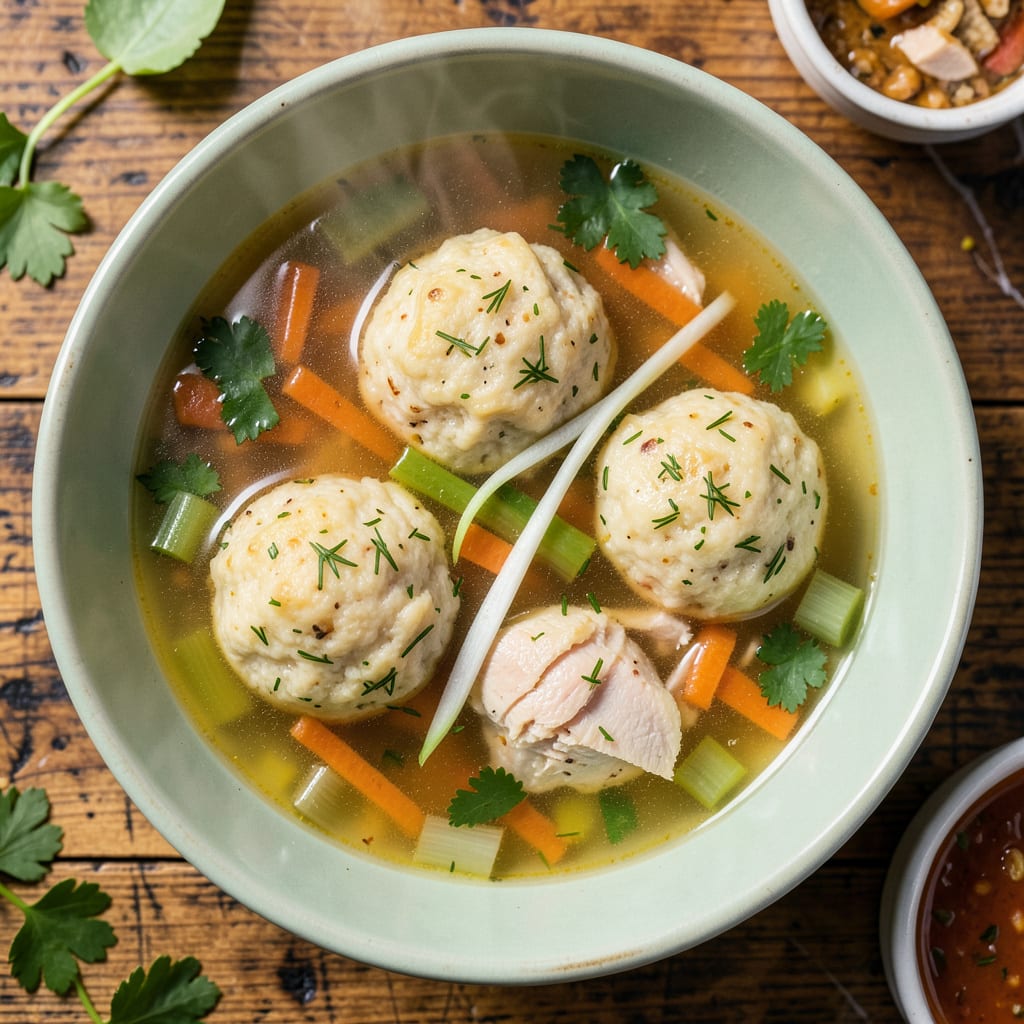
Matzo ball soup delivers a light, savory chicken broth with tender dumplings that are fluffy yet slightly dense, absorbing the broth’s rich, herby flavor. The matzo balls themselves have a mild, eggy taste with a soft, pillowy texture that melts in your mouth.
This soup hits that perfect comfort spot between delicate and hearty. The broth, often made with schmaltz (rendered chicken fat), carries a depth that’s richer than regular chicken soup but never overpowering. 💛 What’s special is how the matzo balls act like little flavor sponges—they soak up the broth’s essence while keeping their own subtle, buttery character. It’s the kind of dish that feels like a warm hug, especially when you’re craving something nostalgic and nourishing.
💡 In This Article
- Breaking Down the Classic Matzo Ball Soup Flavor Profile
- How to Enhance Matzo Ball Soup’s Taste at Home
Breaking Down the Classic Matzo Ball Soup Flavor Profile
The broth’s signature depth comes from schmaltz—rendered chicken fat that adds a velvety richness regular chicken broth lacks. When simmered with onions, carrots, and celery for 2-3 hours, the fat emulsifies slightly, creating a mouthfeel that’s lighter than cream but more substantial than plain broth.
The key is the slow extraction of collagen from chicken bones, which breaks down into gelatin and gives the liquid its silky body. 🔥
Matzo balls owe their unique texture to the 1:1 ratio of matzo meal to eggs in traditional recipes. The meal (ground matzo crackers) absorbs liquid differently than flour, creating dumplings that are tender yet hold their shape.
When cooked in the broth for 20-30 minutes, they expand slightly but remain dense enough to soak up flavors without dissolving. The egg content contributes a subtle custard-like quality that makes them feel luxurious despite their simplicity.
Herbs play a crucial role in balancing the richness. Fresh dill and parsley added in the final 10 minutes of cooking provide bright, grassy notes that cut through the fat. Unlike heavy herbs like rosemary that can dominate, these choices complement without overpowering.
The cultural genius lies in this restraint—every ingredient serves the soup’s comforting purpose without competing for attention. ✨
Temperature matters more than you’d think. Serving at 160-170°F (just below simmering) allows the schmaltz to remain slightly liquid, coating your palate with each spoonful. Too hot, and you’ll scald the delicate matzo ball structure; too cool, and the fat congeals.
This narrow window is why the soup tastes best fresh from the pot, with the matzo balls at their most absorptive and the broth’s aromatics fully volatile.
The cultural significance explains why this balance feels so satisfying. Jewish tradition values dishes that nourish without heaviness—perfect for Passover when rich foods might overwhelm. The mild eggy flavor of matzo balls mirrors the simplicity of matzo itself, while the herby broth represents spring’s renewal.
It’s comfort food with purpose, where every element has meaning beyond just taste. 💫
What surprises most first-time tasters is how the flavors evolve as you eat. The first sip delivers clean chicken essence, then the matzo ball releases its absorbed broth with each bite. The herbs emerge last, cleansing your palate between spoonfuls.
This progression is why the soup feels simultaneously simple and complex—a hallmark of truly great comfort food.

Trained in classic French technique but raised on slow-cooked ribs and spicy rubs, she blends culinary skill with smoke and soul.
- Recipe for Boneless Pork Chops in Cast Iron Skillet: Sear and Baste to Juicy Perfection - October 3, 2026
- Recipe for Boneless Cross Rib Roast: Slow-Roasted Beef with Herb Crust - October 3, 2026
- Hamburgers in Sauce Recipe Crock Pot: Slow-Cooked Savory Delight - October 3, 2026