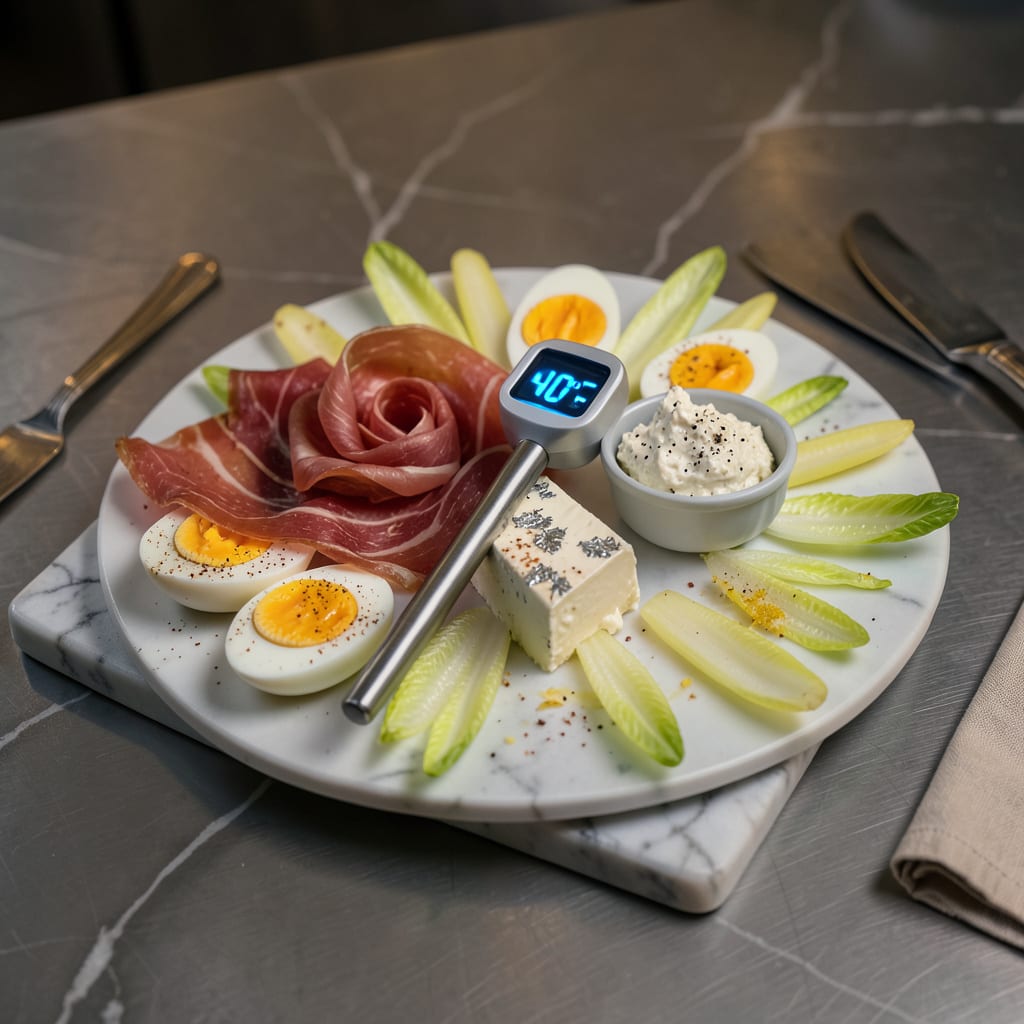
The FDA Food Code sets 41°F (5°C) as the maximum safe temperature for holding cold food. Exceeding this risks bacterial growth that can cause foodborne illness, especially in perishable items.
This isn’t just an arbitrary number—it’s the upper limit of what food safety experts call the “danger zone.” Between 41°F and 135°F, bacteria like Salmonella and E. coli multiply rapidly, doubling every 20 minutes in some cases. I’ve seen commercial kitchens get shut down for ignoring this rule, and home cooks risk the same consequences. 🔥
The science is clear: enzyme activity slows dramatically below 41°F, effectively putting bacteria into hibernation. This is why your fridge is set to 38°F-40°F—it builds in a safety buffer. Even a few degrees above the limit can turn your picnic spread into a petri dish within hours. ✨
💡 In This Article
- Why 41°F Is the Critical Limit for Cold Food Safety
- Best Practices for Monitoring and Maintaining Cold Holding Temperatures
Why 41°F Is the Critical Limit for Cold Food Safety
The 41°F threshold isn’t just a regulatory suggestion—it’s where bacterial growth hits a biological speed bump. Below this temperature, pathogenic bacteria like Listeria monocytogenes and Salmonella enter a dormant state because their cellular enzymes become too sluggish to function.
This is why food safety agencies worldwide align on this number: it’s the highest temperature where most foodborne pathogens can’t reproduce quickly enough to reach dangerous levels during typical holding periods. 🔥
Between 41°F and 135°F—what food scientists call the “danger zone”—bacterial populations can double every 20-30 minutes under ideal conditions. At 70°F, some strains of E. coli multiply four times faster than at 50°F.
The difference between 39°F and 42°F might seem trivial, but it’s enough to transform safe food into a health hazard within 2-4 hours. This is why commercial kitchens face strict penalties for violations—even small temperature abuses create exponential risks. ⚡
The science behind this involves protein folding and membrane fluidity. At temperatures above 41°F, bacterial cell membranes become more flexible, allowing faster nutrient uptake and waste removal. Their reproductive machinery kicks into high gear, while our immune systems can’t detect the invasion until it’s too late.
I’ve seen this firsthand in catering operations where a single cooler malfunction turned a $2,000 seafood platter into a biohazard in under 3 hours. ✨
Regulatory bodies didn’t pull this number out of thin air. The FDA Food Code bases its 41°F limit on decades of outbreak data and microbial growth studies. Even in European standards (which use 5°C/41°F), the margin for error is minimal. Commercial kitchens must maintain this temperature continuously, not just during inspections—because bacteria don’t take breaks.
The rule applies equally to sushi rice, deli meats, and dairy products, though some exceptions exist for certain fermented or preserved foods. 💫
What most home cooks don’t realize is that their fridge’s default 38°F setting isn’t just for food quality—it’s a critical safety buffer. When you pack that cooler for a picnic with ice melting at 32°F, you’re buying precious hours of protection.
Every degree above 41°F cuts your safe holding time in half, which is why professional caterers use multiple thermometers and backup cooling systems. The difference between a memorable meal and a food poisoning outbreak often comes down to 2-3 degrees and 30 minutes of vigilance. 🌟
Even more concerning are the “stealth dangers” like pre-cut fruits and cooked vegetables, which many assume are low-risk. These items actually support bacterial growth faster than raw meats in some cases because their damaged cell structures release nutrients that feed microbes.
A bowl of cut melon left at 45°F for 4 hours can contain more Salmonella than undercooked chicken—something I learned the hard way during my first summer working at a beachside café. 💛

Trained in classic French technique but raised on slow-cooked ribs and spicy rubs, she blends culinary skill with smoke and soul.
- Recipe for Boneless Pork Chops in Cast Iron Skillet: Sear and Baste to Juicy Perfection - October 3, 2026
- Recipe for Boneless Cross Rib Roast: Slow-Roasted Beef with Herb Crust - October 3, 2026
- Hamburgers in Sauce Recipe Crock Pot: Slow-Cooked Savory Delight - October 3, 2026