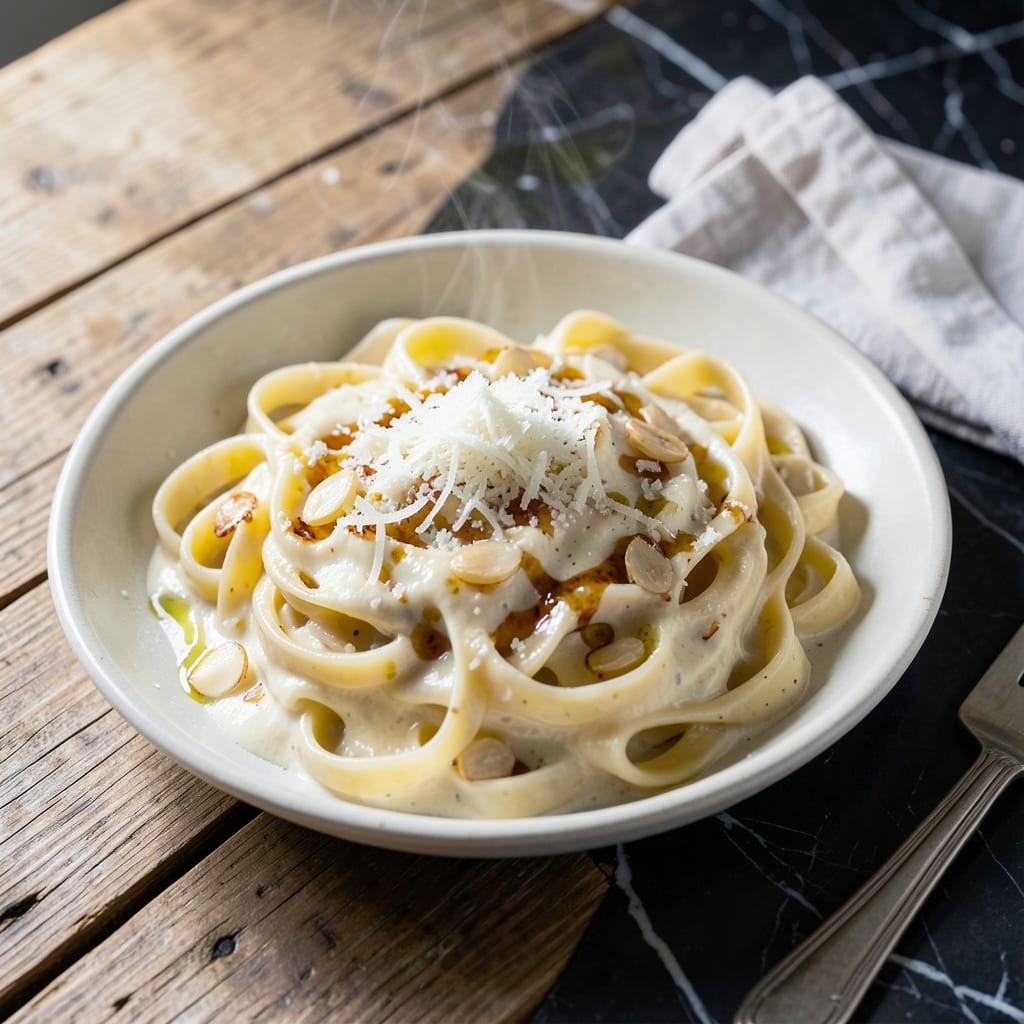
Some sauces elevate a dish from good to unforgettable, and this white wine alfredo is one of them. I developed this recipe after too many heavy, flour-thickened versions that masked the cheese’s true flavor.
The secret is a slow emulsion of butter, cream, and parmesan with white wine, creating a silky texture that clings to pasta. It’s a proven method that delivers restaurant-quality results without the heaviness of traditional roux-based sauces.
What you’ll get is a sauce with depth—bright from the wine, rich from the cream, and deeply savory from aged parmesan. It coats every noodle evenly, with no grainy texture or separated oil.
Perfect for fettuccine, but versatile enough for chicken, vegetables, or even as a dip for bread.
Ingredients for White Wine Alfredo Sauce
Eight ingredients build this silky, restaurant-quality sauce with bright wine and rich parmesan depth.
| Ingredient | Amount | Notes |
|---|---|---|
| Unsalted Butter 🧈 | ½ cup | For smooth emulsion base |
| Heavy Cream 🥛 | 1 ½ cups | Full-fat for richness |
| Parmesan Cheese 🧀 | 1 ½ cups | Freshly grated, aged |
| Dry White Wine 🍷 | ½ cup | Crisp variety like Sauvignon Blanc |
| Garlic Cloves 🧄 | 3 cloves | Minced for depth |
| Salt 🧂 | ½ tsp | Fine sea salt preferred |
| Black Pepper 🌶️ | ¼ tsp | Freshly ground preferred |
| Nutmeg 🌰 | 0.125 tsp | Freshly grated for warmth |
[recipe_ingredient_scaler]
The Parmesan is non-negotiable here. Aged Parmigiano-Reggiano (the real stuff, not the pre-grated sawdust) melts smoothly and delivers that deep umami. Whole Foods or a specialty cheese shop will have wedges. The wine should be dry and crisp—Sauvignon Blanc or Pinot Grigio work perfectly. Don’t use cooking wine; if you wouldn’t drink it, don’t cook with it. Heavy cream is key for that velvety texture, so skip the half-and-half.
No wine? Substitute chicken or vegetable broth with a splash of lemon juice for acidity. Out of Parmesan? Pecorino Romano adds a sharper bite. For a lighter version, half-and-half works in a pinch but the sauce won’t be as luscious. The nutmeg is subtle but important—freshly grated (from a whole nut) tastes far better than pre-ground. Garlic can be adjusted to taste, but don’t skip it.
Sauce keeps in the fridge for 3-4 days in an airtight container. Reheat gently over low heat, stirring constantly, to prevent separation. For longer storage, freeze for up to 3 months. Thaw overnight in the fridge before reheating.
Why You’ll Love This Recipe
- One Pot Wonder: I just melt butter, pour in wine and cream, and let the parmesan do the rest—no fancy steps.
- Rich and Tangy: The white wine cuts through the cream’s richness, and the garlic? Pure comfort in every bite.
- Pasta Night Hero: It clings to fettuccine, coats veggies, or even rescues leftover chicken. Honestly, it’s my weeknight MVP.
- Leftovers? Yes Please: It thickens up even better the next day, and I’ll be real: I’ve eaten it straight from the fridge.
Step-by-Step Instructions for White Wine Alfredo Sauce
Master this technique for a velvety sauce that clings beautifully to pasta every time.
Step 1: Build the Flavor Base with Butter and Garlic
Melt the 0.5 cup unsalted butter in a heavy saucepan over medium heat. I use a light-colored pan so I can monitor the butter’s color as it melts—this prevents browning, which would darken the final sauce.
Add the 3 cloves garlic cloves (minced) and cook for 1-2 minutes until fragrant but not browned. You want the garlic to infuse the butter with its aroma without adding bitterness. Stir constantly to prevent hot spots.
This butter-garlic foundation creates the first layer of flavor that will carry through the entire sauce. The butter should foam slightly but never turn brown at this stage.
Step 2: Deglaze with White Wine
Pour in the 0.5 cup dry white wine and increase heat to medium-high. Using a wooden spoon, scrape up any browned bits from the bottom of the pan—this incorporates maximum flavor into the sauce.
Let the wine simmer for 3-4 minutes until it reduces by about half. You’ll know it’s ready when the sharp alcohol smell dissipates and the liquid takes on a slightly syrupy consistency. This step mellows the wine’s acidity while concentrating its fruit notes.
The reduction should coat the back of a spoon but still be fluid enough to incorporate the cream smoothly in the next step.
Step 3: Create the Cream Emulsion
Reduce heat to medium-low and slowly pour in the 1.5 cups heavy cream, whisking constantly. This gradual incorporation prevents the cream from curdling when it hits the hot wine mixture.
Let the cream come to a gentle simmer, then cook for 5-7 minutes until the mixture thickens enough to coat the back of a spoon. You should see the spoon leave a clear path when you run your finger through the sauce.
This is the critical emulsion stage—constant whisking creates a stable base that will hold the cheese smoothly without breaking into a grainy texture.
Step 4: Incorporate the Parmesan
Remove the sauce from heat and let it sit for 1 minute to cool slightly. This prevents the cheese from seizing up when added. Gradually whisk in the 1.5 cups parmesan cheese, adding about ¼ cup at a time.
Wait until each addition is fully melted before adding more. The sauce will thicken significantly as the cheese incorporates. If it becomes too thick, you can whisk in a splash of the pasta cooking water later.
After all the cheese is added, return the sauce to low heat and whisk in the 0.5 tsp salt, 0.25 tsp black pepper, and 0.125 tsp nutmeg. The nutmeg adds a subtle warmth that complements the parmesan perfectly.
Step 5: Adjust Consistency and Serve
Taste and adjust seasoning if needed, though the parmesan is quite salty on its own. If the sauce is too thick, whisk in pasta water 1 tablespoon at a time until it reaches the desired consistency.
For the silkiest texture, use the sauce immediately. It will thicken as it cools, so keep it warm over very low heat if not using right away, stirring occasionally.
The finished sauce should be glossy, smooth, and ribbon-like when poured. It will cling beautifully to pasta, with enough body to coat each strand evenly without being heavy.
Pro Tips For Making White Wine Alfredo Sauce
- Reduce the Wine First: Simmer the white wine for 2-3 minutes before adding cream to cook off the alcohol and concentrate the flavor—I learned this the hard way after a batch tasted too sharp.
- Grate Fresh Parmesan: Skip the pre-shredded stuff; freshly grated Parmesan melts smoother and doesn’t turn the sauce grainy, which happened to me more times than I’d like to admit.
- Low and Slow Heat: Keep the heat at medium-low once the cream goes in to prevent curdling; after burning two batches, I finally figured out patience is the thing that matters most here.
- Use Room Temp Cream: Pull the heavy cream out of the fridge 20 minutes early so it blends seamlessly into the butter and wine—sounds weird, but it works.
Troubleshooting Great white wine alfredo sauce
Sauce Breaking or Separating
If your sauce looks curdled or oily, remove it from heat immediately. Whisk in 1-2 tablespoons of cold heavy cream or pasta water 1 tablespoon at a time until smooth. I learned this trick after my first few attempts resulted in a sad, separated mess. 💡
Grainy Texture
This usually means the cheese was added too quickly or the sauce was too hot. Next time, let the sauce cool slightly off-heat before adding the parmesan cheese, and whisk in ¼ cup at a time. Pre-grated cheese often contains anti-caking agents that prevent smooth melting.
Too Thick or Thin
For a thick sauce, whisk in pasta water 1 tablespoon at a time until it loosens. If it’s too thin, simmer for 2-3 more minutes over medium-low heat while stirring constantly. The sauce should coat the back of a spoon but still flow easily.
Overly Salty
Parmesan can be quite salty, so taste before adding the 0.5 tsp salt. If it’s too salty, balance with a pinch of sugar or a splash of cream. I often skip the added salt entirely when using aged Parmigiano-Reggiano.
Wine Flavor Too Strong
If the wine taste is overwhelming, the reduction step might have been rushed. Simmer the 0.5 cup white wine for the full 3-4 minutes until the alcohol smell is gone. A splash of cream can also help mellow sharp flavors.
Lumpy Garlic
Always mince the 3 cloves garlic finely to ensure even distribution. If you do end up with lumps, strain the sauce through a fine-mesh sieve before adding the cheese. This ensures a silky finish every time.
Nutrition Facts
Frequently Asked Questions
Can I use a different type of wine?
A crisp dry white like Sauvignon Blanc works best. Avoid sweet wines or cooking wine, as they can make the sauce taste off. If avoiding alcohol, substitute chicken broth with a splash of lemon juice for acidity.
What if my sauce is too thick?
Whisk in pasta water 1 tablespoon at a time until it reaches the desired consistency. For a thinner sauce, simmer for 2-3 minutes over medium-low heat while stirring.
Can I make this ahead of time?
Yes! The sauce keeps in the fridge for 3-4 days in an airtight container. Reheat gently over low heat, stirring constantly, to prevent separation.
Why does my sauce taste grainy?
This usually happens if the cheese is added too quickly or the sauce is too hot. Let it cool slightly off-heat before adding parmesan, and whisk in ¼ cup at a time.

Trained in classic French technique but raised on slow-cooked ribs and spicy rubs, she blends culinary skill with smoke and soul.
- Recipe for Boneless Pork Chops in Cast Iron Skillet: Sear and Baste to Juicy Perfection - October 3, 2026
- Recipe for Boneless Cross Rib Roast: Slow-Roasted Beef with Herb Crust - October 3, 2026
- Hamburgers in Sauce Recipe Crock Pot: Slow-Cooked Savory Delight - October 3, 2026