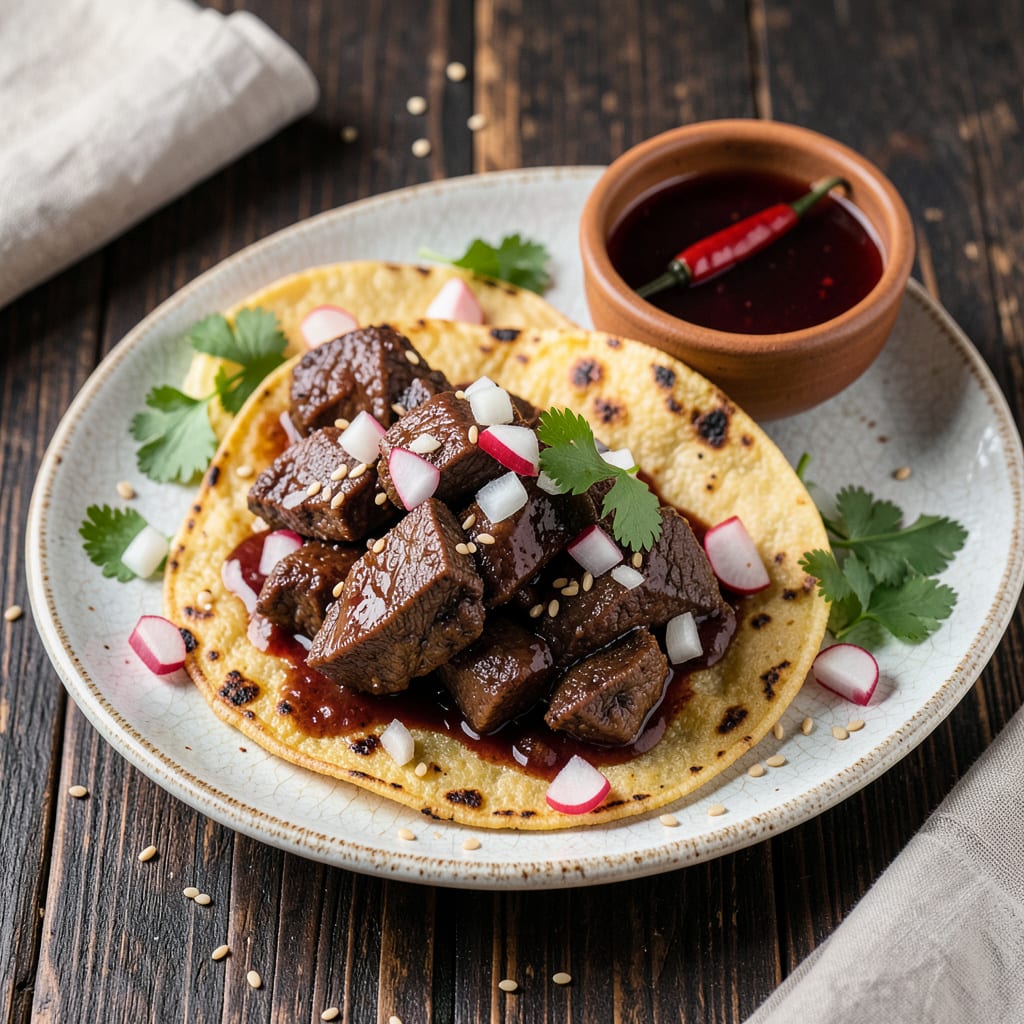
Soggy birria tacos usually happen from excess moisture in the filling, improper frying technique, or not draining the tortillas well after dipping. Overcrowding the pan or using cold oil also causes them to steam instead of crisp.
I’ve seen this happen countless times in my kitchen—what seems like a small oversight can completely change your taco’s texture. The consommé soaking process is where most people go wrong. When tortillas absorb too much liquid, their starch structure breaks down, making them vulnerable to falling apart during frying. 🔥
Temperature plays a bigger role than most realize. Oil that’s not hot enough creates a steaming effect rather than that coveted crispy sear. And here’s a pro tip: even after dipping, tortillas need a quick rest on a rack to let excess liquid drip away before hitting the pan. This simple step makes all the difference between soggy and spectacular.
💡 In This Article
- What Causes Birria Tacos to Become Soggy
- Pro Techniques for Crispy Birria Tacos Every Time
What Causes Birria Tacos to Become Soggy
The moment corn tortillas hit that rich consommé, their starch molecules begin absorbing liquid like a sponge. Corn masa contains amylopectin that gelatinizes when exposed to moisture, transforming the tortilla’s structure from firm to pliable.
🔥 The longer they soak, the more their cell walls break down—this is why a 3-5 second dip is ideal, while anything over 10 seconds risks complete structural collapse during frying.
Oil temperature creates a domino effect. At the perfect 350-375°F range, water in the tortilla instantly vaporizes, creating that signature crispy crust. But drop below 325°F, and you’re essentially poaching the taco—the moisture has nowhere to escape, turning your shell into a steamed pouch.
I’ve tested this with an infrared thermometer: tacos fried at 375°F develop a golden crust in 45-60 seconds, while those at 300°F take twice as long and emerge rubbery.
The filling acts like a moisture bomb. Birria meat simmered for 3-4 hours retains about 60% of its original liquid even after draining. When you pile this into your taco, the residual juices seep into the fried shell, softening it from the inside out. The solution?
Let your drained meat rest in a colander for 10-15 minutes before using—this extra step removes surprising amounts of excess liquid.
Here’s what most home cooks miss: the steam factor. When you crowd tacos in the pan, they create a microclimate of trapped steam. Each taco needs about 2 inches of space around it for proper airflow. Without this, the bottoms steam rather than fry, and the tops get soggy from condensed moisture dripping back down.
I use a 12-inch skillet for just 3-4 tacos at a time to maintain perfect crispness.
The tortilla’s post-dip drainage is critical. After removing from consommé, tortillas should rest on a wire rack for 20-30 seconds before frying. This allows surface liquid to drip away while the interior moisture redistributes.
Skip this step, and you’re essentially frying a wet tortilla—the oil can’t create that crisp barrier because it’s busy trying to evaporate the surface water first.
Even the type of oil matters. Refined avocado oil (520°F smoke point) maintains stable heat better than vegetable oil (400°F smoke point), preventing temperature drops when adding tacos. When oil temp fluctuates, you get inconsistent cooking—some spots crisp while others absorb oil and turn greasy.
A candy thermometer is my secret weapon for maintaining that golden 360°F sweet spot throughout batch cooking. ✨

Trained in classic French technique but raised on slow-cooked ribs and spicy rubs, she blends culinary skill with smoke and soul.
- Recipe for Boneless Pork Chops in Cast Iron Skillet: Sear and Baste to Juicy Perfection - October 3, 2026
- Recipe for Boneless Cross Rib Roast: Slow-Roasted Beef with Herb Crust - October 3, 2026
- Hamburgers in Sauce Recipe Crock Pot: Slow-Cooked Savory Delight - October 3, 2026