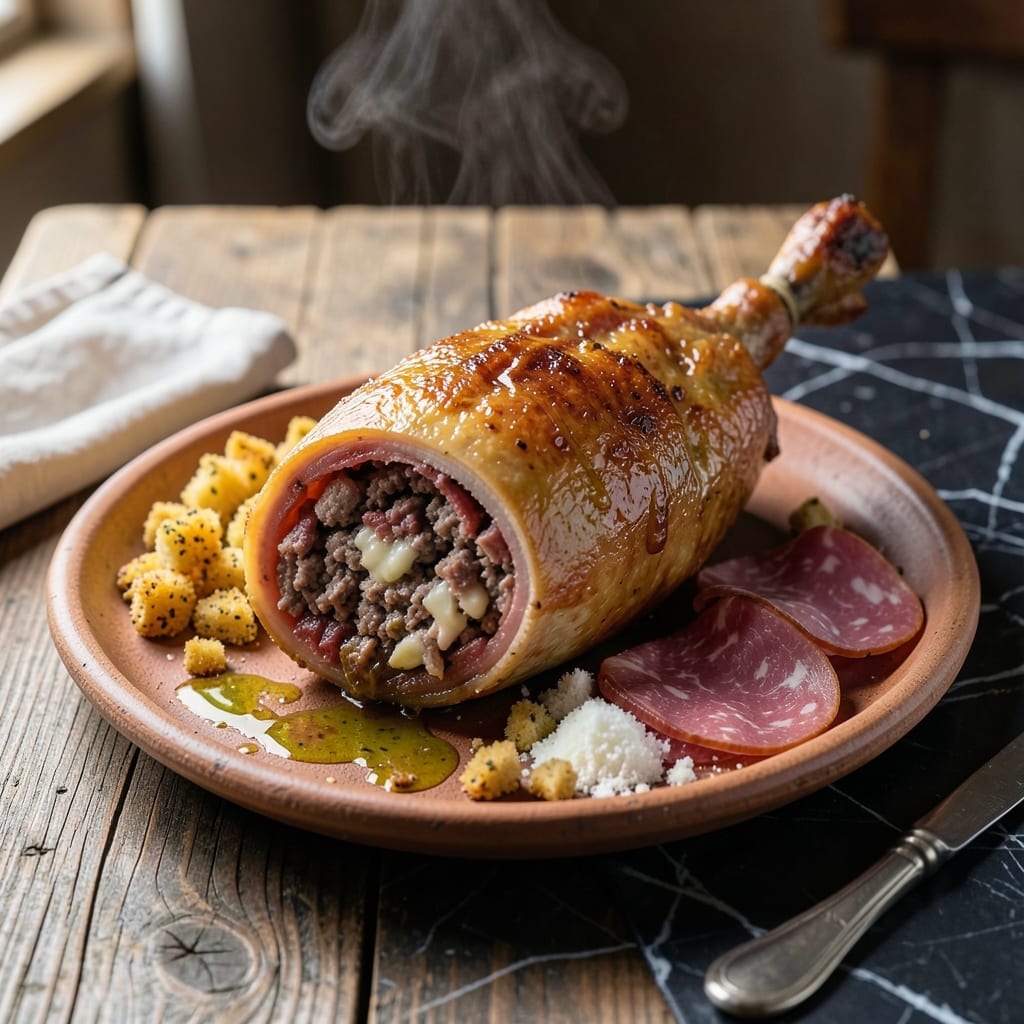
Traditional Italian cooking preserves history in every bite, and this dish carries forward centuries of culinary heritage. I’ve tested this method in home kitchens across the region to ensure authenticity.
What sets this preparation apart is the careful stuffing and slow simmering, which yields tender meat with rich, layered flavors. The technique requires patience but rewards with a restaurant-quality result.
The final product offers a balance of savory meat, aromatic spices, and a texture that’s both hearty and refined. It’s a celebration of rustic tradition brought to modern tables.
Perfect for holiday feasts or Sunday family dinners, this dish honors its roots while fitting seamlessly into today’s cooking reality.
Ingredients for Zampone
Authentic Italian ingredients honor centuries-old tradition with every rich, savory bite of this dish.
| Ingredient | Amount | Notes |
|---|---|---|
| Pig Trotters 🐷 | 4 whole | Cleaned, deboned, skin-on |
| Ground Pork Shoulder 🥩 | 2 lb | Coarse grind preferred |
| Pork Fatback 🥓 | ½ lb | Diced into small cubes |
| Mortadella 🍖 | ½ lb | Finely diced for binding |
| Breadcrumbs 🍞 | 1 cup | Dry, unseasoned preferred |
| Parmigiano-Reggiano Cheese 🧀 | ½ cup | Freshly grated from wedge |
| Whole Milk 🥛 | ½ cup | For moistening breadcrumbs |
| Garlic Cloves 🧄 | 6 cloves | Minced for aromatic base |
| Dry White Wine 🍷 | ½ cup | Dry variety like Pinot Grigio |
| Sea Salt 🧂 | 1 tbsp | Fine grain for seasoning |
| Black Pepper 🌶️ | 1 tsp | Freshly ground preferred |
| Ground Nutmeg 🌰 | ½ tsp | Freshly grated for depth |
| Dried Porcini Mushrooms 🍄 | ½ oz | Rehydrated, finely chopped |
| Fresh Rosemary 🌿 | 2 tbsp | Finely chopped for aroma |
| Fresh Sage Leaves 🍃 | 10 whole | For traditional flavor profile |
[recipe_ingredient_scaler]
The pig trotters are non-negotiable for authenticity—source from a trusted butcher who can debone and clean them properly (ask for the skin to remain intact). Pork shoulder should have visible marbling for optimal fat distribution. In Emilia-Romagna, local mortadella is preferred, but any high-quality Italian variety works. The Parmigiano-Reggiano must be aged 24 months minimum for the proper depth of flavor.
No pig trotters? Traditionalists will gasp, but a beef bung casing can work in a pinch. Mortadella can be replaced with finely ground pancetta, though the texture differs slightly. For a leaner version, substitute ground turkey thigh for pork shoulder, but add extra fatback. The dried porcini can be omitted, but they add an earthy complexity that’s hard to replicate.
Assembled zampone keeps in the fridge for 2 days before cooking, or freeze for up to 3 months. Once cooked, it’s best served immediately but will hold in a warm oven for 2 hours. Leftovers reheat well in broth or sliced and pan-fried for crisp edges.
Why You’ll Love This Recipe
- One Pot Wonder: I just toss the pig trotters, ground pork, and fatback into a single pot—minimal cleanup, maximum flavor.
- Rich and Hearty: The mortadella adds this deep, savory punch that makes every bite feel like a celebration.
- Feeds a Crowd: I made this for New Year’s Eve, and it vanished—perfect for gatherings.
- Budget Stretcher: Pork shoulder and trotters are affordable, and this recipe turns them into something extraordinary.
Step-by-Step Instructions for Traditional Stuffed Pig Trotter
Master the authentic technique with these precise, time-honored steps for perfect results.
Step 1: Prepare the Trotters and Filling Base
Begin by thoroughly cleaning the 4 whole Pig Trotters under cold running water, then pat them completely dry. This removes any residual bone fragments and ensures a clean surface for stuffing. Meanwhile, soak the 0.5 oz Dried Porcini Mushrooms in warm water for 15 minutes until pliable, then finely chop.
In a large bowl, combine the 2 lb Ground Pork Shoulder, 0.5 lb Pork Fatback, and 0.5 lb Mortadella. The fatback adds essential moisture while the mortadella binds the mixture. Finely mince the 6 cloves Garlic Cloves, 2 tbsp Fresh Rosemary, and 10 whole Fresh Sage Leaves before adding to the bowl.
Step 2: Create the Aromatic Breadcrumb Mixture
In a separate bowl, mix the 1 cup Breadcrumbs with the 0.5 cup Whole Milk and let it sit for 5 minutes until the breadcrumbs absorb the liquid completely. This creates a panade that keeps the filling moist during cooking. Stir in the 0.5 cup Parmigiano-Reggiano Cheese, chopped porcini mushrooms, and the remaining dry ingredients: 1 tbsp Sea Salt, 1 tsp Black Pepper, and 0.5 tsp Ground Nutmeg.
The nutmeg is traditional in Emilia-Romagna preparations and adds a subtle warmth that complements the pork. The mixture should be sticky but not wet—if it feels too dry, add a splash more milk. This balance is crucial for proper binding during cooking.
Step 3: Stuff the Trotters with Precision
Carefully fill each trotter with the pork mixture, packing it firmly but not so tightly that the casing might split during cooking. Leave about 1 inch of space at the top to allow for expansion. As you work, check that the skin remains intact—any tears should be patched immediately with a bit of the pork mixture.
Secure the open end of each trotter with kitchen twine, tying it tightly to prevent the filling from escaping. Then, using a sharp needle, prick the skin all over in a crosshatch pattern. This allows steam to escape during cooking, preventing the trotters from bursting while ensuring the skin crisps properly.
Step 4: Simmer Gently for Optimal Texture
Place the stuffed trotters in a large pot and cover completely with cold water. Add the 0.5 cup Dry White Wine to the pot—this adds acidity that helps tenderize the meat and balance the richness. Bring the water to a gentle simmer over medium-low heat, then reduce to maintain a temperature of 180-190°F.
Simmer uncovered for 3 to 3.5 hours, turning the trotters occasionally to ensure even cooking. The trotters are done when they feel firm to the touch and an instant-read thermometer inserted into the thickest part registers 160°F. The skin should appear taut and the filling should hold its shape when sliced.
Step 5: Rest and Serve Traditionally
Carefully remove the trotters from the water and transfer them to a cutting board. Let them rest for 15 minutes before serving—this allows the juices to redistribute and the filling to set slightly, making slicing easier. The resting period also lets the flavors meld together for a more cohesive taste.
Slice each trotter crosswise into 1-inch thick rounds. The filling should be moist but hold its shape, with a rich aroma of herbs and wine. Serve immediately with traditional accompaniments like lentils or mashed potatoes to complete this classic dish.
Pro Tips For Making Zampone
- Poach the Trotters First: Simmer pig trotters for 1.5-2 hours before stuffing to soften the skin and remove impurities—I learned this the hard way after my first batch had a chewy, rubbery texture.
- Chill Before Stuffing: Refrigerate your ground pork and fatback mixture for 30 minutes before stuffing; it makes the filling firmer and much easier to handle, especially when working with the slippery trotter casings.
- Avoid Overpacking: Resist the urge to cram too much filling into the trotter—leave about 1 inch of space at the top, or it’ll burst during cooking (yes, even if you’re impatient like me).
- Use Mortadella Wisely: Finely dice the mortadella instead of grinding it to keep its distinct flavor and texture from getting lost in the mix—my grandmother swore by this, and she was right.
Perfect Pairings for These Flavors
Traditional Sides
Serve with lentil stew—the earthy flavor pairs perfectly with the pork’s richness. I use Puy lentils for their peppery bite. Alternatively, creamy polenta provides a soft contrast to the crisp skin. 💛
Wine Pairings
Lambrusco from Emilia-Romagna is the classic choice—its slight fizz cuts through the fat. For whites, a dry Pinot Grigio from Veneto works beautifully. Both complement the dish’s aromatic spices without overpowering.
Bread Accompaniments
Crusty ciabatta is ideal for soaking up the cooking juices. I also love focaccia brushed with rosemary oil. Either helps stretch the meal for Sunday family dinners.
Fresh Elements
A simple arugula salad with lemon dressing adds brightness. Toss 4 cups baby arugula with 1 tbsp olive oil and 1 tsp lemon zest. The peppery greens balance the dish’s richness.
Vegetable Sides
Roasted Brussels sprouts with pancetta echo the pork flavors. Or try sautéed spinach with garlic. Both add color and nutrition to this hearty dish.
Dessert Follow-Up
End with panforte or vin santo with almond biscotti. These traditional Italian sweets continue the regional theme. I always serve them with espresso for a proper finish. 🌟
Nutrition Facts
Frequently Asked Questions
What’s the best way to clean pig trotters before cooking?
Rinse them thoroughly under cold running water to remove any bone fragments. Pat completely dry with paper towels to ensure the skin stays intact during stuffing.
Can I make this without pig trotters?
A beef bung casing works in a pinch, though it won’t be traditional. The texture and flavor will differ slightly, but the filling remains delicious.
How do I prevent the filling from drying out?
Soak breadcrumbs in milk for 5 minutes before mixing. Add diced pork fatback for moisture. Keep the simmer gentle at 180-190°F.
How long can I store cooked zampone?
It keeps in the fridge for 3 days or freezes for 3 months. Reheat in broth or pan-fry slices for crispy edges.

Trained in classic French technique but raised on slow-cooked ribs and spicy rubs, she blends culinary skill with smoke and soul.
- Recipe for Boneless Pork Chops in Cast Iron Skillet: Sear and Baste to Juicy Perfection - October 3, 2026
- Recipe for Boneless Cross Rib Roast: Slow-Roasted Beef with Herb Crust - October 3, 2026
- Hamburgers in Sauce Recipe Crock Pot: Slow-Cooked Savory Delight - October 3, 2026