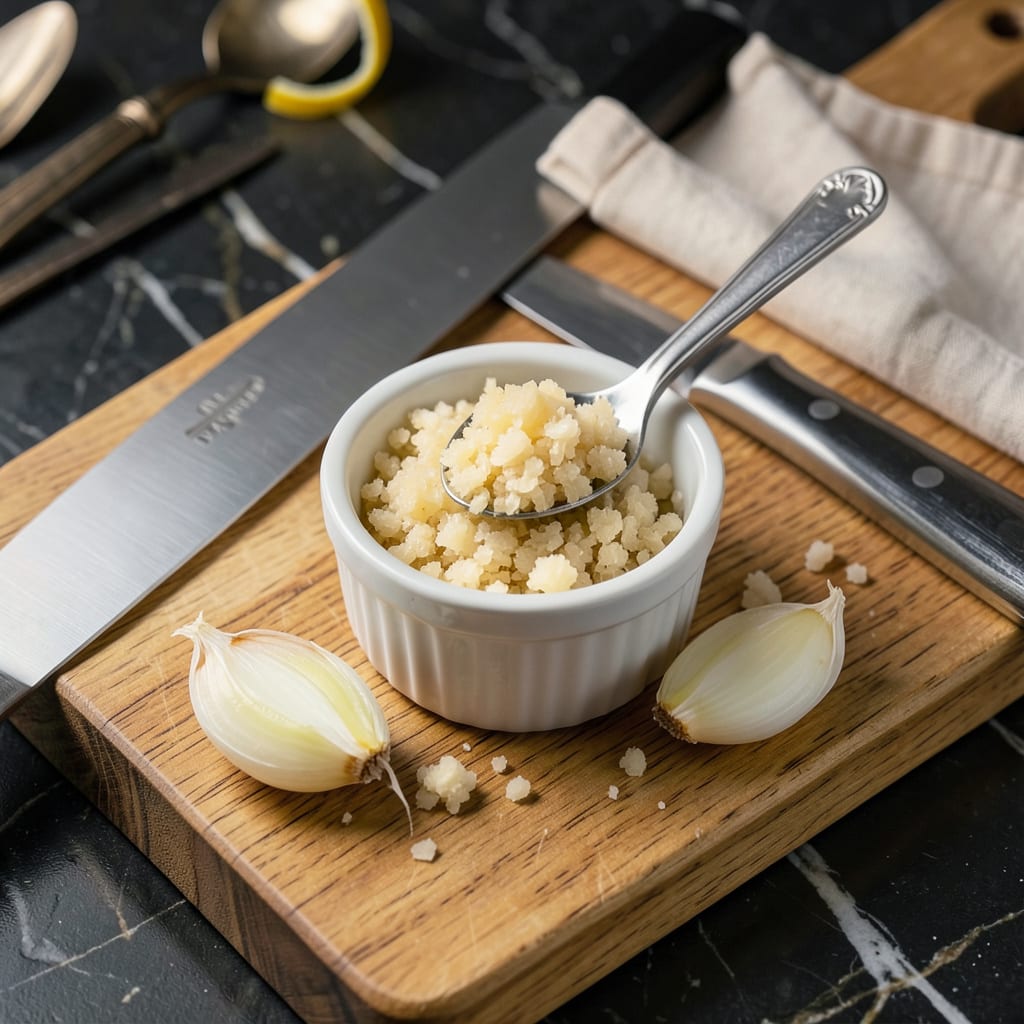
Two medium cloves of garlic typically equal about 2 teaspoons when minced, which is roughly ⅔ of a tablespoon. For precise measurements, use 3 cloves per tablespoon as a general rule.
I’ve found this conversion particularly useful when scaling recipes up or down. The key here is the mincing process—finely chopped garlic packs more tightly into a measuring spoon than roughly chopped. 🔥 For example, if you’re making a marinade that calls for 1 tablespoon of minced garlic, you’d need about 4-5 medium cloves to hit that mark. Always remember that garlic intensity varies too: fresh cloves are more potent than pre-minced versions from jars.
💡 In This Article
- How Garlic Clove Size Affects Tablespoon Measurements
- Practical Garlic Conversion Tips for Recipes
How Garlic Clove Size Affects Tablespoon Measurements
Garlic cloves vary dramatically in size, which directly impacts volume measurements. A single head of garlic can contain anywhere from 4 to 20 cloves, with individual cloves ranging from the size of a pea to nearly the size of a walnut.
🔥 The average medium clove (about 1 inch long) yields roughly 1 teaspoon when minced, but I’ve seen jumbo cloves produce nearly 1.5 teaspoons of minced garlic. This variation explains why recipes often specify “medium cloves” as the standard reference point.
The moisture content in garlic changes with age and storage conditions, which alters how it breaks down when minced. Fresh garlic contains about 60-65% water, while older cloves lose moisture and become more concentrated. When you mince dried-out cloves, you’ll get less volume because the cells don’t release as much liquid.
I’ve noticed that garlic stored in humid conditions (like my coastal kitchen) maintains higher moisture levels, resulting in slightly more minced volume per clove.
Your mincing technique plays a surprising role too. Finely minced garlic (almost paste-like) packs more tightly into a measuring spoon than coarsely chopped pieces. Using a garlic press extracts even more liquid from the cells, which can increase the volume by up to 20% compared to knife-mincing.
✨ For example, when I press garlic for my famous BBQ rub, I need fewer cloves to reach 1 tablespoon than when I hand-chop for a stir-fry.
Visual comparisons help put this into perspective. Imagine three cloves side by side: a small clove (pea-sized) might yield ½ teaspoon minced, a medium clove (dime-sized) gives 1 teaspoon, and a large clove (quarter-sized) can produce 1.5-2 teaspoons.
This is why professional recipes often specify weight measurements (5g per medium clove) rather than volume—it eliminates the size variable entirely.
The freshness factor can’t be ignored either. Newly harvested garlic has plumper cloves with higher water content, while storage-dried garlic becomes more potent and dense. I’ve found that garlic from my summer harvest produces about 10% more minced volume than the same-sized cloves from winter storage.
This concentration difference explains why some recipes might taste stronger even when using the same number of cloves.
For the most consistent results, I recommend this approach: mince your garlic first, then measure. This accounts for all variables—size, moisture, and technique. When testing recipes for my cooking classes, I always use this method to ensure flavor balance, especially in delicate sauces where garlic intensity can make or break the dish. 💫

Trained in classic French technique but raised on slow-cooked ribs and spicy rubs, she blends culinary skill with smoke and soul.
- Recipe for Boneless Pork Chops in Cast Iron Skillet: Sear and Baste to Juicy Perfection - October 3, 2026
- Recipe for Boneless Cross Rib Roast: Slow-Roasted Beef with Herb Crust - October 3, 2026
- Hamburgers in Sauce Recipe Crock Pot: Slow-Cooked Savory Delight - October 3, 2026