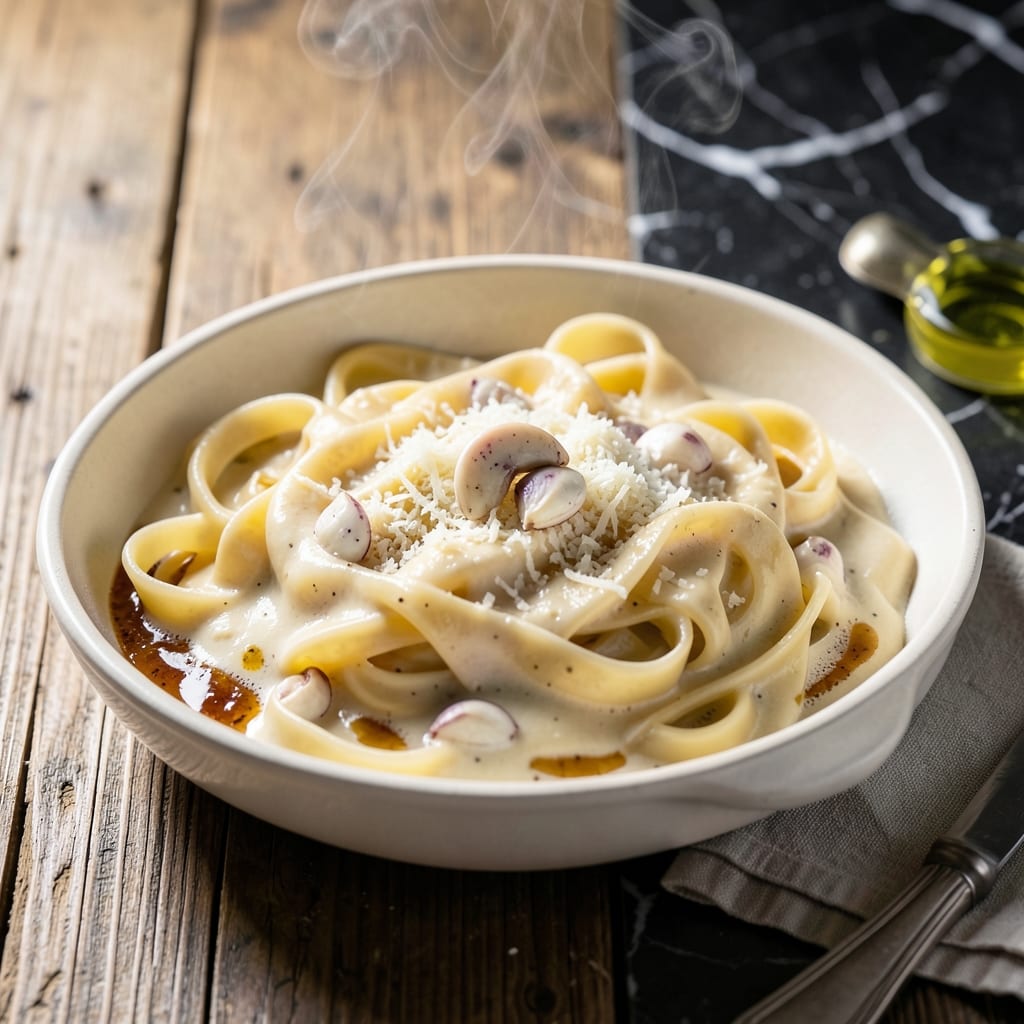
This alfredo sauce elevates classic pasta with a sophisticated white wine twist. The wine adds depth while maintaining the signature creamy texture.
I developed this version to balance richness with subtle acidity. A splash of dry white wine brightens the heavy cream base, creating a more complex flavor profile.
You’ll achieve a silky parmesan sauce that clings beautifully to pasta. The wine reduces slightly during cooking, leaving behind its essence without overpowering the dish.
The result is a restaurant-quality sauce ready in 20 minutes. Perfect for fettuccine, gnocchi, or as a decadent pizza base.
Ingredients for Alfredo Sauce Recipe with Wine
Nine ingredients transform into silky, restaurant-quality sauce with subtle wine depth.
| Ingredient | Amount | Notes |
|---|---|---|
| Heavy Cream 🥛 | 2 cups | Full-fat for creaminess |
| Unsalted Butter 🧈 | ½ cup | Cubed for even melting |
| Parmesan Cheese 🧀 | 1 ½ cups | Freshly grated from block |
| Dry White Wine 🍷 | ½ cup | Sauvignon Blanc or Pinot Grigio |
| Garlic Cloves 🧄 | 4 cloves | Minced for even distribution |
| Kosher Salt 🧂 | 1 tsp | Diamond Crystal preferred |
| Freshly Ground Black Pepper 🌶️ | ½ tsp | Adjust to taste |
| Fresh Nutmeg 🌰 | 0.125 tsp | Grated as needed |
| All-Purpose Flour 🌾 | 2 tbsp | For thickening sauce |
[recipe_ingredient_scaler]
The Parmesan is non-negotiable here. Grab a wedge of Parmigiano-Reggiano from the specialty cheese counter—pre-grated melts unevenly and lacks that sharp, nutty complexity. Whole Foods or Trader Joe’s have reliable options. Fresh nutmeg makes a surprising difference; those little jars of pre-ground lose potency fast. The wine should be something you’d drink—Sauvignon Blanc or Pinot Grigio work beautifully.
No wine? Substitute chicken broth with a squeeze of lemon for acidity. Out of heavy cream? Half-and-half plus a pat of butter gets close. Parmesan can’t be skipped, but Pecorino Romano adds a sharper edge if you want to experiment. The flour is just for thickening—cornstarch works too at half the amount. Skip the nutmeg if you must, but it adds that subtle warmth.
Sauce tightens as it cools—loosen with a splash of warm cream if needed. Keeps 4-5 days in the fridge, though the wine flavor mellows over time. Freeze for 3 months (the texture may separate slightly, but a good whisk brings it back).
Why You’ll Love This Recipe
- Five Ingredients: I love that I only need to grab heavy cream, butter, parmesan, white wine, and garlic to make this happen.
- Rich & Complex: The wine cuts through the cream and parmesan for a deeper flavor than plain alfredo.
- Date Night Ready: I’ve served this over fettuccine for a cozy dinner in, and it feels fancy without the fuss.
- Fridge Friendly: Leftovers keep beautifully, so I double the batch and use it for pasta, dips, or veggie topping all week.
Step-by-Step Instructions for Alfredo Sauce With Wine
This method transforms simple ingredients into a restaurant-quality sauce with rich, velvety texture.
Step 1: Create a Roux Base for Stability
Melt the 0.5 cup Unsalted Butter in a heavy saucepan over medium heat. I always use a light-colored pan so I can see the butter change color and avoid burning. Once the foaming subsides, add the 2 tbsp All-Purpose Flour and whisk constantly for 2 minutes.
You want the mixture to turn a pale golden color and smell faintly nutty. This roux acts as the thickener for your sauce and prevents the cheese from separating. Keep the heat steady—too high and the flour will brown too quickly, too low and it won’t cook enough to remove the raw taste.
Step 2: Deglaze with Wine for Depth
Slowly pour in the 0.5 cup Dry White Wine while whisking continuously. The mixture will thicken dramatically at first, then loosen as the wine incorporates. I prefer Sauvignon Blanc for its crisp acidity that cuts through the richness.
Let it simmer for 3-4 minutes until the raw alcohol smell dissipates and the mixture reduces by about a third. You’ll notice the edges looking slightly glossy—that’s your cue. This step is crucial for building complex flavor layers beyond just cream and cheese.
Step 3: Infuse with Garlic and Cream
Add the 4 cloves Garlic Cloves (minced) and cook for 30 seconds until fragrant but not browned. Then slowly whisk in the 2 cups Heavy Cream. I pour it in a thin stream while whisking to prevent lumps from forming.
Increase heat to medium-high and bring to a gentle simmer. Let it cook for 5 minutes, stirring occasionally, until the sauce thickens enough to coat the back of a spoon. You’ll see it transform from thin liquid to a velvety base that clings to your whisk.
Step 4: Incorporate Cheese and Seasonings
Reduce heat to low and gradually add the 1.5 cups Parmesan Cheese, whisking constantly until each addition is fully melted. I always use freshly grated from a block—pre-shredded contains anti-caking agents that prevent smooth melting.
Once the cheese is incorporated, stir in the 1 tsp Kosher Salt, 0.5 tsp Freshly Ground Black Pepper, and 0.125 tsp Fresh Nutmeg. The nutmeg adds a subtle warmth that complements the wine beautifully. Taste and adjust seasoning if needed—the Parmesan’s saltiness can vary by brand.
Step 5: Finish and Serve Immediately
Remove from heat and let the sauce sit for 1-2 minutes. It will thicken slightly as it cools. If it becomes too thick, whisk in a splash of pasta water or warm milk to reach your desired consistency.
Use immediately over pasta, as the sauce will continue to thicken as it cools. For the silkiest texture, toss with freshly cooked pasta rather than pouring it on top. The starch from the pasta helps the sauce cling perfectly to every strand.
Pro Tips For Making Alfredo Sauce Recipe With Wine
- Reduce the Wine First: Simmer the white wine for 2-3 minutes before adding cream—this burns off the harsh alcohol and leaves a cleaner, richer flavor in your sauce.
- Grate Fresh Parmesan: Skip the pre-shredded stuff; freshly grated Parmesan melts smoother and doesn’t clump like the store-bought version.
- Watch the Heat: Keep the flame at medium-low once the cream goes in, or you’ll risk curdling the sauce. I learned this the hard way after two split batches.
- Use Room-Temp Cream: Pull your heavy cream out of the fridge 15 minutes early—it blends into the sauce faster and reduces the chance of separating.
Regional Styles of This Dish
Italian Classic Style
In Rome, I learned to use dry Italian white wine like Vernaccia or Frascati for a brighter, more aromatic sauce. The key is reducing the wine by half before adding cream. This intensifies the grape notes while maintaining the sauce’s signature silkiness. 🌟
French Approach
The French prefer a splash of Chablis or Sancerre for their version, often adding a touch of Dijon mustard with the cream. This creates a sharper, more sophisticated flavor profile that pairs wonderfully with chicken or seafood pasta.
American Adaptation
In the US, I often see California Chardonnay used for a buttery, fuller-bodied sauce. The oak notes complement the rich cream base beautifully. Many home cooks also add a pinch of paprika for color and subtle warmth.
Northern Italian Variation
In Piedmont, they sometimes incorporate 1 tbsp mascarpone with the Parmesan for extra creaminess. The wine used here tends to be Gavi or Cortese, which are local dry whites that add mineral notes to the sauce.
Southern Italian Twist
Down in Sicily, I’ve seen versions with Marsala wine instead of dry white. This adds a deeper, slightly sweet dimension. They often finish with toasted breadcrumbs for texture contrast. 💫
Modern Fusion Style
For a contemporary approach, try using Viognier wine with its floral notes. Some chefs even infuse the cream with lemongrass or kaffir lime leaves before adding to the sauce base.
Nutrition Facts
Frequently Asked Questions
What kind of wine works best?
Use a dry white like Sauvignon Blanc or Pinot Grigio. These add bright acidity without overpowering the creamy base.
Can I make this without alcohol?
Substitute chicken broth with lemon juice for similar acidity. The flavor will be milder but still delicious.
Why does my sauce turn grainy?
This happens when cheese melts unevenly. Always use freshly grated Parmesan and add it slowly while whisking constantly on low heat.
How long can I store leftovers?
Keep in an airtight container in the fridge for 4-5 days. Reheat gently with a splash of cream to restore smoothness.

Trained in classic French technique but raised on slow-cooked ribs and spicy rubs, she blends culinary skill with smoke and soul.
- Recipe for Boneless Pork Chops in Cast Iron Skillet: Sear and Baste to Juicy Perfection - October 3, 2026
- Recipe for Boneless Cross Rib Roast: Slow-Roasted Beef with Herb Crust - October 3, 2026
- Hamburgers in Sauce Recipe Crock Pot: Slow-Cooked Savory Delight - October 3, 2026