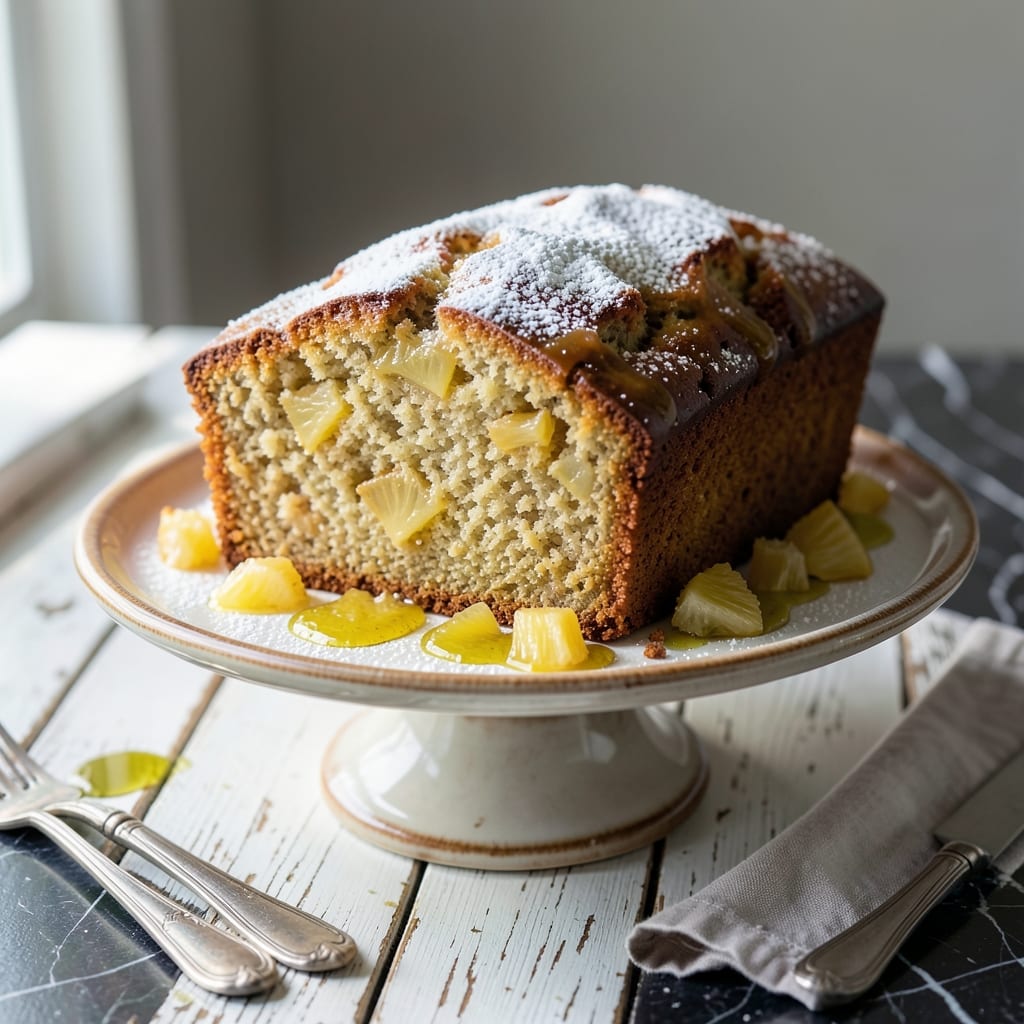
This cake captures the essence of Southern baking tradition with its rich, buttery base and unexpected pineapple depth. The fruit caramelizes during baking, creating pockets of sweetness that elevate every bite.
What sets this apart is the method: creaming butter and sugar for 5 minutes ensures that signature moist crumb that pound cakes are famous for. The pineapple adds natural sweetness without overpowering the classic butter-sugar foundation.
You’ll end up with a dense, tender cake that stays fresh for days. The caramelized pineapple bits create a subtle jammy layer that makes this version unforgettable.
Serve at room temperature with a dusting of powdered sugar or a dollop of whipped cream. This is Southern cooking at its finest.
Ingredients for Southern Living Pineapple Pound Cake
Rich butter, sugar, and pineapple create this Southern classic with signature moist crumb and caramelized depth.
| Ingredient | Amount | Notes |
|---|---|---|
| Unsalted Butter 🧈 | 2 cups | Room temperature, high-fat European style preferred |
| Granulated Sugar 🍚 | 3 cups | Fine grain for even distribution |
| Large Eggs 🥚 | 7 whole | Room temperature for better emulsification |
| All-Purpose Flour 🌾 | 3 ½ cups | Sifted for lighter texture |
| Crushed Pineapple 🍍 | 1 cup | Undrained, with juice for moisture |
| Baking Powder 🧂 | 1 tsp | Fresh for optimal rise |
| Salt 🧂 | 1 tsp | Fine sea salt for balance |
| Vanilla Extract 🌿 | 2 tsp | Pure extract for authentic flavor |
| Heavy Cream 🥛 | ½ cup | Full-fat for richness |
| Powdered Sugar 🍬 | ½ cup | For dusting finished cake |
[recipe_ingredient_scaler]
The butter is non-negotiable here. European-style with 82% fat (like Plugrá or Kerrygold) gives you that tender, dense crumb pound cakes are famous for. Supermarkets carry it near the specialty cheeses—worth the splurge. The pineapple must be crushed with juice; Dole or Del Monte cans work perfectly. Don’t substitute fresh pineapple; it lacks the concentrated sweetness that caramelizes during baking.
No cake flour? All-purpose works fine—just be sure to sift it first. Out of heavy cream? Whole milk with a tablespoon of melted butter per half-cup does the trick. Vanilla extract should be pure, not imitation. If you’re in a pinch, bourbon adds a nice depth (use 1 tablespoon in place of 1 teaspoon vanilla). The eggs must be room temperature to emulsify properly with the butter and sugar.
This cake stays moist for 5 days at room temperature, wrapped in plastic. For longer storage, freeze slices for up to 3 months (thaw at room temp). The caramelized pineapple flavor deepens over time—tastes even better the next day.
Why You’ll Love This Recipe
- I’ll be real: leftovers taste even better the next day, and this cake stays fresh for days under a cake dome.
- One Bowl Wonder: I love that I can mix everything—butter, sugar, eggs, flour, and that sweet crushed pineapple—in a single bowl. Cleanup is a breeze.
- Moist & Rich: The pineapple keeps this cake ridiculously tender, and the butter makes every bite feel indulgent.
- Crowd Pleaser: Honestly, it’s my go-to for potlucks, birthdays, or just because Tuesdays need cake.
Step-by-Step Instructions for Southern Living Pineapple Pound Cake
This method ensures maximum moisture and that signature dense crumb with caramelized pineapple flavor.
Step 1: Cream Butter and Sugar to Ribbon Stage
In a stand mixer fitted with the paddle attachment, beat the 2 cups Unsalted Butter on medium speed for 1 minute until smooth and creamy. Gradually add the 3 cups Granulated Sugar, beating on medium-high speed for 4-5 minutes until the mixture becomes pale and forms ribbons when the paddle is lifted.
This creaming process incorporates air that creates the fine, tight crumb characteristic of pound cake. The butter should be at room temperature but not overly soft—when pressed, it should leave a slight indent. Scrape the bowl halfway through to ensure even mixing.
Step 2: Incorporate Eggs and Flavorings
Add the 7 whole Large Eggs one at a time, mixing on medium speed for 30 seconds after each addition until fully incorporated. The mixture may appear slightly curdled after adding the eggs, but will smooth out as you continue.
Stir in the 2 tsp Vanilla Extract and 1 cup Crushed Pineapple with its juice. The pineapple adds moisture and subtle caramelized notes. Mix just until combined—overmixing at this stage can develop gluten prematurely.
Step 3: Alternate Dry Ingredients and Cream
In a separate bowl, whisk together the 3.5 cups All-Purpose Flour, 1 tsp Baking Powder, and 1 tsp Salt. With the mixer on low speed, add the dry ingredients in three additions, alternating with the 0.5 cup Heavy Cream, beginning and ending with the flour mixture.
Mix just until the flour disappears into the batter. The heavy cream adds richness and maintains the moist texture. The batter will be thick but should fall off a spoon in heavy ribbons rather than clumps.
Step 4: Bake at Moderate Temperature
Transfer the batter to a greased and floured 12-cup Bundt pan, spreading it evenly with a spatula. Bake at 325°F for 1 hour 20 minutes to 1 hour 40 minutes, or until a long skewer inserted into the center comes out clean.
Check for doneness at the 1 hour 20 minute mark. The cake is done when the top springs back when lightly pressed and the edges have pulled away from the pan. The low temperature prevents the exterior from browning too quickly while allowing the center to cook through.
Step 5: Cool Completely Before Glazing
Allow the cake to cool in the pan for 20 minutes, then invert it onto a wire rack to cool completely. This cooling period is essential—glazing a warm cake will cause the powdered sugar to melt and disappear.
Once completely cool, dust the top with 0.5 cup Powdered Sugar using a fine-mesh sieve. The sugar will adhere to the slightly sticky surface created by the pineapple, creating a delicate, snowy finish that complements the cake’s dense, moist crumb.
Pro Tips For Making Southern Living Pineapple Pound Cake
- Cream Butter Longer: Beat the unsalted butter and sugar for a full 5-7 minutes until pale and fluffy—I learned this the hard way after my first few cakes turned out dense instead of tender.
- Drain Pineapple Well: Press the crushed pineapple in a fine-mesh strainer for at least 10 minutes to remove excess juice, or your cake will be gummy instead of moist.
- Room Temp Eggs: Take the eggs out 30 minutes before baking—cold eggs won’t emulsify properly with the butter, and you’ll end up with a cake that doesn’t rise evenly.
- Check at 50 Minutes: Start testing for doneness at 50 minutes with a toothpick; overbaking dries this cake out fast, and the pineapple keeps it moist even if it looks underdone.
Common Mistakes When Making Perfect Results
Overmixing the Batter
Once you add the 3.5 cups All-Purpose Flour, mix just until it disappears. Overmixing develops gluten, which will make your cake tough instead of that signature dense-but-tender crumb. I use the lowest speed on my mixer for this step. 💡
Butter Too Warm
Your 2 cups Unsalted Butter should be at room temperature but not overly soft. If it looks greasy or shiny, it’s too warm. Properly creamed butter will hold its shape when pressed. I learned this the hard way in my tiny Boston kitchen.
Skipping the Creaming
Don’t rush the 4-5 minute creaming of butter and sugar. This incorporates air that creates the fine crumb. The mixture should look pale and ribbon-like when the paddle is lifted. My Nonna always said patience here pays off.
Wrong Pan Size
Use a 12-cup Bundt pan—any smaller and the cake won’t cook through properly. Grease and flour it thoroughly, including the center tube. I use Baker’s Joy spray for easy release. This prevents that dreaded cake sticking to the pan.
Underbaking the Center
Bake at 325°F for at least 1 hour 20 minutes. Check with a long skewer—the center should come out clean. Don’t rely on color alone; the low temperature means it won’t brown deeply. 🔥
Glazing Too Soon
Let the cake cool completely before dusting with 0.5 cup Powdered Sugar. Glazing while warm will cause the sugar to melt and disappear. I wait at least 2 hours to ensure it sets properly.
Nutrition Facts
Frequently Asked Questions
Why does this cake need 7 eggs?
The 7 eggs create a rich, dense structure while keeping the crumb tender. Fewer eggs would make the cake dry, while more could make it rubbery. They also help emulsify the butter and sugar for that perfect moist texture.
Can I use fresh pineapple instead of canned?
No, canned crushed pineapple works best because its juice caramelizes during baking. Fresh pineapple lacks the concentrated sweetness and moisture needed for the signature flavor and texture.
How do I know when it’s fully baked?
Insert a long skewer into the center—it should come out clean. The top will spring back when pressed, and the edges will pull away from the pan. Expect 1 hour 20 minutes to 1 hour 40 minutes at 325°F.
Can I make this in a loaf pan instead?
Use two 9×5-inch loaf pans instead of a Bundt pan. Divide the batter evenly and bake for 1 hour to 1 hour 15 minutes. Check for doneness with a skewer.

Trained in classic French technique but raised on slow-cooked ribs and spicy rubs, she blends culinary skill with smoke and soul.
- Recipe for Boneless Pork Chops in Cast Iron Skillet: Sear and Baste to Juicy Perfection - October 3, 2026
- Recipe for Boneless Cross Rib Roast: Slow-Roasted Beef with Herb Crust - October 3, 2026
- Hamburgers in Sauce Recipe Crock Pot: Slow-Cooked Savory Delight - October 3, 2026