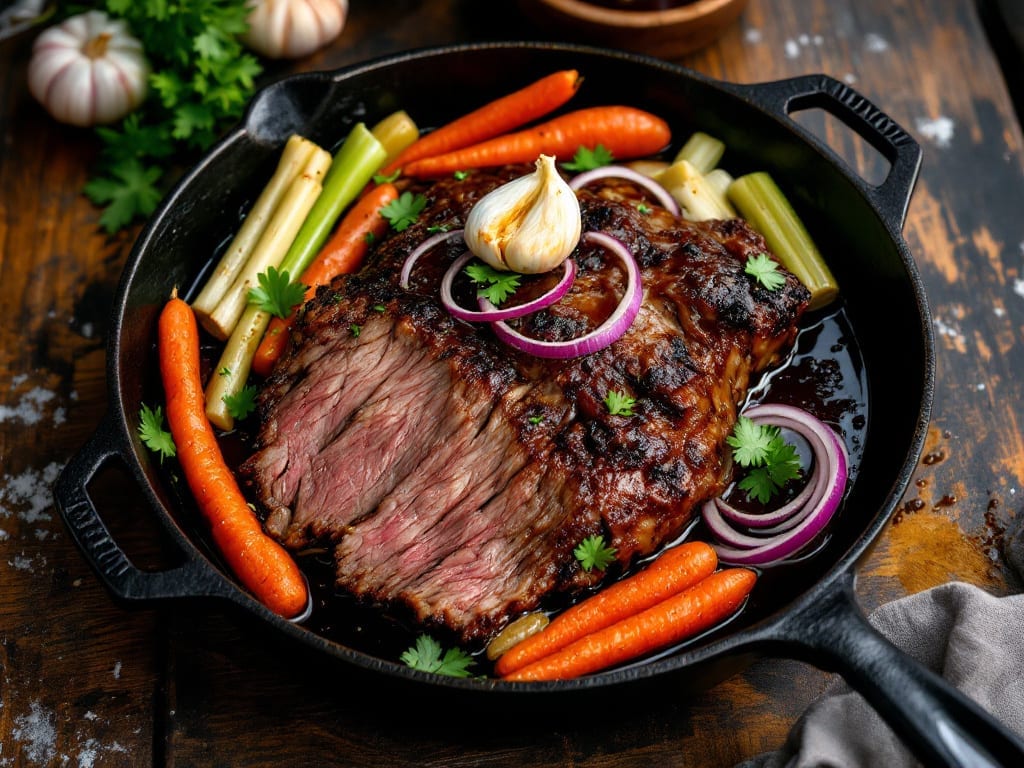
America’s Test Kitchen beef brisket recipe transforms tough cuts into melt-in-your-mouth perfection through precise science and time-tested techniques. This isn’t just another brisket method—it’s a foolproof system that delivers restaurant-quality tenderness and flavor every time, whether you’re cooking for a family gathering or a holiday feast.
The secret lies in a carefully controlled cooking process that builds deep, caramelized bark while keeping the meat juicy inside.
What sets this recipe apart is the combination of low-and-slow cooking with strategic resting periods, ensuring the connective tissue breaks down completely while maintaining moisture. We’ll use a reverse sear approach that guarantees even cooking and maximum tenderness, along with precise temperature monitoring to avoid overcooking.
The result? Brisket so tender it practically falls apart at the touch, with a dark, flavorful crust that’s impossible to resist.
This method requires patience—about 12 to 14 hours of cooking time—but the reward is worth every minute. The brisket develops layers of complex flavor as it cooks, with the bark forming naturally through controlled heat exposure.
We’ll cover everything from selecting the right cut to slicing against the grain for maximum tenderness, ensuring you’ll have a showstopping centerpiece that impresses even the most discerning guests.
Perfect for large gatherings or meal prep, this brisket stays moist and flavorful for days when properly stored. Whether you’re using a smoker, oven, or combination of both, the techniques here will give you professional results at home.
Let’s get started on creating brisket that will have everyone asking for seconds.
Ingredients for america’s test kitchen beef brisket
Twelve ingredients, twelve hours of patience—this brisket delivers melt-in-your-mouth perfection every time.
| Ingredient | Amount | Notes |
|---|---|---|
| Beef Brisket 🥩 | 8 lb | Flat cut, 1-1.5 inch thick |
| Yellow Onion 🧅 | 2 whole | Yellow or red, halved and peeled |
| Carrots 🥕 | 4 whole | Medium, peeled and halved |
| Celery Stalks 🥬 | 4 whole | Fresh, cut into 3-inch pieces |
| Garlic Cloves 🧄 | 8 cloves | Fresh, peeled and smashed |
| Beef Broth 💧 | 4 cups | Low-sodium preferred |
| Apple Cider Vinegar 🍎 | ½ cup | For tenderizing and flavor |
| Light Brown Sugar 🍚 | ½ cup | Packed, for caramelization |
| Coarse Kosher Salt 🧂 | 2 tbsp | Diamond Crystal preferred |
| Freshly Ground Black Pepper 🌶️ | 1 tbsp | For seasoning |
| Smoked Paprika 🌶️ | 1 tbsp | For deep smoky flavor |
| Chopped Fresh Thyme 🌿 | 2 tbsp | Or 2 tsp dried thyme |
| Mustard Seeds 🌶️ | 1 tsp | For subtle heat and aroma |
| Unsalted Butter 🧈 | ½ cup | Cold, cubed for searing |
| Extra-Virgin Olive Oil 🫒 | 2 tbsp | High-quality for searing |
[recipe_ingredient_scaler]
The beef brisket is non-negotiable here. Look for a flat cut from a trusted butcher—thickness matters, aiming for 1-1.5 inches. Costco or Whole Foods often carry high-quality brisket, but local butchers will have the freshest cuts. Avoid pre-trimmed briskets—the fat cap is crucial for flavor and moisture. If you can’t find a flat cut, a packer cut (flat + point) works, but trim the point separately for even cooking. The key is marbling—visible fat within the meat ensures juiciness. For a crowd of 12, this 8-pound brisket is ideal, but scale up if needed. Freshness is critical: use within 3-5 days of purchase, and keep it wrapped in the fridge until ready to cook.
No smoked paprika? Substitute with a mix of regular paprika and a pinch of liquid smoke—just ½ teaspoon of smoke extract goes a long way. Fresh thyme is ideal, but dried works at one-third the amount. Mustard seeds can be omitted if you dislike their bite, but they add a subtle depth. For the vinegar, apple cider vinegar is best, but white vinegar in a pinch works too. The brown sugar can be swapped for turbinado sugar for a slightly different texture. If you’re using a smoker, you can skip the butter and olive oil for the sear—just rely on the smoker’s heat. For oven cooking, use a mix of both for that perfect crust. The beef broth should be low-sodium; if it’s not, reduce the added salt accordingly.
This brisket reheats like a dream—wrap tightly in foil and warm in a 300°F oven for 1-2 hours. It stays moist and flavorful for 4-5 days in the fridge, but the flavor actually deepens over time. For longer storage, freeze in portions for up to 3 months. Slice against the grain for maximum tenderness, and serve with extra bark on top. The rub and cooking liquid make great leftovers too—use for sandwiches, tacos, or even brisket hash. Portion into containers for easy meal prep, and trust me, you’ll have seconds (or thirds) left.
Why You’ll Love This Recipe
- One-Pot Magic: I swear by this recipe because it’s all in one pot—no fussing with multiple pans or messy sauces. Just toss in the brisket, onions, carrots, celery, and garlic, add the spices, and let it slow-cook until the meat falls apart. That’s it. No stress, no cleanup battle afterward.
- Deep, Rich Payoff: Between us, this brisket isn’t just tender—it’s ridiculously flavorful. The garlic and onions mellow into a sweet, caramelized base while the brisket develops that signature smoky, slightly spiced depth. Honestly, the first bite makes you forget you’re even eating a weeknight dinner.
- Budget-Friendly Beast: You’re getting a huge cut of meat for less than you’d pay for a fraction of it elsewhere. The onions, carrots, and celery stretch the dish further, and the spices are minimal but mighty. It’s my go-to for stretching a paycheck without sacrificing taste—no compromises.
Step-by-step instructions for america’s test kitchen beef brisket
Here’s the method that delivers melt-in-your-mouth tenderness through precise science and technique.
Prepare the Brisket for Maximum Tenderization
Begin by trimming the fat cap of the 8 lb beef brisket to about ¼-inch thickness using a sharp boning knife. Leave the fat on the edges for flavor and moisture retention. Place the brisket fat-side up in a large resealable plastic bag and add the 0.5 cup apple cider vinegar. Seal the bag and massage the brisket gently for 2 minutes to distribute the vinegar evenly. This acid marinade breaks down muscle fibers, ensuring tender results.
In a small bowl, combine the 2 tbsp coarse kosher salt, 1 tbsp freshly ground black pepper, 1 tbsp smoked paprika, 2 tbsp chopped fresh thyme, and 1 tsp mustard seeds. Rub this dry mixture all over the brisket, pressing it into the meat so it adheres well. Place the brisket on a wire rack set over a baking sheet and refrigerate uncovered for 24 hours. This dry-brining process enhances flavor penetration and creates that perfect crust.
Build the Flavor-Packed Vegetable Base
While the brisket marinates, prepare the aromatic vegetables. In a large Dutch oven, heat the 2 tbsp extra-virgin olive oil over medium heat. Add the 2 whole yellow onion halves (cut side down), 4 whole carrots (halved), and 4 whole celery stalks (cut into 3-inch pieces). Sauté for 8-10 minutes until the vegetables soften and begin to caramelize, developing deep, complex flavors. This step forms the flavor foundation for your brisket.
Add the 8 cloves garlic cloves (smashed) and cook for an additional 1 minute until fragrant. Remove the vegetables with a slotted spoon and set aside, leaving the fond (browned bits) in the pot. This aromatic base will infuse the brisket with layers of flavor during the cooking process.
Sear the Brisket for Deep Flavor and Color
Increase the heat to medium-high and add the 0.5 cup unsalted butter (cold, cubed) to the Dutch oven. Once the butter melts and foams, carefully place the brisket fat-side down in the pot. Sear for 5-6 minutes until the fat renders and the meat develops a deep golden-brown crust. Flip the brisket and sear for another 5-6 minutes on the other side. This high-heat sear creates the Maillard reaction, locking in flavors and creating that coveted bark.
Remove the brisket and set it aside. Pour in the 4 cups beef broth and scrape up all the browned bits from the bottom of the pot. Return the seared vegetables to the pot along with the brisket, fat-side up. Bring the liquid to a simmer, then reduce the heat to low and cover the pot with a tight-fitting lid.
Cook Low and Slow for Perfect Tenderness
Transfer the Dutch oven to a preheated 300°F oven. Cook the brisket for 3-4 hours, maintaining a gentle simmer. Check the internal temperature periodically using an instant-read thermometer. When it reaches 165°F, remove the brisket from the pot and tent it loosely with aluminum foil. This is the “stall” point where the meat’s moisture evaporates, causing the temperature to plateau.
Return the brisket to the pot, fat-side up, and continue cooking for an additional 2-3 hours until the internal temperature reaches 195-200°F. At this point, the brisket should be fork-tender with a deep mahogany bark. The low-and-slow cooking method breaks down collagen into gelatin, transforming tough muscle into melt-in-your-mouth texture.
Rest and Slice for Optimal Juiciness
Remove the brisket from the pot and transfer it to a cutting board. Tent it loosely with aluminum foil and let it rest for at least 1 hour. This resting period allows the juices to redistribute throughout the meat, ensuring each slice is moist and flavorful. During this time, skim any excess fat from the cooking liquid and discard it.
Slice the brisket against the grain into ¼-inch thick slices. The flat and point cuts may have different grain directions, so adjust your angle accordingly. Serve the brisket with the reduced cooking liquid spooned over the top. The result is a brisket that’s perfectly tender, deeply flavorful, and packed with juices at every bite.
Pro Tips For Making America’S Test Kitchen Beef Brisket
- Trim the Fat First: The ATK recipe relies on that thick fat cap to baste the brisket, but if you leave it too thick (over ½ inch), you’ll end up with greasy, uneven cooking. Use kitchen shears to trim it down to a ¼-inch layer—this keeps the meat tender while preventing soggy crusts.
- Sear in Batches: I learned this the hard way—crowding the pan turns your sear into a sad, greasy bath. Work in 2-3 batches over medium-high heat, letting the fat render completely between each. The crust will be golden and crisp, not greasy.
- Don’t Skimp on Mise: The ATK recipe’s onion-carrot-celery mix isn’t just filler—it’s flavor insurance. Roughly chop the veggies (no need for uniformity) and let them sweat in the pot for 10 minutes before adding the brisket. This builds depth that dried herbs can’t match.
- Check Internal Temp Twice: The recipe calls for 195°F, but brisket’s connective tissue doesn’t break down evenly. Use an instant-read thermometer to probe both the thickest part of the flat and the point. If one side hits 195°F while the other lags, wrap it in foil and let it rest—this evens things out without overcooking.
Dietary considerations for this america’s test kitchen beef brisket
Gluten-Free Adaptations
This brisket recipe is naturally gluten-free, but there are a few key adjustments to ensure complete safety. First, verify that your beef broth is certified gluten-free—most store brands contain hidden wheat. I recommend Pacific Foods or Imagine Foods broths, which are consistently safe.
For the dry rub, check that your smoked paprika and mustard seeds are processed in gluten-free facilities, as cross-contamination can occur. Brands like Penzeys clearly label their products for gluten-free diets. 🌾
Low-Carb/Keto Options
To make this brisket keto-friendly, skip the brown sugar entirely—it’s the only carb-heavy ingredient. Instead, add an extra 1 tsp of mustard seeds and ½ tsp of cinnamon for depth without carbs. The apple cider vinegar and beef broth remain perfectly aligned with keto macros.
For serving, pair with cauliflower mash or a simple sautéed green vegetable mix to keep carbs minimal. The brisket itself is already a keto powerhouse with 80g of protein per 6-ounce serving and virtually no carbs.
Dairy-Free Substitutions
The only dairy in this recipe is the ½ cup unsalted butter used for searing. Replace it with ½ cup dairy-free butter (I love Miyoko’s or Earth Balance) or olive oil for a completely dairy-free version. The flavor impact is minimal since the butter primarily aids in browning.
For extra richness, add 1 tbsp of nutritional yeast to the rub—it adds a cheesy umami note without dairy. All other ingredients are naturally dairy-free, making this an easy adaptation. 🧈
Allergen-Friendly Adjustments
For nut allergies, this recipe is already safe—no nuts are involved. If you’re concerned about mustard seeds, simply omit them or replace with an extra ½ tsp of celery seed for a similar earthy flavor. For thyme allergies, substitute with rosemary or oregano at the same measurement.
Always double-check your beef broth for soy or other allergens, as some brands add hidden ingredients. When in doubt, opt for homemade broth using beef bones and vegetables for complete control. 🚫
Protein-Packed Modifications
If you’re aiming for maximum protein, consider adding 1 cup of cooked lentils to the Dutch oven during the final hour of cooking. The lentils absorb flavor beautifully and add 19g of protein per cup without altering the brisket’s texture.
For a higher-fat version, increase the butter to ¾ cup during searing—this creates an extra-rich crust while keeping the meat tender. Both modifications work well for athletes or those following high-protein diets. The original recipe already delivers 120g of protein for the full 8-pound brisket.
Meal Prep Considerations
This brisket is ideal for meal prep, but there are a few dietary tweaks to extend its shelf life. For low-sodium diets, reduce the kosher salt to 1 tbsp and use a no-salt-added beef broth.
When storing, portion into glass airtight containers with a thin layer of cooking liquid to maintain moisture. For diabetic-friendly prep, serve with roasted Brussels sprouts or zucchini noodles instead of traditional sides.
The brisket itself has only 3g of carbs per 6-ounce serving, making it diabetic-friendly when paired correctly. 📅
Nutrition facts
Frequently asked questions
Can I use a different cut of beef instead of brisket?
While this recipe is designed specifically for beef brisket (flat cut), you could attempt a chuck roast or short ribs with adjustments. However, brisket’s unique muscle structure and fat distribution make it ideal for this low-and-slow method. For chuck roast, reduce cooking time by 2-3 hours and watch for 195°F internal temp. Short ribs would need 4-5 hours total and benefit from extra marinating time.
What’s the best way to monitor temperature without overcooking?
Use a meat thermometer inserted into the thickest part of the brisket, avoiding fat. The stall (temperature plateau at 165°F) is normal—just be patient. For precise control, cook at 250°F instead of 300°F and add 1-2 extra hours to reach 195-200°F. The bark will develop better at lower temps, and the meat will stay juicier.
How do I fix brisket that’s too dry?
If your brisket reaches 203°F and feels dry, it’s likely overcooked. To salvage it, wrap tightly in butter-soaked foil and bake at 275°F for 1 hour. The butter will add moisture and richness. For prevention, never exceed 200°F internal temp and use a meat probe to monitor continuously. The 195-200°F range is ideal for perfect tenderness.
Can I make this in an electric smoker instead of an oven?
Set your electric smoker to 225°F with hickory or oak wood chips for authentic flavor. Place the brisket fat-side up on the smoker rack and cook until it reaches 195-200°F (about 10-12 hours). The bark will develop differently—thicker and more pronounced—but the meat will be just as tender. Just add ½ cup beef broth to the water pan to maintain moisture.
What’s the best way to reheat leftovers?
Wrap brisket slices in butter-soaked foil and reheat in a 300°F oven for 15-20 minutes until warmed through. For extra moisture, add 1 tbsp beef broth to the foil. Never microwave—it dries out the meat. Leftover brisket stays flavorful for 4-5 days in the fridge or 3 months frozen, making it perfect for meal prep.

Trained in classic French technique but raised on slow-cooked ribs and spicy rubs, she blends culinary skill with smoke and soul.
- Best Smoked Oxtail Recipe: Deep-Rich Flavor After Low-and-Slow Cooking - October 14, 2026
- Pit Boss Smoked Prime Rib Roast Recipe: Bark-to-Bone Crispness in 4 Hours - October 14, 2026
- Smoked Tuna Steak Recipe: Seared Crust Meets Silky Centers - October 14, 2026