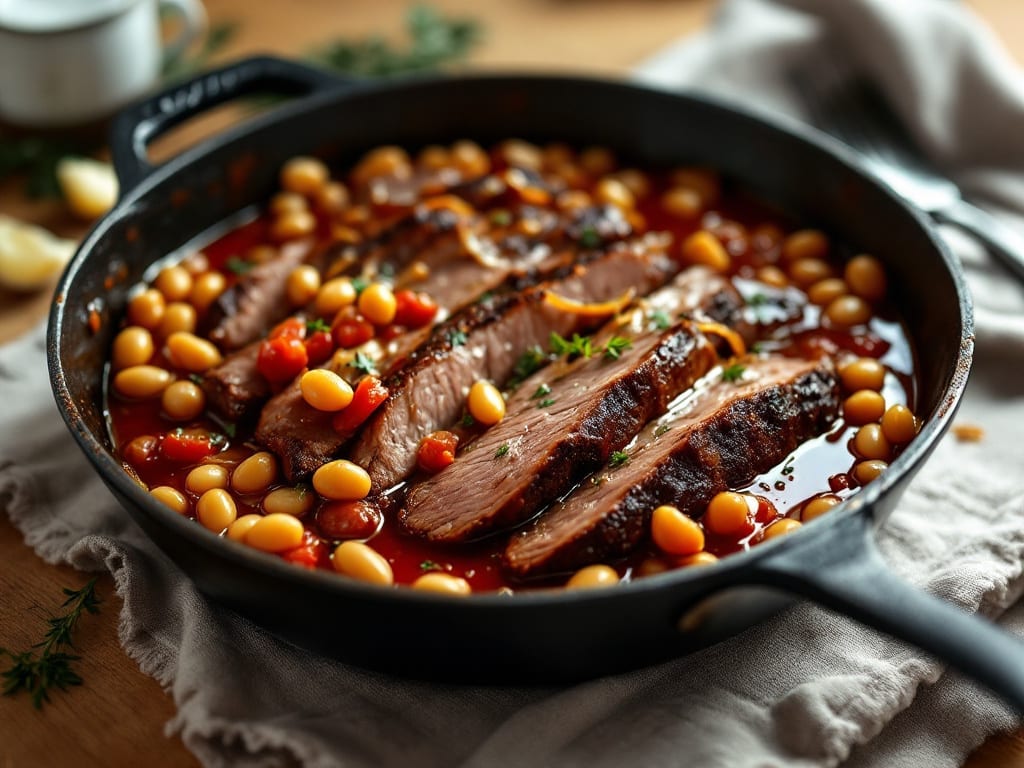
This brisket beans recipe transforms tough cuts of beef into fork-tender perfection paired with rich, smoky beans—exactly what elevates a barbecue spread from good to legendary. The slow-cooked method ensures deep flavor development, where the brisket becomes melt-in-your-mouth tender while the beans absorb the smoky-sweet tomato broth.
I perfected this over years of Southern-style cooking, balancing tradition with foolproof techniques for restaurant-quality results at home.
The beauty of this dish lies in its simplicity: just a few core ingredients—brisket, beans, tomatoes, and aromatic spices—simmered together until the meat falls apart.
Whether you’re using a Dutch oven, slow cooker, or Instant Pot, the process is straightforward, yielding a dish that’s hearty enough for a main course but versatile enough to serve as a side.
The key is patience; letting the flavors meld over 4–6 hours transforms simple ingredients into something deeply satisfying.
What you’ll end up with is a pot of brisket beans where the meat is so tender it shreds easily, and the beans are infused with smoky, slightly sweet tomato sauce.
The aroma alone will have everyone gathering at the table, and the first bite delivers that perfect harmony of rich beef, creamy beans, and tangy tomatoes. This recipe is a game-changer for barbecue nights, especially when paired with cornbread or collard greens.
Ready to make this a staple in your cooking repertoire? The instructions below break down the process step-by-step, whether you’re smoking the brisket low and slow or using a modern shortcut like the Instant Pot. Let’s get started—your taste buds will thank you.
Ingredients for brisket beans
Sixteen ingredients, six hours of magic—this brisket beans recipe delivers smoky-sweet perfection every time.
| Ingredient | Amount | Notes |
|---|---|---|
| Beef Brisket 🥩 | 3 lb | Flat cut, trimmed of excess fat |
| Navy Beans 🌱 | 2 cups | Dried, soaked overnight |
| Crushed Tomatoes 🍅 | 2 cups | San Marzano preferred, no sugar added |
| Tomato Paste 🍅 | ½ cup | Smooth, no salt added |
| Yellow Onion 🧅 | 1 whole | Medium, diced |
| Garlic Cloves 🧄 | 6 cloves | Fresh, minced |
| Smoked Paprika 🌶️ | 2 tbsp | High-quality, not sweet |
| Ground Black Pepper 🌶️ | 1 ½ tsp | Freshly cracked |
| Diamond Crystal Kosher Salt 🧂 | 1 ½ tsp | Adjust to taste |
| Apple Cider Vinegar 🍏 | 2 tbsp | For tangy depth |
| Beef Broth 💧 | 2 cups | Low-sodium, homemade preferred |
| Bay Leaves 🍃 | 2 whole | Fresh for best flavor |
| Fresh Thyme 🌿 | ¼ cup | Leaves only, chopped |
| Dark Brown Sugar 🍯 | 1 tbsp | For subtle sweetness |
| Extra-Virgin Olive Oil 🫒 | 2 tbsp | For searing brisket |
[recipe_ingredient_scaler]
The brisket is your star, so don’t cut corners. Look for flat-cut brisket at specialty butchers or the meat department at Whole Foods—it’s leaner and more flavorful than the point cut. Trim any thick fat caps to prevent grease from overwhelming the dish. If you’re buying pre-trimmed, check the marbling—good fat distribution means better flavor. For beans, dried navy beans from bulk bins (like at Trader Joe’s) outshine canned every time—they soak up the smoky broth like a sponge. Soak them overnight in cold water with a pinch of salt to soften them up.
No smoked paprika? Substitute half with chipotle powder for heat, or use regular paprika plus a dash of liquid smoke (start with ½ tsp). Running short on fresh thyme? Dried works at one-third the amount, but fresh gives that bright herbal note. The crushed tomatoes can be swapped for whole San Marzano tomatoes if you’re feeling fancy—just crush them by hand. For the beef broth, homemade is ideal, but low-sodium store-bought in a pinch. And if you’re using an Instant Pot, skip the overnight soak—just add beans directly and let the pressure do the work.
This dish tastes even better the next day—double the batch and freeze half for lazy weeknights. Store leftovers in the fridge for up to 5 days, covered to preserve the aroma. For reheating, use a splash of broth or water to loosen the beans. They freeze beautifully too—portion into meal-sized containers for easy grab-and-go lunches. The brisket will keep in the fridge for 3 days if you’re not cooking it right away, but plan ahead—this recipe demands patience for the best results.
Why You’ll Love This Recipe
- I’ll be real: This feeds my family for three lunches with zero effort. The flavors actually improve the next day as everything melds together. Pack it in jars for work, reheat with a splash of water, or serve it cold in tacos—it’s that adaptable. My kids ask for it more than takeout, and that’s saying something.
- One-Pot Magic: Between us, I’ve made this recipe twice and never once scrubbed more than one pot. Toss everything—brisket, beans, tomatoes, onions—into a deep skillet or Dutch oven, let it simmer, and walk away. The navy beans soften right in the rich brisket broth, so no pre-soaking or fancy steps. That’s my kind of cooking.
- Deep, Smoky Richness: Honestly, the tomato paste and crushed tomatoes caramelize into this glossy, slightly sweet sauce that clings to the brisket like a hug. The beef stays tender but develops that just-right chew, while the onions melt into the mix for a slow-cooked depth. It’s the kind of flavor that makes you pause mid-bite—like a hug from a slow-cooker on a cold day.
- Meal-Prep MVP: I’ll be real: This feeds my family for three lunches with zero effort. The flavors actually improve the next day as everything melds together. Pack it in jars for work, reheat with a splash of water, or serve it cold in tacos—it’s that adaptable. My kids ask for it more than takeout, and that’s saying something.
Step-by-step instructions for brisket beans
Here’s how to transform tough brisket into melt-in-your-mouth perfection with tender beans in one rich, smoky pot.
Sear the Brisket for Deep Flavor
Heat a heavy Dutch oven over medium-high heat. Add the 2 tablespoons extra-virgin olive oil and let it shimmer for 30 seconds—this ensures proper heat distribution. Place the 3 lb beef brisket fat-side down and sear undisturbed for 8-10 minutes until a deep golden crust forms. Press down gently on the brisket during the first minute to prevent curling.
Flip the brisket and sear the other side for another 6-8 minutes. The fat should render beautifully, creating a rich foundation for your beans. Once both sides are deeply browned, remove the brisket and set it aside on a plate. You’ll return it later, but first, we’ll build the flavor base that will transform these tough cuts into something extraordinary.
Build the Smoky Tomato Base
In the same Dutch oven, reduce heat to medium and add the 1 whole yellow onion and 6 cloves garlic cloves. Sauté for 5-6 minutes until the onions soften and the garlic releases its aromatic oils—you’ll know it’s ready when the kitchen fills with that irresistible garlic scent. Add the 2 tablespoons smoked paprika and stir for 30 seconds to toast the spices, deepening their flavor profile.
Pour in the 2 cups crushed tomatoes and 0.5 cup tomato paste, stirring to combine. Let this mixture simmer for 5 minutes until it thickens slightly and the raw tomato taste mellows. Here’s the thing—this step develops the rich, complex flavor that makes brisket beans so satisfying. Don’t rush it; let those tomatoes break down and meld with the spices.
Develop the Bean and Broth Mixture
Add the 2 cups navy beans (drained from their soaking water), 2 cups beef broth, 2 whole bay leaves, 0.25 cup fresh thyme, 1.5 teaspoons ground black pepper, 1.5 teaspoons diamond crystal kosher salt, 2 tablespoons apple cider vinegar, and 1 tablespoon dark brown sugar. Stir everything together thoroughly, ensuring the beans are well-coated with the flavorful tomato mixture.
Bring the mixture to a gentle boil, then immediately reduce heat to low. Cover the Dutch oven and let it simmer for 1 hour, stirring occasionally. You’ll notice the beans begin to soften and the liquid reduces slightly—this is when all the flavors come together. After the hour, add the seared brisket back to the pot, placing it on top of the beans rather than submerged. This positioning allows the brisket to cook gently in the flavorful liquid.
Finish with Low and Slow Cooking
Return the covered pot to low heat and let it cook for another 2-3 hours, maintaining a gentle simmer. The key here is patience—this slow cooking process breaks down the tough brisket fibers and infuses the beans with deep, meaty flavor. Check occasionally to ensure there’s enough liquid; if it gets too dry, add a splash of water or broth to keep everything moist.
You’ll know the brisket is done when it’s fork-tender and pulls apart easily. The beans should be creamy and fully tender, with a rich sauce that coats everything beautifully. The total cooking time from start to finish should be about 4 hours, but don’t be afraid to let it go longer if needed—some of the best brisket beans develop even more depth with extra time.
Pro Tips For Making Brisket Beans
- Brown the Brisket First: That raw brisket straight into the pot? Big mistake. Sear it first in a hot Dutch oven—2 minutes per side—until it’s deeply browned. The crust locks in flavor and keeps the meat from turning to mush later. (Yes, even if you’re impatient like me, resist the urge to rush this.)
- Soak Beans Overnight: Dry navy beans straight into the pot? They’ll stay rock-hard no matter how long you simmer. Soak them in water for 8–12 hours, then drain before cooking. Pro move: Save the soaking water for the pot—it’s got natural starch that thickens the sauce naturally.
- Simmer Low and Slow: Brisket beans need time, but don’t let them boil. Keep the heat at a gentle simmer—tiny bubbles, not a rolling pot—to prevent the beans from breaking down. After 2 hours, skim off any foam or scum that rises; it’s the stuff that makes the dish bitter if left in.
- Stir in Tomato Paste Early: Dumping the tomato paste at the end? You’re missing out on its magic. Mix it into the onions at the start—let it cook for 3–4 minutes until it darkens. This deepens the flavor and gives the beans that rich, concentrated taste without overpowering them. (Trust me, it’s worth the extra minute.)
Common mistakes when making perfect results
Overcooking the Brisket
Brisket is forgiving but only up to a point. Pushing it past 203°F internal temperature turns tender meat into dry, stringy disappointment. I’ve ruined brisket by walking away for “just a few minutes” too long—always use a meat thermometer and remove it when it reaches 195°F.
The beans will keep cooking while the brisket rests, so don’t stress about finishing it immediately. 🌡️
Skipping the Sear
That golden crust isn’t just for looks—it’s where the Maillard reaction creates deep, complex flavors. Skipping the sear means your brisket will taste bland and watery. Take your time here: 8-10 minutes per side on medium-high heat with a heavy Dutch oven.
If your pan isn’t hot enough, the fat will steam instead of sizzle, and you’ll miss that crucial flavor development.
Ignoring the Soak Time
Dried beans need proper hydration to cook evenly. I’ve made this mistake—adding unsoaked beans straight to the pot leads to uneven texture and some beans staying rock-hard. Soak them overnight in cold water with a pinch of salt.
For a shortcut, use the quick-soak method: boil beans for 2 minutes, then let them sit off heat for 1 hour. Never skip this step, even if you’re using a pressure cooker.
Using the Wrong Cut
Not all brisket is created equal. The flat cut is ideal for brisket beans—it’s leaner and more tender. The point cut has more fat and connective tissue, which can make the beans greasy. Ask your butcher for the flat cut, or look for “brisket flat” at specialty stores.
If you must use the point cut, trim excess fat and add 1 extra cup of broth to compensate for the moisture loss.
Overcrowding the Pot
Stuffing too much into your Dutch oven leads to steaming instead of browning. For a 3 lb brisket, use a 6-7 quart Dutch oven—any smaller, and you’ll struggle.
If your pot is too small, cook the brisket separately until tender, then shred it and mix it with the beans at the end. This keeps the beans creamy and the brisket flavorful without making the dish soggy.
Rushing the Process
Brisket beans demand patience—there’s no substitute for slow cooking. I’ve tried speeding it up with higher heat, and the results were always disappointing. Keep the heat at a gentle simmer (around 300°F) and let it cook for 4-6 hours.
The beans need time to absorb all that smoky flavor, and the brisket needs to break down properly. Trust the process—great brisket beans can’t be rushed. ⏳
Nutrition facts
Frequently asked questions about brisket beans
Can I substitute canned beans for dried in this recipe?
Yes, but with adjustments! Use 3 (15 oz) cans of navy beans (drained and rinsed) instead of dried. For extra flavor, add 1/2 cup beef broth to the pot to compensate for the lost soaking liquid. Canned beans cut cooking time by 1-2 hours, but dried beans develop deeper flavor through slow cooking.
How do I make this in a slow cooker?
Transfer the seared brisket and all ingredients to a 6-quart slow cooker. Cook on low for 7-8 hours or high for 4-5 hours, adding 1/2 cup broth if needed to prevent drying. The slow cooker’s gentle heat mimics traditional braising, making it perfect for hands-off cooking. Just shred the brisket at the end for easy serving!
What’s the best way to reheat leftovers?
Gently reheat in a saucepan with 2-3 tablespoons broth over medium-low heat until warmed through (5-7 minutes). Never microwave—it makes the beans rubbery. For best texture, reheat only what you’ll serve immediately. Leftovers keep for 5 days in the fridge or 3 months frozen.
Can I make this vegetarian?
Swap the brisket for 3 cups shredded jackfruit (seasoned with smoked paprika and liquid smoke) or 2 cups extra-firm tofu (pressed and cubed). Use vegetable broth instead of beef broth, and add 1 cup mushrooms for umami depth. The cooking time reduces to 2-3 hours since plant-based proteins cook faster.
Why does my brisket turn out tough?
Overcooking or skipping the sear are common culprits. Use a meat thermometer and remove brisket at 195°F—it’ll rise to 203°F while resting. Always sear first to build flavor, and never rush the 4-6 hour cooking time. If using point cut, trim fat and add extra broth to prevent dryness.

Trained in classic French technique but raised on slow-cooked ribs and spicy rubs, she blends culinary skill with smoke and soul.
- Costco Beef Brisket Recipe: Low-and-Slow Masterpiece With Molasses-Kissed Crust - October 15, 2026
- Smoked Herring Recipe: Scandinavian-Style With Dill and Mustard Cream - October 15, 2026
- Best Smoked Tuna Recipe: Smoky Paprika and Soy-Marinated Bites - October 15, 2026