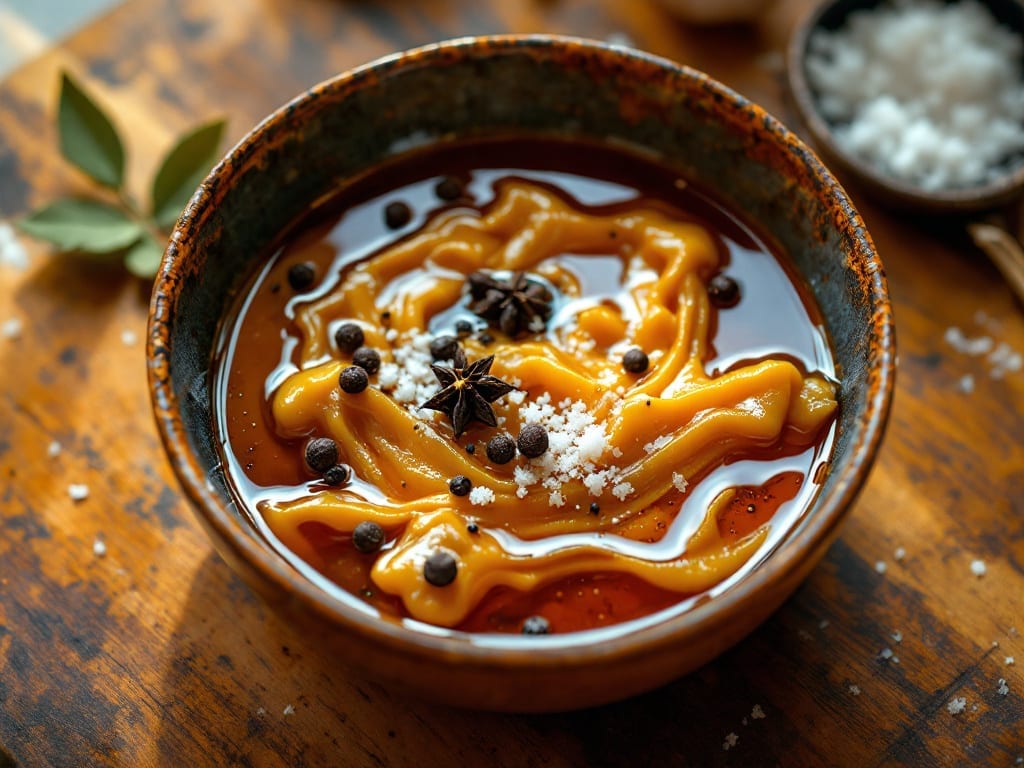
This corned beef brisket marinade recipe transforms tough cuts into melt-in-your-mouth perfection through a bold blend of vinegar, spices, and aromatic herbs. The day I realized French technique could elevate my rubs, I knew this marinade would become a staple—its tangy depth and savory complexity are unmatched.
I developed it after years of slow-cooking brisket, refining the balance between sharp vinegar and rich spices to create a marinade that tenderizes while building layers of flavor.
The secret lies in the precise ratio of apple cider vinegar to mustard, which not only breaks down fibers but also infuses the meat with a signature tang.
Garlic, bay leaves, and black pepper work together to create a marinade that’s both traditional and dynamic—perfect for 24 hours of immersion before cooking. This isn’t just a marinade; it’s a flavor foundation that turns corned beef into a showstopper.
What you’ll achieve is brisket with deep, caramelized edges and tender, juicy meat that falls apart at the touch of a fork. The marinade’s bold spices and vinegar infusion create a crust that’s irresistibly rich, while the interior remains moist and flavorful.
Whether you’re slow-cooking for a holiday feast or quick-searing for a weeknight dinner, this marinade delivers restaurant-quality results every time.
Store any leftovers in an airtight container in the refrigerator for up to 5 days, or freeze for 3 months—its versatility makes it a pantry essential. Ready to elevate your corned beef? Let’s get started with this foolproof marinade that’s as simple as it is transformative.
Ingredients for corned beef brisket marinade
Ten ingredients. One marinade. Restaurant-quality brisket flavor in minutes.
| Ingredient | Amount | Notes |
|---|---|---|
| Apple Cider Vinegar 🍎 | 1 cup | Raw, unfiltered preferred for depth |
| Yellow Mustard 🍯 | ½ cup | Dijon for extra tanginess |
| Granulated Garlic 🧄 | 2 tbsp | Fresh minced works too |
| Ground Black Pepper 🌶️ | 1 ½ tbsp | Freshly cracked for intensity |
| Kosher Salt 🧂 | 1 ½ tbsp | Diamond Crystal preferred |
| Dried Bay Leaves 🌿 | 2 whole | Crushed lightly for release |
| Ground Allspice 🌶️ | 1 tsp | Freshly toasted preferred |
| Ground Cloves 🌿 | ½ tsp | Whole cloves toasted works |
| Onion Powder 🧅 | 1 tsp | Freshly ground preferred |
| Brown Sugar 🍬 | 2 tbsp | Light or dark variety |
[recipe_ingredient_scaler]
The apple cider vinegar is non-negotiable—Bragg or local raw vinegar from the farmers market have the best depth. I always grab the unfiltered kind because that sediment adds complexity. Mustard? Dijon if you want extra tang, but regular yellow works fine. The garlic and pepper are where the magic happens—freshly ground pepper makes all the difference, and I never skip toasting the spices (whole cloves and allspice in a dry pan for 30 seconds). For the bay leaves, California or Mexican are my go-to—they hold up better to long marinating. Salt is critical too; Diamond Crystal dissolves better than table salt and enhances the marinade’s depth.
No Dijon mustard? Yellow plus 1 tsp extra vinegar mimics the tang. Short on brown sugar? Honey or maple syrup at half the amount works in a pinch. Want more heat? Add cayenne or crushed red pepper flakes (start with 1/4 tsp). The allspice and cloves can be swapped for cinnamon and nutmeg, but the French technique relies on their warmth. For the vinegar, if you can’t find apple cider, white wine vinegar with 1 tsp apple juice gets close. And if you’re feeling fancy, add 1 tbsp beef broth to the marinade for extra umami—trust me on this.
This marinade keeps 1 week refrigerated in an airtight jar, but it’s best used within 3 days for maximum flavor. I always double the batch—one for immediate use, one to stash in the freezer for 6 months. For brisket, let it work its magic for 24 hours, flipping the meat occasionally. The longer it marinates, the deeper the flavor, but never exceed 48 hours or the vinegar will start breaking down the meat fibers too aggressively. If you’re short on time, 3 hours minimum still delivers serious flavor.
Why You’ll Love This Recipe
- Pantry Magic: I swear by this marinade because it uses stuff I already have—no special trips to the store. The apple cider vinegar and mustard cut through the fat while the garlic and salt sink in overnight, doing all the work for me.
- Tangy Perfection: That first bite? The vinegar’s sharp bite balances the rich brisket, and the mustard adds a creamy depth. Honestly, it’s the kind of flavor that makes me want to eat it straight from the bowl—but don’t.
- Weekend Feast: This marinade turns a simple brisket into the star of St. Paddy’s Day or Sunday dinner. I’ve even used it for pulled pork—just swap the cooking method—and suddenly, you’ve got a showstopper without extra effort.
- Leftovers That Win: The beauty of this recipe? It’s forgiving. Double the batch, marinate a second brisket, and you’ve got sandwiches for days. My kids fight over the scraps, and I’m left with zero food waste. (Yes, even on a Tuesday night.)
Step-by-step instructions for corned beef brisket marinade
Here’s how to craft the perfect marinade—bold, aromatic, and packed with depth.
Combine the Vinegar and Mustard Base
In a medium mixing bowl, pour in the 1 cup apple cider vinegar and 0.5 cup yellow mustard. The vinegar should be raw and unfiltered for maximum tang, while the Dijon mustard adds a subtle richness that balances the acidity. Whisk vigorously for 1 minute until fully emulsified—this ensures the mustard dissolves completely into the vinegar, creating a smooth foundation.
Here’s the thing—if you use pre-minced garlic instead of granulated, strain it first to remove any excess moisture. Wet garlic can dilute the marinade’s potency, so we want all that flavor concentrated. Let the mixture sit for 5 minutes while you prepare the dry ingredients; this gives the vinegar time to mellow slightly and mingle with the mustard’s oils.
Incorporate the Dry Spice Blend
In a small bowl, combine the 1.5 tbsp kosher salt, 1.5 tbsp ground black pepper, 1 tsp onion powder, 1 tsp ground allspice, 0.5 tsp ground cloves, and 2 tbsp brown sugar. These spices form the backbone of the marinade’s complexity—salt for preservation, pepper for heat, allspice and cloves for warmth, onion powder for depth, and brown sugar to caramelize slightly during cooking.
Lightly crush the 2 whole dried bay leaves between your palms or with a rolling pin to release their essential oils. This step is crucial; whole bay leaves won’t infuse properly if left intact. Sprinkle the crushed bay leaves and spice blend into the vinegar-mustard mixture. Gently fold with a wooden spoon until everything is evenly distributed—no clumps should remain. The marinade should have a thick, paste-like consistency at this stage.
Add the Garlic and Sugar for Depth
Stir in the 2 tbsp granulated garlic and 2 tbsp brown sugar until fully dissolved. The granulated garlic ensures even distribution, while the brown sugar adds a subtle caramel note that enhances the brisket’s bark during cooking. Let the mixture sit for 10 minutes at room temperature—this allows the spices to bloom and the sugar to slightly dissolve, creating a more cohesive marinade.
Taste the marinade now (it’ll be strong, but trust the process). If you want to adjust the balance, add a pinch more sugar to sweeten the acidity or a dash of salt to intensify the flavor. The marinade should taste bold, slightly sweet, and deeply aromatic—like a concentrated version of what your brisket will become. Transfer to an airtight container and let it rest for at least 4 hours (or up to 24 hours) before using. This resting period allows the flavors to fully meld into a cohesive, flavor-packed infusion.
Pro Tips For Making Corned Beef Brisket Marinade
- Whisk the Mustard: Mix the yellow mustard into the vinegar first—don’t just dump it in dry. I learned this the hard way when my marinade turned into a lumpy mess that clung like glue instead of coating the meat evenly. Stirring it into the vinegar emulsifies it, so it spreads smoothly and clings better.
- Toast the Garlic: Bloom the granulated garlic in a dry pan for 30 seconds before adding it to the marinade. It deepens the flavor without burning—just until it smells nutty. I was skeptical until I tried it; now I can taste the difference in every bite.
- Salt in Layers: Don’t just sprinkle salt on the brisket once—work it into the meat in stages. Start with a heavy rub, let it sit for 30 minutes, then add another layer before marinating. This ensures the salt penetrates deeply and doesn’t just sit on the surface.
- Vinegar First, Then Meat: Pour the apple cider vinegar marinade over the brisket after it’s been salted and rested. Vinegar is acidic, and if you soak the raw meat in it too long, it can make the edges tough. Two hours max—any longer and you’re risking a chewy texture.
Make-ahead tips for this recipe
Marinade Prep Ahead
Make this marinade 24-48 hours in advance for maximum flavor development. I always prep mine the night before—it sits in my fridge while I handle other meal prep tasks. The longer it rests, the more the spices and vinegar meld together, creating a deeper, more complex flavor profile.
Store in an airtight glass jar with a tight-sealing lid to preserve freshness. 💫
Brisket Prep Timeline
For best results, marinate your brisket for 24 hours—no less. I like to trim the fat cap first, then place the brisket in a ziplock bag or shallow dish and pour the marinade over it. Turn the bag or dish every 6-8 hours to ensure even coating.
If you’re short on time, 12 hours minimum still works, but the flavor won’t be as deep. Pro tip: Use a meat thermometer to track internal temp during cooking—aim for 203°F for perfect tenderness.
Freezer-Friendly Marinade
Double the batch and freeze half for later use. Portion into 1-cup freezer-safe containers—this makes it easy to grab when you need it. Thaw overnight in the fridge before using.
I keep a stash in my freezer year-round because this marinade works for more than just brisket—it’s fantastic on pork shoulder, chicken thighs, or even tough cuts of beef like chuck roast. Just 3 months in the freezer keeps it fresh and potent.
Marinated Meat Storage
After marinating, store the brisket in its marinade in the fridge for up to 3 days before cooking. The longer it sits, the more flavor it absorbs, but don’t exceed 48 hours or the vinegar will start breaking down the meat fibers.
For a quick weeknight meal, you can cook it right away—just pat it dry before searing to get that perfect crust. I often marinate mine on Sunday and cook it Wednesday for a stress-free dinner. ⏰
Reusing Marinade
Never reuse leftover marinade that’s touched raw meat—it’s a food safety no-no. But you can save the unused portion for future batches. Strain out any solids (like bay leaves or garlic bits) and store the liquid in an airtight container in the fridge for up to 1 week.
I’ve used leftover marinade to baste brisket during cooking or even as a quick glaze for roasted vegetables. Just reduce it slightly on the stovetop to concentrate the flavors.
Coastal Foraging Twist
For a unique touch, I sometimes forage wild sea lavender or dandelion greens from the coastal cliffs where I ride my motorcycle. Finely chop a handful and mix it into the marinade for an earthy, briny note.
It’s a secret I picked up from local fishermen—works especially well with brisket. If you can’t forage, 1 tsp dried seaweed flakes from the specialty store gives a similar effect. 🌊
Nutrition facts
Frequently asked questions
Can I use this marinade on other meats besides brisket?
This marinade works beautifully on pork shoulder, chicken thighs, and even beef chuck roast. The vinegar and spices tenderize tough cuts while adding rich depth. I’ve used it for pulled pork and it creates an amazing bark when smoked.
How do I adjust the heat level in this marinade?
For extra heat, add ¼ teaspoon cayenne pepper or ½ teaspoon crushed red pepper flakes. If you prefer milder flavor, reduce the black pepper to 1 teaspoon and omit the cloves. The allspice provides warmth without heat, so it’s a great compromise for sensitive palates.
What’s the best way to store leftover marinade?
Store unused marinade in an airtight glass container in the fridge for up to 1 week. For longer storage, freeze in 1-cup portions for up to 3 months. Never reuse marinade that’s touched raw meat, but you can use it for basting or glazes after straining out solids.
Can I make this marinade without Dijon mustard?
Yes! Use regular yellow mustard and add 1 teaspoon extra vinegar to maintain the tangy balance. The marinade will still work well, though Dijon provides a smoother texture and slightly more complex flavor. For a vinegar substitute, white wine vinegar works in a pinch.
Why does my brisket turn out too acidic after marinating?
Over-marinating (beyond 48 hours) or using too much vinegar can make brisket overly acidic. Try reducing the vinegar to ¾ cup and increase the mustard to ⅓ cup for a milder profile. Also, pat the meat dry before cooking to promote better browning and reduce acidity carryover.

Trained in classic French technique but raised on slow-cooked ribs and spicy rubs, she blends culinary skill with smoke and soul.
- Best Smoked Oxtail Recipe: Deep-Rich Flavor After Low-and-Slow Cooking - October 14, 2026
- Pit Boss Smoked Prime Rib Roast Recipe: Bark-to-Bone Crispness in 4 Hours - October 14, 2026
- Smoked Tuna Steak Recipe: Seared Crust Meets Silky Centers - October 14, 2026