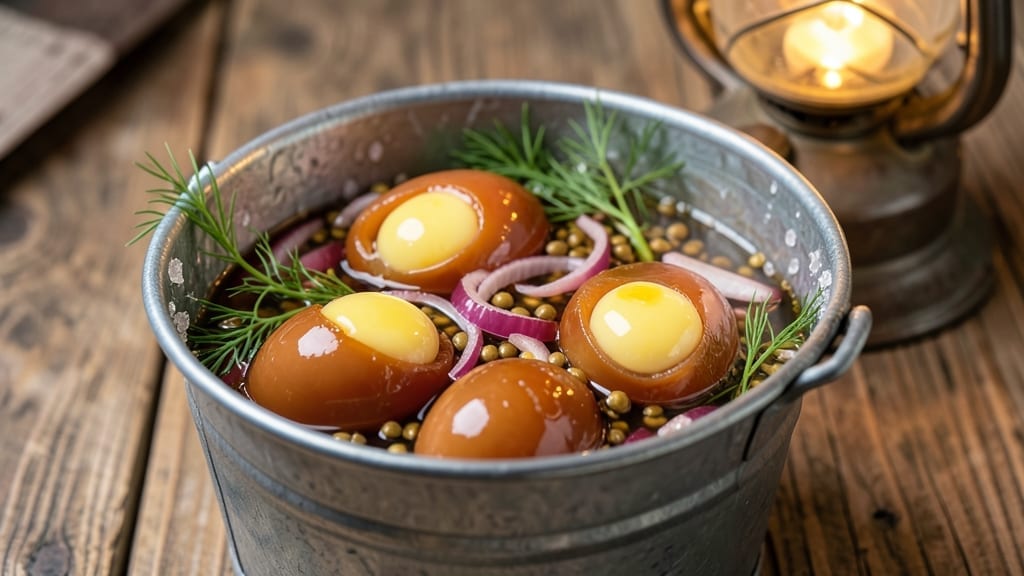
This Amish smoked pickled eggs recipe transforms simple eggs into a pantry staple with deep smoky flavor and tangy crunch that lasts for months. The traditional method combines cold smoking with a carefully balanced brine—apple cider vinegar, mustard seeds, and aromatic herbs—that creates a complex flavor profile unlike anything store-bought.
I first tried this after discovering how Amish families preserve eggs through winter, and the results changed how I think about pickled eggs forever.
The process begins with a foolproof brine that penetrates each egg, creating that signature tangy bite you crave. You’ll use a cold smoking technique (no hot flames here) with hickory or applewood for that authentic Amish touch, which infuses the eggs with smoky depth without overpowering their natural richness.
What makes this recipe special is the patience—eggs need at least 2 weeks to develop that perfect balance of smokiness and tang.
By the time you’re done, you’ll have eggs that are crispy-edged and tender inside, with a flavor so bold it elevates sandwiches, salads, or even charcuterie boards. The best part?
These eggs keep for up to 6 months in the fridge, making them a cost-effective way to enjoy restaurant-quality flavor at home. Whether you’re preserving a harvest or just love bold flavors, this method delivers every time.
Ready to try it? The instructions break down the exact brine ratios, smoking schedule, and storage tips to ensure perfect results. Here’s how to make them—no prior smoking experience required.
Ingredients for amish smoked pickled eggs
Twelve essential ingredients transform ordinary eggs into smoky, tangy pantry treasures with restaurant-quality depth.
| Ingredient | Amount | Notes |
|---|---|---|
| Large Eggs 🥚 | 24 whole | Fresh, room temperature for even curing |
| Apple Cider Vinegar 🍎 | 2 cups | Raw, unfiltered preferred for depth |
| Distilled White Vinegar 💧 | ½ cup | For balanced acidity |
| Granulated Sugar 🍚 | ½ cup | Light brown preferred for caramel notes |
| Diamond Crystal Kosher Salt 🧂 | 1 cup | Coarse grain for proper brine saturation |
| Mustard Seeds 🌶️ | 2 tbsp | Yellow, whole, lightly toasted |
| Dill Seeds 🌿 | 1 tbsp | Freshly crushed for aromatic oils |
| Black Peppercorns 🌶️ | 1 tbsp | Freshly cracked for intensity |
| Garlic Cloves 🧄 | 6 whole | Smashed, not minced |
| Hickory or Applewood Chips 🌳 | 2 lbs | Food-grade, unscented |
| Water 💧 | 4 cups | Filtered, room temperature |
| Bay Leaves 🍃 | 2 whole | Fresh, dried if unavailable |
| Cayenne Pepper 🔥 | ½ tsp | Adjust for heat preference |
[recipe_ingredient_scaler]
The eggs are your canvas—farm-fresh gives the best texture, but grocery store eggs work too. For the brine, apple cider vinegar is non-negotiable (Bragg or local orchard brands shine), and Diamond Crystal salt dissolves better than table salt. Mustard seeds and dill seeds? Toast them in a dry pan for 30 seconds first—they release oils that make the eggs sing. Hickory chips deliver that classic Amish smokiness, but applewood adds sweetness if you prefer a milder profile. Grab these at Costco or Smokehouse Supply for bulk deals, or order online if local stores don’t carry them.
No apple cider vinegar? White vinegar plus 1 tbsp lemon juice mimics the tang, but you’ll lose some depth. Short on mustard seeds? 1 tsp ground mustard plus 1 tsp vinegar works in a pinch, though texture won’t be identical. For the wood chips, fruitwood blends add complexity if you can’t find hickory. The bay leaves? Dried is fine, but fresh adds a brighter aroma. Pro tip: If your eggs float in the brine (they will), weigh them down with a sterilized plate—no need for fancy tools, just a clean dinner plate from your dishwasher.
This isn’t a quick project—2 weeks minimum for flavor development, up to 6 months in the fridge. Store the eggs submerged in their brine in glass jars (mason jars work perfectly), sealed with lids. The brine itself keeps indefinitely, so you can reuse it for future batches. For serving, crack the eggs open and let them sit for 5 minutes—the crispy edges and tender yolks are worth the wait. Freeze extras in brine for up to 3 months if you’re not using them all at once.
Why You’ll Love This Recipe
- No-Fuss Pickling: I swear by this recipe because it’s that simple—just eggs, vinegars, and salt. No fancy jars, no complicated steps. The vinegar mixture does all the work while you sip coffee and scroll through your phone.
- Smoky-Sweet Magic: That perfect balance of tangy apple cider vinegar and just a hint of smokiness? It’s like a crisp autumn morning in a jar. The sugar keeps it from being too harsh, and the salt? Well, it’s the secret to making every bite irresistible.
- Party Snack Hero: Between us, these eggs disappear at gatherings. Serve them whole with crackers for a no-mess appetizer, or chop them into salads for a salty crunch. They’re the kind of dish that makes you look like a host who actually knows what they’re doing.
- Lasts for Weeks: Honestly, I’ve had jars of these sitting in my fridge for months—they just get better with time. The vinegar keeps them fresh, and the cost? A fraction of store-bought pickles. Plus, they’re my go-to for lazy nights when I don’t feel like cooking.
Step-by-step instructions for smoky brine-cured eggs
Here’s how to transform simple eggs into rich, smoky treasures that keep for months.
Prepare the Brine Base
In a large non-reactive container (I use a food-grade plastic bucket), combine the 4 cups water, 2 cups apple cider vinegar, and 0.5 cup distilled white vinegar. Stir until fully dissolved—this acid blend prevents bacterial growth while creating the perfect tangy foundation. The apple cider vinegar adds depth that store-bought vinegar can’t match.
Add the 1 cup diamond crystal kosher salt and 0.5 cup granulated sugar, stirring constantly until completely dissolved. The coarse salt crystals will dissolve more slowly, ensuring even distribution throughout the brine. Let the mixture sit for 10 minutes to allow the salt to fully integrate—you’ll see it become completely transparent, signaling it’s ready for the next ingredients.
Infuse with Aromatics and Spices
In a small saucepan, toast the 2 tbsp mustard seeds and 1 tbsp dill seeds over medium-low heat for 2-3 minutes until fragrant. Watch carefully—they’ll darken slightly but shouldn’t burn. Immediately transfer to a mortar and crush them with the 1 tbsp black peppercorns and 6 whole smashed garlic cloves until you have a coarse paste. This releases their essential oils that will permeate every egg.
Add this aromatic mixture along with the 2 whole bay leaves and 0.5 tsp cayenne pepper to the brine. Stir gently to distribute the spices evenly. The cayenne adds subtle heat that mellows beautifully over time, while the bay leaves contribute earthy complexity. Here’s the thing—don’t skip the crushing step. Whole seeds won’t infuse properly, leaving your eggs bland compared to the rich flavor you’re aiming for.
Smoke the Brine
Fill a large smoker or heavy-duty pot with the 2 lbs hickory or applewood chips and light them according to your smoker’s instructions. Maintain a temperature of 180-200°F—this gentle heat range is crucial for proper smoking without cooking the brine. Once you see steady, thin smoke (not thick white vapor), carefully pour the prepared brine through a fine-mesh strainer into a heatproof container.
Place this container in the smoker or over the smoldering chips, ensuring the smoke circulates around it. Smoke the brine for 30-45 minutes, stirring occasionally. You’ll notice the liquid developing a beautiful amber hue and an unmistakable smoky aroma. This is where the magic happens—the smoke compounds dissolve into the brine, creating that signature Amish flavor profile that sets these apart from regular pickled eggs.
Cure the Eggs
While the brine smokes, carefully crack each of the 24 whole large eggs into a clean bowl, discarding any cracked shells. This prevents shell fragments from contaminating your final product. Once the brine has cooled to room temperature (about 20-30 minutes), pour it into a large glass jar or food-grade plastic container with a lid.
Gently place the eggs into the brine using a slotted spoon, being careful not to break them. The eggs should be completely submerged—if any float to the top, use a small plate to weigh them down. Seal the container and refrigerate for at least 5 days, though I recommend 7-10 days for maximum flavor development. The longer they cure, the more complex the flavor becomes, with the smoke and spices melding perfectly with the egg yolks.
Store and Enjoy
After curing, transfer the eggs to clean jars or containers, keeping them submerged in their smoky brine. They’ll keep in the refrigerator for up to 3 months, with flavor actually improving over time. The key to perfect storage is maintaining the proper brine level—always keep the eggs completely covered.
To serve, simply remove an egg and enjoy straight from the brine. The yolk should be rich and creamy with subtle smoky undertones, while the white remains firm. For sandwiches, I like to slice them thinly—they hold their shape beautifully while adding that incredible depth of flavor. Real talk: these aren’t just eggs anymore. They’re a pantry staple that will elevate any meal from ordinary to extraordinary.
Pro Tips For Making Amish Smoked Pickled Eggs
- Crack Eggs Gently: DESCRIPTION:
- Boil Eggs 10 Minutes: DESCRIPTION:
- Use Real Cider Vinegar: DESCRIPTION:
- Pack Jars Tight: DESCRIPTION:
Perfect pairings for these flavors
Smoky Sandwich Elevation
These eggs transform any sandwich into a gourmet experience. I love them on a classic Reuben with sauerkraut, Russian dressing, and melted Swiss cheese—the smoky depth cuts through the richness perfectly. For a lighter option, try them on sourdough with avocado, crisp bacon, and a drizzle of chipotle mayo.
The key is to slice them paper-thin with a sharp knife so each bite delivers that crispy edge and creamy yolk. 🥪
Charcuterie Board Star
Amish smoked pickled eggs shine on charcuterie boards as a tangy, smoky contrast to rich meats and cheeses. Pair them with sharp cheddar, prosciutto, and fig jam for a sweet-savory balance.
I like to serve them whole, cracked open with a spoon, so guests can scoop up the yolk with crusty bread. The smoky aroma draws people in, making them the centerpiece of any board. 🧀
Breakfast Reinvented
Start your day with these eggs on a crispy hash brown breakfast sandwich with cheddar cheese and a fried egg on top. Or mix them into a shakshuka for an unexpected smoky twist—they add depth without overpowering the tomatoes and spices.
For a quick bite, serve them with toasted baguette slices and a dollop of herbed cream cheese. The contrast of warm bread and cool, tangy eggs is pure comfort. 🍳
Salad Game-Changer
Add them to spinach salads with crisp apples, walnuts, and a balsamic vinaigrette for a protein boost that packs flavor. I also love them in potato salads—swap out hard-boiled eggs for these smoky ones and reduce the mayo slightly to balance the richness.
The eggs hold their shape beautifully, adding texture and that signature Amish tang. 🥗
Snack Attack
For a no-fuss snack, serve them straight from the jar with toasted pretzels or pita chips for dipping. The crispy edges make them irresistible, and the smoky flavor satisfies any craving.
I keep a jar in my fridge for quick lunches—just grab an egg, slice it, and eat it with a sprinkle of flaky sea salt. It’s the perfect balance of savory, tangy, and smoky in every bite. 🍽️
Nutrition facts
Frequently asked questions
Why do Amish smoked pickled eggs need to cure for so long?
The extended curing time—at least 5 days but ideally 7-10 days—allows the smoky brine to fully penetrate the eggs, developing that signature tangy depth. The spices and smoke compounds gradually infuse the yolks and whites, creating a flavor profile that’s far more complex than quick-pickled eggs. Think of it like aging cheese—the longer they sit, the richer they become.
Can I use store-bought smoked paprika instead of smoking the brine?
You can try, but you’ll miss the authentic Amish depth. Smoking the brine directly infuses it with hundreds of flavor compounds that paprika can’t replicate. If you’re short on time, add 1 tsp smoked paprika to the brine after smoking, but expect a more subtle flavor. For true smoky magic, the cold-smoking step is essential.
What’s the best way to serve these eggs beyond sandwiches?
Try them in shakshuka for a smoky twist, or add sliced eggs to spinach salads with crisp apples and walnuts. They’re also perfect as a charcuterie board centerpiece—crack open whole eggs so guests can scoop up the yolk with crusty bread. The crispy edges make them irresistible as a snack too, paired with pretzels or pita chips.
My eggs floated in the brine—will they still be safe to eat?
Floating eggs are perfectly safe if they’re fully submerged in the acidic brine (pH 4.6 or lower). Use a sterilized plate to weigh them down—no need for fancy tools. The acidity from the vinegar preserves them, so as long as they stay submerged, they’ll cure properly. Just check them daily to ensure they don’t rise again.
Can I make this recipe without a smoker?
Yes! Use a large stainless steel pot with a lid and a smoking gun or electric smoker pan**. Place wood chips in the pot, heat on low, and let them smolder before pouring the brine over them. Keep the lid slightly ajar to allow smoke circulation. For 30 minutes, you’ll get that essential smoky infusion without specialized equipment.

Trained in classic French technique but raised on slow-cooked ribs and spicy rubs, she blends culinary skill with smoke and soul.
- Best Smoked Oxtail Recipe: Deep-Rich Flavor After Low-and-Slow Cooking - October 14, 2026
- Pit Boss Smoked Prime Rib Roast Recipe: Bark-to-Bone Crispness in 4 Hours - October 14, 2026
- Smoked Tuna Steak Recipe: Seared Crust Meets Silky Centers - October 14, 2026