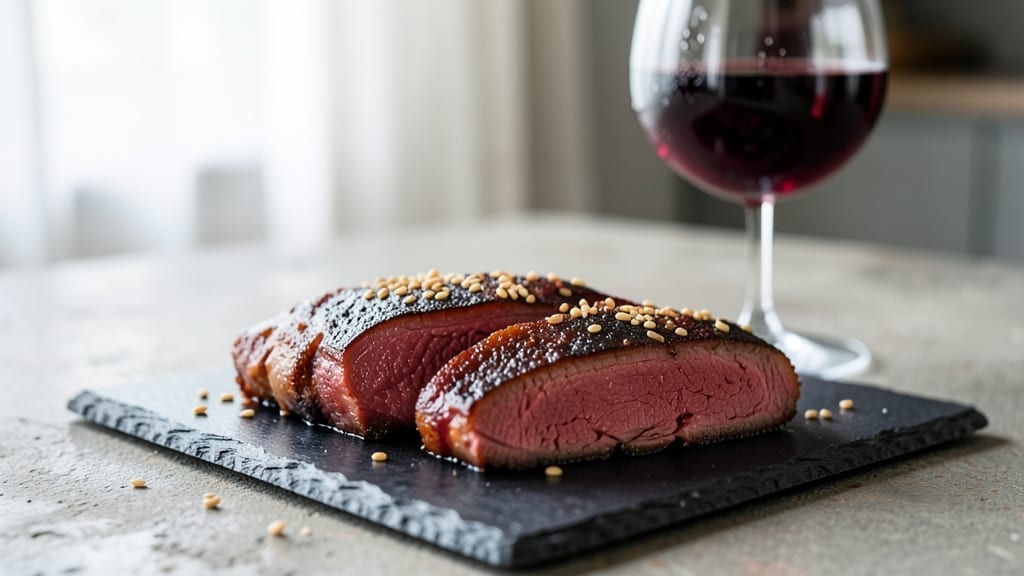
This smoked corned beef recipe transforms tough brisket into melt-in-your-mouth perfection with a crispy bark that cracks under pressure. 🔥 The secret lies in low-and-slow smoking paired with precise temperature control—a method I perfected after years of backyard cookouts where hickory smoke became my first love.
What starts as a simple brisket becomes a showstopper when the bark develops that coveted snap and the meat falls apart at the touch of a fork.
The process begins with a foolproof curing stage that tenderizes the meat while infusing it with deep, savory flavors. You’ll need a quality smoker (pellet, offset, or electric), but the technique itself is straightforward: maintain a steady 225°F for hours until internal temps hit 195-203°F.
This slow cook ensures the connective tissue breaks down completely, while the bark forms through careful spritzing and smoke exposure. The result? A dish that’s both impressive and deeply satisfying.
By the time you slice into that beautifully smoked brisket, you’ll be rewarded with tender, juicy meat that practically melts in your mouth. The bark adds a satisfying contrast, while the smoky aroma fills your kitchen—proof that patience pays off in flavor.
Serve it on rye with mustard or in a classic Reuben sandwich, and you’ll understand why this recipe becomes a centerpiece for gatherings. Let’s get started on creating your own masterpiece.
For those new to smoking, don’t worry—this method is designed to be approachable. We’ll cover everything from equipment setup to troubleshooting common issues, so you can achieve restaurant-quality results in your own backyard.
The key is attention to detail, especially during the smoking phase where temperature consistency makes all the difference. Trust me, once you try this, you’ll never go back to store-bought corned beef again.
Ingredients for smoked corned beef
Pantry staples meet backyard smoke magic—just a few ingredients transform brisket into showstopping perfection.
| Ingredient | Amount | Notes |
|---|---|---|
| Beef Brisket 🥩 | 4 lb | Flat cut, 1-inch thick |
| Yellow Mustard 🍯 | ½ cup | For curing rub base |
| Kosher Salt 🧂 | 1 ½ cups | Diamond Crystal preferred |
| Brown Sugar 🍚 | ½ cup | Light or dark |
| Black Peppercorns 🌶️ | 2 tbsp | Freshly cracked |
| Garlic Powder 🧄 | 2 tbsp | Not garlic salt |
| Ground Coriander 🌿 | 1 tbsp | For depth of flavor |
| Ground Cloves 🌿 | 1 tsp | Whole cloves ground fresh |
| Hickory Wood Chips 🌳 | 2 lb | Unsoaked, for smoking |
| Apple Juice 🍎 | 2 cups | For spritzing during smoke |
| Yellow Onions 🧅 | 2 whole | Quartered, for serving |
| Pickle Slices 🥒 | 12 slices | For serving |
| Rye Bread 🍞 | 1 lb | For serving, sliced |
| Russian Dressing 🥫 | ½ cup | For serving |
| Yellow Mustard (for serving) 🍯 | ¼ cup | For sandwiches |
[recipe_ingredient_scaler]
The brisket is non-negotiable—flat cut, 1-inch thick gives you that ideal balance of tenderness and bark. Costco or local butchers usually have it pre-trimmed, but if you’re buying whole, trim it yourself for even cooking. Look for good marbling—those little fat streaks are what make the meat juicy. I always buy mine a day ahead and let it sit uncovered in the fridge to dry-brine slightly. The hickory wood chips? Grab Traeger or Cookshack brands—they’re consistent and won’t leave bitter aftertaste. Freshly cracked peppercorns make all the difference here—pre-ground loses potency fast.
No kosher salt? Diamond Crystal is the gold standard, but Morton kosher salt works too—just use the same amount. Short on brown sugar? White sugar plus 1 tsp molasses gets you close. The coriander and cloves might be tricky to find—Penzeys or bulk spice shops have them, or check the international aisle at Whole Foods. For the spritzing, apple juice or cider vinegar both work—just avoid anything too sweet like orange juice. The rye bread should be dark, dense rye—the kind that holds up to juicy corned beef without getting soggy. Martins or Hebrew National are my go-tos, but any good sourdough rye works.
This keeps beautifully—3-4 days in the fridge if wrapped tightly in butcher paper, or 3 months frozen. I like to portion the leftovers into Reuben sandwiches for easy lunches. The bark gets even better the next day if you reheat it slowly in the oven. For serving, assemble everything the morning of—onions, pickles, mustard, and Russian dressing all taste fresher that way. The meat reheats best at 300°F for 20 minutes—just cover it with foil to keep it moist.
Why You’ll Love This Recipe
- I’ll be real: this isn’t just for St. Paddy’s. Leftovers? Chef’s kiss. Wrap it tight in butcher paper, and you’ve got a 3-day stash of corned beef that’s perfect for sandwiches, grain bowls, or even just reheated with a slice of rye. My kids devour the pickles and Russian dressing leftovers too—no waste, just satisfaction.
- Here’s what sold me: that perfect bark. The apple juice spritzing every two hours keeps the meat juicy while letting the exterior caramelize into something crispy and addictive. No fancy tools—just a spray bottle and patience. Trust me, the first bite is worth every hour of smoke time.
Step-by-step instructions for smoked corned beef
Here’s how to transform tough brisket into melt-in-your-mouth perfection with that coveted crispy bark.
🔥 Step 1: Cure the Brisket Overnight
In a large bowl, combine the ½ cup yellow mustard, 1½ cups kosher salt, ½ cup brown sugar, 2 tbsp freshly cracked black peppercorns, 2 tbsp garlic powder, 1 tbsp ground coriander, and 1 tsp ground cloves. Mix thoroughly until completely uniform—no dry spots should remain. This is your curing rub.
Pat the 4 lb beef brisket dry with paper towels, then generously coat all sides with the curing mixture, pressing it into the meat. Wrap tightly in plastic wrap and refrigerate for 24 hours. This step is non-negotiable for tenderizing the meat and developing that signature corned beef flavor. The longer it cures, the more flavorful the result, but don’t exceed 48 hours or the meat may become too soft.
🍳 Step 2: Prepare the Smoker and Preheat
Soak the 2 lb hickory wood chips in water for 30 minutes before using. Set up your smoker for indirect heat—place the wood chips on one side and leave the other side empty for the brisket. Preheat to 225°F using only the wood chips (no charcoal or gas). You’ll know it’s ready when you see thin, blue smoke wafting from the chimney.
While preheating, prepare a spray bottle with the 2 cups apple juice. This will help maintain moisture during the long smoke. Line the smoker’s drip pan with aluminum foil for easy cleanup. The reason for the low temperature is simple: it allows collagen to break down slowly, resulting in that signature tender texture we’re after.
⏰ Step 3: Smoke the Brisket Low and Slow
Remove the brisket from the fridge and pat it dry one final time. Place it fat-side up on the empty side of the smoker (this prevents the fat from pooling and creating steam). Close the lid and smoke for 12 hours, maintaining 225°F. Every 2 hours, spray both sides of the brisket with the apple juice mixture. This keeps the meat moist and helps create that beautiful bark.
Here’s where patience pays off: the brisket will hit “the stall” around 160°F—the temperature plateaus as moisture evaporates. Don’t panic. This is normal. Continue smoking until the internal temperature reaches 203°F (about 16-18 hours total). The bark should be deep mahogany brown and crispy to the touch, with a smoke ring just beneath the surface.
🥘 Step 4: Rest and Prepare Serving Components
Remove the brisket from the smoker and transfer it to a cutting board. Tent loosely with aluminum foil and let it rest for 1 hour. This resting period allows the juices to redistribute, ensuring every slice is moist and flavorful. While it rests, slice the 2 yellow onions into ¼-inch rings and arrange them on a baking sheet.
Preheat your oven to 350°F and broil the onions for 10-12 minutes until caramelized. Toast 8 slices of the 1 lb rye bread until golden and crisp. Arrange the remaining 4 slices on a serving platter. The contrast of warm, crispy bread with tender corned beef is what makes this dish unforgettable.
🍽️ Step 5: Slice and Assemble
After resting, slice the brisket against the grain into ¼-inch thick slices. Arrange the slices on the toasted rye bread, then top with the caramelized onions. Drizzle with ½ cup Russian dressing and serve with the remaining 12 pickle slices and ¼ cup yellow mustard (for serving) on the side. Each bite should deliver that perfect balance of smoky, tender meat with a crispy exterior.
For an extra touch, sprinkle a pinch of freshly cracked black peppercorns on top before serving. The combination of textures—crispy bark, tender meat, caramelized onions, and tangy pickles—is what makes this smoked corned beef experience truly special. Serve immediately while everything is at its peak.
Pro Tips For Making Smoked Corned Beef
- Crack Pepper Fresh: I learned this the hard way—store-bought pre-ground black pepper loses potency fast. Crush those 2 tbsp peppercorns right before mixing with the curing rub, and you’ll taste the difference in every bite of that crispy bark.
- Don’t Skip the 24-Hour Cure: The curing rub isn’t just flavoring—it’s the magic that turns tough brisket into melt-in-your-mouth perfection. Rush it, and you’ll end up with dry, flavorless meat. Wrap that brisket tight and let it sit exactly 24 hours, no excuses.
- Spray Like a Pro: Those 2 cups of apple juice aren’t just for show—spraying every 2 hours keeps the bark from drying out while you wait for that 203°F internal temp. Use a fine-mist spray bottle, and don’t drown the meat—just keep it glistening.
- Rest or Regret: Skipping that 1-hour rest after smoking is how you end up with juices pooling on your cutting board instead of in the meat. Tent it loosely with foil, and let it chill out—your slices will thank you.
Regional styles of these flavors
Irish Pub Tradition
If you’ve ever been to an Irish pub, you know smoked corned beef is a staple for St. Patrick’s Day. The Irish use a salt-cured brine with a touch of whole spices like cloves and allspice, then smoke it low and slow over applewood for that classic aroma.
I remember my first trip to Dublin—every pub had their own version, but the best was at The Brazen Head, where they served it with caramelized onions and Dublin Bay salt on the side.
The key here is patience: let it smoke for 16-18 hours to develop that deep, smoky flavor. 🍀
Jewish Delicatessen Style
In New York’s Jewish delis, smoked corned beef is a Reuben sandwich essential. They cure it with coarse kosher salt and mustard seeds, then smoke it until the bark is deep mahogany.
The meat is sliced thin and piled high on rye bread with Swiss cheese and Russian dressing. I love how the smoky depth pairs with the tangy dressing—it’s a match made in deli heaven. The trick? Use freshly cracked peppercorns in the rub for that extra kick. 🥪
Southern BBQ Twist
Down South, they take corned beef and add a spicy kick with hot sauce and smoked paprika in the rub. I once smoked a brisket at a Texas BBQ competition using Penzeys hot honey in the apple juice spritz—it gave the bark a subtle heat that surprised everyone.
Serve it with pickled jalapeños and creamy coleslaw for a fusion that’s pure Southern charm. The low-and-slow method ensures the meat stays juicy while the bark gets that perfect snap. 🔥
German Bratenhouse Approach
In Germany, they treat corned beef like a slow-roasted braten, smoking it with beechwood instead of hickory. The rub includes marjoram and bay leaves for an earthy depth, and they often serve it with red cabbage and potato dumplings.
I tried this once after a ride along the Black Forest trails—the herbs added a complexity I hadn’t expected. Let it rest for 2 hours after smoking to let the flavors meld, then slice against the grain for maximum tenderness. 🌳
Modern Smoker’s Fusion
For those who love experimenting, blend Irish and Southern flavors by adding ginger and star anise to the rub alongside the cloves. Smoke it with a mix of hickory and applewood for a sweet-smoky balance.
I’ve done this with wild herbs I forage near the coast—sea thyme and rosemary add a coastal twist. Serve it on sourdough toast with spicy mustard and caramelized red onions for a dish that’s equal parts tradition and innovation. 💛
Nutrition facts
Frequently asked questions
Why does the brisket need to cure overnight?
The 24-hour cure tenderizes the tough brisket while infusing it with deep flavor from the kosher salt, brown sugar, and spices. This step breaks down proteins and develops that signature corned beef taste. Skipping it means tougher meat and less bark development. Trust the process—it’s what makes this dish legendary!
What if my smoker doesn’t reach 225°F consistently?
If your smoker struggles with temperature, use a digital probe thermometer to monitor both the smoker and meat. Add more wood chips or adjust airflow—even 200°F works, just extend smoking time by 1-2 hours. Patience is key; consistency matters more than perfection.
Can I use regular salt instead of kosher salt?
Yes, but adjust the amount—use 1 cup table salt for every 1½ cups kosher salt in the rub. Kosher salt’s coarse texture blends better, but table salt works fine. Just measure by volume, not weight, for accuracy.
How do I know when the bark is ready?
Look for a deep mahogany color and crispy texture when you press it gently. The bark should crack under pressure, and the internal temp should hit 203°F. If it’s too soft, smoke another 1-2 hours at 225°F. The bark is worth the wait!
Can I make this ahead of time?
The meat keeps beautifully for 3-4 days in the fridge if wrapped tightly in butcher paper. Reheat at 300°F for 20 minutes—the bark gets even better the next day. Leftovers make fantastic Reuben sandwiches!

Trained in classic French technique but raised on slow-cooked ribs and spicy rubs, she blends culinary skill with smoke and soul.
- Chinese Braised Beef Brisket with Daikon Recipe: Silky Tender Meat and Crunchy Roots - October 18, 2026
- Oklahoma Joe’s Smoked Beans Recipe: Slow-Smoked Flavor That Rivals the Original - October 18, 2026
- Beef Brisket Chili Recipe: Slow-Simmered Richness with Deep Flavor Layers - October 18, 2026