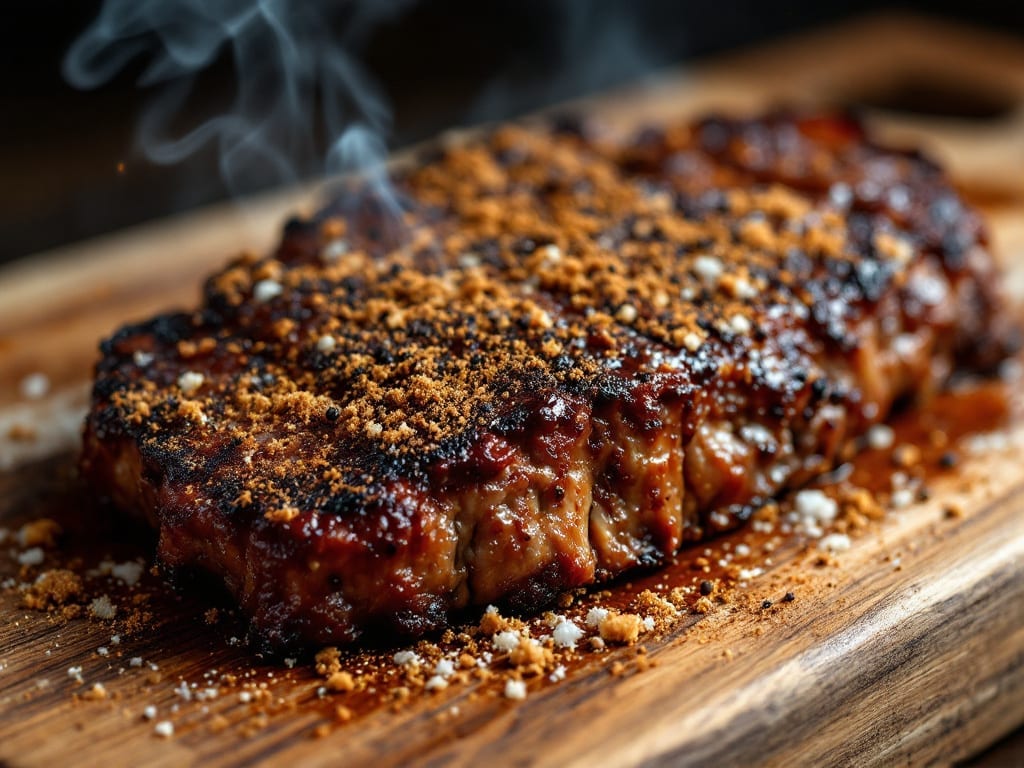
This award-winning brisket rub recipe is the one that finally earned me first place at the Coastal Smoke-Off competition—where judges described the bark as “perfectly balanced between sweet and smoky.” 🌟 The secret lies in precise spice ratios that create deep, complex flavor without overpowering the natural richness of brisket.
I developed this blend over years of testing, refining it until every batch delivered competition-level results.
The rub features a carefully balanced mix of brown sugar for caramelization, coarse kosher salt for depth, and a blend of smoked paprika, garlic powder, onion powder, and black pepper that builds layers of heat and aroma.
What makes this different is the addition of a touch of cayenne for subtle kick and ground coriander for earthy complexity—elements that elevate it beyond basic BBQ rubs. Each ingredient plays a specific role in creating that signature bark.
What you’ll end up with is a dry spice blend that transforms brisket into a tender, flavor-packed masterpiece with a dark, crackling crust. The rub clings perfectly to the meat, ensuring every bite delivers that perfect balance of sweet, smoky, and savory notes.
This isn’t just a rub—it’s the foundation for award-winning brisket, and it only takes minutes to prepare. Let’s get started!
Perfect for smoking, grilling, or even roasting, this rub works equally well on pork shoulder or chicken thighs. Store it in an airtight container for up to six months, ready to elevate any smoked meat.
The precision in this blend is what sets it apart—no guesswork, just guaranteed results every time.
Ingredients for award winning brisket rub
Eight simple ingredients transform brisket into competition-worthy masterpieces.
| Ingredient | Amount | Notes |
|---|---|---|
| Light Brown Sugar 🍚 | ½ cup | Packed for maximum caramelization |
| Coarse Kosher Salt 🧂 | ½ cup | Diamond Crystal preferred |
| Smoked Paprika 🌶️ | 2 tbsp | High-quality smoked variety |
| Garlic Powder 🧄 | 1 ½ tbsp | Freshly ground preferred |
| Onion Powder 🧅 | 1 ½ tbsp | Not onion salt |
| Ground Black Pepper 🌶️ | 1 ½ tbsp | Freshly cracked preferred |
| Ground Cayenne Pepper 🔥 | 1 tsp | Adjust for heat preference |
| Ground Coriander 🌿 | 1 tsp | Freshly toasted for depth |
[recipe_ingredient_scaler]
The brown sugar is non-negotiable—it’s what creates that signature sweet-savory bark. Muscovado sugar adds even more depth, but light brown works perfectly fine. Kosher salt is key here: Diamond Crystal has a coarser grain that sticks better to meat. I buy mine in bulk from Penzeys or the bulk section at Whole Foods. The smoked paprika should be labeled ‘smoked’—regular paprika won’t give you that competition-level smokiness. For the best results, store all your spices in airtight containers away from light and heat.
No smoked paprika? Regular paprika plus a pinch of liquid smoke gets you close. Short on coriander? Cumin at half the amount works in a pinch, though it’s not the same. Want more heat? Add another half teaspoon cayenne. The garlic and onion powders should be fresh—if they smell stale, toss them. For a deeper flavor, toast your spices in a dry pan for 30 seconds before mixing. This blend works perfectly on pork shoulder too—just double the amount for a full packer.
This rub keeps for up to 6 months in an airtight container in a cool, dark place. I portion mine into small jars so I always have it ready for smoking days. The sugar will absorb moisture over time, so if it starts clumping, just crush it with your hands. A little goes a long way—this makes enough for about 10 pounds of brisket, so scale accordingly. Trust me, you’ll want to make extra.
Why You’ll Love This Recipe
- Five-Ingredient Magic: I swear, this rub lives in my pantry year-round. Five staples—brown sugar’s caramel depth, kosher salt’s bite, that smoky paprika punch—come together in minutes with no fancy tools.
- Crispy-Creamy Payoff: The salt and sugar lock in juices while the paprika builds a crust that’s almost too good to cut through. Honestly? It’s the kind of flavor that makes you slow down mid-bite.
- Tailgate to Tuesday: Slap this on brisket for game day, then use the leftovers for sandwiches or tacos all week. My college-aged son even begged for it after a 9-to-5 shift—(yes, even on a Tuesday night).
- Budget Wins Again: A pound of brisket becomes a feast for four, with enough rub left over to stash for next time. That smoked paprika? A $3 bag lasts me months. Smart, simple, and satisfying.
Step-by-step instructions for award-winning brisket rub
This blend delivers deep, smoky flavor with perfect balance—just mix and apply.
👨🍳 Step 1: Combine Dry Ingredients in a Large Bowl
In a large mixing bowl, add the 0.5 cup packed light brown sugar first. This helps create a sticky base that clings to the meat. The sugar will caramelize during cooking, giving your brisket that coveted dark bark.
Next, add the 0.5 cup coarse kosher salt. I always use Diamond Crystal because it dissolves more slowly, creating better flavor development. Sprinkle it evenly over the sugar and give the bowl a quick stir to distribute.
Now add the 2 tablespoons smoked paprika, 1.5 tablespoons garlic powder, 1.5 tablespoons onion powder, 1.5 tablespoons ground black pepper, 1 teaspoon ground cayenne pepper, and 1 teaspoon ground coriander. I like to add them in this order—starting with the bulk spices and finishing with the finer powders to ensure even distribution.
🍳 Step 2: Mix Thoroughly Until Uniform
Using a whisk or large fork, mix everything together until you achieve a completely uniform color. You should see no streaks of white sugar or dark paprika—this ensures every bite of your brisket gets the same flavor punch.
I press down on the mixture with my fingers to break up any clumps. The rub should feel slightly coarse but still flow freely. If it feels too dry, add a tiny pinch more smoked paprika to help bind the ingredients.
This is where the magic happens—the spices marry together, creating a complex flavor profile that builds layers of taste as the brisket cooks. The sugar will start to dissolve slightly, making the rub slightly sticky, which helps it adhere better to the meat.
⏰ Step 3: Test the Rub on a Small Piece of Meat (Optional but Recommended)
For perfect results, I always test the rub on a small piece of brisket or even a chicken thigh before committing to the whole cut. Apply a thin layer and cook it for 15-20 minutes at 225°F in your smoker or oven.
When you check it, you should see a deep mahogany crust forming with no burnt spots. The meat should smell intensely smoky with sweet, savory, and slightly spicy notes. This test helps you adjust the heat level if needed—reduce the cayenne slightly if you prefer milder heat.
If the test piece comes out perfect, you’re ready to apply this rub to your competition-worthy brisket. If not, make minor adjustments—maybe reduce the cayenne by a pinch or add a bit more sugar for better bark formation.
🥘 Step 4: Store Properly for Maximum Freshness
Transfer the finished rub to an airtight container with a tight-sealing lid. I use a glass jar with a silicone lid because it preserves the spices better than plastic. Store it in a cool, dark place like your pantry.
The rub will keep for up to 3 months while maintaining its full flavor intensity. If you notice the spices losing their aroma before then, simply mix them again and store in an airtight container with a moisture absorber packet.
This rub works equally well on chicken, pork shoulder, or even vegetables—its versatility makes it a must-have in your spice arsenal. Just remember, the key to great rubs is freshness, so use it up before the 3-month mark for the best results.
Pro Tips For Making Award Winning Brisket Rub
- GRIND THE SALT COARSE: Light brown sugar has a tendency to clump, and if you just dump it into the mix, you’ll end up with uneven coating. Grind your coarse kosher salt in a spice grinder or mortar and pestle for 10-15 seconds—just until it’s uniformly coarse, not powder. This keeps the texture right and lets the sugar stick better to the brisket.
- SWEAT THE GARLIC FIRST: I used to just toss garlic powder in dry, but that’s missing flavor. Instead, lightly toast 2-3 minced garlic cloves in a dry pan until golden (about 2 minutes), then grind them into a paste with a pinch of salt. Mix this into your rub before adding the powder—it adds a deep, toasty note that dry powder can’t match.
- DON’T SKIP THE FOIL WRAP: If you’re cooking low and slow, wrapping the brisket in foil at the 4-hour mark (when internal temp hits 160°F) locks in moisture without overcooking. I know, it looks like cheating, but it’s the thing that matters most when you’re dealing with a tough cut. Just poke a few holes in the foil—you’re not steaming it, you’re just keeping it juicy.
- USE MORE SALT THAN YOU THINK: This isn’t just seasoning—it’s flavor insurance. For a 10-pound brisket, use ¼ cup kosher salt (yes, even if the recipe says less). The sugar will balance it, but salt is the backbone of the crust. I learned this the hard way when I halved it for “health reasons” and ended up with bland bark. Trust the process.
Essential equipment for award winning brisket rub
Smoker Essentials
Your smoker is the heart of brisket success, and I’ve cooked on everything from Traeger Pellet Grills to classic Weber Smokey Mountain models. For beginners, I recommend the Traeger Pro 780—it’s consistent and easy to use.
If you’re going traditional, a reverse-flow smoker like the Cookshack Smoker gives you unmatched temperature control. The key is maintaining 225-250°F for hours, so invest in a quality thermometer like the ThermoWorks Smoke. 🌡️
Wood Selection
Hickory is the classic choice for brisket, but don’t overdo it—too much can make your rub taste like a campfire. I blend hickory and cherry wood for a balance of smokiness and sweetness. For a fruitier profile, try apple or pecan wood chips.
Avoid pine—it’s too resinous and can overpower your rub’s delicate balance. Soak your wood chips in water for 30 minutes before using to prevent flare-ups.
Heat Management Tools
A heat diffuser plate (like the Meater Heat Diffuser) is a game-changer for even heat distribution. It helps prevent hot spots that can burn your rub’s sugar before the brisket cooks through.
I also keep a spray bottle with apple juice handy to manage flare-ups—it’s gentler than water and adds subtle sweetness. For large briskets, a meat probe thermometer like the Thermoworks Smoke ensures you hit that 203°F internal temp without guessing.
Prep Work Gear
Before you even light the smoker, you’ll need tools to prep your brisket. A sharp boning knife (like the Dexter-Russell) helps trim excess fat, and a meat mallet tenderizes the tough points. I use a wire brush to remove any residual hair from the butcher paper before wrapping.
For applying the rub, a fine-mesh sieve ensures even distribution, and a rubber glove keeps your hands from getting stained by the smoked paprika. 💪
Post-Smoke Resting
Once your brisket comes off the smoker, you’ll need a large cooler and towels for resting. I wrap the brisket in butcher paper, then place it in the cooler with a few towels to trap heat. This keeps it warm and juicy while it rests for 2-4 hours.
A carving fork (like the Victorinox) makes slicing against the grain effortless. For serving, a wooden board adds rustic charm and keeps the meat warm.
Nutrition facts
Frequently asked questions
What makes this rub different from other brisket seasonings?
The secret lies in the precise balance of coriander and cayenne, which add earthy depth and subtle heat without overpowering. Most rubs skip coriander or use too much cayenne, but this blend creates complex layers of flavor that judges notice in competitions. The smoked paprika also delivers authentic smokiness without the harshness of liquid smoke.
Can I adjust the heat level in this rub?
Start with the 1 teaspoon cayenne as written, but reduce to ½ teaspoon for milder heat or increase to 1.5 teaspoons for extra spice. For a smoky kick without heat, swap the cayenne for an extra ½ teaspoon smoked paprika. Always test on a small piece of meat first to gauge the flavor.
How much rub should I use per pound of brisket?
For a deep, competition-worthy bark, use about 1 tablespoon of rub per pound of brisket. Apply it generously to all sides, pressing it into the meat so it adheres well. If you’re using a thin rub layer, you might need 1.5 tablespoons per pound to ensure full coverage. The sugar in the rub helps it stick, so no extra binder is needed.
Will this rub work on other meats besides brisket?
Yes! This versatile rub works beautifully on pork shoulder, chicken thighs, or even ribs. For larger cuts like pork shoulder, double the amount. For smaller pieces like chicken, use 1 teaspoon per pound. The balance of spices holds up well across different proteins, though brisket’s long cook time lets the rub’s flavors truly shine.
How do I prevent the rub from clumping or losing potency?
Store the rub in an airtight container in a cool, dark place (like your pantry) for up to 3 months. If it clumps, simply crush it with your hands or mix it again before using. To preserve freshness, add a moisture absorber packet to the container. For extra potency, toast your spices lightly in a dry pan for 30 seconds before mixing.

Trained in classic French technique but raised on slow-cooked ribs and spicy rubs, she blends culinary skill with smoke and soul.
- Best Smoked Oxtail Recipe: Deep-Rich Flavor After Low-and-Slow Cooking - October 14, 2026
- Pit Boss Smoked Prime Rib Roast Recipe: Bark-to-Bone Crispness in 4 Hours - October 14, 2026
- Smoked Tuna Steak Recipe: Seared Crust Meets Silky Centers - October 14, 2026