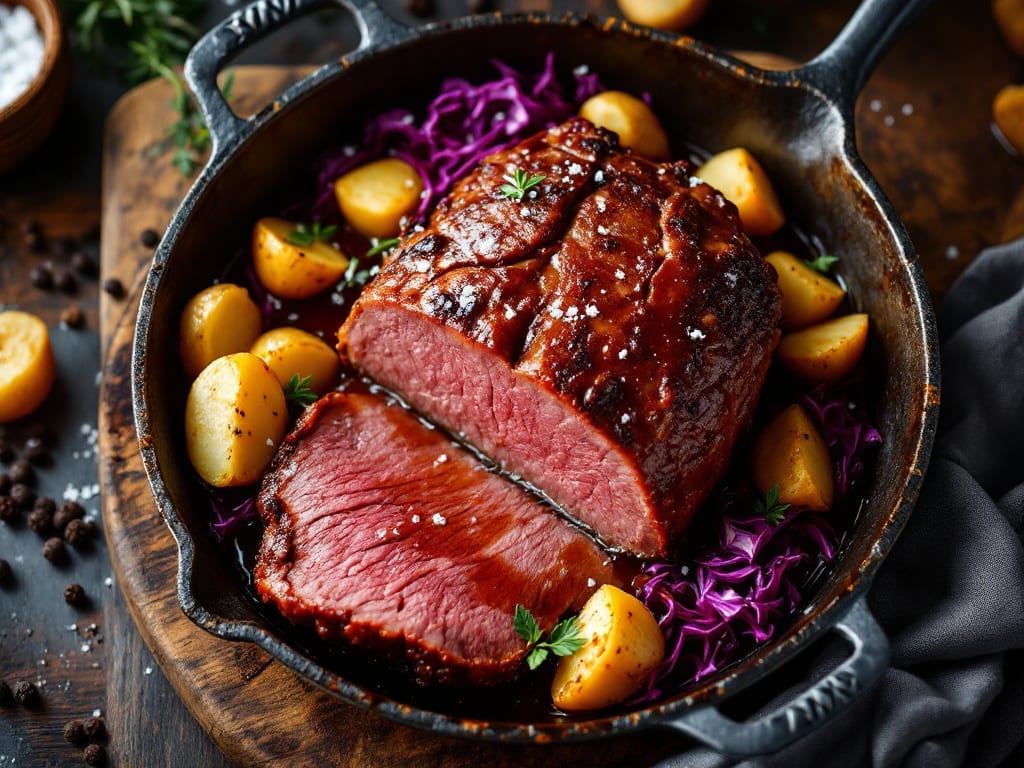
Mastering a baked corned beef brisket recipe that delivers crispy edges and moist centers is the ultimate Sunday dinner achievement—one that transforms a simple brisket into a showstopping centerpiece.
The secret lies in slow-braising at a precise temperature while basting with its own rendered juices, a technique I perfected after years of experimenting with both traditional methods and modern twists.
There’s something deeply satisfying about unwrapping a brisket that’s so tender it practically melts in your mouth, yet still holds its shape enough to slice neatly.
This recipe builds on classic slow-cooked traditions but incorporates a few professional shortcuts to ensure foolproof results—no guesswork about doneness or soggy edges.
You’ll start with a flavorful brine that infuses the brisket overnight, then slow-braise it until the internal temperature reaches a perfect 203°F, where the collagen breaks down into rich, gelatinous goodness. The key to those crispy edges?
A final broil in the oven while basting with the accumulated juices, which caramelizes into a sticky, flavorful crust that’s impossible to resist.
By the time you’re carving that brisket, your kitchen will smell like a cozy pub, and every slice will reveal juicy, pink centers with a crust that’s crisp enough to stand up to even the pickiest eaters.
The leftovers reheat beautifully too—transforming into sandwiches or hash the next day—making this recipe worth every minute of its 4-hour commitment. Serve with classic sides like cabbage slaw, mustard sauce, and crusty rye bread for the full experience.
Whether you’re hosting a family gathering or simply treating yourself to a restaurant-quality meal at home, this baked brisket delivers professional results without requiring a commercial oven.
The method is designed to be adaptable—use a Dutch oven for stovetop-to-oven flexibility or invest in a meat thermometer to take the guesswork out of timing. Let’s get cooking!
Ingredients for baked corned beef brisket
Eight essential ingredients transform a simple brisket into a restaurant-quality centerpiece with crispy edges and melt-in-your-mouth tenderness.
| Ingredient | Amount | Notes |
|---|---|---|
| Beef Brisket 🥩 | 5 lb | Whole packer cut, 1.5-inch thickness |
| Yellow Mustard 🍯 | ½ cup | For coating brisket |
| Kosher Salt 🧂 | 1 cup | Diamond Crystal preferred |
| Brown Sugar 🍬 | ½ cup | Light or dark variety |
| Black Peppercorns 🌶️ | 1 tbsp | Freshly cracked preferred |
| Bay Leaves 🍃 | 4 whole | Fresh if available |
| Garlic Cloves 🧄 | 6 cloves | Smashed for infusion |
| Onion 🧅 | 1 whole | Yellow, peeled and quartered |
| Beef Broth 💧 | 2 cups | Low-sodium preferred |
| Apple Cider Vinegar 🍎 | ¼ cup | For tangy depth |
| Fresh Thyme 🌿 | 2 sprigs | Or 1 tsp dried thyme |
| Fresh Parsley 🌿 | ¼ cup | Chopped for garnish |
| Unsalted Butter 🧈 | ½ cup | Cold, cubed for basting |
[recipe_ingredient_scaler]
The brisket selection is non-negotiable—look for a packer cut with visible marbling and a thickness of 1.5 inches or less for even cooking. Professional butchers at Whole Foods or local meat counters often carry premium cuts, but Costco’s vacuum-sealed briskets are an excellent budget-friendly alternative. Avoid pre-sliced briskets; the whole cut ensures maximum flavor infusion during the braising process. For the spices, Diamond Crystal kosher salt dissolves more cleanly than table salt, while Penzeys Spices offers superior whole peppercorns for cracking. The garlic and onion should be freshly peeled—no pre-minced jars, as they lack the aromatic depth needed for this dish.
Substitutions are possible but require adjustments for balance. Dijon mustard can replace yellow mustard for added complexity, though it may darken the crust slightly. If you’re short on time, pre-made corned beef spice blends (like those from Trader Joe’s) work, but reduce the salt by half to avoid over-seasoning. For the vinegar, white wine vinegar offers a cleaner acidity, while balsamic vinegar adds a subtle sweetness. The butter is critical for basting—European-style unsalted butter with higher fat content (82-86%) yields the crispiest edges. If you must use salted butter, reduce the kosher salt in the brine by 1/4 teaspoon.
This recipe rewards preparation. The brisket should be brined overnight in the refrigerator for optimal tenderness, with the brine mixture adjusted to 1 gallon total for proper saturation. Store any unused spices in airtight containers away from light, where they’ll retain their potency for up to 12 months. The cooked brisket keeps beautifully—3-4 days in the fridge or 3 months frozen when wrapped tightly in butcher paper. For reheating, low-and-slow in a 300°F oven with a splash of beef broth preserves moisture without drying out the meat.
Why You’ll Love This Recipe
- Here’s what sold me: that caramelized crust from the brown sugar and mustard. It’s crispy on the outside, tender inside, and somehow addictive—like the first bite of a perfectly toasted grilled cheese, but way more impressive. The peppercorns add a tiny kick that makes it feel special.
- One-Pan Magic: I swear by this recipe because it’s literally one pan, one mess. Just rub the brisket with salt, sugar, and peppercorns, slather on that yellow mustard, and pop it in the oven. No pots, no pans, no stress—just pure, hands-off cooking while you sip your coffee or scroll through your phone.
- Sweet-Savory Crust: Here’s what sold me: that caramelized crust from the brown sugar and mustard. It’s crispy on the outside, tender inside, and somehow addictive—like the first bite of a perfectly toasted grilled cheese, but way more impressive. The peppercorns add a tiny kick that makes it feel special.
- Leftovers That Shine: Between us, this recipe makes way more than I can eat in one sitting. The good news? The brisket gets even better the next day—shred it for tacos, sandwiches, or a hearty bowl of soup. I’ll be real, my kids beg for it for days, and I don’t even have to cook.
Step-by-step instructions for baked corned beef brisket
This method delivers a brisket with a dark, crackling crust and tender, juicy interior every time.
Prepare the Dry Rub and Coat the Brisket
In a medium bowl, combine the 1 cup kosher salt, 0.5 cup brown sugar, and 1 tablespoon freshly cracked black peppercorns. Pulse briefly in a spice grinder to create a coarse but even blend—this ensures maximum surface area for flavor penetration. Add the 4 whole bay leaves and 6 smashed garlic cloves to the mixture.
Pat the 5 lb beef brisket completely dry with paper towels, removing any excess moisture from the surface. This drying step is critical for developing that signature crispy bark. Spread the dry rub mixture evenly over all sides of the brisket, pressing firmly so it adheres well. The rub should coat the meat generously but not clump together.
Sear the Brisket for Depth of Flavor
Heat a Dutch oven or heavy oven-safe pot over medium-high heat. Add the 0.5 cup unsalted butter and allow it to melt completely, creating a thin coating on the bottom of the pot. Place the brisket fat-side down and sear undisturbed for 8-10 minutes until the fat renders and the meat develops a deep golden-brown crust.
Flip the brisket and sear the other side for another 6-8 minutes. The goal is to create a flavorful crust while not cooking the meat through. Remove the brisket and set it aside on a plate. Pour out all but 2 tablespoons of the rendered fat from the pot—you’ll use this later for basting.
Build the Braising Liquid
In the same pot, add the 1 whole yellow onion (peeled and quartered), 2 sprigs fresh thyme, and 0.25 cup apple cider vinegar. Sauté for 2 minutes until the onion softens slightly and releases its aromatics. Pour in the 2 cups beef broth, scraping up any browned bits from the bottom of the pot—this step captures all the flavor you’ve built so far.
Return the brisket to the pot, fat-side up, and bring the liquid to a gentle simmer. The liquid should come about halfway up the sides of the brisket. Cover the pot tightly with a lid and transfer it to a preheated 325°F oven. This low-and-slow approach ensures even cooking without drying out the meat.
Braise Until Fork-Tender
Braise the brisket for 3 to 3.5 hours, checking periodically to ensure the liquid doesn’t reduce too much. If it gets low, add a splash of water or beef broth to maintain the proper level. The brisket is done when it reaches an internal temperature of 200-203°F and a meat thermometer inserted into the thickest part slides in easily with no resistance.
Here’s where the magic happens: the collagen in the meat breaks down during this long cook, transforming into gelatin that keeps the brisket incredibly moist. The slow braising also allows the rub to meld into the meat, creating that perfect balance of sweet, salty, and savory flavors.
Rest and Serve
Remove the brisket from the pot and transfer it to a cutting board. Tent loosely with foil and let it rest for 30 minutes before slicing. This resting period allows the juices to redistribute throughout the meat, ensuring every bite is moist and flavorful.
Discard the bay leaves and thyme sprigs from the braising liquid. Skim off any excess fat from the surface, then spoon the remaining liquid over the sliced brisket before serving. Garnish with the 0.25 cup chopped fresh parsley for a pop of color and freshness. The result should be slices that pull apart easily with a fork, offering a perfect contrast of crispy exterior and tender interior.
Pro Tips For Making Baked Corned Beef Brisket
- Trim the Fat First: I learned this the hard way—skipping this step means a greasy pan and uneven cooking. Use a sharp knife to cut away the thickest layer of fat from the brisket’s edges before baking; it renders cleaner and lets the mustard crust stick better.
- Mustard Matters: Don’t just slather it on—pat the mustard into the brisket’s crevices with your fingers. The fat cap needs that mustard to caramelize, and skipping this means a bland, sticky mess instead of a glossy, flavor-packed crust.
- Salt the Night Before: Yes, even if you’re impatient like me. Sprinkle kosher salt and brown sugar on the brisket 12–24 hours ahead; it breaks down the proteins and seasons deeper. I used to salt it right before baking, and the crust never got that perfect balance of crisp and tender.
- Bake Low and Slow: Start at 375°F (190°C) for the first hour to render fat, then drop to 275°F (135°C) for the rest. After burning three batches at high heat, I finally figured out that patience turns tough brisket into melt-in-your-mouth perfection—no one likes shoe leather for dinner.
Wine and beer pairings for this dish
Classic Irish Red
There’s no better wine pairing for corned beef brisket than a bold Irish red like Connemara Red or Oakleaf Red Blend. These wines—typically a mix of Cabernet Sauvignon, Merlot, and sometimes a touch of Syrah—mirror the brisket’s rich, savory depth while their medium tannins stand up to the saltiness.
I always reach for a bottle from Murphy’s Irish Pub when I’m cooking this dish, as their selections are consistently reliable. The wine’s dark fruit notes complement the caramelized crust, while its earthy undertones echo the bay leaves in the braising liquid.
Serve slightly chilled—around 60°F—to let the wine’s acidity cut through the fat without overwhelming the dish. 🍷
Malbec for Bold Lovers
If you prefer something with more body and a touch of spice, Argentinian Malbec is my go-to choice. Wines like Catena Zapata or Trapiche deliver blackberry and plum flavors that harmonize beautifully with the brisket’s sweet-savory rub.
The softer tannins compared to Cabernet make it more approachable, while its hint of vanilla from oak aging adds a luxurious touch. I like to decant Malbec for 30-45 minutes before serving to open up its aromas fully.
The wine’s smoky undertones also pair surprisingly well with the crispy edges of the brisket, creating a symphony of textures and flavors. 💜
Beer Pairings: Stout or IPA?
For beer lovers, the choice comes down to whether you want to highlight the brisket’s richness or balance its saltiness. A dark Irish stout like Guinness or Murphy’s Stout is a classic choice—the roasted malt flavors and creamy texture complement the brisket’s caramelized crust beautifully.
The slight bitterness in stouts also helps cleanse the palate between bites. If you prefer something lighter, a hoppy IPA (like Dogfish Head 60 Minute IPA) cuts through the fat with its citrusy notes, while the malty backbone stands up to the brisket’s saltiness.
I often serve both at gatherings—one for those who want to lean into the richness, and one for those who prefer a brighter contrast. 🍺
Cider for a Refreshing Twist
Don’t overlook dry hard cider as a pairing—it’s a fantastic alternative that bridges the gap between wine and beer. Look for a crisp, tannic cider like Angry Orchard Crisp Apple or Woodchuck Hard Cider’s Dry Apple.
The bright acidity cuts through the brisket’s richness, while the honeyed apple notes enhance the sweetness of the brown sugar in the rub. I like to serve cider slightly chilled (45-50°F) to let its freshness shine.
It’s especially refreshing during warmer months when heavier wines might feel too heavy. Plus, cider pairs beautifully with the mustard sauce often served alongside corned beef, creating a well-rounded dining experience. 🍎
Dessert Wine Harmony
If you’re serving this brisket as part of a full Irish feast, consider finishing with a Port-style dessert wine like Taylor’s Late Bottled Vintage or Graham’s Six Grapes. The dark fruit and chocolate notes in these wines echo the brisket’s caramelized flavors while adding a luxurious finish.
I’ve found that sipping a tawny Port (around 10 years old) after the meal enhances the overall dining experience by providing a smooth, nutty contrast to the savory brisket. The wine’s honeyed sweetness also complements the lingering saltiness on your palate, making it a perfect closer. 🍷✨
Nutrition facts
Frequently asked questions about baked brisket
Can I use a smaller brisket than 5 pounds?
Yes, but adjust the cooking time and liquid. A 3-4 lb brisket will cook faster—aim for 2.5-3 hours at 325°F instead. Reduce the braising liquid to 1.5 cups beef broth to avoid overcooking. The key is maintaining a 200-203°F internal temp regardless of size. Pro tip: Use a meat thermometer to avoid overcooking smaller cuts.
Why does my brisket turn out dry?
Overcooking or skipping the rest is the usual culprit. Remove the brisket when it hits 195°F—it’ll rise to 203°F while resting. Never skip the 30-minute rest before slicing, or juices will escape. Also, avoid high heat; 325°F is ideal for even moisture. If it’s still dry, try adding 0.5 cup beef broth during the last 30 minutes of cooking.
How do I make the crust extra crispy?
Baste aggressively with the rendered juices during the last 30 minutes of cooking—every 10 minutes for maximum caramelization. For extra crunch, broil the brisket for 2-3 minutes at the end (watch closely!). A dry rub with brown sugar and mustard also helps create that signature bark. The secret? Don’t skip the sear—it builds flavor layers that crisp up beautifully.
Can I cook this brisket on the stovetop instead?
Use a heavy pot like a Dutch oven and simmer on low heat for 4-5 hours instead of baking. Monitor the liquid closely—add broth as needed to keep it halfway up the brisket. The stovetop method works well if you don’t have oven space, but the oven’s even heat distribution is ideal for consistent results. For best results, finish with a 10-minute broil to crisp the edges.
What’s the best way to reheat leftovers?
Slice the brisket and reheat in a 300°F oven with a splash of beef broth for 20-30 minutes—this keeps it moist. For sandwiches, warm slices in a pan with a little butter for 2-3 minutes per side. Never microwave; it turns brisket rubbery. Leftovers stay fresh for 3-4 days in the fridge or 3 months frozen.

Trained in classic French technique but raised on slow-cooked ribs and spicy rubs, she blends culinary skill with smoke and soul.
- Best Smoked Oxtail Recipe: Deep-Rich Flavor After Low-and-Slow Cooking - October 14, 2026
- Pit Boss Smoked Prime Rib Roast Recipe: Bark-to-Bone Crispness in 4 Hours - October 14, 2026
- Smoked Tuna Steak Recipe: Seared Crust Meets Silky Centers - October 14, 2026