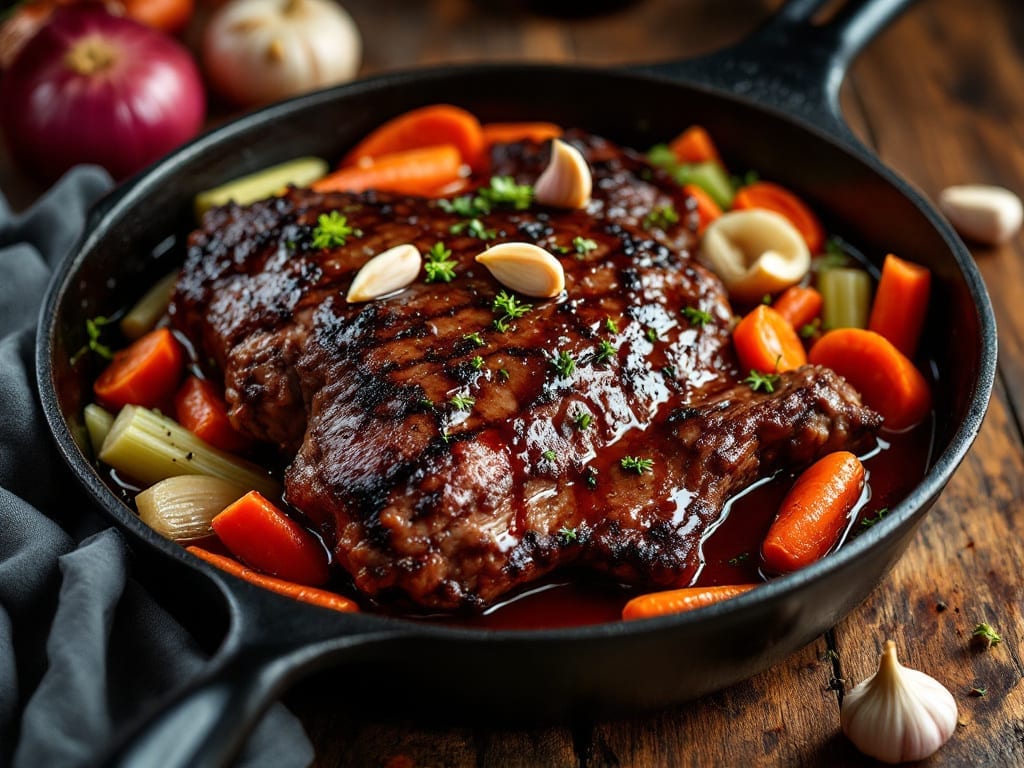
This braised beef brisket recipe transforms tough cuts into melt-in-your-mouth perfection through slow-simmered richness and deep, layered flavors. The day I realized French technique could elevate my rubs changed how I approach braising—now I know the secret lies in patience, precise seasoning, and a well-balanced braising liquid.
What starts as a simple cut becomes a centerpiece when cooked low and slow, developing complex flavors that make every bite unforgettable.
The process begins with a dry rub of aromatic spices that clings to the beef like armor, creating a flavorful crust before the braising liquid transforms it into tender, fork-tender slices.
A rich blend of red wine, tomatoes, and herbs simmers for hours, infusing the meat with depth while keeping it impossibly juicy. This isn’t just comfort food—it’s a restaurant-quality dish you can master at home with the right technique.
By the time you’re done, you’ll have beef so tender it practically falls apart at the touch, swimming in a sauce thick enough to coat every bite. The aroma alone will have your whole house asking what’s for dinner, and the first slice will silence any skepticism.
Serve it with crusty bread to soak up every last drop of that velvety sauce, or pair it with roasted vegetables for a complete meal that feels like a celebration.
Leftovers? There won’t be any—this brisket disappears faster than you can say “second helping.” But if you’re lucky enough to have some remain, they reheat beautifully, making it perfect for meal prep or feeding a crowd.
The key to success is attention to detail during the braising process, and I’ll walk you through every step to ensure foolproof results every time.
Ingredients for braised beef brisket
Six ingredients make the magic happen—bold flavors that turn tough beef into melt-in-your-mouth perfection.
| Ingredient | Amount | Notes |
|---|---|---|
| Beef Brisket 🥩 | 4 lb | Flat cut, 1-1.5 inch thick |
| Yellow Onion 🧅 | 2 whole | Chopped, medium dice |
| Carrots 🥕 | 4 whole | Peeled, cut into chunks |
| Celery Stalks 🥬 | 4 whole | Cut into 1-inch pieces |
| Garlic Cloves 🧄 | 8 cloves | Peeled, smashed |
| Dry Red Wine 🍷 | 1 cup | Bold, like Cabernet Sauvignon |
| Beef Broth 💧 | 4 cups | Low-sodium preferred |
| Tomato Paste 🍅 | ½ cup | Smooth, not chunky |
| Fresh Thyme 🌿 | ¼ cup | Stems removed, chopped |
| Fresh Rosemary 🌿 | ⅛ cup | Needles only, chopped |
| Kosher Salt 🧂 | 1 ½ tbsp | Plus extra for seasoning |
| Black Peppercorns 🌶️ | 1 tbsp | Freshly cracked |
| Bay Leaves 🍃 | 2 whole | Dried, standard size |
| Olive Oil 🫒 | 2 tbsp | Extra-virgin for searing |
| All-Purpose Flour 🌾 | ½ cup | For dusting |
[recipe_ingredient_scaler]
The brisket is the star, so don’t skimp on quality. Look for a flat cut with good marbling—Costco or Whole Foods usually have excellent options. If you’re buying a whole packer, trim off excess fat to 1/4-inch thickness for even cooking. The red wine matters too—any bold, dry red works here, but Cabernet Sauvignon or Merlot are my go-tos. The beef broth should be low-sodium; Swanson or Pacific Foods are reliable brands. For the tomato paste, Mueller’s is my favorite—it’s smooth and never clumpy.
No red wine? Beef broth with a splash of balsamic works in a pinch. Fresh thyme and rosemary are ideal, but dried works at half the amount. The carrots and celery can be swapped for turnips or parsnips if you’re feeling adventurous. For the flour, King Arthur or Gold Medal are my go-to brands—they dust evenly without clumping. The garlic can be jarred minced if you’re in a hurry, but fresh is always better. If you’re short on time, pre-chopped mirepoix from the grocery store works fine—just rinse it well to remove excess moisture.
This dish tastes even better the next day, so make extra. The brisket keeps for 4-5 days in the fridge, and the sauce freezes beautifully for up to 3 months. I like to portion the meat into single-serving containers so it’s ready for quick lunches. The sauce can be reheated on its own or with the meat—just add a splash of water or broth if it’s too thick. The leftovers reheat best in a 350°F oven for about 20 minutes, covered with foil.
Why You’ll Love This Recipe
- Deep Flavor Magic: The slow braise transforms tough brisket into something tender and irresistible. That caramelized onion base? Pure comfort. And the garlic? It clings to every bite like a flavor hug.
- Leftovers That Shine: Between us, this dish only gets better the next day. Reheat slices in a pan with a splash of broth, and it’s like a restaurant-quality sandwich. My freezer is full of portions I pull out for lazy nights.
- Budget Feast: A single brisket feeds my whole family for days. The veggies stretch the meat, and the cost per serving is a fraction of takeout. Plus, it’s one of those meals where everyone reaches for seconds without guilt.
Step-by-step instructions for braised beef brisket
Here’s how to transform tough brisket into melt-in-your-mouth perfection through gentle braising.
Sear the Brisket for Deep Flavor
Pat the 4 lb beef brisket dry with paper towels—this ensures maximum browning. Heat 2 tbsp olive oil in a large Dutch oven over medium-high heat until shimmering. Place the brisket fat-side down and sear for 5 minutes without moving it, pressing gently to keep it flat. Flip and sear the other side for another 5 minutes until both sides develop a deep golden crust.
Here’s the thing—this initial sear creates the Maillard reaction that builds rich, caramelized flavors. If you notice the fat burning before the meat browns, reduce the heat slightly. Once both sides are beautifully browned, transfer the brisket to a plate and set aside temporarily.
Build the Aromatic Base
In the same Dutch oven, add 2 whole yellow onion, 4 whole carrots, and 4 whole celery stalks cut into chunks. Cook over medium heat for 5 minutes, stirring occasionally, until the vegetables begin to soften and release their juices. Add the 8 cloves garlic cloves (smashed) and cook for another 30 seconds until fragrant.
Now add the 0.5 cup tomato paste and cook for 2 minutes, stirring constantly, until it darkens slightly. This creates the foundation for your braising liquid. Sprinkle in the 0.5 cup all-purpose flour and stir vigorously for 1 minute to cook off the raw flour taste completely. You’ll see the mixture thicken slightly—this helps create a richer sauce later.
Deglaze and Simmer the Brisket
Pour in the 1 cup dry red wine, scraping up all the browned bits from the bottom of the pot with a wooden spoon. Let it simmer for 3 minutes until reduced by half. Add the 4 cups beef broth, 0.25 cup fresh thyme, 0.125 cup fresh rosemary, 1.5 tbsp kosher salt, 1 tbsp black peppercorns, and 2 whole bay leaves. Return the brisket to the pot, fat-side up.
Bring the liquid to a gentle simmer—you should see small bubbles breaking the surface but no vigorous boiling. This controlled simmer is crucial. Cover the pot and transfer to a preheated 300°F oven. Braise for 3 hours, then carefully flip the brisket and continue cooking for another 3 hours. The total cooking time should be 6 hours, until the meat is fork-tender and pulls apart easily.
Rest and Serve with Sauce
Remove the brisket from the pot and transfer it to a cutting board. Tent loosely with foil and let it rest for 15 minutes—this allows the juices to redistribute throughout the meat. Meanwhile, skim any excess fat from the braising liquid and reduce it over medium heat for 5 minutes until slightly thickened. Taste and adjust seasoning if needed.
Slice the brisket against the grain into ¼-inch thick pieces and serve directly from the pot, spooning the rich sauce over each portion. The vegetables should be tender but still holding their shape. This braised brisket makes a hearty centerpiece for any meal, with deep, complex flavors that develop over hours of slow cooking.
Pro Tips For Making Braised Beef Brisket
- Sear the Brisket Hard: Get that pan smoking before adding the brisket—high heat for 3-4 minutes per side until deep brown. I used to rush this, and the flavor just didn’t stick like it does when you let the meat develop that crust first.
- Chop Veggies Uniformly: Onions, carrots, and celery should be cut into ½-inch chunks—no big pieces lurking in the pot. My grandmother swore by this, and she was right: even cooking means no mushy bits or underdone edges.
- Deglaze Aggressively: After searing the brisket, pour in the liquid (be it wine, broth, or beer) and scrape the pan like you’re mad at those brown bits. That’s where the flavor hides, and skipping it means losing half the taste.
- Cover Tight After Browning: Once the brisket is seared and the veggies are in, slap that lid on immediately—no waiting. The steam jumpstarts the braising, and I learned this the hard way when my first batch turned out dry because I lingered.
Serving suggestions for this braised beef brisket
Crusty Bread Pairing
Nothing beats braised brisket with a warm, crusty loaf to soak up that rich sauce. I grab a baguette from my local bakery—look for one with a crispy exterior and soft interior. Slice it thickly and toast it in the oven at 375°F for 5 minutes until golden.
The bread should be sturdy enough to handle the sauce without falling apart, but still soft enough to melt in your mouth. 🥖
For an extra-special touch, brush the bread with garlic-infused olive oil before toasting. I like to add a pinch of flaky sea salt right after pulling it from the oven—it enhances the buttery flavor and balances the brisket’s richness.
If you’re feeling fancy, serve it on a wooden board with a side of whipped butter for dipping.
Roasted Vegetable Medley
Roasted vegetables add color, texture, and freshness to balance the richness of the brisket. I love a mix of carrots, parsnips, and Brussels sprouts—tossed in 2 tbsp olive oil, 1 tsp smoked paprika, and ½ tsp kosher salt.
Roast at 400°F for 25-30 minutes until caramelized and tender. The smoky paprika complements the brisket beautifully while adding a touch of warmth.
For a seasonal twist, swap in sweet potatoes or beets—both pair wonderfully with the deep flavors of the braised meat. I often roast them alongside the brisket in the oven during the last 30 minutes of cooking to save time.
A sprinkle of fresh parsley after roasting adds a bright, herbaceous note that cuts through the richness.
Creamy Polenta
Creamy polenta is a game-changer for soaking up that velvety sauce. Cook 1 cup polenta in 4 cups milk or broth over medium heat, stirring constantly until thick and creamy—about 20-25 minutes.
Stir in 2 tbsp butter and ¼ cup grated Parmesan cheese for extra richness. The silky texture contrasts perfectly with the tender brisket.
For a lighter option, use half milk and half vegetable broth—**it still tastes creamy but adds a subtle earthiness. Garnish with a drizzle of truffle oil or extra Parmesan before serving.
I often serve polenta in a shallow bowl so guests can scoop up brisket and sauce together—it’s a crowd-pleaser every time. 🍲
Classic Potato Sides
For a comforting classic, serve your brisket with creamy mashed potatoes—whipped with butter, sour cream, and chives. The smooth texture and mild flavor let the brisket shine. I make mine with Yukon Gold potatoes—they hold their shape better and have a naturally creamy texture.
A sprinkle of fresh chives adds a pop of color and freshness.
Alternatively, try garlic-roasted baby potatoes—**tossed in olive oil, minced garlic, and rosemary, then roasted at 425°F for 30 minutes until crispy. The garlic and rosemary echo the flavors in the brisket, creating a cohesive meal. Both sides reheat beautifully, making them perfect for leftovers.
Wine and Beer Pairings
A bold red wine is a must with braised brisket. I reach for a Cabernet Sauvignon or Malbec—**their tannins stand up to the rich, fatty meat while complementing the deep flavors of the sauce.
For something lighter, a Pinot Noir offers bright acidity that cuts through the richness. Chill your wine slightly before serving—around 60-65°F—to enhance its flavors.
If you prefer beer, a dark ale or stout—like Guinness or a Belgian Dubbel—works beautifully. The malty sweetness balances the savory brisket, while the carbonation cleanses your palate between bites. For a non-alcoholic option, try a sparkling cider—****it’s crisp and refreshing without overpowering the meal.
Nutrition facts
Frequently asked questions
Why does my braised brisket turn out tough instead of tender?
The key is low-and-slow cooking. If your oven runs hot, use a meat thermometer—the internal temp should reach 203°F for fork-tender results. Also, avoid flipping too often; the recipe’s 6-hour braise with one flip at 3 hours is critical. If your brisket is still tough, it may need 1-2 extra hours in the oven.
Can I use a slow cooker instead of an oven?
Follow the same sear and base-building steps, then transfer everything to a 6-quart slow cooker on Low for 8-10 hours or High for 5-6 hours. The sauce will be thinner, but you can reduce it later. Just ensure the liquid covers at least half the brisket—add more broth if needed.
What’s the best way to reheat leftovers?
Reheat in a 350°F oven for 20-30 minutes, covered with foil, to preserve moisture. For quick reheating, use a skillet with a splash of beef broth or water—just warm through (165°F internal temp) and avoid boiling. The sauce thickens as it cools, so add a little liquid if needed.
Do I need to trim the fat off the brisket?
Leave a ¼-inch fat cap for flavor and moisture, but trim excess fat to ½-inch thickness for even cooking. The fat renders during braising, creating a rich sauce. If your brisket has too much fat, pat it dry before searing to prevent splattering.
How can I make this dish ahead of time?
Braise the brisket up to 24 hours ahead—it tastes even better! Store in the fridge in its braising liquid. Reheat gently (as above) and finish with a 5-minute reduction on the stovetop to thicken the sauce. For meal prep, portion the meat and sauce separately; they reheat beautifully.

Trained in classic French technique but raised on slow-cooked ribs and spicy rubs, she blends culinary skill with smoke and soul.
- Roasted Brisket Recipe: Low-and-Slow Smoky Tenderness Without Dryness - October 15, 2026
- Best Passover Beef Brisket Recipe: Molasses-Spiced Slow-Cooked Masterpiece - October 15, 2026
- Jamie Oliver’s Fast and Simple Brisket Recipe: Smoky-Sweet One-Pan Magic - October 15, 2026