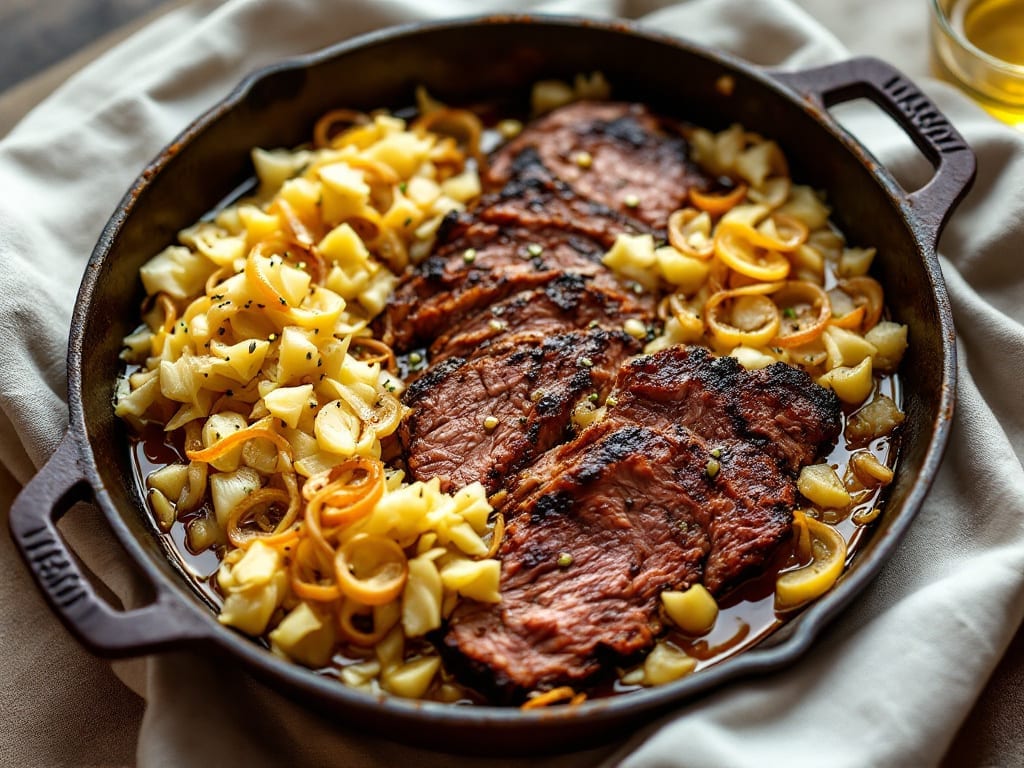
This beef brisket and sauerkraut recipe transforms a classic pairing into a showstopper that balances rich, slow-cooked beef with tangy fermented cabbage in perfect harmony.
The key lies in cooking the brisket until it’s fork-tender—whether smoked, braised, or roasted—and serving it alongside sauerkraut that’s been gently warmed to preserve its bright acidity.
I developed this method after years of perfecting brisket techniques, ensuring every bite delivers both deep smoky flavor and that refreshing crunch from the sauerkraut.
The beauty of this dish is its versatility—you can smoke the brisket low and slow for Texas-style perfection, or adapt it to an Instant Pot for a quicker version that still delivers incredible results.
The sauerkraut, traditionally served on the side, gets a modern twist by being warmed with caraway seeds or a splash of apple cider vinegar to enhance its natural tang. This balance of textures and flavors makes it a crowd-pleaser for gatherings or a hearty weeknight dinner.
By the time you serve this dish, you’ll have perfectly tender brisket that falls apart at the touch of a fork, paired with sauerkraut that’s warm but still vibrant. The combination creates a symphony of smoky, savory, and tangy notes that will have everyone reaching for seconds.
Serve it with crusty rye bread, a dollop of mustard, or a simple green salad to round out the meal.
Whether you’re hosting a barbecue or simply craving comfort food, this recipe delivers restaurant-quality results with minimal fuss. The secret is patience—letting the brisket cook until it’s ready and the sauerkraut warm just enough to bring out its best.
Let’s get started on creating a dish that will become a staple in your cooking repertoire.
Ingredients for beef brisket and sauerkraut
Six ingredients transform brisket into melt-in-your-mouth perfection paired with sauerkraut that sings with tangy brightness.
| Ingredient | Amount | Notes |
|---|---|---|
| Beef Brisket 🥩 | 4 lb | Flat cut, well-marbled for tenderness |
| Sauerkraut 🥬 | 2 cups | Unopened jar, tangy flavor |
| Yellow Onion 🧅 | 1 whole | Large, sliced into half-moons |
| Garlic Cloves 🧄 | 6 cloves | Fresh, peeled and smashed |
| Apple Cider Vinegar 🍏 | ¼ cup | Raw, unfiltered preferred |
| Caraway Seeds 🌾 | 1 tbsp | Whole, lightly toasted |
| Beef Broth 💧 | 2 cups | Low-sodium, homemade or quality |
| Brown Sugar 🍯 | ½ cup | Packed, light or dark |
| Smoked Paprika 🌶️ | 2 tsp | For deep smoky flavor |
| Black Peppercorns 🌶️ | 1 tsp | Freshly cracked |
| Salt 🧂 | 1 ½ tsp | Kosher or sea salt |
| Mustard Seed 🌶️ | 1 tsp | Yellow or brown |
| Bay Leaves 🍃 | 2 whole | Fresh or dried |
| Olive Oil 🫒 | 2 tbsp | Extra-virgin for searing |
[recipe_ingredient_scaler]
The brisket is the star, so don’t cut corners. Look for a flat cut with good marbling—Costco or Whole Foods usually have the best quality. A 4-pound brisket feeds six generously, but if you’re feeding a crowd, grab a 6-pounder. The sauerkraut? Reinhart or Bubbapalooza brands are my go-tos—they’ve got that perfect tang without being too sour. If you’re using a jar from the store, make sure it’s unopened and has a firm liquid on top—that’s the good stuff. The onions and garlic? Yellow onions work best—they’re sweeter and caramelize beautifully. Grab a big bag of onions from Trader Joe’s or your local market—they’re usually cheaper and fresher than the pre-packaged ones.
No smoked paprika? Substitute with a mix of chili powder and a pinch of liquid smoke—it’ll get you close. Running low on caraway seeds? Fennel seeds work too, but they’re more anise-like. The beef broth can be store-bought, but if you’ve got time, homemade is worth it—just simmer beef bones with veggies for a few hours. The sauerkraut is non-negotiable here—no substitutes, but if you’re out, a mix of cabbage and a splash of vinegar in a pinch. For the brisket, if you’re short on time, use an Instant Pot on high pressure for 2 hours instead of smoking it. And if you’re feeling fancy, add a splash of bourbon to the braising liquid—trust me, it elevates everything.
Brisket reheats beautifully—wrap it in foil and warm in the oven at 300°F for 30 minutes. The sauerkraut? Keep it in the fridge until ready to serve—it stays good for weeks. Once you’ve warmed it with the caraway seeds and vinegar, it’s best eaten immediately, but you can reheat it gently on the stove if needed. The leftovers? Divide the brisket into portions and freeze—it keeps for up to 3 months. The sauerkraut, once opened, will last in the fridge for 2-3 weeks if you keep it submerged in its liquid. And if you’ve got extra braising liquid? Use it for gravy or freeze it for future recipes—waste not, want not!
Why You’ll Love This Recipe
- One-Pot Magic: I swear by this—just dump the brisket, sauerkraut, and onions in one pot, let it simmer. No fancy techniques, no extra dishes. The vinegar does all the work while you sip wine and pretend you’re not cooking.
- Weeknight Workhorse: Between us, this feeds my whole family plus leftovers for lunch. Toss it in a slow cooker in the morning, come home to dinner ready, and still have enough for sandwiches. No sad, limp leftovers here.
- Budget Beef Boost: Brisket’s cheap, sauerkraut lasts forever, and you’re using every bit. Double the recipe, freeze half—no waste, just flavor. Honestly, it’s the kind of meal that makes me feel like I’m feeding a crowd without breaking the bank.
Step-by-step instructions for smoky-sour beef brisket
This method transforms tough brisket into tender, flavor-packed perfection paired with tangy sauerkraut.
Sear and Season the Brisket
Heat a Dutch oven over medium-high heat until hot. Add the 2 tablespoons olive oil and swirl to coat the bottom evenly. Place the 4 lb beef brisket fat-side down and sear undisturbed for 5 minutes until deeply browned. Flip and sear the other side for another 5 minutes.
While searing, prepare the seasoning blend by mixing together the 1.5 teaspoons salt, 2 teaspoons smoked paprika, 1 teaspoon black peppercorns (cracked), 1 teaspoon mustard seed, and 1 tablespoon caraway seeds in a small bowl. After searing, rub this mixture all over the brisket, pressing it into the meat so it adheres well.
Here’s the thing—don’t skip the searing. This step creates a flavorful crust that locks in juices during the long cook. The brisket should be richly browned before moving to the next stage.
Build the Smoky-Sour Sauce
In the same Dutch oven, add the sliced 1 whole yellow onion and cook for 3 minutes until softened. Stir in the 6 smashed garlic cloves and cook for another 30 seconds until fragrant. Pour in the 0.25 cup apple cider vinegar and scrape up any browned bits from the bottom—this is where all the flavor hides.
Add the 2 cups sauerkraut, breaking it up with a wooden spoon. Stir in the 0.5 cup brown sugar, 2 whole bay leaves, and the 2 cups beef broth. Bring everything to a simmer, then reduce heat to medium-low and let it bubble gently for 10 minutes, allowing the flavors to meld together.
This is where the magic happens—the tangy vinegar and fermented sauerkraut combine with the sweet brown sugar to create a complex, balanced sauce that will tenderize the brisket as it cooks.
Slow Cook Until Fork-Tender
Place the seasoned brisket fat-side up into the Dutch oven, spooning some of the sauce over the top. Cover tightly with a lid and transfer to a preheated 300°F oven. Cook for 3 hours, then check the internal temperature with a meat thermometer—it should read 195°F and the meat should pull apart easily.
If the brisket isn’t quite tender after 3 hours, continue cooking for another 30-minute increments until it reaches the perfect texture. The sauce should reduce slightly, creating a thick, glossy coating that clings beautifully to the meat.
Real talk: Your oven might run hot, so start checking at the 20-minute mark. The brisket is done when it’s fork-tender and the sauce has thickened into a rich glaze. This slow cooking transforms tough muscle into melt-in-your-mouth perfection.
Rest and Serve with Sauce
Remove the brisket from the oven and transfer it to a cutting board. Tent loosely with aluminum foil and let it rest for 20 minutes. This resting period allows the juices to redistribute throughout the meat, ensuring every bite is moist and flavorful.
While the brisket rests, skim off any excess fat from the sauce in the Dutch oven if desired. The brisket should slice effortlessly against the grain into ¼-inch thick pieces. Spoon the smoky-sour sauce over the sliced brisket and serve immediately with any remaining sauerkraut mixture.
Each bite delivers tender, juicy beef with a perfect balance of smoky, sweet, and tangy flavors. The sauerkraut adds a refreshing contrast that cuts through the richness of the brisket, making this dish truly unforgettable.
Pro Tips For Making Beef Brisket And Sauerkraut
- USE A DUTCH OVEN: The brisket needs time—low and slow is the only way. If you don’t have one, a heavy pot with a tight lid works just as well, but check the temperature with a thermometer. I learned this the hard way after a pot of water boiling away mid-cook.
- DRAIN AND RINSE THE SAUERKRAUT: That liquid is tangy, but it can make your dish watery. Drain the sauerkraut in a colander, then rinse it briefly under cold water to cut the sharpness. Pat it dry with a towel—wet sauerkraut steams instead of caramelizing.
- SEAR THE BRISKET IN BATCHES: Overcrowding the pan steams the meat instead of browning it. Work in 2-3 layers, letting each get a deep crust before adding more. A hot pan and a little patience make all the difference in flavor.
- ADD VINEGAR LATE: Too early, and the acid cooks off, leaving you with flat flavor. Stir in the apple cider vinegar in the last 15 minutes of cooking—it brightens the dish without overpowering the rich brisket. Trust me, timing matters here.
Perfect pairings for beef brisket and sauerkraut
Crusty Bread Pairings
Nothing complements brisket and sauerkraut like a warm, crusty rye or pumpernickel loaf—the dense texture soaks up the smoky-sour sauce beautifully. I recommend Martin’s Potato Bread or a homemade sourdough for extra depth.
For a lighter option, crusty baguette slices work perfectly, especially when toasted with a smear of Dijon mustard before serving. 🥖
Mustard Elevations
Mustard isn’t just a side—it’s a flavor enhancer for this dish. A dollop of spicy brown mustard (like French’s) adds a sharp contrast to the richness, while whole-grain mustard brings earthy notes.
For a twist, mix 1 tbsp mustard with 1 tsp honey and 1 tsp apple cider vinegar to drizzle over the brisket before serving. This balances the tangy sauerkraut with a touch of sweetness.
Pickled Veggie Sides
Pickled red onions or radishes add another layer of acidity that cuts through the brisket’s richness. I love quick-pickled cucumbers (toss 1 cup thinly sliced cucumbers with ¼ cup rice vinegar, 1 tbsp sugar, and ½ tsp salt for 30 minutes).
These bright, crunchy sides keep the meal fresh and vibrant, especially when served alongside the sauerkraut. 🥒
Creamy Potato Mash
A garlic-herb mashed potato (made with Yukon Gold potatoes, butter, sour cream, and chives) adds a velvety contrast to the smoky brisket. For extra indulgence, fold in crumbled blue cheese or sharp cheddar into the mash.
This hearty side balances the tangy sauerkraut and ensures every bite is satisfying. Serve it in a heavy ceramic bowl to keep it warm.
Green Salad Balance
A simple arugula salad with lemon vinaigrette (mix 3 tbsp olive oil, 1 tbsp lemon juice, ½ tsp Dijon, and salt) refreshes the palate between rich bites.
Add toasted walnuts or pumpkin seeds for crunch and shaved Parmesan for a salty kick. This light side prevents the meal from feeling too heavy while complementing the brisket’s depth.
Beer and Wine Pairings
A dark lager like Leffe Blond or Samuel Adams Black Lager mirrors the brisket’s smokiness, while a dry Riesling (such as Dr. Loosen Blue Slate) cuts through the richness with its crisp acidity.
For beer lovers, a Belgian-style witbier (like Hoegaarden) adds citrusy notes that echo the apple cider vinegar in the sauerkraut. Avoid heavy reds—they’ll clash with the tang. 🍷
Nutrition facts
Frequently asked questions
Can I substitute sauerkraut with another fermented vegetable?
While sauerkraut is ideal for its tangy flavor, you can use kimchi or pickled red cabbage in a pinch. Just reduce the apple cider vinegar in the recipe since these already have acidity. For kimchi, use 1.5 cups instead of sauerkraut to maintain balance. The texture will differ slightly, but the fermented kick remains.
How do I know when the brisket is done without a meat thermometer?
Press the brisket gently with tongs—if it pulls apart easily and the meat is fork-tender, it’s ready. The internal texture should feel like butter, not rubber. Another trick: The fat should render and the meat should have a probe-tender feel when pierced. For extra confidence, check if the sauce has reduced to a glossy consistency.
Can I make this recipe in an Instant Pot instead of the oven?
After searing the brisket, add all ingredients to the Instant Pot and cook on high pressure for 90 minutes. Let the pressure release naturally for 15 minutes, then check for tenderness. The Instant Pot version cooks faster but requires careful monitoring to avoid overcooking. The sauerkraut will soften more quickly, so serve it immediately.
Why does my brisket turn out dry even after slow cooking?
Overcooking or skipping the rest time are the most common culprits. Always cook until the internal temp reaches 195°F, not higher. Let the brisket rest for 20 minutes before slicing—this redistributes juices. If it’s still dry, try wrapping the brisket in butcher paper during the last hour of cooking to trap moisture.
How far ahead can I prepare the sauerkraut mixture?
Prepare the sauerkraut mixture up to 2 days ahead—store it in an airtight container in the fridge. Reheat gently on the stove with a splash of water or broth to restore its texture. For the brisket, you can prep the seasoning and sauce base ahead, but sear and cook it fresh for the best results. Planning ahead saves time on busy days!

Trained in classic French technique but raised on slow-cooked ribs and spicy rubs, she blends culinary skill with smoke and soul.
- Beef Brisket Rolls Recipe: Flaky Layers and Smoky Sweet Filling - October 15, 2026
- Masterbuilt Smoker Beef Brisket Recipe: Bark-To-Meat Ratio Hack for Unmatched Flavor - October 15, 2026
- Costco Beef Brisket Recipe: Low-and-Slow Masterpiece With Molasses-Kissed Crust - October 15, 2026